1. Introduction
The Ferrari Amalfi is Ferrari’s front-engined V8 grand tourer and the successor to the Ferrari Roma. It is positioned as one of the most usable and elegant cars in Ferrari’s modern range: a 2+2 coupé with a front-mid-mounted twin-turbocharged V8, rear-wheel drive, an 8-speed dual-clutch gearbox and a design philosophy built around long-distance refinement rather than track-focused aggression.
Ferrari unveiled the Amalfi in 2025 as a petrol-powered coupé, with European deliveries expected from early 2026 and US deliveries following later. The car succeeds the Roma coupé and continues Ferrari’s tradition of front-engined GT cars, but with a more developed technical package, a redesigned exterior, improved cabin ergonomics and a more powerful version of Ferrari’s 3.9-litre twin-turbo V8. Reuters reported the Amalfi’s starting price at around €240,000 / $281,000, while UK pricing has been reported from around £202,459 before options.
The Amalfi is not Ferrari’s fastest or most extreme model. That role belongs to cars such as the 849 Testarossa, 296 Speciale and Ferrari’s limited-series halo cars. Instead, the Amalfi is designed to be the Ferrari that can be used more often, over longer distances and with less compromise. It is a grand tourer first and a supercar second, although with 640 cv, 0–100 km/h in 3.3 seconds and a top speed of around 320 km/h, it is still extremely quick by any normal standard.
For buyers, this positioning is important. The Amalfi sits below Ferrari’s V12 grand tourers in price and prestige, but above conventional luxury GTs in theatre and brand desirability. It is aimed at the owner who wants Ferrari design, performance and exclusivity, but does not necessarily want the intensity of a mid-engined hybrid supercar. It is also more discreet than many modern supercars, making it attractive to buyers who want elegance rather than constant visual drama.
From an ownership perspective, the Amalfi is likely to be one of the more approachable modern Ferraris. It has a usable cabin, a relatively practical front-engined layout, a proven V8 architecture and a character suited to weekend trips, long-distance touring and occasional daily use. It is still a Ferrari, so running costs, insurance, tyres, servicing and depreciation need to be taken seriously, but it should be easier to live with than Ferrari’s more extreme mid-engined models.
The Ferrari Amalfi therefore matters because it represents the refined side of Ferrari. It is not trying to be the loudest car in the range. It is trying to be the car that blends beauty, pace, usability and status into a coherent grand touring package.
2. Production & History
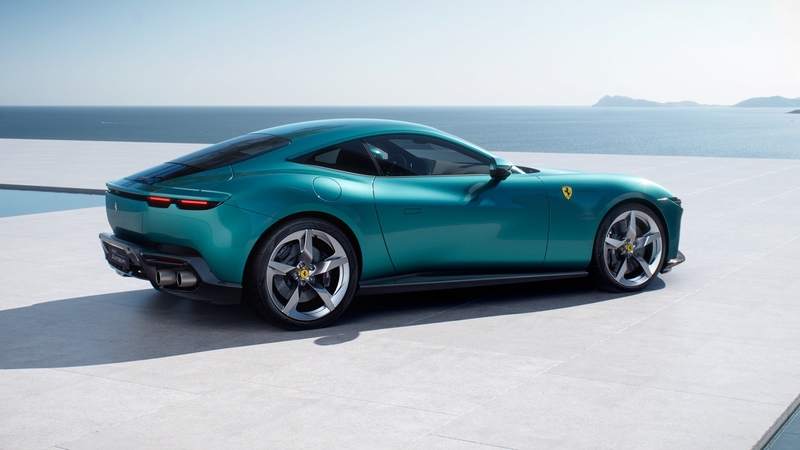
The Ferrari Amalfi was unveiled in July 2025 as the successor to the Ferrari Roma coupé. The Roma itself was launched in 2019 and became Ferrari’s modern interpretation of the elegant front-engined coupé: less aggressive than a mid-engined Ferrari, more usable than a V12 flagship, and styled around the idea of understated Italian sophistication. The Amalfi continues that philosophy but updates it for a newer generation of Ferrari buyers.
The name is significant. Ferrari has often used evocative Italian names to position cars emotionally, and “Amalfi” immediately suggests the Amalfi Coast: elegance, travel, landscape, leisure and Italian luxury. That is exactly the role the car plays in the range. It is not named after a racetrack or technical formula. It is named after a place associated with grand touring, which reinforces the car’s purpose.
Successor to the Ferrari Roma
Mechanically and conceptually, the Amalfi is an evolution of the Roma. It keeps the front-mid-engine, rear-wheel-drive layout and the 2+2 coupé format. However, it is not merely a facelift. Ferrari increased power to 640 cv, introduced updated turbocharger management, added a redesigned front end, fitted an active rear spoiler and improved dynamic systems including brake-by-wire and ABS Evo technology borrowed from Ferrari’s newer-generation performance cars.
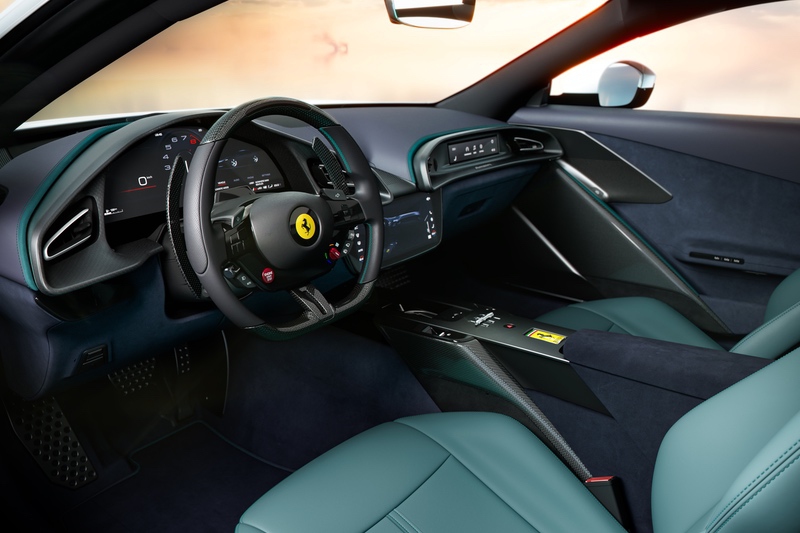
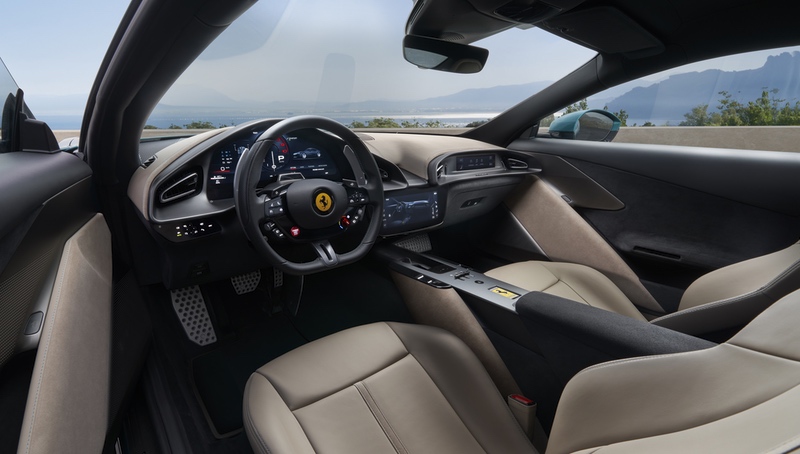
The Roma was admired for its elegance but criticised by some owners and reviewers for its interior control layout, particularly the heavy reliance on touch-sensitive interfaces. The Amalfi appears to respond to those criticisms with a more usable cabin layout and more mature controls. That matters because the Amalfi’s target buyer is likely to use the car more often than someone who buys a track-focused Ferrari.
Place in Ferrari’s GT Lineage
The Amalfi belongs to a long line of front-engined Ferrari grand tourers. Its ancestry can be traced through cars such as the 250 GT, 365 GTB/4 Daytona, 456 GT, 550 Maranello, 575M, California, Portofino and Roma. Unlike the V12 grand tourers, however, the Amalfi uses a smaller and more efficient twin-turbo V8. That makes it more accessible in price and more compact in character.
It also sits within Ferrari’s modern strategy of offering different types of emotional experience. The 296 GTB delivers compact hybrid supercar performance. The 12Cilindri provides naturally aspirated V12 tradition. The Purosangue offers four-door usability. The Amalfi offers elegant front-engined grand touring.
Production and Availability
The Amalfi is not expected to be a numbered limited-production Ferrari. However, Ferrari production is always controlled, and early cars are likely to be allocated through dealers to established clients first. Reuters reported that European deliveries would begin in early 2026, with US deliveries expected three to six months later.
For buyers, that means availability may be limited at launch, particularly for desirable specifications. As with most modern Ferraris, real-world transaction prices can move significantly above base price once paint, wheels, carbon fibre, interior materials and personalisation are added.
Historically, the Amalfi may become important as one of Ferrari’s final non-hybrid V8 grand tourers, depending on how Ferrari’s future powertrain strategy develops. It arrives at a time when Ferrari is preparing electric models while continuing to produce petrol and hybrid cars. That context gives the Amalfi a particular appeal: it is modern, but still fundamentally combustion-led.
3. Design & Styling
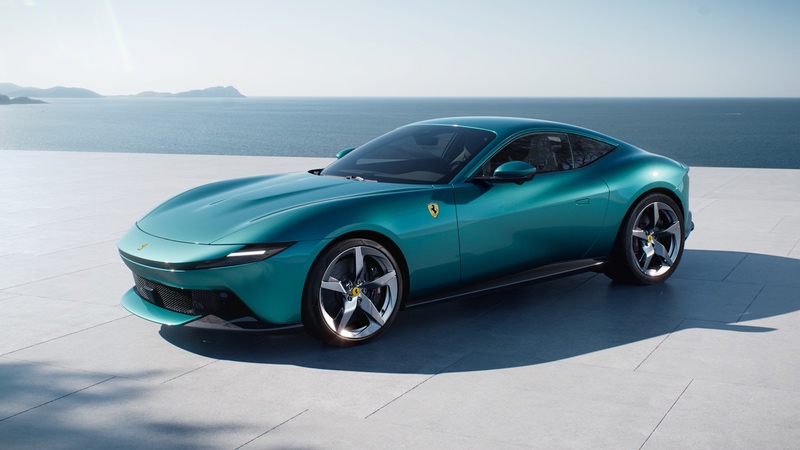
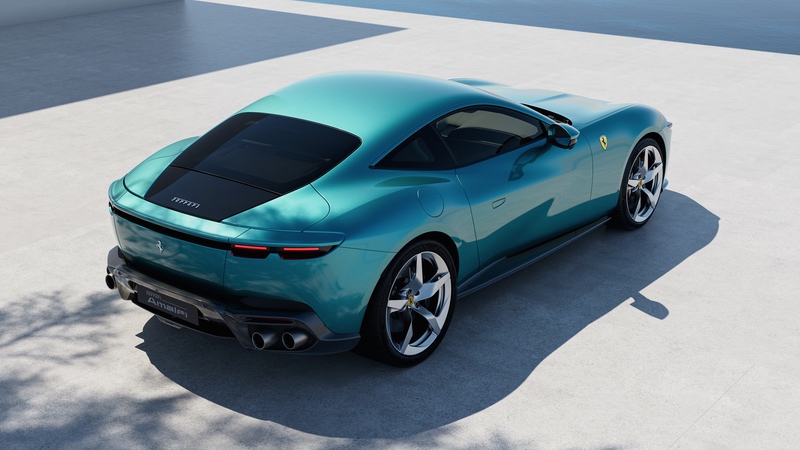
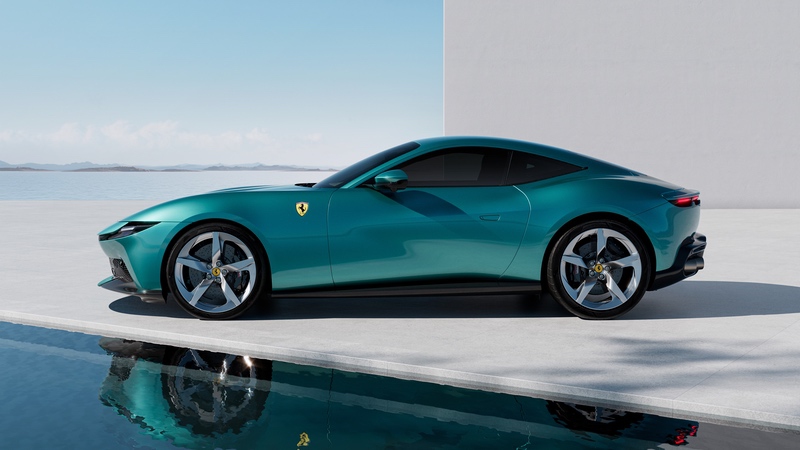
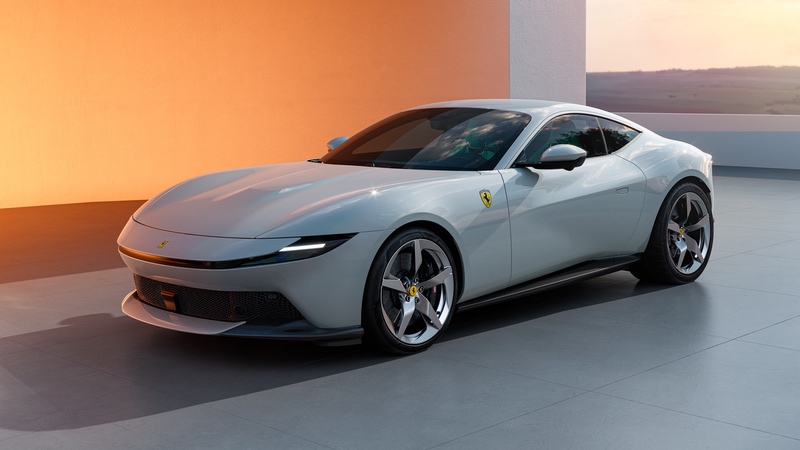
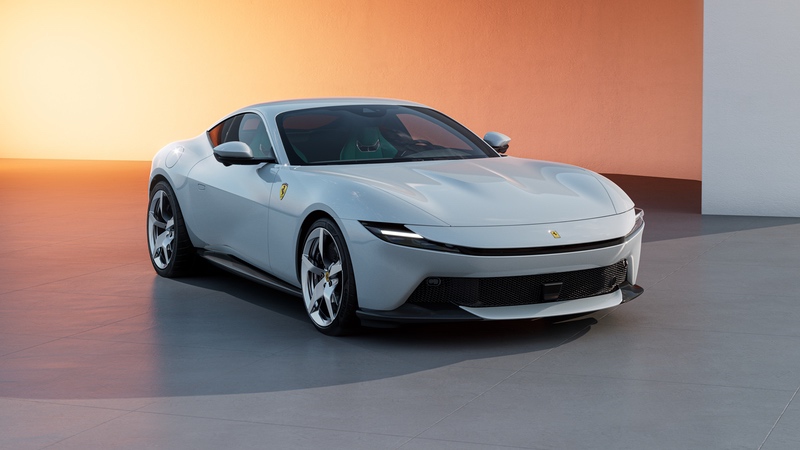
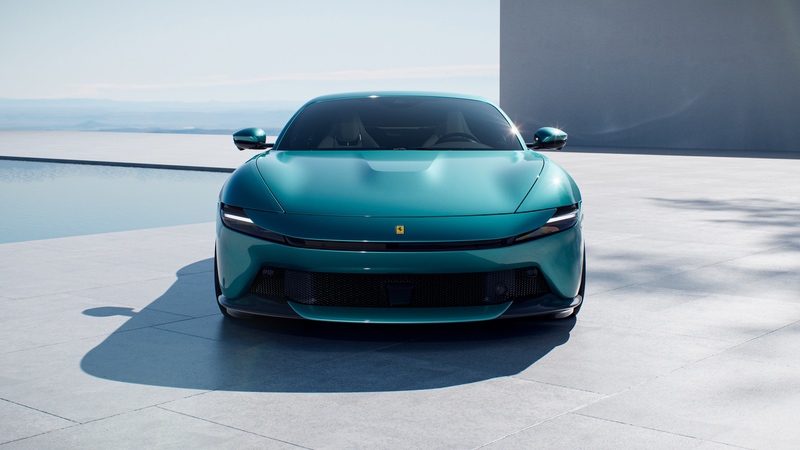
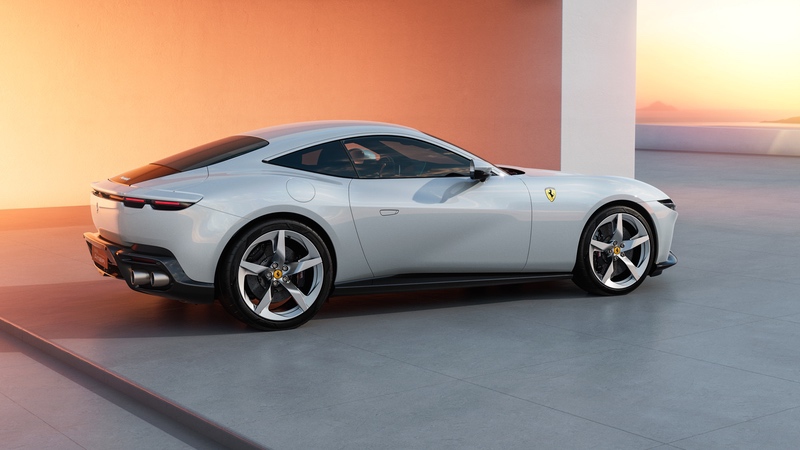
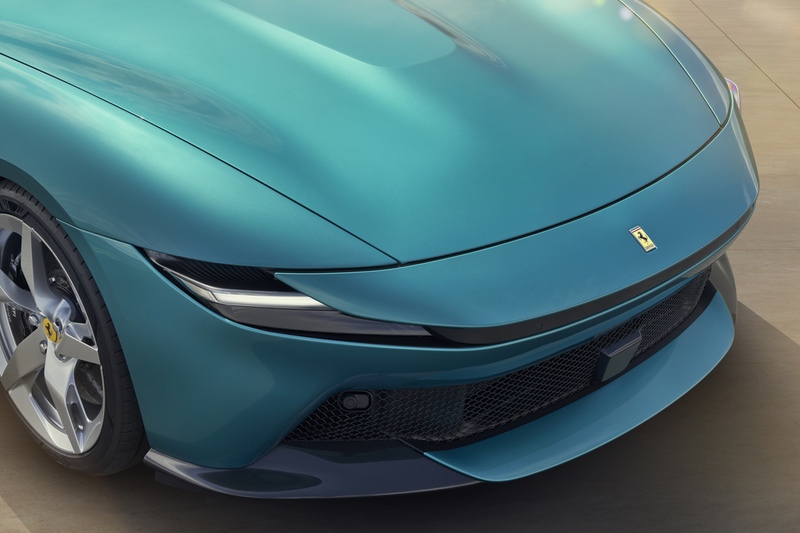
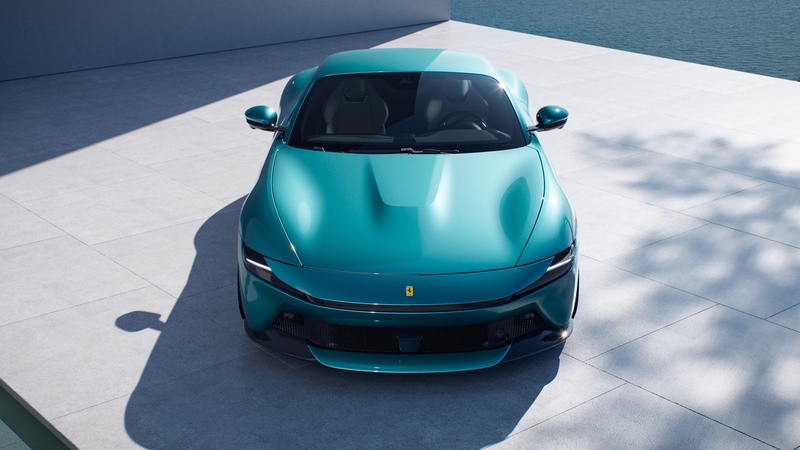
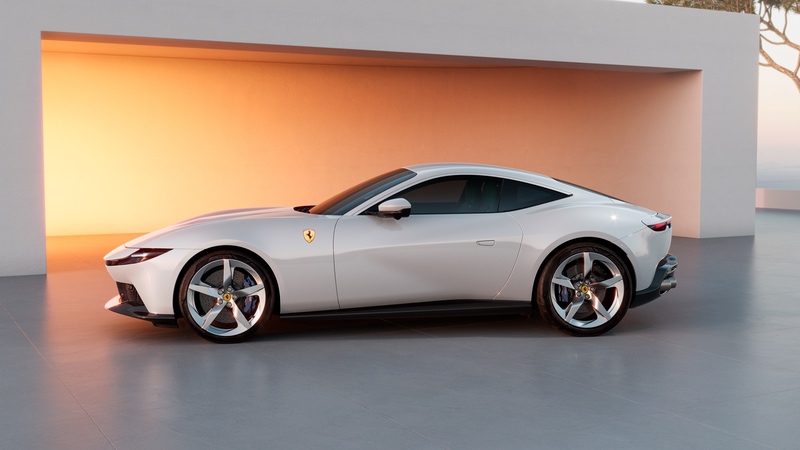
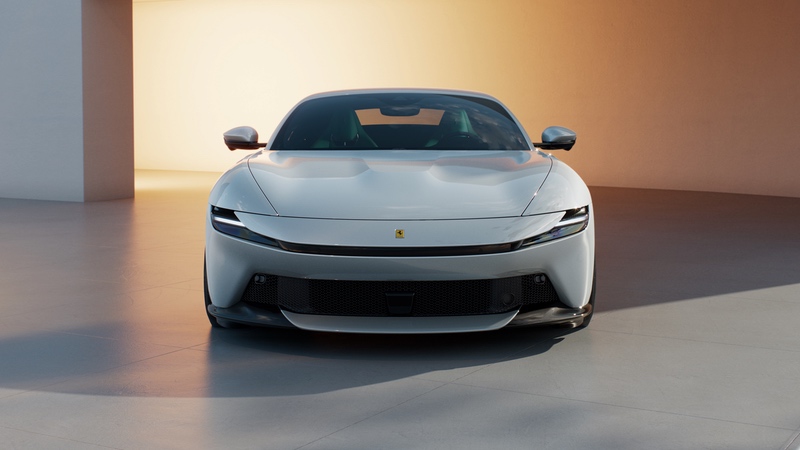
The Ferrari Amalfi is designed around elegance rather than aggression. It retains the long-bonnet, rear-set cabin and fastback proportions that made the Roma visually distinctive, but introduces a sharper and more modern front-end treatment. The result is a car that feels more assertive than the Roma without becoming visually excessive.
Exterior Proportions
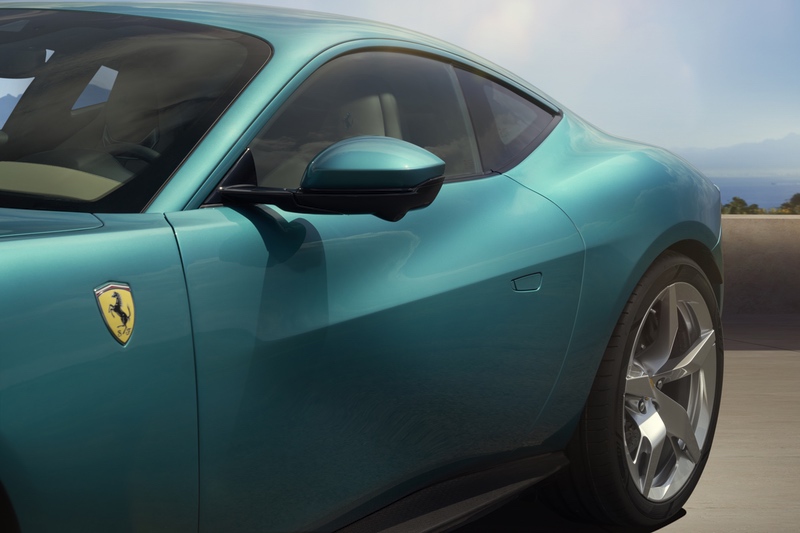
The Amalfi follows the classic front-engined Ferrari GT formula. The bonnet is long, the cabin is positioned rearward, and the rear haunches give the car enough muscularity to avoid looking delicate. This layout visually communicates the car’s mechanical structure: engine ahead of the cabin, power sent to the rear wheels, and a driving position that feels more grand tourer than supercar cockpit.
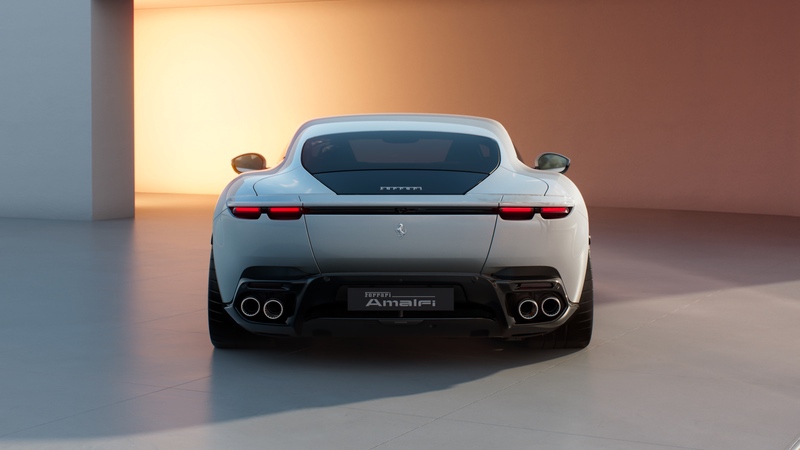
The Amalfi is not intended to look like a track weapon. There are no huge fixed wings, no exaggerated vents and no overly theatrical surface treatments. Instead, Ferrari has focused on clean lines, controlled surfaces and integrated aerodynamic features. This is important for long-term appeal. Supercars with aggressive styling can date quickly; elegant GTs tend to age more gracefully.
Front and Rear Design
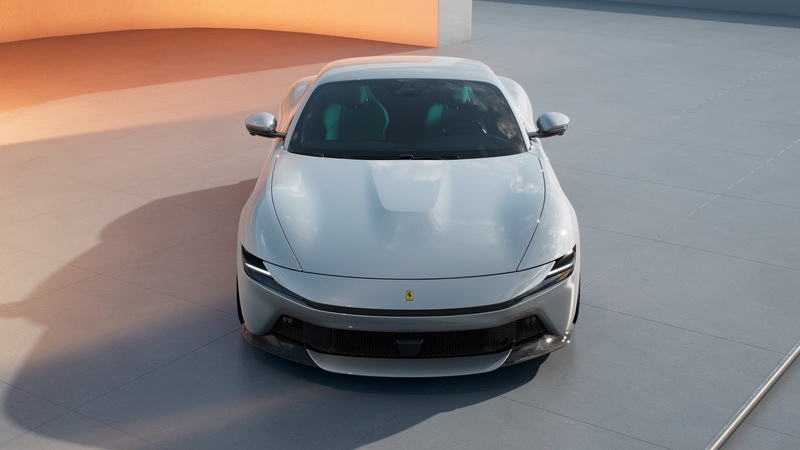
The front end is one of the biggest departures from the Roma. Ferrari has redesigned the nose to give the Amalfi a more technical and contemporary identity. The lighting treatment is slimmer and more assertive, while the grille and lower aerodynamic elements give the car greater visual width.
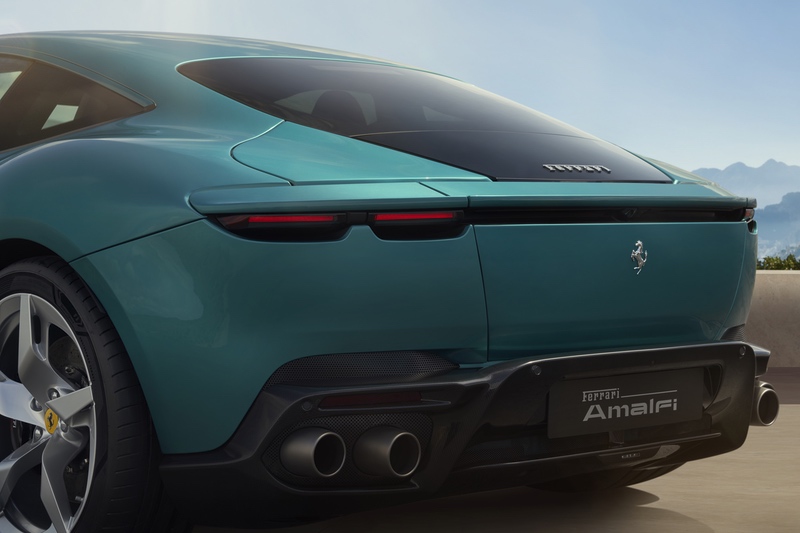
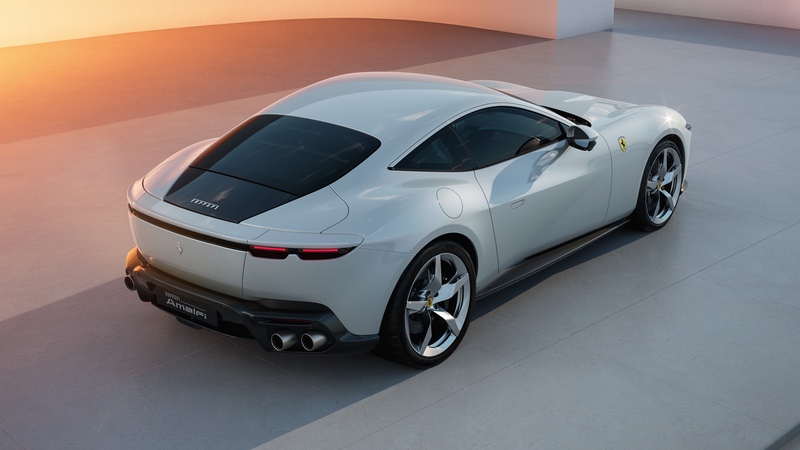
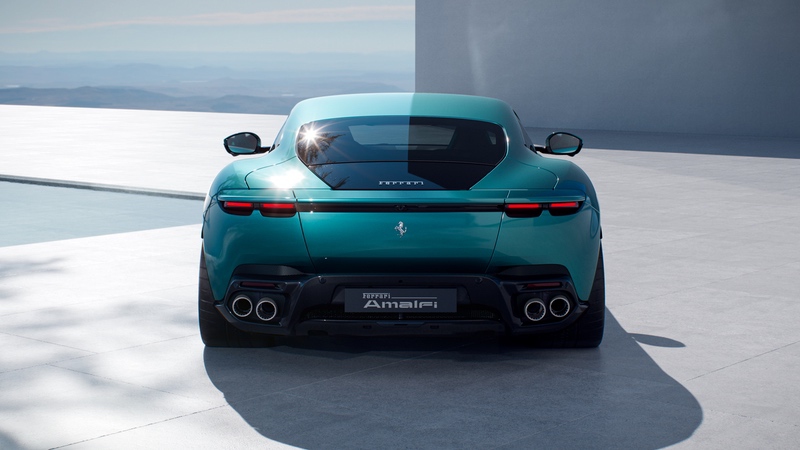
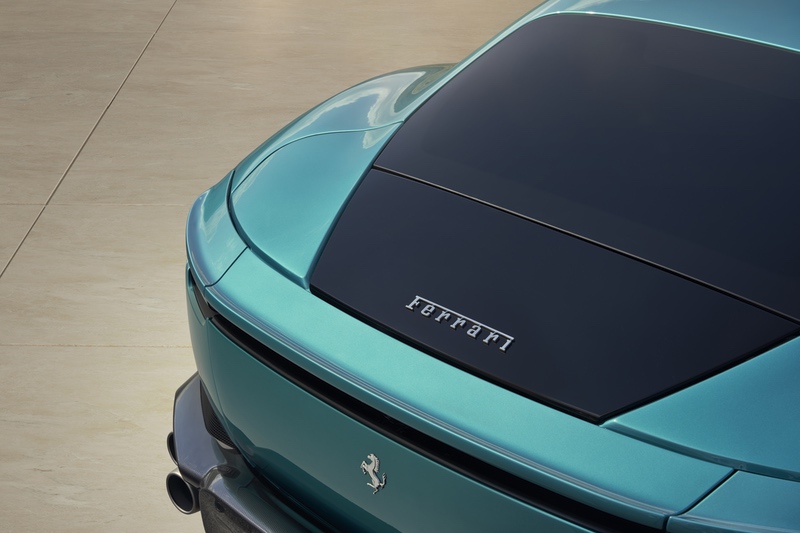
At the rear, the Amalfi uses an integrated active spoiler. This is not simply a styling flourish. Reuters reported that the Amalfi includes a rear integrated active spoiler designed to increase stability. The advantage is that the car can remain visually clean at lower speeds while gaining additional aerodynamic support when required.
Interior Design
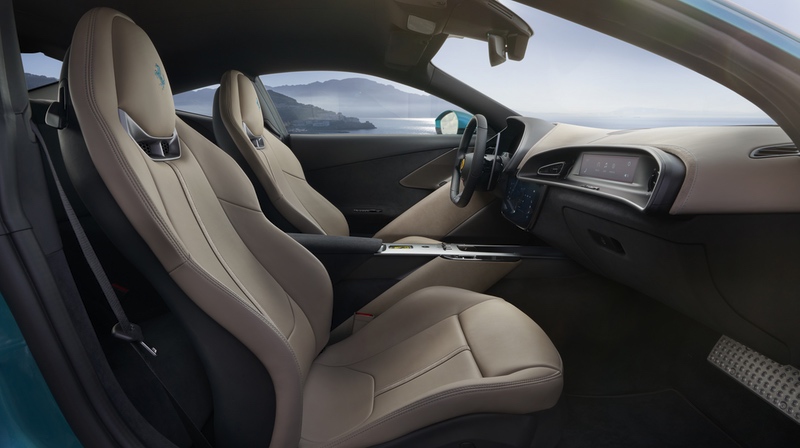
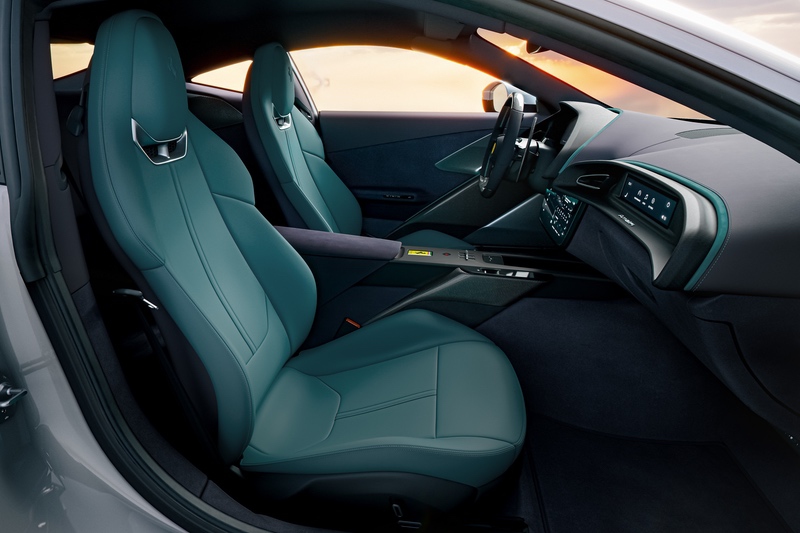
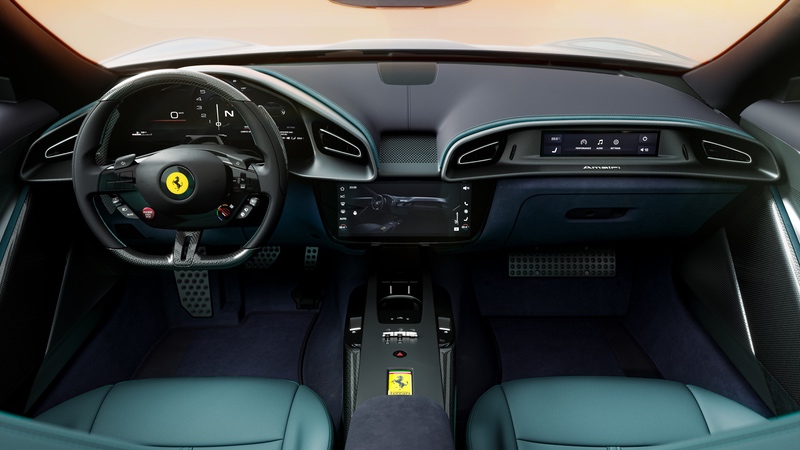
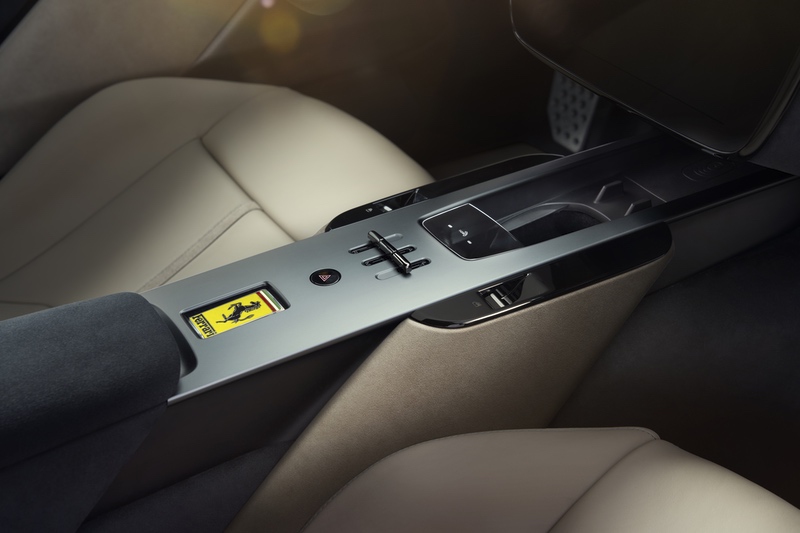
The interior is especially important because this is a grand tourer. Buyers will expect comfort, technology and material quality, not just performance. Compared with the Roma, the Amalfi’s cabin has been updated to improve usability. Car and Driver notes that Ferrari addressed some of the Roma’s interior issues with an improved cabin and new technical features.
The Amalfi is a 2+2, but the rear seats should be understood realistically. They are useful for children, occasional short trips, or extra luggage, but they are not full-size adult rear seats. This is common in the segment. The real benefit is flexibility rather than full four-seat practicality.
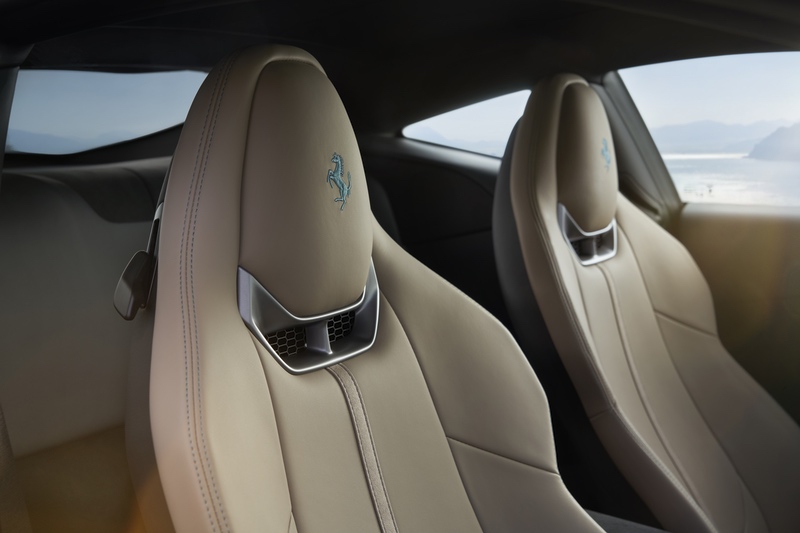
A well-specified Amalfi can feel highly luxurious. Leather, Alcantara, carbon fibre, contrast stitching, forged wheels and bespoke paint can significantly change the car’s personality. For resale, specification will matter greatly. Elegant colours may suit the car better than aggressive combinations, although Ferrari buyers often value individuality.
4. Engine & Technical Specifications
The Ferrari Amalfi is powered by a 3.9-litre twin-turbocharged V8, officially listed at 3,855 cc, producing 640 cv at 7,500 rpm and 760 Nm of torque across a broad rev range. It uses an 8-speed dual-clutch transmission and rear-wheel drive. Ferrari’s dealer technical information lists the Amalfi with a twin-turbo V8, 3,855 cc displacement, 640 cv maximum power and an 8-speed gearbox.
Core Technical Specification
Key figures include:
- Engine: 3.9-litre twin-turbocharged V8
- Displacement: 3,855 cc
- Power: 640 cv / approximately 631 bhp
- Torque: 760 Nm / approximately 561 lb ft
- Transmission: 8-speed dual-clutch automatic
- Drivetrain: rear-wheel drive
- Layout: front-mid engine
- Body style: 2-door 2+2 coupé
- 0–100 km/h: 3.3 seconds
- Top speed: approximately 320 km/h / 199 mph
- Combined fuel consumption: Ferrari lists combined WLTP fuel consumption at 11.2 l/100 km.
Engine Character
The V8 is an evolution of Ferrari’s proven F154 engine family, a powertrain architecture that has appeared in several modern Ferraris. In the Amalfi, it is tuned for a balance of response, refinement and performance. Car and Driver reports that the Amalfi uses new turbocharger management technology, increasing output by 19 hp compared with the Roma and improving throttle response.
That distinction matters. In a grand tourer, the engine must be more than powerful. It needs to be flexible at low speeds, responsive in the middle of the rev range and exciting when extended. The Amalfi’s torque delivery should make it easy to drive quickly without constantly working the gearbox, while the V8 still provides enough top-end character to feel like a Ferrari.
Transmission and Drivetrain
The 8-speed dual-clutch gearbox is related to Ferrari’s latest-generation transmissions and is designed for fast shifts with smooth low-speed behaviour. In a car like the Amalfi, this balance is essential. It must be refined enough for city driving and long journeys but sharp enough when the driver selects a more aggressive mode.
Rear-wheel drive is also central to the Amalfi’s character. Ferrari could have pursued all-wheel drive for greater traction, but rear-wheel drive keeps the car more traditional, lighter in feel and more engaging. It also separates the Amalfi from many all-wheel-drive luxury GT rivals.
Technical Positioning
The Amalfi is not hybridised. That is increasingly notable in the modern Ferrari range. It means the car does not have electric-only driving or instant electric torque fill, but it also means a simpler, lighter and more traditional powertrain character compared with Ferrari’s plug-in hybrid models.
5. Performance
The Ferrari Amalfi delivers performance that sits between traditional grand tourer and full supercar. Ferrari quotes 0–100 km/h in 3.3 seconds and a top speed of around 320 km/h. Reuters also reported the car’s 3.85-litre V8 at 640 hp with a top speed of 320 km/h.
Acceleration
The Amalfi is fast enough to feel serious in any context. A 3.3-second 0–100 km/h time means it accelerates with authority, but its performance delivery is likely to feel less brutal than Ferrari’s hybrid supercars. That is not a weakness. It suits the car’s purpose.
A 296 GTB or 849 Testarossa delivers speed with hybrid immediacy and immense low-speed punch. The Amalfi delivers speed through a more traditional V8 grand touring character: strong torque, rapid gearshifts and progressive rear-wheel-drive acceleration. This makes it easier to enjoy on road without feeling overwhelmed by the car’s capability.
Mid-Range Performance
The Amalfi’s real-world strength is likely to be mid-range response. With 760 Nm of torque, the car should surge forward effortlessly from lower and medium speeds. This is especially valuable for overtaking, motorway driving and fast cross-country use.
The updated turbo management system should also improve response compared with the Roma. In practical terms, that means less delay between throttle input and acceleration, which makes the car feel sharper and more expensive in its behaviour.
Handling
The Amalfi is not designed as a stripped-out track car. Its handling brief is balance, confidence and precision. The front-mid-engine layout places the engine behind the front axle, helping weight distribution and reducing the heavy nose feel that can affect some front-engined performance cars.
The rear-wheel-drive layout should make the car feel adjustable, while Ferrari’s latest control systems help manage traction and stability. Car and Driver notes that the Amalfi adds brake-by-wire and ABS Evo technology borrowed from the 296 GTB to improve cornering performance.
Braking and Stability
The active rear spoiler supports stability at speed, while the brake-by-wire system helps integrate braking performance with electronic control. Some purists may prefer traditional brake feel, but modern Ferrari systems are designed to deliver consistency and confidence.
Real-World Performance
The Amalfi’s performance is best understood as usable speed. It is quick enough to feel special, but not so extreme that the driver can only enjoy a tiny fraction of its ability. This makes it ideal for long-distance touring, mountain roads and everyday special-occasion use. It is a Ferrari that can be driven briskly without constantly feeling like it belongs only on a circuit.
6. Variants & Special Editions
The Ferrari Amalfi is currently centred around the coupé, but its platform and market role leave room for Spider, special-edition and highly personalised versions. Understanding these possibilities is important for buyers because Ferrari grand tourers often evolve through derivatives over their production life.
Ferrari Amalfi Coupé
The standard Amalfi coupé is the core model. It offers the cleanest design, the lowest weight and the most traditional grand touring character. For buyers who value elegance, usability and long-term design purity, the coupé is likely to be the most balanced version.
At launch, the car was positioned as Ferrari’s entry-level coupé, but “entry-level Ferrari” should not be misunderstood. With a reported European starting price of €240,000 / $281,000 and UK pricing around £202,459, the Amalfi remains a very expensive and exclusive car.
Ferrari Amalfi Spider
A Spider version has been reported and is expected to broaden the car’s appeal further. A convertible Amalfi would follow the logic of the Roma Spider, offering the same grand touring concept with added open-air usability. The Spider would likely be more expensive and slightly heavier than the coupé, but potentially stronger in warm-weather markets.
For many buyers, the Spider would be the more emotional version, while the coupé would remain the cleaner and more elegant design. This mirrors the broader Ferrari market, where coupés often appeal to purists and Spiders appeal to lifestyle-oriented owners.
Assetto or Handling Packages
Ferrari has not positioned the Amalfi as a track-focused car, so a hardcore version would need to be carefully judged. A more aggressive handling package could be possible, but the car’s essential appeal is refinement. If Ferrari made the Amalfi too sharp or compromised, it could undermine the reason buyers choose it over a 296 GTB.
A more likely direction would be optional handling or carbon packages rather than a full track-focused derivative.
Tailor Made and Bespoke Specifications
The most important variation will be specification. The Amalfi’s personality can change substantially depending on colours, wheels, interior materials and options.
Buyers should think carefully about:
- Exterior colour
- Wheel design
- Interior leather colour
- Contrast stitching
- Carbon fibre exterior options
- Carbon fibre interior options
- Seat style
- Suspension lift
- Premium audio
- Driver assistance features
Because the Amalfi is an elegant GT, tasteful specification is especially important. Overly aggressive combinations may suit Ferrari’s mid-engined cars better than the Amalfi. Strong resale specifications are likely to include classic Ferrari colours, sophisticated metallics, darker interiors with contrast stitching, and well-chosen carbon fibre.
Future Collectability
If the Amalfi becomes one of Ferrari’s last purely petrol V8 grand tourers, it may gain long-term significance. However, standard production Ferraris should not be bought assuming guaranteed appreciation. The strongest cars will likely be low-mileage, well-specified, dealer-maintained examples in desirable colours.
7. Driving Experience
The Ferrari Amalfi is designed to feel refined, fast and confidence-inspiring rather than raw or intimidating. That is exactly what separates it from Ferrari’s mid-engined supercars. It should feel like a car that can be used regularly, enjoyed over distance and still deliver the emotional charge expected of a Ferrari.
Around Town
At low speeds, the Amalfi should be one of the easier Ferraris to live with. The front-engined layout improves visibility compared with mid-engined models, while the dual-clutch gearbox should behave smoothly in traffic. The car is still low, wide and expensive, so parking ramps, kerbs and tight spaces require care, but it is not intended to feel fragile.
The 2+2 layout also adds flexibility. The rear seats are not ideal for adults, but they are useful for luggage, children or occasional short journeys. That makes the Amalfi more practical than a strict two-seat Ferrari.
Fast-Road Character
On a good road, the Amalfi should feel more athletic than a conventional luxury GT. The steering will likely be quick, the chassis controlled and the engine responsive. The important point is that the car should not feel heavy or detached. Ferrari’s challenge with any front-engined GT is to deliver elegance without dullness.
The Amalfi’s rear-wheel-drive layout helps here. It should feel more natural and more adjustable than an all-wheel-drive GT, especially for drivers who value balance and throttle control.
Long-Distance Ability
Long-distance touring is where the Amalfi should excel. It has enough performance to cover ground quickly, enough comfort to remain usable and enough cabin refinement to feel premium. This makes it ideal for European road trips, weekend escapes and regular use by owners who do not want a Ferrari that sits unused.
Emotional Character
The Amalfi’s emotional appeal is subtler than a 12Cilindri or 296 GTB. It does not have the naturally aspirated V12 drama of the 12Cilindri or the hybrid punch of the 296. Instead, it offers a polished V8 soundtrack, elegant design and balanced performance. It is a Ferrari for drivers who value sophistication as much as speed.
8. Ownership Insights
Owning a Ferrari Amalfi should be more manageable than owning Ferrari’s most extreme models, but it remains a high-value, high-performance Italian GT. Buyers should budget carefully and prioritise specification, history and warranty coverage.
Running Costs
Indicative annual running costs will depend on mileage, location and usage, but realistic estimates include:
- Insurance: £4,000–£10,000 / $5,000–$13,000+
- Tyres: £1,400–£2,500 / $1,800–$3,200 per set
- Paint protection film: £4,000–£7,000 / $5,000–$9,000
- Annual detailing: £800–£2,000 / $1,000–$2,500
- Warranty extension after factory cover: several thousand pounds/dollars annually
- Fuel: high when driven hard, although better than a V12 Ferrari
Ferrari lists combined WLTP fuel consumption at 11.2 l/100 km, but owners should expect real-world consumption to vary heavily depending on driving style.
Servicing Reality
Ferrari’s seven-year maintenance programme should reduce scheduled servicing costs for new owners, assuming the car follows Ferrari’s current maintenance approach. However, scheduled servicing is only part of ownership. Tyres, brakes, fluids, cosmetic repairs, paint protection, wheel damage and warranty extensions remain significant.
Servicing should be carried out through Ferrari main dealers or recognised Ferrari specialists. The V8 engine is a proven architecture, but the Amalfi still uses complex electronics, advanced braking systems, an active rear spoiler and high-value components.
Reliability Expectations
The Amalfi’s twin-turbo V8 is based on a mature Ferrari engine family, which should help reliability expectations. However, buyers should not treat any modern Ferrari as simple. Electronics, gearbox systems, suspension components, active aerodynamics and infotainment can all become expensive if neglected.
A pre-purchase inspection will be essential once used examples enter the market. Buyers should check service history, warranty status, accident history, paintwork, tyre age, brake wear, software updates and evidence of launch-control or track-heavy use.
Real-World Usability
The Amalfi should be one of the more usable Ferraris. It has front luggage space, 2+2 flexibility, a refined cabin and a less aggressive driving character than mid-engined models. It can be used for weekends, touring and occasional daily driving.
However, it is still not a normal daily car. It is low, expensive, attention-grabbing and costly to repair. It is best for owners who want to use their Ferrari often, not necessarily every day.
9. Market Value & Depreciation
The Ferrari Amalfi enters the market at a relatively accessible point within Ferrari’s range, but that does not mean it is inexpensive. UK pricing has been reported from £202,459, while Reuters reported a European starting price of €240,000 / $281,000. US pricing is expected to vary due to import costs, tariffs and specification.
New Market Position
The Amalfi effectively replaces the Roma coupé and becomes Ferrari’s elegant front-engined V8 GT. That positioning gives it broad appeal, but it also means it is likely to be produced in higher numbers than special-series Ferraris. As a result, buyers should expect some depreciation once early demand stabilises.
Depreciation Factors
Values will depend on:
- Mileage
- Colour
- Interior specification
- Carbon fibre options
- Wheel choice
- Dealer history
- Warranty status
- Market supply
- Whether a Spider version affects coupé demand
- Broader Ferrari model cycles
The Amalfi’s elegant character means specification discipline is especially important. A well-optioned car in a tasteful colour may hold value better than an unusual car with polarising choices.
Comparison with Roma
The Roma’s used market will likely influence early Amalfi values. If used Roma prices remain attractive, some buyers may see the Roma as the value alternative. The Amalfi must therefore justify its premium through improved performance, updated cabin usability and fresher design.
Long-Term Outlook
The Amalfi’s long-term appeal may improve if Ferrari moves away from non-hybrid V8 grand tourers. A front-engined petrol V8 Ferrari GT could become more interesting in a future market dominated by hybrid and electric models. However, standard production models are rarely guaranteed investments.
The best ownership strategy is to buy the right specification, avoid excessive options that may not be recovered on resale, maintain full Ferrari history and use the car sensibly.
10. Competitors
Aston Martin DB12
The Aston Martin DB12 is one of the Amalfi’s closest rivals. It offers a front-engined V8 layout, elegant GT positioning and serious performance. The Aston is more muscular in character, with a stronger emphasis on torque and luxury GT presence.
The Ferrari should feel lighter, sharper and more exotic. The Aston may be the better traditional grand tourer for buyers wanting comfort and long-distance refinement. The Amalfi is likely to appeal more to buyers who want a more delicate, Ferrari-specific driving experience.
Bentley Continental GT
The Bentley Continental GT is more luxurious and more comfort-focused. It offers greater cabin space, more refinement and stronger daily usability. It is less of a sports car and more of a grand luxury coupé.
The Amalfi is more focused, more agile and more emotionally exotic. Buyers choosing between them are choosing between luxury depth and sporting elegance. The Bentley is easier to live with; the Ferrari feels more special.
Porsche 911 Turbo S
The Porsche 911 Turbo S is faster in many real-world conditions and far more usable as a daily car. Its all-wheel-drive traction, build quality and practicality make it one of the most complete performance cars on sale.
However, the Porsche does not offer the same sense of Ferrari occasion. The Amalfi is more elegant, rarer and more emotionally charged. The Porsche is the rational performance choice; the Amalfi is the more romantic GT.
Maserati GranTurismo Trofeo
The Maserati GranTurismo Trofeo offers Italian style, front-engined GT proportions and a more relaxed personality. It is less expensive and more understated than the Ferrari. However, it lacks the Ferrari’s performance edge, brand strength and sense of exclusivity.
The Maserati may suit buyers wanting a refined Italian GT without Ferrari attention. The Amalfi is the stronger choice for those who want sharper dynamics and higher desirability.
Ferrari Roma
The Roma is the Amalfi’s most important internal competitor on the used market. It has similar proportions, the same broad concept and likely lower purchase prices. However, the Amalfi offers more power, revised styling, improved interior usability and updated dynamic systems.
A buyer seeking value may choose the Roma. A buyer wanting the latest and most resolved version of Ferrari’s V8 GT formula will choose the Amalfi.
11. FAQs
Is the Ferrari Amalfi the replacement for the Roma?
Yes. The Ferrari Amalfi succeeds the Ferrari Roma coupé. It keeps the same broad front-engined V8 grand touring philosophy but adds more power, updated design, improved cabin usability and newer dynamic technology.
What engine does the Ferrari Amalfi use?
The Amalfi uses a 3.9-litre twin-turbocharged V8 with 3,855 cc displacement. It produces 640 cv and is paired with an 8-speed dual-clutch gearbox.
How fast is the Ferrari Amalfi?
The Ferrari Amalfi accelerates from 0–100 km/h in 3.3 seconds and has a top speed of approximately 320 km/h / 199 mph.
How much does the Ferrari Amalfi cost?
UK pricing has been reported from around £202,459. Reuters reported a European starting price of €240,000, equivalent to approximately $281,000 at launch reporting. US pricing may be higher depending on tariffs, options and market conditions.
Is the Ferrari Amalfi a hybrid?
No. The Ferrari Amalfi is petrol-powered and uses a twin-turbocharged V8 without plug-in hybrid assistance. This separates it from models such as the 296 GTB, 296 GTS and 849 Testarossa.
Is the Ferrari Amalfi practical?
By Ferrari standards, yes. It has a front-engined layout, 2+2 seating, a more refined cabin and a grand touring character. However, the rear seats are limited and best used for children, short trips or luggage.
Is the Ferrari Amalfi better than the Roma?
The Amalfi is more powerful, newer and technically improved. It also addresses some of the Roma’s cabin usability criticisms. However, the Roma may now represent stronger used-market value for buyers who want a similar experience at a lower price.
Will the Ferrari Amalfi hold its value?
It should remain desirable, but it is not immune to depreciation. Specification, mileage, colour, options, service history and supply will all matter. The strongest cars are likely to be tasteful, low-mileage examples with full Ferrari history.
12. Related Articles
- Ferrari Roma
- Ferrari Roma Spider
- Ferrari Portofino M
- Ferrari California T
- Ferrari 296 GTB
- Ferrari 296 GTS
- Ferrari 12Cilindri
- Aston Martin DB12
- Bentley Continental GT
- Porsche 911 Turbo S
- Maserati GranTurismo Trofeo
13. Are You Ready?
- Looking to buy a Ferrari Amalfi? Click to find available cars.
- Need insurance? Click to apply for Supercar Insurance.
- Need a service? Click to book a specialist service.
- Buying one? Click to request a PPI inspection.
- Selling your car? Click to request a valuation.