1. Introduction
The Ferrari F80 is Ferrari’s latest limited-production halo hypercar and the successor to the LaFerrari. It sits at the very top of Ferrari’s road-car hierarchy, above the 296, 849 Testarossa, 12Cilindri and Purosangue, and represents the most extreme interpretation of Ferrari road-car engineering currently available. Ferrari has confirmed that the F80 will be produced in a limited run of 799 examples, placing it in the lineage of the GTO, F40, F50, Enzo and LaFerrari.
That lineage matters because Ferrari’s halo cars are never simply faster versions of its normal production models. They are technical declarations. The F40 expressed turbocharged rawness. The F50 attempted to bring Formula 1 thinking to the road. The Enzo integrated advanced electronics and aerodynamic logic. The LaFerrari introduced hybrid assistance around a naturally aspirated V12. The F80 moves Ferrari into a new era: a V6 hybrid, motorsport-derived, aerodynamically extreme hypercar that places technology ahead of nostalgia.
The most controversial element is the engine. Unlike the LaFerrari, Enzo, F50 and many traditional flagship Ferraris, the F80 does not use a V12. Instead, it uses a 3.0-litre 120-degree twin-turbocharged V6 derived conceptually from Ferrari’s recent motorsport programmes, supported by a hybrid system and all-wheel-drive electric assistance. Ferrari states that the V6 alone produces 900 hp and achieves a specific output of 300 hp per litre, while total system output reaches 1,200 cv.
For some buyers and enthusiasts, the absence of a V12 will be difficult to accept. A Ferrari halo car has historically been judged not only by speed, but by emotion, sound and mechanical symbolism. However, the F80’s philosophy is not retrospective. It is not trying to recreate the LaFerrari. It is Ferrari’s answer to the modern hypercar question: how do you create the fastest, most capable, most technologically advanced Ferrari road car in an age shaped by hybrid power, endurance racing, active aerodynamics and electronic control?
The performance figures are extraordinary. Ferrari claims 0–100 km/h in 2.15 seconds, 0–200 km/h in 5.75 seconds, a top speed of 350 km/h, more than 1,000 kg of downforce, and a Fiorano lap time of 1:15.30, making it the fastest road-legal Ferrari around Ferrari’s own test track.
Pricing reflects both the engineering and the exclusivity. Reuters reported a price of approximately $3.9 million, with production assigned to selected clients and deliveries running into Ferrari’s 80th anniversary period. In UK terms, that equates to roughly £3 million–£3.1 million depending on exchange rate and taxes, before any personalisation or secondary-market premium.
For SupercarTribe readers, the Ferrari F80 should be understood as a collector-grade hypercar, a technology flagship and a turning point in Ferrari history. It is not the most romantic Ferrari. It may not be the most beautiful. It is not designed for broad usability. But it is one of the clearest statements Ferrari has made about where ultra-high-performance road cars are heading.
2. Production & History
The Ferrari F80 was unveiled in October 2024 and entered Ferrari’s halo-car bloodline as the direct successor to the LaFerrari. Ferrari officially positioned it alongside legendary cars such as the GTO, F40 and LaFerrari, confirming that production would be limited to 799 units. This makes the F80 one of Ferrari’s most exclusive modern road cars, though its production volume is higher than the LaFerrari coupé’s original 499-unit run.
The Halo Car Lineage
Ferrari halo cars have always served a different purpose from the brand’s series-production models. They are not merely commercial products; they are reference points. Each one captures Ferrari’s engineering priorities at a specific moment.
The F40 reflected turbocharged performance and lightweight aggression. The F50 was Ferrari’s attempt to connect a road car with Formula 1 principles. The Enzo introduced a more modern electronic and aerodynamic performance philosophy. The LaFerrari combined a naturally aspirated V12 with hybrid assistance, creating one of the defining hypercars of the 2010s.
The F80 follows this sequence but changes the emotional centre of the formula. It does not continue the V12 tradition. Instead, it uses a V6 hybrid architecture influenced by Ferrari’s recent racing technologies, including its endurance racing programme. Top Gear described it as a LaFerrari successor that “ditches the V12” and takes inspiration from Ferrari’s recent Le Mans success.
Why Ferrari Chose a V6
The decision to use a V6 is not accidental and should not be dismissed as downsizing for regulatory reasons alone. Ferrari’s modern motorsport success has increasingly involved compact, hybridised powertrains. The 499P Le Mans Hypercar uses a V6 hybrid architecture, and the F80’s 3.0-litre V6 draws from that broader technical direction. Ferrari’s own page states that the F80’s 120-degree V6 delivers 900 hp and a specific output of 300 hp/litre.
In other words, Ferrari is using the F80 to make a point: the future of its fastest road cars is not necessarily tied to cylinder count. It is tied to total system performance, aerodynamics, mass distribution, energy deployment and lap-time capability.
Allocation and Exclusivity
The F80 was effectively unavailable to ordinary buyers from the moment it was announced. Reuters reported that all 799 units were assigned to specific clients, with deliveries beginning late the following year and continuing until Ferrari’s 80th anniversary in 2027.
This allocation model is central to Ferrari’s business strategy. A halo Ferrari is not simply purchased; it is typically awarded to clients with a long and significant relationship with the brand. Ownership history, previous limited-edition purchases, dealer relationships and participation in Ferrari programmes all influence access.
Historical Importance
The F80 will likely be remembered as the first Ferrari halo car to fully break from the V12 expectation. That makes it controversial, but historically important. If the LaFerrari was the bridge between analogue combustion prestige and hybrid performance, the F80 is the car that moves Ferrari’s flagship philosophy fully into the hybrid-motorsport era.
For collectors, that matters. Cars that mark turning points often become more significant over time, even if they are debated at launch. The F80 may not be loved in the same way as the F40 or LaFerrari, but it will almost certainly be studied as one of the most important Ferraris of the 2020s.
3. Design & Styling
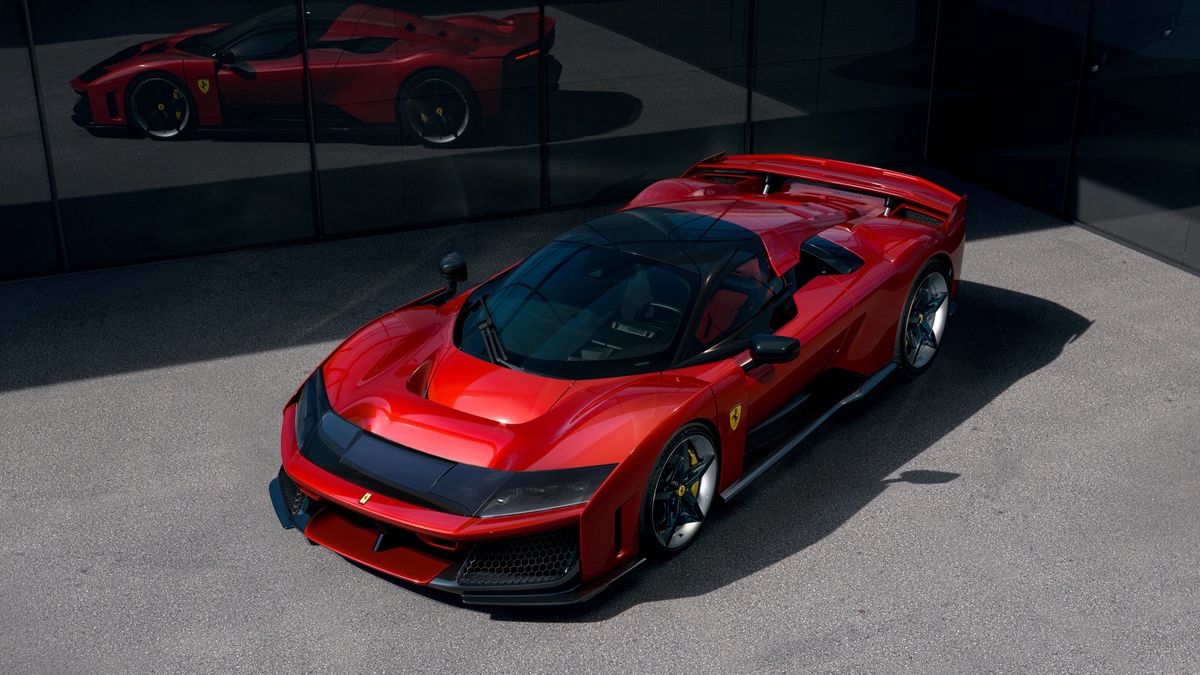
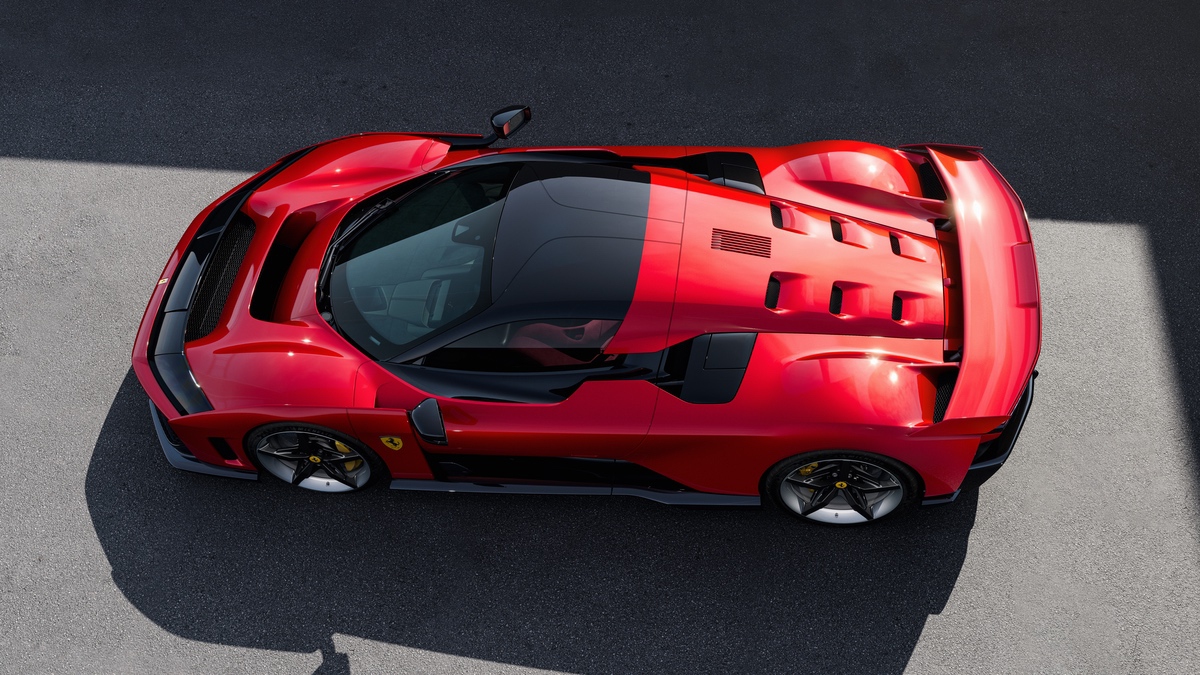
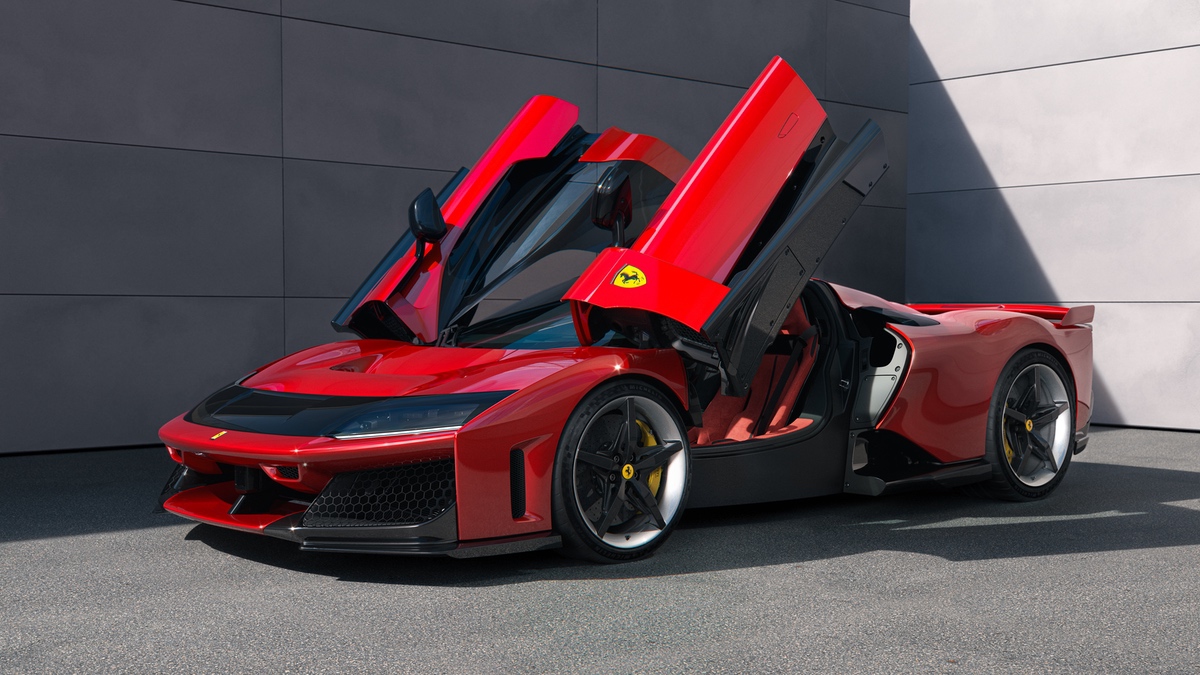
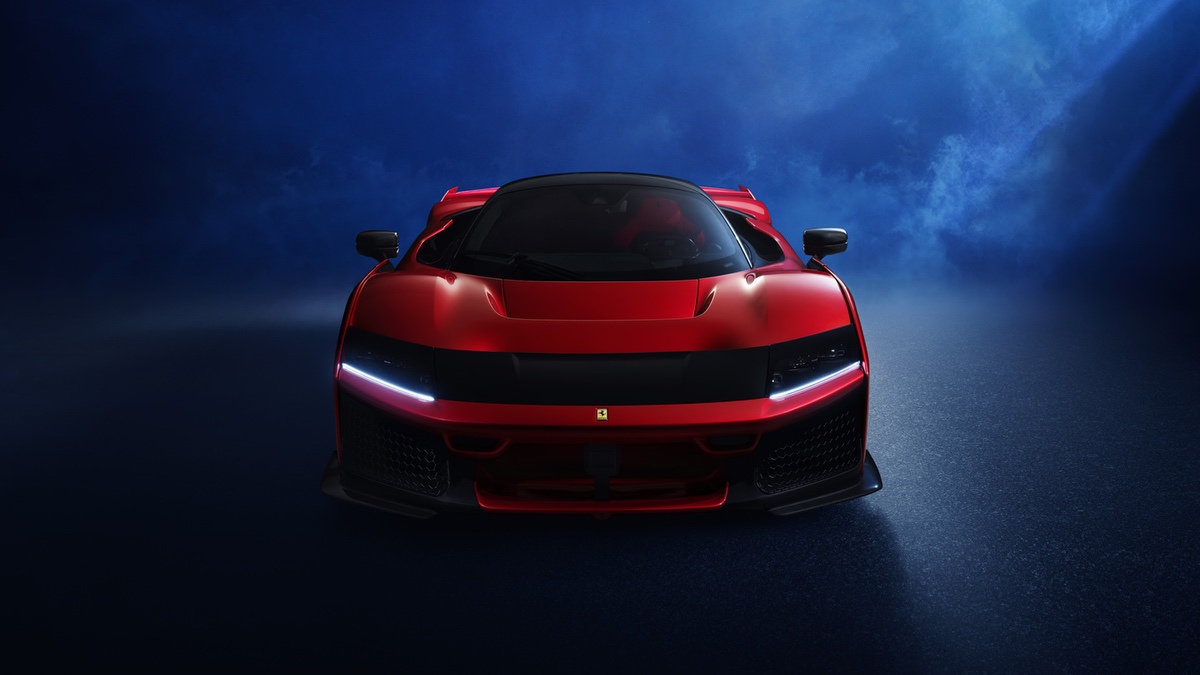
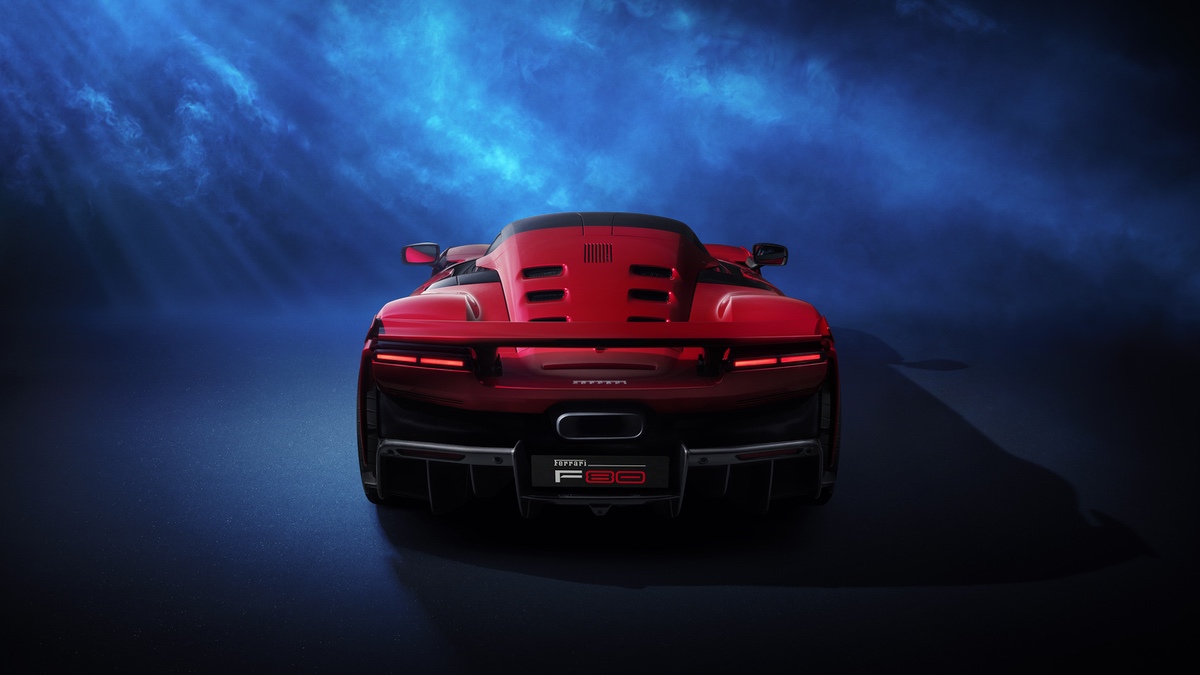
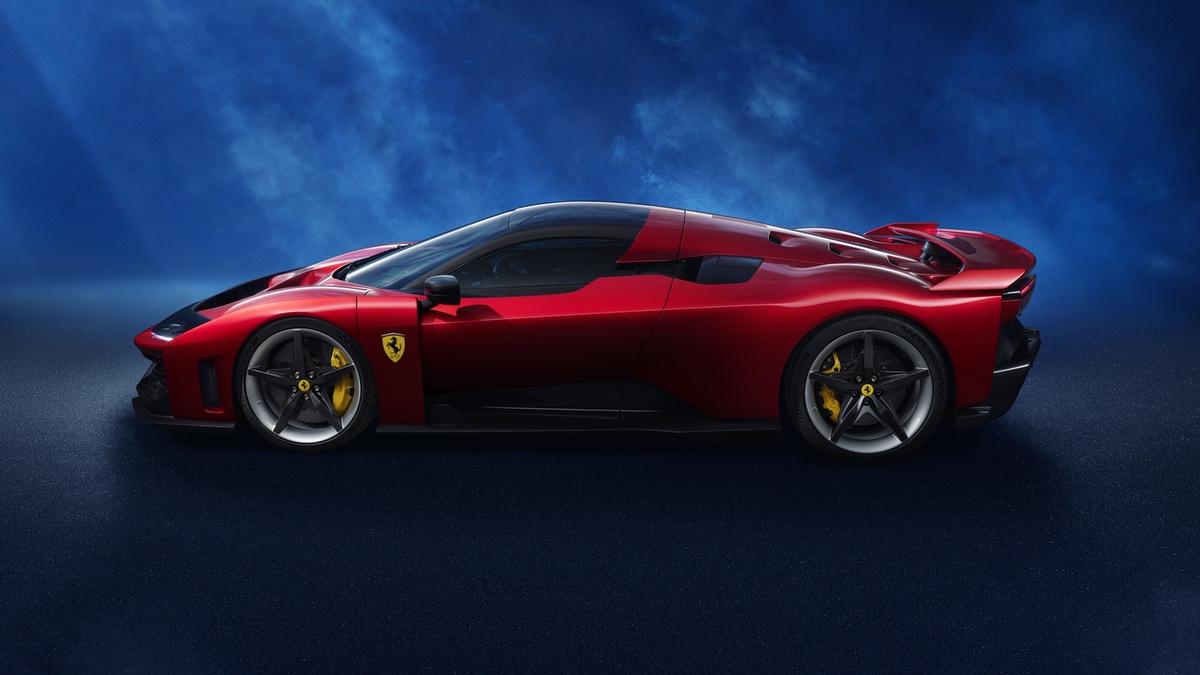
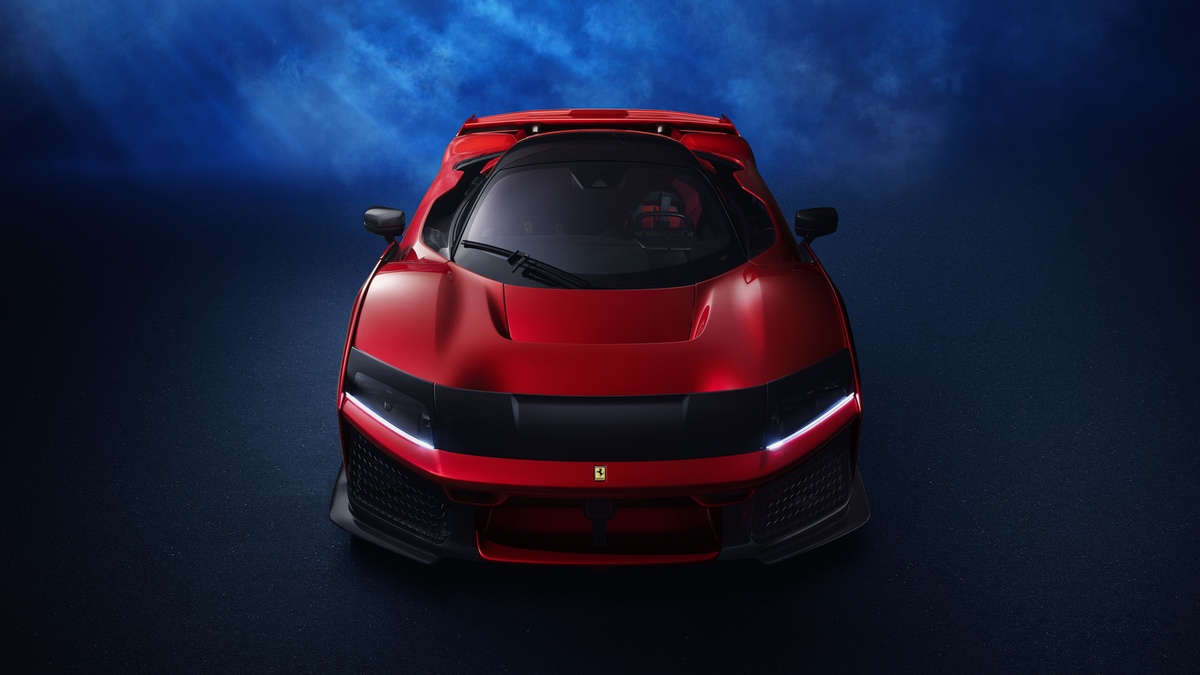
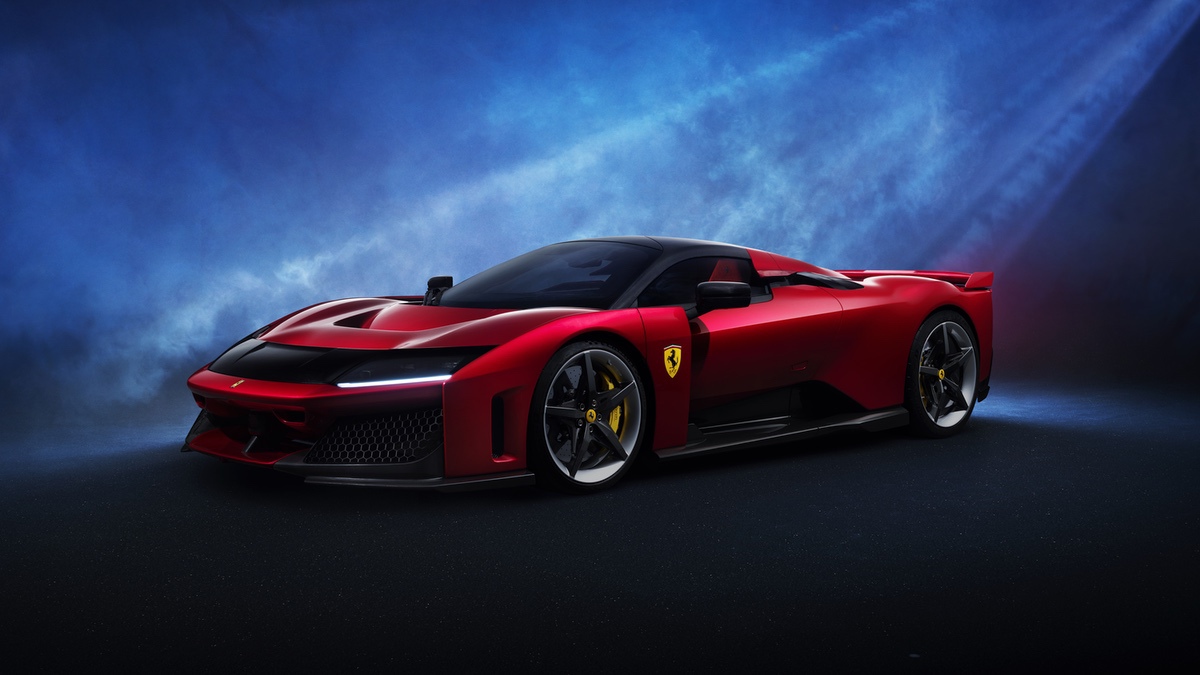
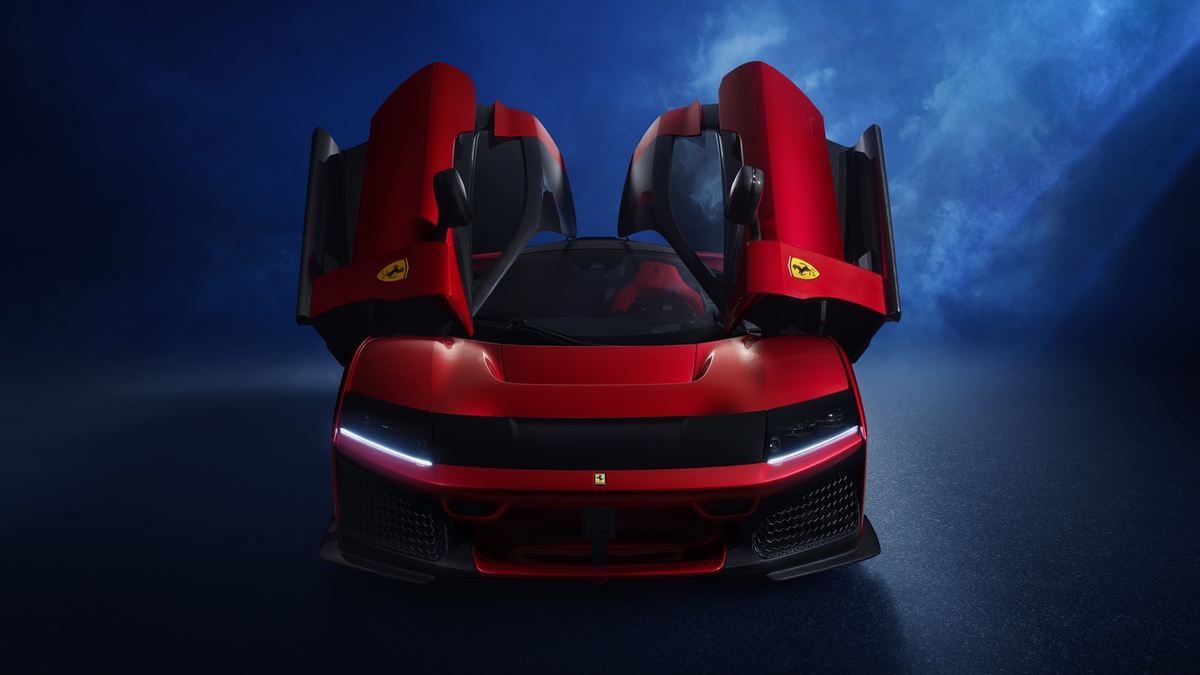
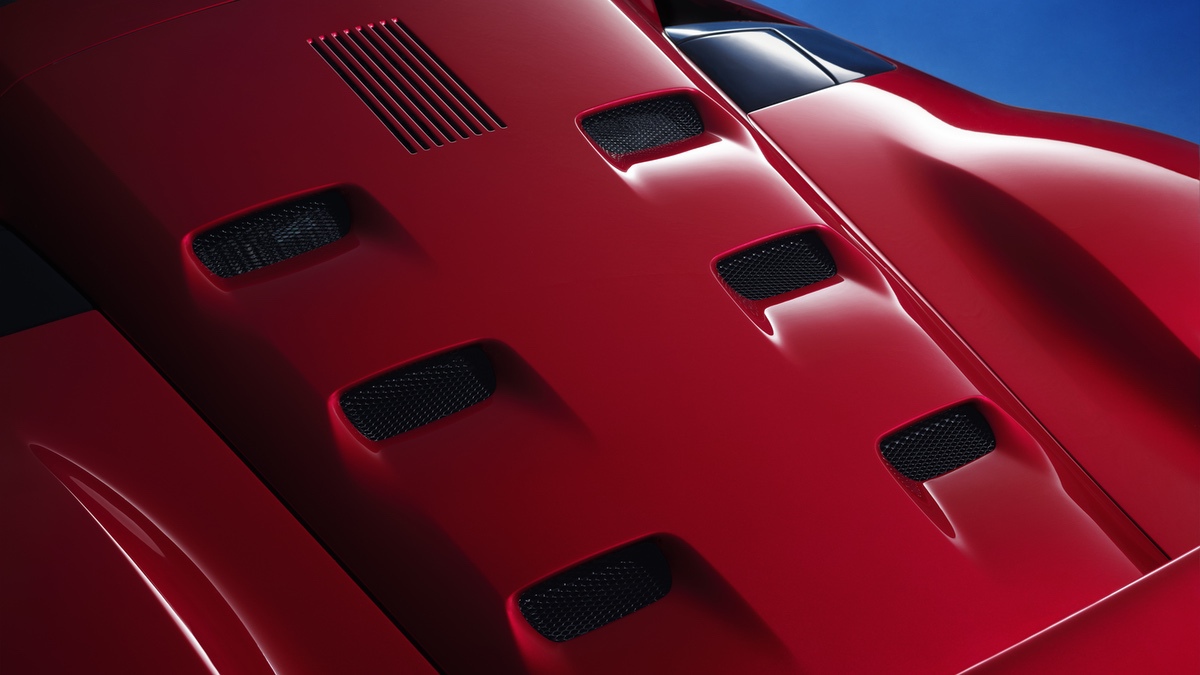
The Ferrari F80’s design is dictated by function more than traditional beauty. This is not an elegant grand tourer like the Roma or 12Cilindri. It is not a clean, sculptural supercar like the 296 GTB. The F80 is a visually complex hypercar shaped by cooling, downforce, pressure management and high-speed stability.
Exterior Philosophy
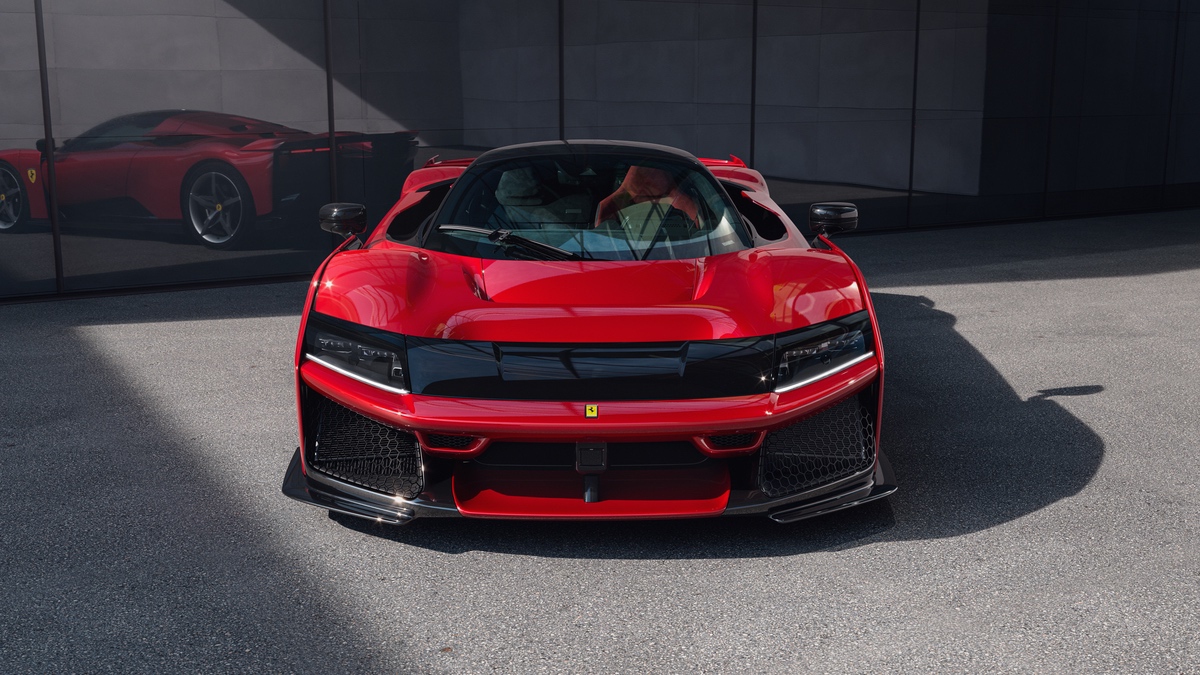
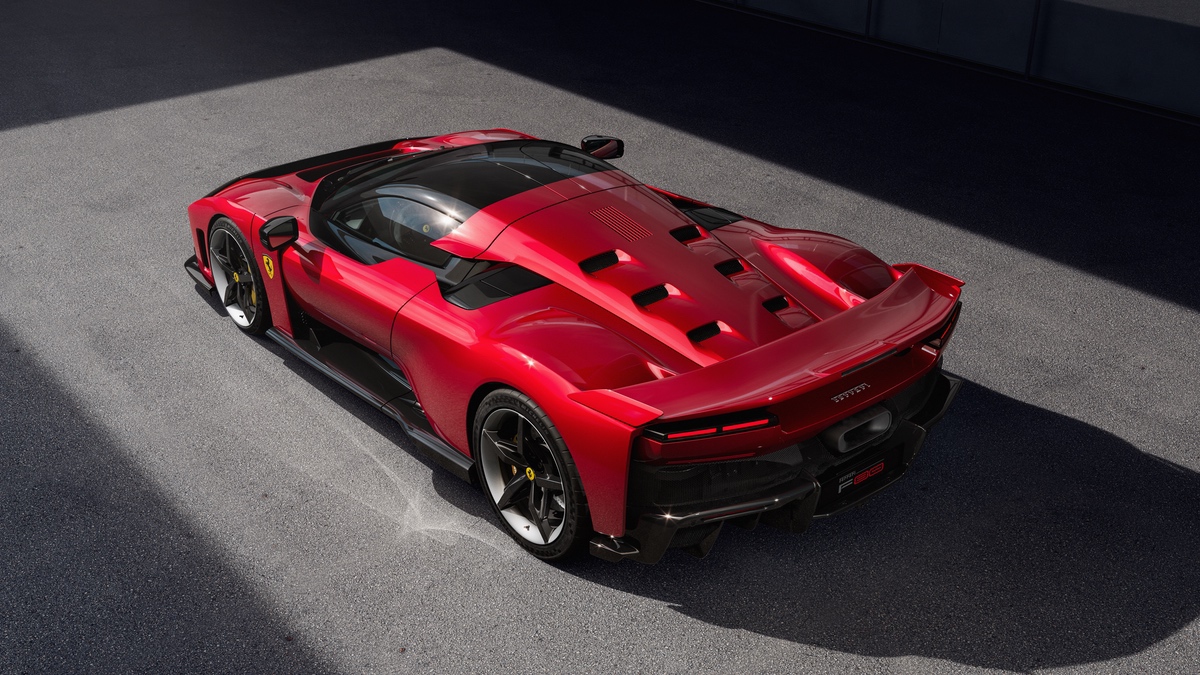
The F80’s exterior makes its purpose immediately clear. It has a very low roofline, wide stance, short overhangs and aggressive aerodynamic surfaces. The car measures approximately 4.84 metres long, 2.06 metres wide and just 1.14 metres tall, giving it a dramatic, track-focused footprint.
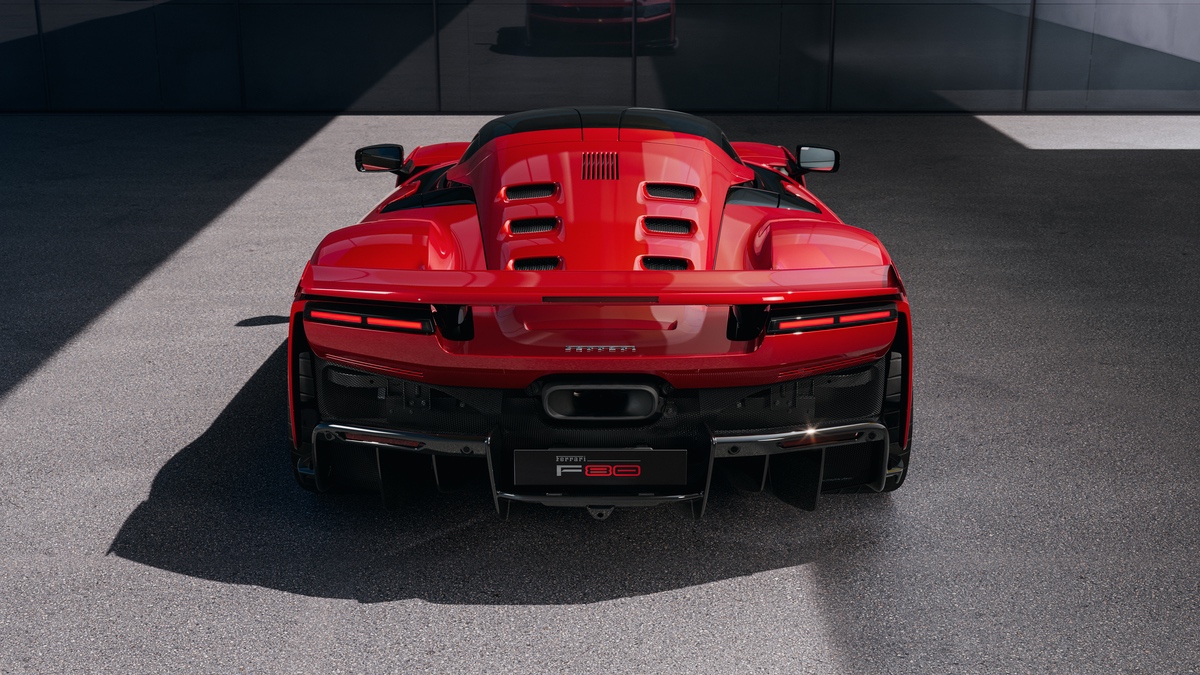
The proportions are not classically pretty in the way some older Ferraris are. Instead, they are technical. The nose is shaped to manage front-end downforce and airflow. The side surfaces are designed around cooling and channel management. The rear is dominated by aerodynamic structure, diffuser volume and active systems.
Aerodynamic Language
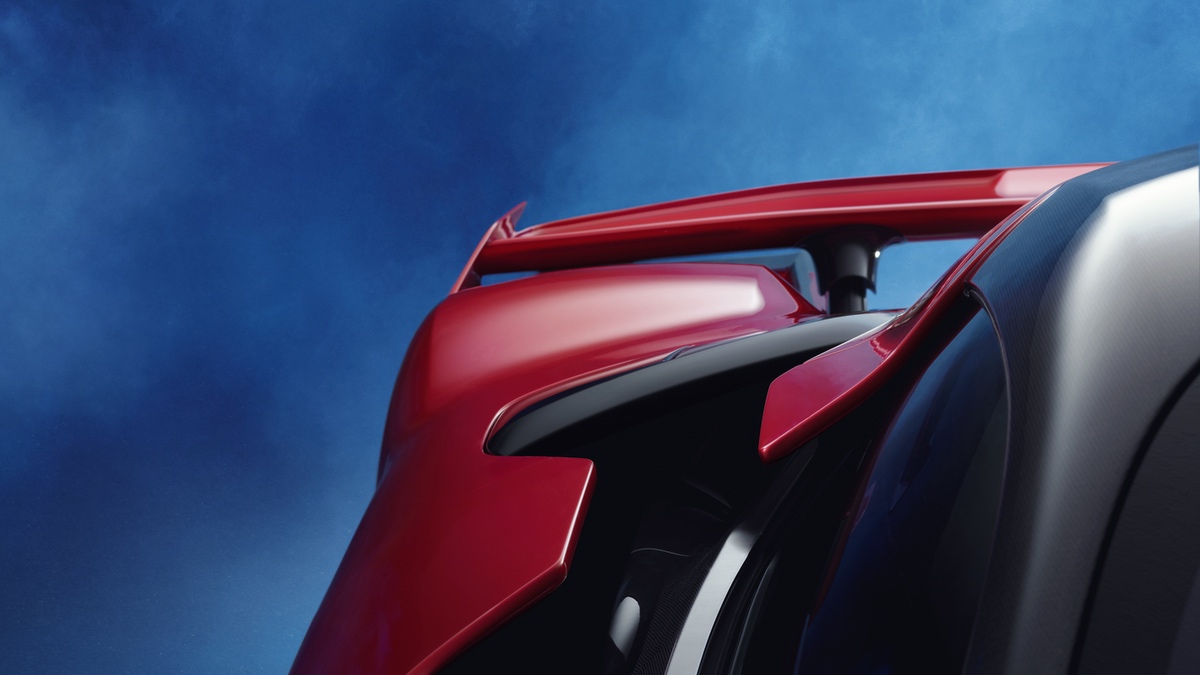
Ferrari claims the F80 can generate over a tonne of downforce, with reported figures around 1,050 kg at speed. This is an extreme number for a road-legal car and explains why the bodywork looks so functional. The car’s design is not decoration; it is performance hardware.
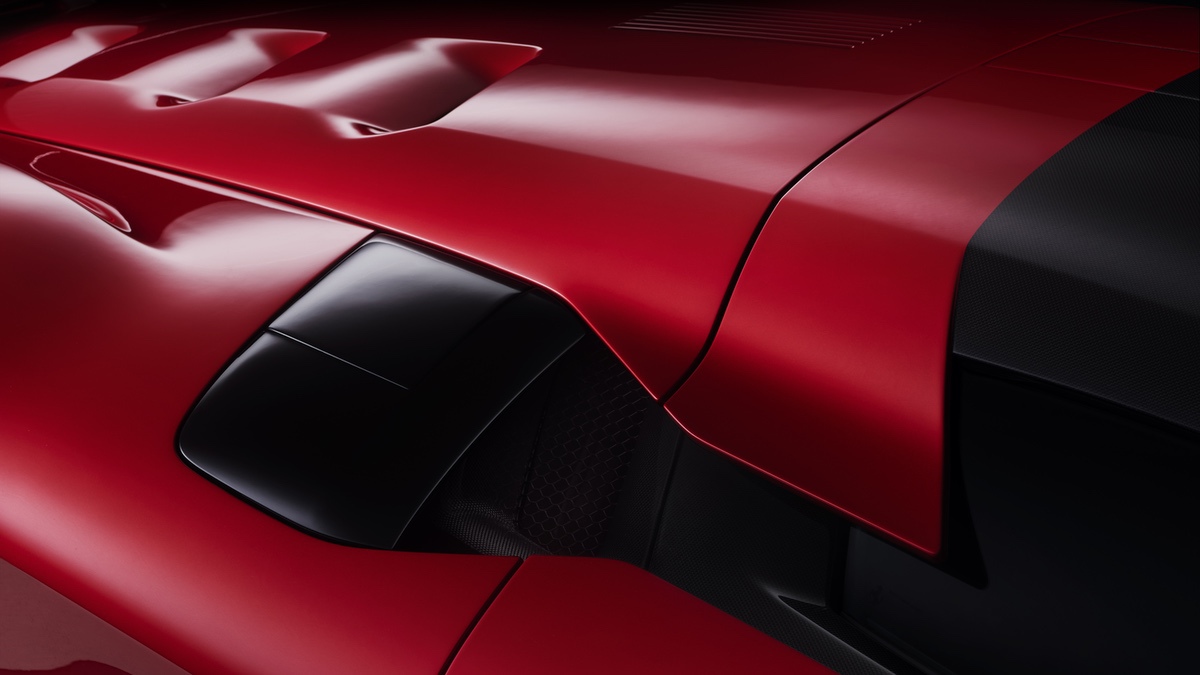
The F80 uses active aerodynamics, large underbody structures and carefully managed airflow over the front and rear surfaces. This gives the car the visual character of an endurance prototype more than a traditional road car. That connection is deliberate. The F80 is meant to reflect Ferrari’s racing knowledge.
Styling References
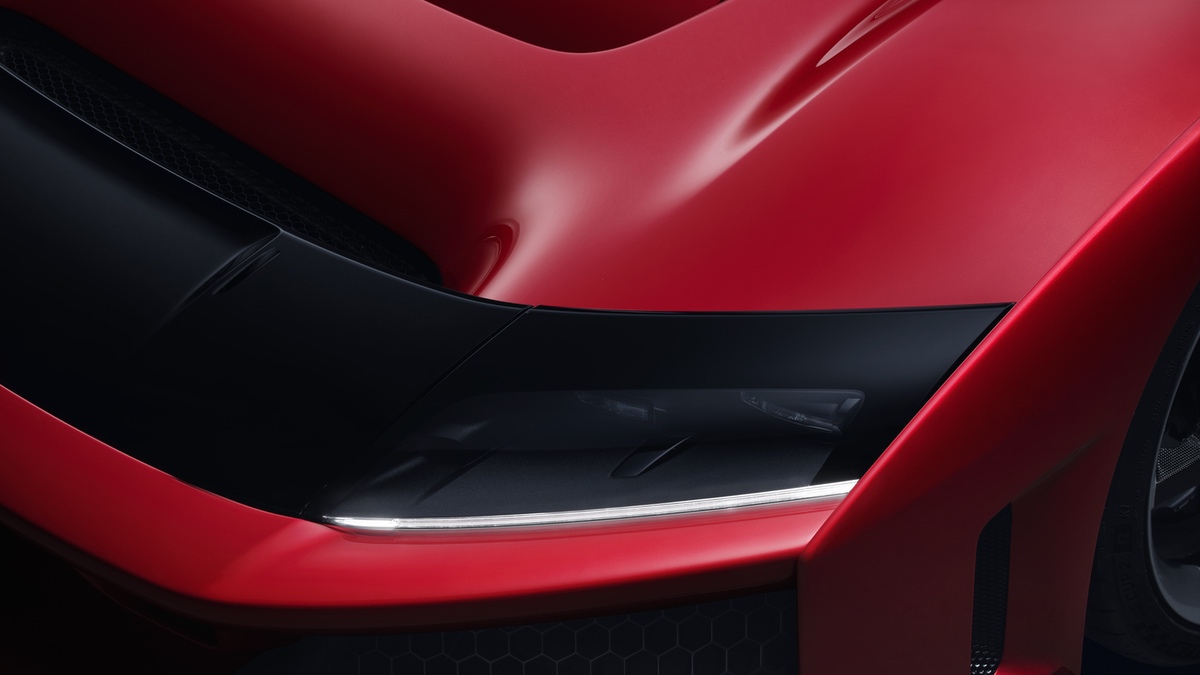
Although the F80 is futuristic, it does include references to Ferrari’s past. The black front band has been linked to the Daytona-style treatment also seen on modern Ferraris such as the 12Cilindri, while the overall aggression and exposed functionality recall the spirit of the F40.
However, this is not a retro design. Ferrari is not trying to recreate any previous halo model. Instead, the F80 uses heritage cues selectively while allowing aerodynamics to dominate the overall form.
Interior Design
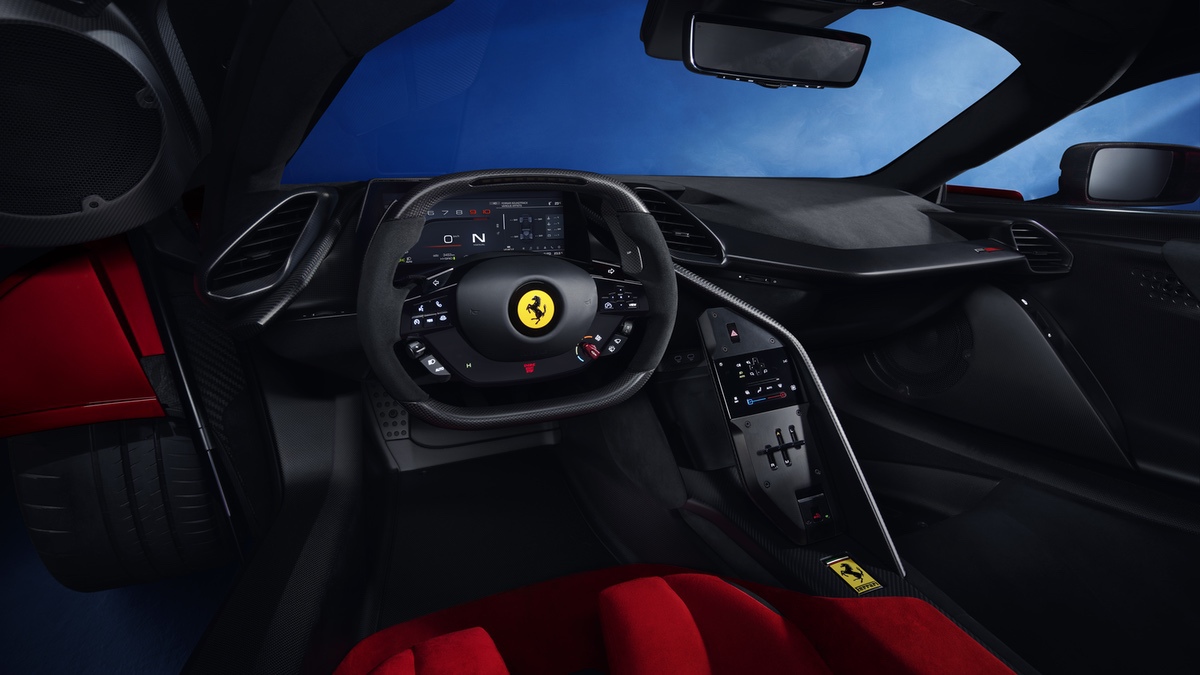
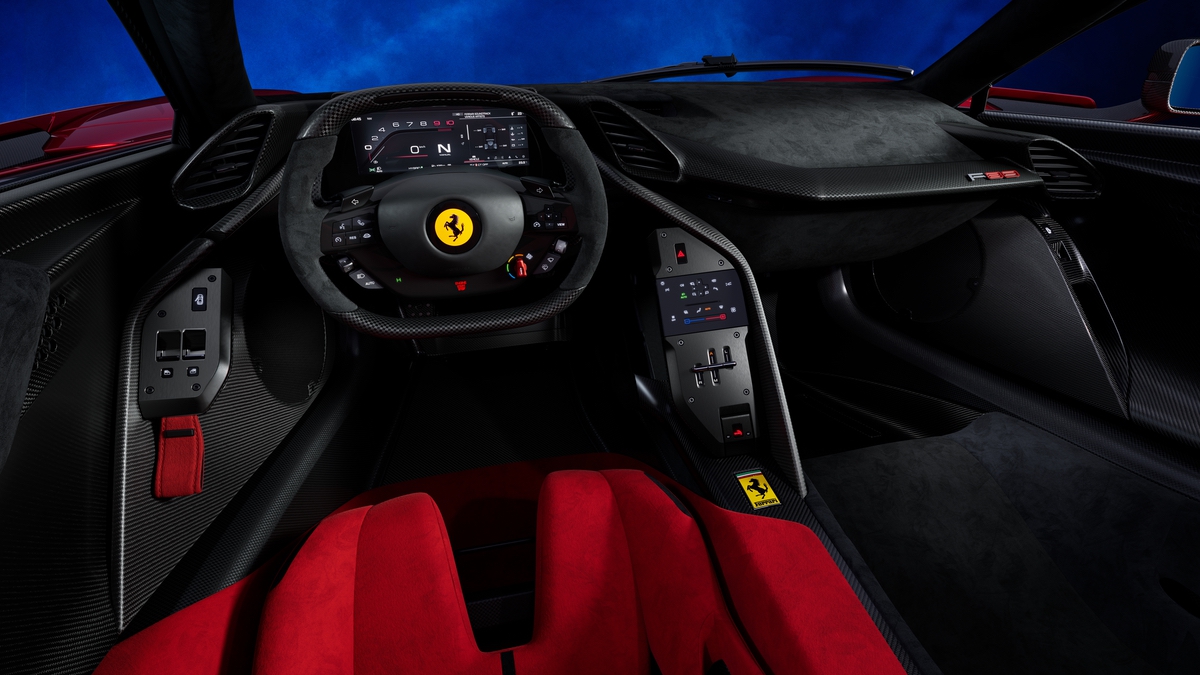
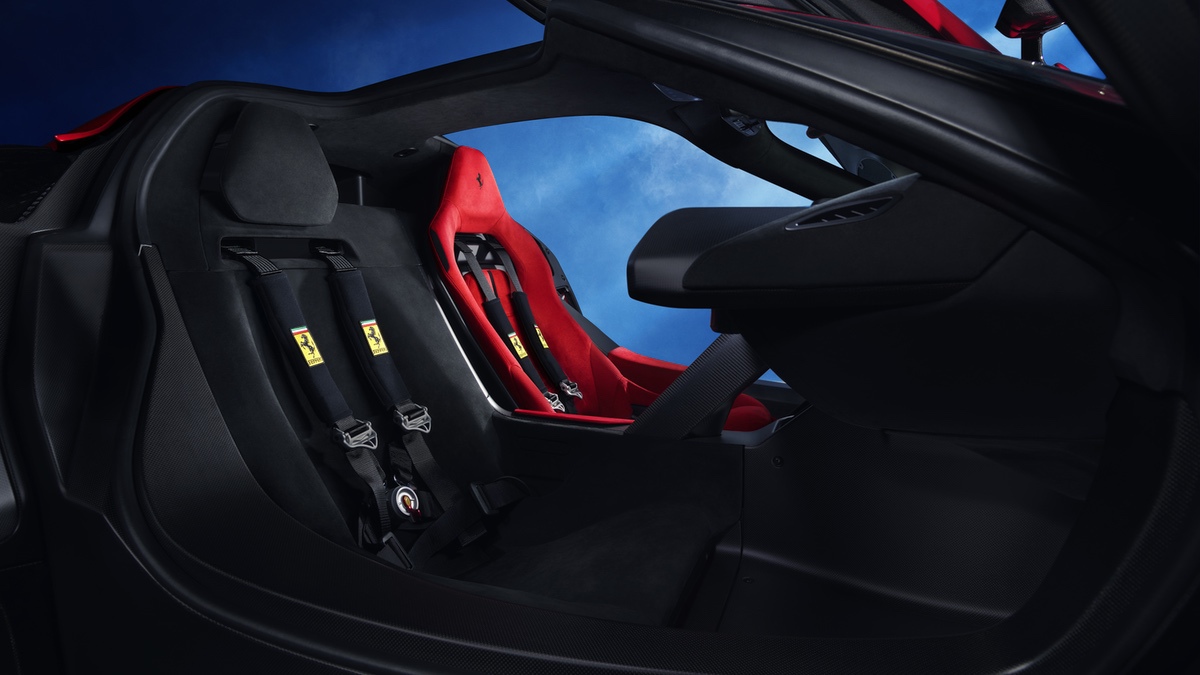
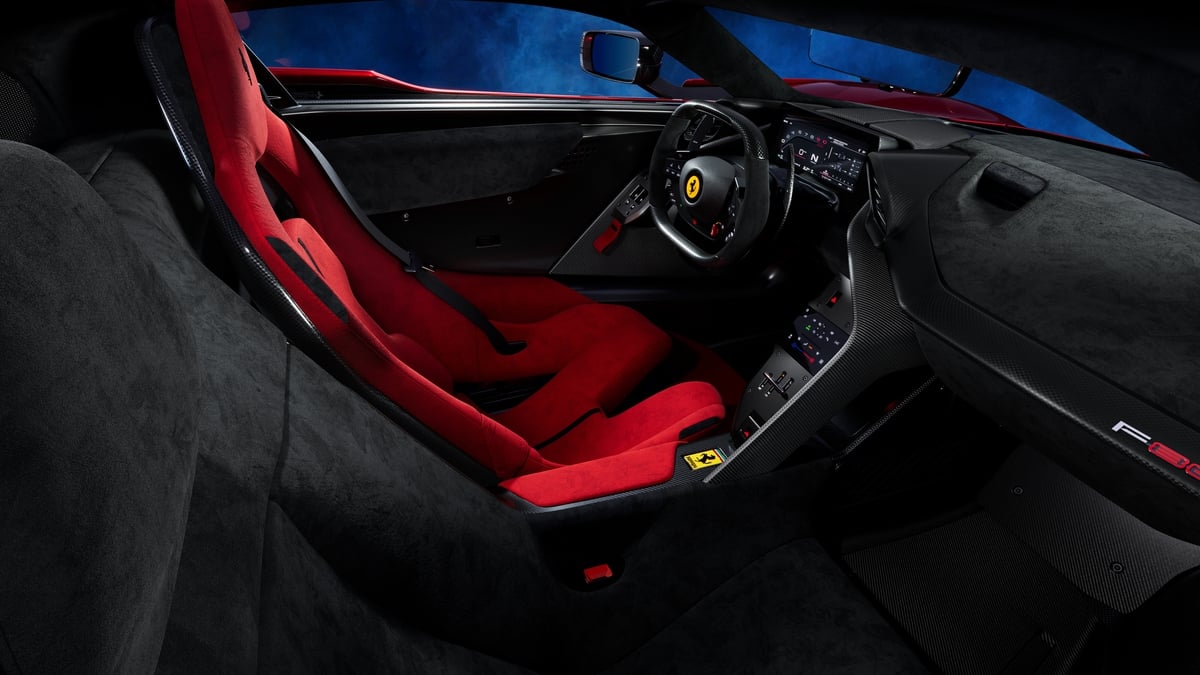
The cabin is focused around the driver. Unlike luxury Ferraris, the F80 does not prioritise spaciousness or opulence. Its interior is a functional performance cockpit, with lightweight materials, race-inspired seating, digital instrumentation and controls positioned around serious driving.
The passenger experience is secondary. This reinforces the F80’s positioning: it is a driver’s hypercar, not a luxury GT. Materials will still be premium, but the atmosphere is more race car than grand tourer.
Design Verdict
The F80 is unlikely to be universally loved for its styling. Some will find it too technical or visually heavy. Others will see it as one of Ferrari’s most purposeful modern designs. What is clear is that it looks exactly like what it is: a road-legal hypercar engineered around speed, downforce and technological intensity.
4. Engine & Technical Specifications
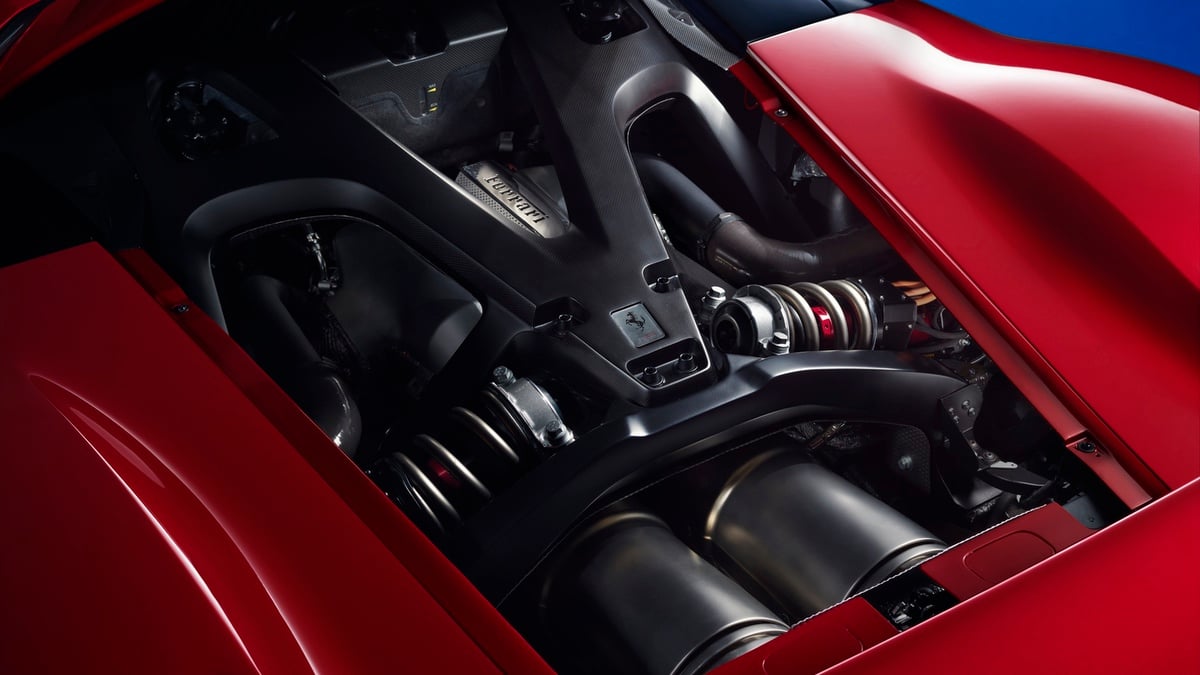
The Ferrari F80’s powertrain is the most important part of the car and the most controversial. It replaces the naturally aspirated V12 tradition with a 3.0-litre 120-degree twin-turbocharged V6 hybrid system. Ferrari states that the V6 produces 900 hp, while the complete hybrid system produces 1,200 cv.
Core Technical Specification
Key figures include:
- Engine: 3.0-litre 120-degree twin-turbocharged V6
- Combustion output: 900 hp
- Total system output: 1,200 cv / approximately 1,184 bhp
- Hybrid system: three electric motors
- Drivetrain: hybrid all-wheel drive
- Transmission: 8-speed dual-clutch automatic
- Battery: 800-volt lithium-ion system, around 2.28 kWh
- 0–100 km/h: 2.15 seconds
- 0–200 km/h: 5.75 seconds
- Top speed: 350 km/h / 217 mph
- Production: 799 units
- Fiorano lap time: 1:15.30
V6 Architecture
The V6 is a 120-degree unit, a layout that allows lower centre of gravity and efficient packaging. The engine is related in concept to Ferrari’s high-performance V6 architecture used in motorsport and road cars, but the F80’s output is far beyond ordinary production applications.
Specific output is a key technical achievement. Ferrari quotes 300 hp per litre, which is extremely high for a production combustion engine. This is achieved through advanced turbocharging, combustion control, cooling and hybrid integration.
Hybrid System
The hybrid system is not designed primarily for economy. It is designed for performance, torque delivery, traction and lap-time consistency. The F80 uses electric motors to support the combustion engine and provide all-wheel-drive capability through the front axle.
The Verge reported that the F80 uses two front electric motors for torque vectoring and a rear motor linked to the engine, with total output reaching 1,200 hp. It also noted the car’s “Boost Optimization” system, which can analyse track data and deploy extra hybrid power where it is most useful.
This is important because it shows how far the F80 has moved beyond a simple powertrain. It is an integrated energy-management system. The car decides how and when to deploy power depending on driver demand, grip, battery state, track position and selected driving mode.
Chassis and Braking
Autocar reported that the F80 uses carbonfibre wheels as standard, with Michelin Pilot Sport Cup 2 or Cup 2R tyres measuring 285/30 R20 at the front and 345/30 R21 at the rear. It also reported new carbon-ceramic brake discs measuring 408 mm at the front and 309 mm at the rear.
These details matter because they show the car’s track bias. Tyres, brakes and wheels are not merely high-end components; they are integral to managing the forces generated by 1,200 cv and over a tonne of downforce.
Technical Character
The F80 is not a traditional Ferrari built around engine emotion alone. It is a system: engine, motors, battery, aerodynamics, tyres, brakes, active suspension and software all working together. That makes it less romantic than a V12 flagship but far more capable as a performance machine.
5. Performance
The Ferrari F80’s performance sits in the highest tier of modern hypercars. Ferrari quotes a top speed of 350 km/h / 217 mph, with acceleration from 0–100 km/h in 2.15 seconds and 0–200 km/h in 5.75 seconds. Reuters also reported the car’s 350 km/h top speed, 1,200 horsepower output and limited 799-unit production.
Acceleration
The F80’s acceleration is not simply about engine power. It is the result of electric torque, all-wheel-drive traction and software control. The electric motors provide instant response, while the twin-turbo V6 supplies immense sustained power. This creates a layered acceleration experience: immediate electrical punch followed by combustion intensity.
Compared with the LaFerrari, the F80 should feel more controlled and more traction-secure. The LaFerrari was rear-wheel drive and emotionally dramatic. The F80 is more integrated and more clinical in how it deploys speed. That does not make it less impressive; it makes it different.
Aerodynamic Performance
Aerodynamics are central to the F80’s performance. At extreme speed, power alone is not enough. The car must remain stable, controllable and confidence-inspiring. The F80’s ability to generate around 1,050 kg of downforce at 250 km/hmeans it is designed to operate at a level far beyond ordinary supercars.
This aerodynamic load improves cornering, braking and stability. It also changes how the car feels. At speed, the F80 should feel more planted and more secure than its weight and power figures might suggest.
Braking
The F80 uses advanced braking technology, including racing-inspired brake materials. Reuters noted the use of racing brake pads and state-of-the-art active suspension. Braking in a car this fast is not only about stopping distance. It is about repeated high-speed stability, pedal confidence and thermal management.
Track Capability
The F80 is clearly designed for serious track use. However, it is not a track-only car. It remains road legal, which is part of its appeal. The challenge for Ferrari was to produce near-racing performance while maintaining enough usability for private collectors.
Real-World Performance
On public roads, the F80’s full performance will be almost impossible to use. What owners will feel instead is response, immediacy, downforce confidence, steering precision and power in reserve. This is a car whose greatest abilities will be revealed on circuit, but whose sense of occasion will be present even at lower speeds.
6. Variants & Special Editions
The Ferrari F80 is currently offered as a single core model, limited to 799 units. Unlike broader Ferrari model families such as the 296 or Roma, the F80 is not intended to support a wide range of trims. It is a halo model, and its rarity is part of its identity.
Standard Ferrari F80
Calling the core F80 “standard” is slightly misleading because every F80 is already a highly specialised hypercar. All examples share the same basic architecture: V6 hybrid powertrain, electric front axle, active aerodynamics, carbon structure, advanced suspension and extreme performance calibration.
The standard car is already positioned at the highest level of Ferrari road-car engineering. There is no lower-powered variant, no comfort-oriented version and no entry specification in any meaningful sense.
Tailor Made Specification
The most meaningful differences between F80 examples will come from specification. Ferrari’s Tailor Made programme allows buyers to customise exterior paint, livery, interior materials, stitching, carbon finishes, racing details and unique design themes.
For an F80, specification is not only a matter of personal taste. It can materially influence long-term desirability. Some collectors prefer launch colours and historically significant configurations. Others favour one-off Tailor Made specifications. The strongest cars will likely be those that combine rarity with taste, rather than those that are merely unusual.
Potential Spider or Aperta
Ferrari has not confirmed an F80 Spider or Aperta. However, past halo models create speculation. The LaFerrari was followed by the LaFerrari Aperta, which became even more exclusive and valuable. If Ferrari ever produced an F80 open-top derivative, it would likely be rarer, more expensive and more difficult to obtain than the coupé.
That said, such a model should not be assumed. The F80’s aerodynamic package is extremely complex, and removing the roof could affect stiffness, airflow and weight. Ferrari would only do it if the engineering case made sense.
Track-Only Derivative
Ferrari could theoretically produce a track-only F80-based programme car, similar in spirit to XX Programme models. Again, this is speculative. If it happened, it would likely be offered only to Ferrari’s most committed clients and would not be road legal.
Collectability by Specification
For buyers and sellers, the key value distinctions will include:
- Launch colour versus Tailor Made colour
- Mileage
- Whether the car has delivery mileage only
- Factory options
- Provenance
- Ferrari Classiche potential in the long term
- Whether the car has been tracked
- Whether it remains in original paint and specification
Because all 799 cars are already rare, condition and story will matter more than trim level.
7. Driving Experience
The Ferrari F80 driving experience is likely to be very different from older halo Ferraris. It is not a raw analogue machine. It is a deeply integrated hybrid hypercar where the engine, electric motors, aerodynamics, suspension and software all work together.
Low-Speed Use
At low speeds, the F80 will not feel like a normal Ferrari GT. It is low, wide, expensive and focused. Visibility, ground clearance and urban practicality will be limited. This is not a car designed for regular city use, even though it remains road legal.
That said, modern Ferrari calibration should make it manageable. The dual-clutch gearbox, hybrid torque control and advanced electronics should allow the car to move smoothly when required. The F80 will likely feel more civilised than its appearance suggests, but less relaxed than a 12Cilindri or Roma.
Road Driving
On the road, the F80’s main sensation will be density of response. The steering, throttle, braking and body control should all feel immediate. The hybrid system will make the car feel alert even before the turbos are fully working, while the V6 will provide the high-speed force.
The sound will be one of the most debated aspects. A V6 hybrid will not deliver the same theatre as a V12 LaFerrari. Buyers expecting that traditional Ferrari howl may be disappointed. Buyers who value speed, response and motorsport relevance may find the F80 more impressive.
Track Driving
On track, the F80 should make the most sense. This is where the downforce, hybrid boost strategy, braking systems and active suspension can be properly exploited. The car is likely to feel immensely stable at speed, with the electric front axle helping pull the car out of corners and torque-vectoring improving precision.
Compared with the LaFerrari, the F80 should feel more controlled and more confidence-inspiring. Compared with an Aston Martin Valkyrie, it may feel more usable and less punishing. Compared with a McLaren W1, it will likely feel more complex and more aerodynamic in character.
Emotional Character
The F80’s emotion comes from capability rather than nostalgia. It may not be the prettiest Ferrari or the best-sounding Ferrari, but it will likely feel like one of the most complete technical machines Ferrari has ever created.
8. Ownership Insights
Owning a Ferrari F80 is not like owning a Roma, Purosangue or even a 296 GTB. This is a multi-million-pound limited-production hypercar with highly specialised maintenance needs, enormous insurance exposure and significant collector-market implications.
Running Costs
Indicative ownership costs are likely to be substantial:
- Insurance: £40,000–£100,000+ / $50,000–$125,000+ annually depending on location, storage, driver profile and agreed value
- Specialist servicing: £10,000–£30,000+ / $12,000–$40,000+ annually depending on usage
- Tyres: likely £4,000–£8,000+ / $5,000–$10,000+ per set
- Track preparation and inspection: potentially £10,000+ / $12,000+ per event cycle
- Paint protection film: £10,000–£20,000 / $12,000–$25,000
- Secure storage: significant additional cost for many owners
These figures are indicative, but the important point is simple: the F80 is not merely expensive to buy. It will be expensive to own properly.
Servicing Reality
The F80 should only be maintained through Ferrari’s official network or factory-supported specialist channels. Its hybrid system, active aerodynamics, battery systems, electric axle, advanced suspension and high-performance braking package require factory-level diagnostic knowledge.
This is not a car for general supercar servicing. Even experienced independent specialists may be limited in what they can do without Ferrari support. For long-term value, full Ferrari service history will be essential.
Reliability Expectations
Modern Ferrari hypercars are engineered to very high standards, but the F80 is extremely complex. The engine itself is a high-output racing-derived V6, but the wider system includes electric motors, high-voltage battery architecture, software, cooling systems, active aero and specialist brakes.
Reliability will depend on correct usage, storage, maintenance and software management. Cars left unused for long periods may require careful battery and system conditioning. Cars used heavily on track will need more frequent inspection.
Real-World Usability
The F80 is road legal, but it is not truly practical. It is best suited to private collections, special drives, concours events, Ferrari gatherings and controlled track use. Owners who expect a relaxed road car may find it too extreme.
A PPI will be essential once cars appear on the secondary market. Buyers should check provenance, allocation history, service records, accident history, paint condition, battery status, software records, tyre age and whether the car has been tracked.
9. Market Value & Depreciation
The Ferrari F80 is unlikely to follow normal depreciation patterns. Its official price was reported at around $3.9 million, with production limited to 799 units and all examples assigned to clients. Reuters reported that deliveries would begin later in 2025 and continue toward Ferrari’s 80th anniversary in 2027.
Primary Market
At launch, the F80 was effectively unavailable to ordinary buyers, even those able to afford it. Ferrari allocation determined access. That creates immediate scarcity and supports strong market values.
Secondary Market
Secondary values will depend on Ferrari’s resale restrictions, client agreements and market appetite. Limited halo Ferraris often trade above list, but timing matters. Early flipped cars may command strong premiums, especially if supply is very limited. Over time, values may stabilise as more cars are delivered.
Some market listings and broker reports have already suggested asking prices above original MSRP, though such figures should be treated carefully because advertised prices do not always equal completed transactions. Still, scarcity and allocation pressure suggest the F80 should remain highly valuable.
Value Drivers
Key value factors include:
- Mileage
- Specification
- Delivery status
- Ownership history
- Ferrari service history
- Whether the car has been tracked
- Accident-free condition
- Original paint
- Factory options
- Documentation
- Market sentiment toward the V6 powertrain
The V6 question is important. Some collectors may prefer V12 halo Ferraris, especially LaFerrari, Enzo and F50. Others may value the F80 precisely because it marks Ferrari’s hybrid racing-derived future.
Long-Term Outlook
The F80 has strong long-term collector potential because it is limited, significant and technically important. However, its ultimate desirability will depend on reputation. If it becomes known as a brilliant driving machine, values should remain exceptionally strong. If collectors decide the V6 lacks emotional appeal, V12 halo Ferraris may remain more romantic.
The safest examples will be low-mileage, original, tastefully specified cars with full Ferrari documentation.
10. Competitors
McLaren W1
The McLaren W1 is the F80’s most direct modern rival. Like the F80, it is positioned as a successor to a major hybrid hypercar lineage: F1, P1 and now W1. The McLaren philosophy traditionally focuses on lightweight construction, driver involvement and aerodynamic sophistication.
Compared with the F80, the W1 is likely to appeal to buyers who prioritise steering feel, chassis delicacy and McLaren’s lightweight engineering tradition. The Ferrari counters with stronger brand mythology, deeper collector demand and a more race-linked hybrid identity through its 499P association.
The choice between them is not simply about performance numbers. It is about identity: Ferrari’s motorsport-halo status versus McLaren’s engineering purity.
Aston Martin Valkyrie
The Aston Martin Valkyrie is arguably the most extreme road-legal car in this competitive set. Its naturally aspirated V12, ultra-lightweight structure and Adrian Newey-influenced aerodynamics give it a rawness the F80 does not try to copy.
The Valkyrie is more uncompromising and more race-car-like. The F80 is more integrated, more usable and more Ferrari in its execution. Buyers who want the most extreme road-legal experience may prefer the Valkyrie. Buyers who want a more rounded, factory-supported Ferrari halo car may prefer the F80.
Mercedes-AMG One
The Mercedes-AMG One is the most direct Formula 1 technology rival. It uses a genuine F1-derived hybrid powertrain concept and offers extraordinary technical credibility. However, its development was famously complex, and its usability is more compromised.
The Ferrari F80 takes a different route. It borrows from Formula 1 and endurance racing thinking but packages the result in a more Ferrari-specific way. The AMG One may be more literal in its F1 connection; the F80 may be more coherent as a road car.
Ferrari LaFerrari
The LaFerrari is not a new-car competitor, but it is the F80’s most important internal rival. It has the naturally aspirated V12, the emotional soundtrack and the established collector reputation. For many Ferrari traditionalists, the LaFerrari remains more romantic.
The F80 is faster, more aerodynamic and more technically advanced. The LaFerrari is more emotional and arguably more beautiful. Collectors choosing between them are choosing between two eras of Ferrari halo thinking: V12 hybrid emotion versus V6 hybrid integration.
Porsche Mission X / Future Porsche Hypercar
Porsche’s next halo hypercar is expected to compete philosophically in this space. Porsche typically brings engineering discipline, usability and Nürburgring credibility. However, until its production form is confirmed, the F80 has the advantage of being a defined, allocated, production Ferrari hypercar with immediate collector status.
11. FAQs
Is the Ferrari F80 the successor to LaFerrari?
Yes. The Ferrari F80 is Ferrari’s new halo hypercar and sits in the lineage of the F40, F50, Enzo and LaFerrari. It is not a direct mechanical continuation of LaFerrari because it replaces the V12-based hybrid formula with a V6 hybrid system, but strategically it occupies the same position at the top of Ferrari’s road-car range.
How many Ferrari F80s will be made?
Ferrari will build 799 examples of the F80. Ferrari confirmed the limited production number when presenting the car as part of its pantheon of halo models.
What engine does the Ferrari F80 use?
The F80 uses a 3.0-litre 120-degree twin-turbocharged V6 supported by three electric motors. The combustion engine produces 900 hp, while the combined hybrid system output reaches 1,200 cv.
Is the Ferrari F80 a V12?
No. The Ferrari F80 does not use a V12. It uses a V6 hybrid powertrain. This has been controversial among some Ferrari enthusiasts, but Ferrari’s decision reflects its current motorsport technology direction, especially its endurance racing and hybrid performance programmes.
How fast is the Ferrari F80?
The Ferrari F80 has a reported top speed of 350 km/h / 217 mph. It accelerates from 0–100 km/h in about 2.15 secondsand from 0–200 km/h in about 5.75 seconds.
How much does the Ferrari F80 cost?
The F80 was reported at around $3.9 million, equivalent to roughly €3.6 million or about £3.1 million, depending on exchange rates, taxes and local pricing. All cars were allocated to selected Ferrari clients.
Is the Ferrari F80 road legal?
Yes. The F80 is road legal, despite its extreme aerodynamic and hybrid performance systems. However, it is not designed to be a practical daily-use car. It is best understood as a road-legal hypercar intended for collectors, special drives and serious track use.
Will the Ferrari F80 be collectible?
Almost certainly. Its limited production, halo status, Ferrari badge and technological importance make it a major collector car. However, long-term values will depend on how collectors judge the V6 hybrid powertrain compared with earlier V12 halo Ferraris.
12. Related Articles
- Ferrari LaFerrari
- Ferrari Enzo
- Ferrari F50
- Ferrari F40
- Ferrari 288 GTO
- Ferrari 499P
- Ferrari SF90 Stradale
- Ferrari 849 Testarossa
- McLaren W1
- Aston Martin Valkyrie
13. Are You Ready?
- Looking to buy a Ferrari F80? Click to find available cars.
- Need insurance? Click to apply for Supercar Insurance.
- Need a service? Click to book a specialist service.
- Buying one? Click to request a PPI inspection.
- Selling your car? Click to request a valuation.