1. Introduction
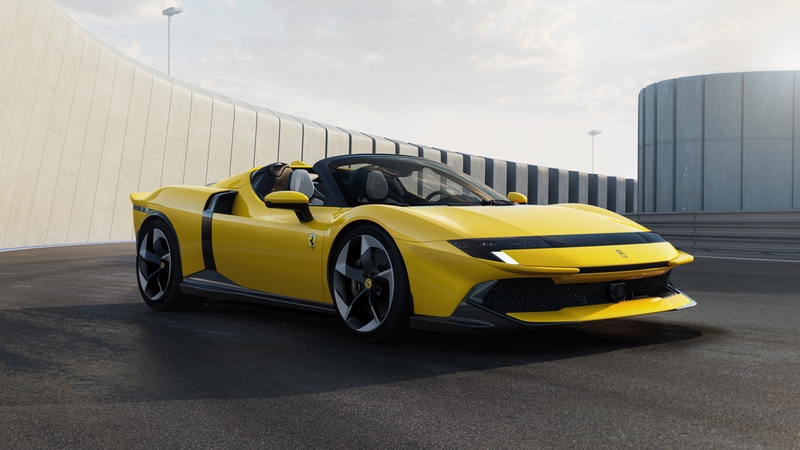
The Ferrari 849 Testarossa Spider is the open-top version of Ferrari’s new flagship plug-in hybrid supercar, replacing the SF90 Spider and reviving one of the most recognisable names in Ferrari history. It combines a mid-mounted twin-turbocharged V8, three electric motors, all-wheel drive, a retractable hardtop, and a total output of 1,050 cv, making it the most powerful series-production Ferrari Spider to date. Ferrari confirms that the combustion engine alone produces 830 cv, with the hybrid system taking the total system output to 1,050 cv.
This is not a nostalgic remake of the 1980s Testarossa. The original Testarossa was a wide-bodied, flat-12, analogue icon of its era. The 849 Testarossa Spider is something very different: a high-technology, electrified, mid-engined performance car designed to sit at the top of Ferrari’s regular production supercar range. The name carries history, but the product is firmly contemporary.
For buyers, the Spider version matters because it changes the character of the car. The coupe is likely to appeal to those who want maximum structural purity, lowest weight, and the most focused interpretation of the platform. The Spider, by contrast, adds open-air theatre. It is slightly heavier, more expensive, and marginally less pure from an engineering perspective, but it offers a more sensory ownership experience. In a car where speed arrives almost instantly, the ability to lower the roof and hear more of the V8-hybrid powertrain becomes a major part of its appeal.
The 849 Testarossa Spider also occupies a very particular place in the market. It is not a traditional grand tourer like the Ferrari 12Cilindri Spider. It is not a lightweight rear-wheel-drive driver’s car like the McLaren 750S Spider. It is not a naturally aspirated V12 spectacle like the Lamborghini Revuelto Roadster. Instead, it is Ferrari’s most advanced open-top production supercar: a plug-in hybrid, all-wheel-drive, aerodynamic, software-assisted performance flagship.
Pricing reflects that status. UK Spider pricing has been reported from around £442,467, while US pricing has been listed from around $577,437, before options. The Assetto Fiorano version raises those figures further, particularly once carbon fibre, paint, interior trim, wheels, and personalisation are added.
For SupercarTribe readers, the central question is not whether the 849 Testarossa Spider is fast. With 1,050 cv, a claimed 0–100 km/h time of under 2.3 seconds, and a top speed of around 330 km/h, that is already clear. The more important question is whether it delivers a complete Ferrari ownership experience: emotional, usable, technically credible, desirable, and resilient in the market. On paper, the 849 Testarossa Spider is Ferrari’s most ambitious open-top supercar yet.
2. Production & History
The Ferrari 849 Testarossa Spider was revealed alongside the 849 Testarossa coupe in 2025 as the successor to the SF90 Spider. This is significant because the SF90 represented Ferrari’s first major move into series-production plug-in hybrid supercars. The 849 Testarossa Spider continues that formula but develops it further with more power, revised aerodynamics, a more aggressive design identity, and the return of the Testarossa name.
The Return of the Testarossa Name
The Testarossa name carries unusual weight within Ferrari history. It originally referred to the red-painted cylinder heads used on Ferrari racing engines, with “Testa Rossa” translating as “red head.” The name later became globally famous through the 1984 Ferrari Testarossa, one of the most recognisable supercars of the 1980s.
Ferrari’s decision to reuse the name is therefore not casual. It gives the 849 Testarossa Spider an immediate historical connection, but it also raises expectations. Buyers will expect more than performance figures; they will expect presence, drama, and long-term significance. Ferrari also regained rights to the Testarossa brand in the EU after a legal dispute, strengthening the timing of the name’s return.
Successor to the SF90 Spider
Mechanically, the 849 Testarossa Spider follows the SF90 Spider’s broad architecture: a mid-mounted V8, plug-in hybrid system, three electric motors, all-wheel drive, and an 8-speed dual-clutch gearbox. However, Ferrari has increased the output, revised the aerodynamics, and sharpened the car’s visual and dynamic identity.
The SF90 Spider was already extremely fast, but it was sometimes criticised for feeling more technical than emotional. The 849 Testarossa Spider appears to be Ferrari’s answer to that criticism. By combining the same basic hybrid layout with more aggressive styling, stronger power figures, and the Testarossa name, Ferrari is positioning the car as more than a replacement. It is intended to be a more desirable and more complete flagship Spider.
Production Timing and Allocation
Production is expected to begin in 2026, with European deliveries beginning first and US deliveries following later. Reporting around the launch indicated European deliveries from mid-2026, with US deliveries expected after that.
The 849 Testarossa Spider is not expected to be a numbered limited-production model in the same way as Ferrari’s special-series hypercars. However, that does not mean it will be easy to buy. Ferrari’s allocation process typically prioritises established clients, particularly for high-demand flagship models. Early cars are likely to go to loyal Ferrari buyers with strong dealer relationships.
Historical Importance
The 849 Testarossa Spider may become important for several reasons. It is one of Ferrari’s most powerful production convertibles, it marks the return of the Testarossa name, and it arrives at a moment when Ferrari is balancing combustion heritage with electrified performance. It also appears shortly before Ferrari’s broader transition toward more electrified and eventually fully electric products.
That context gives the car long-term relevance. It is not an analogue Ferrari, and traditionalists may debate the use of the Testarossa name on a hybrid V8. But historically, Ferrari has often used its most advanced road cars to demonstrate where the brand is going next. The 849 Testarossa Spider is therefore not a tribute to the past as much as a statement about Ferrari’s performance future.
3. Design & Styling
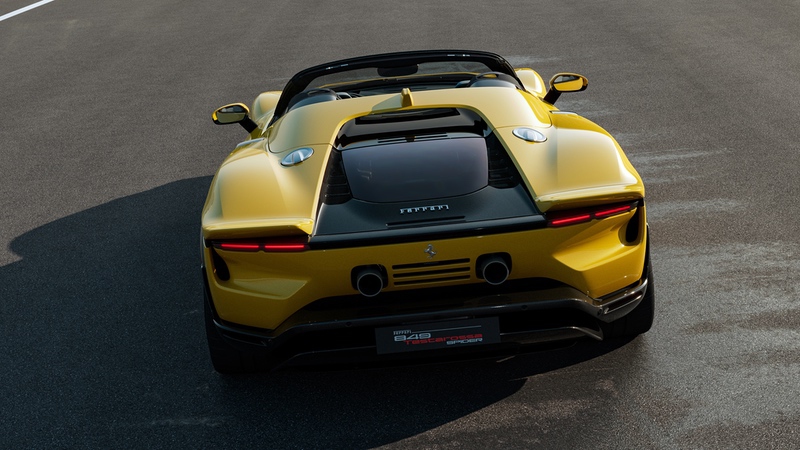
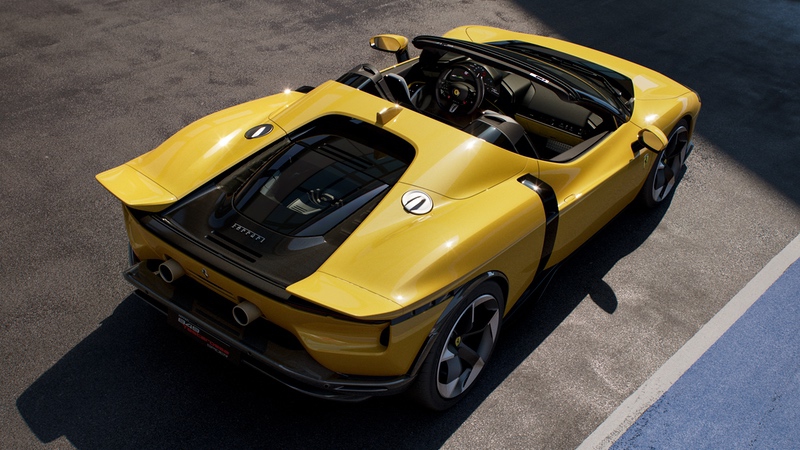
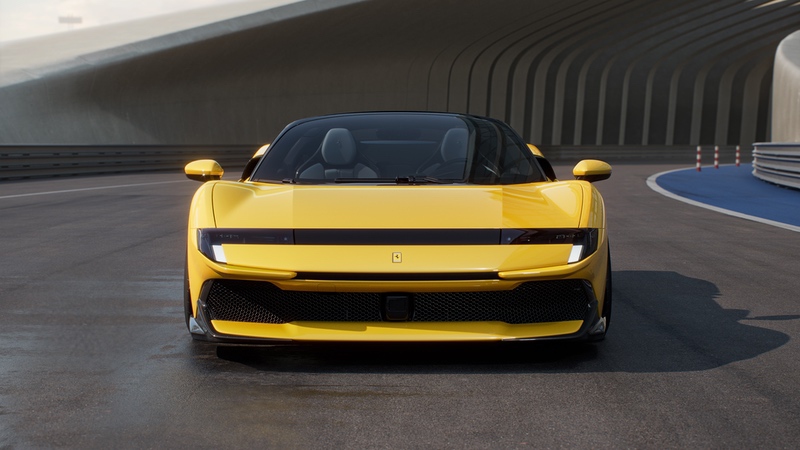
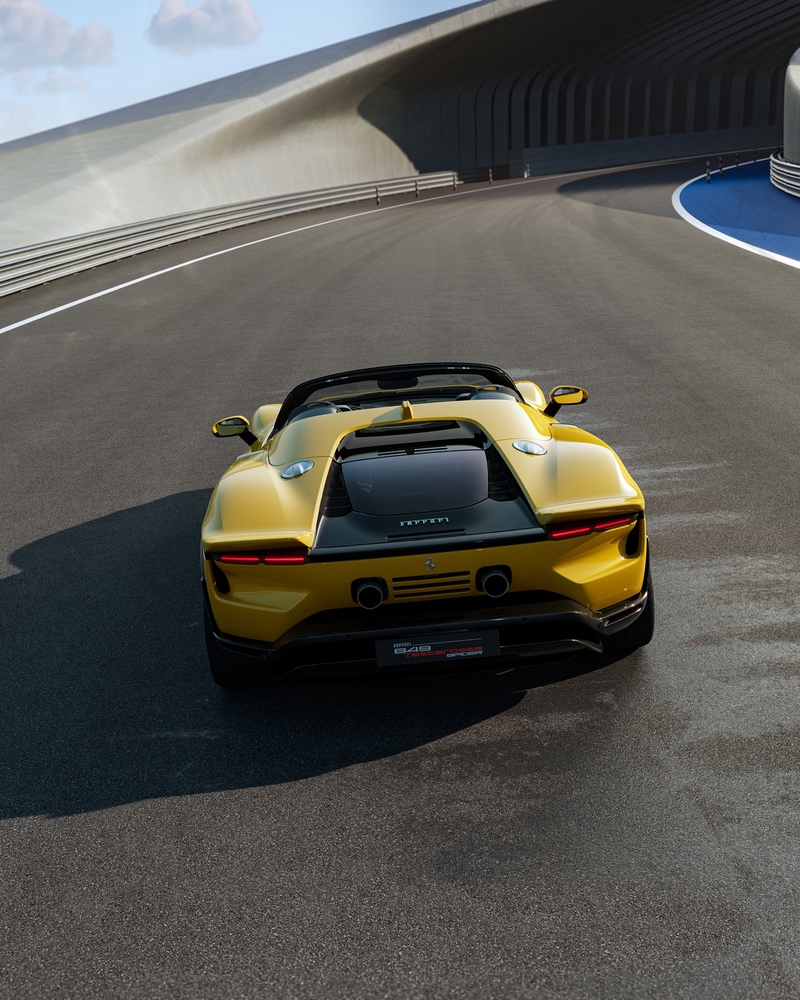
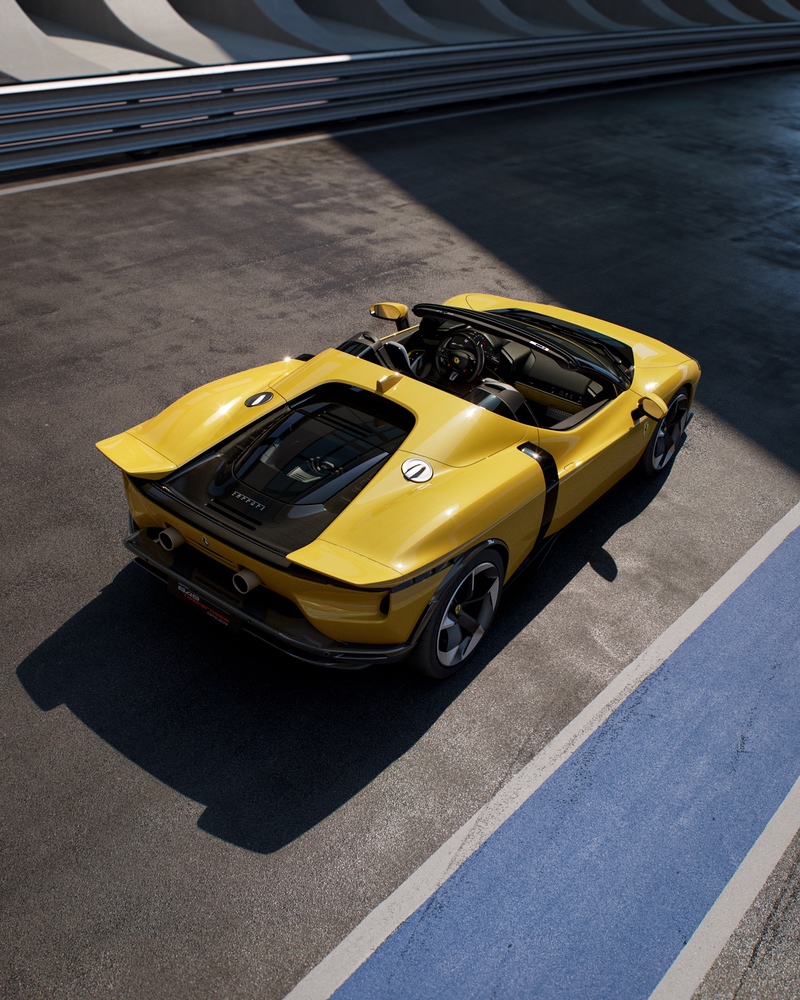
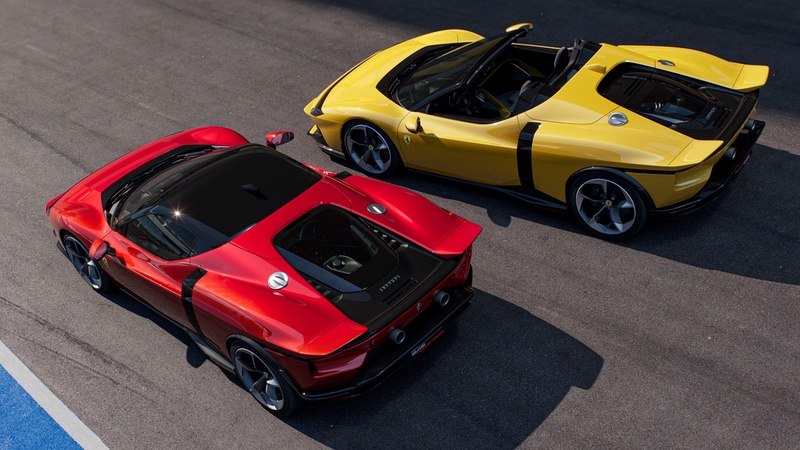
The Ferrari 849 Testarossa Spider is visually more assertive than the SF90 Spider. It has a sharper, more architectural design language, with strong horizontal elements, dramatic surfacing, and a rear treatment that gives the car a wider and more technical appearance. It is not a soft, elegant convertible. It is a flagship hybrid supercar with open-air capability.
Exterior Design Philosophy
Ferrari has avoided making the 849 Testarossa Spider look like a simple retro homage. The design does not copy the side strakes of the 1980s Testarossa, nor does it attempt to recreate the proportions of the original car. Instead, it uses the Testarossa name as inspiration for a broader sense of drama and presence.
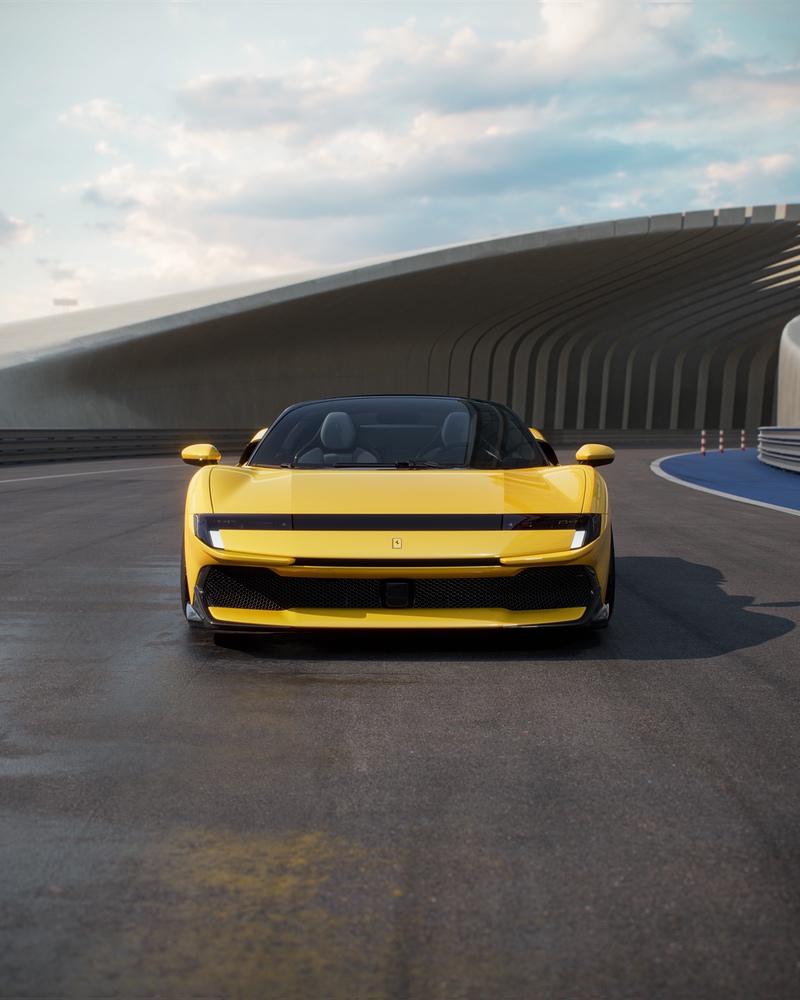
The front end is low, wide, and visually technical. The lighting treatment and aerodynamic surfaces give the car a futuristic identity, while the bodywork is clearly shaped around airflow management. The car looks more aggressive than the SF90, and that matters because the SF90’s design was relatively restrained given its performance level.
Spider-Specific Design
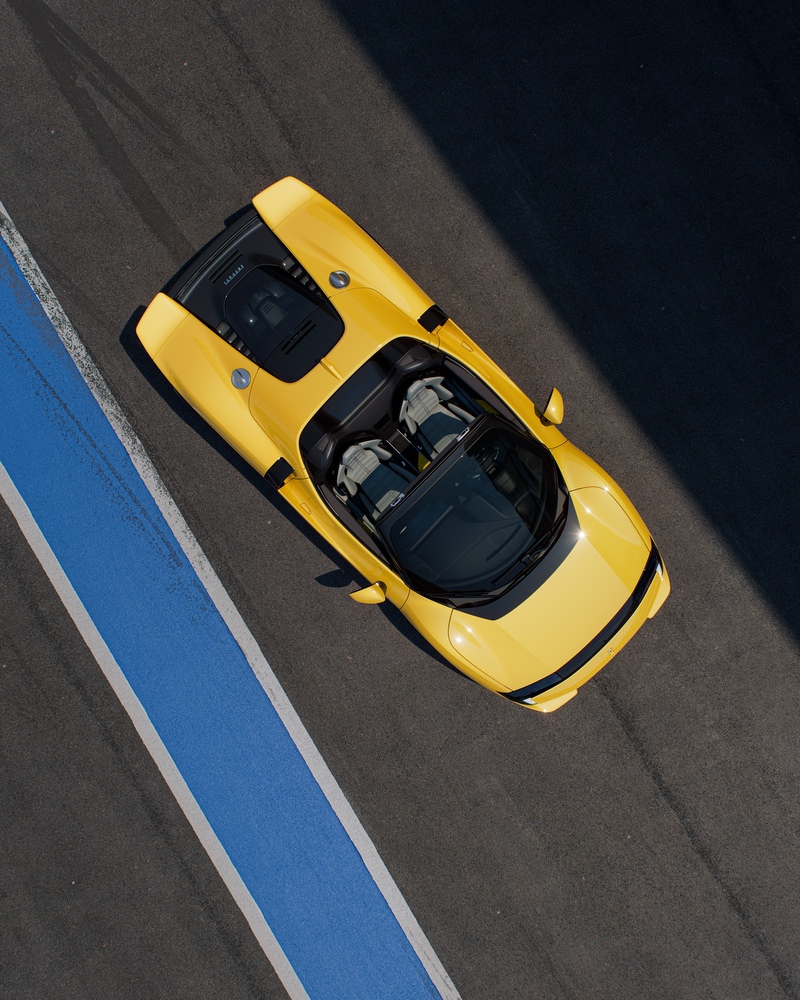
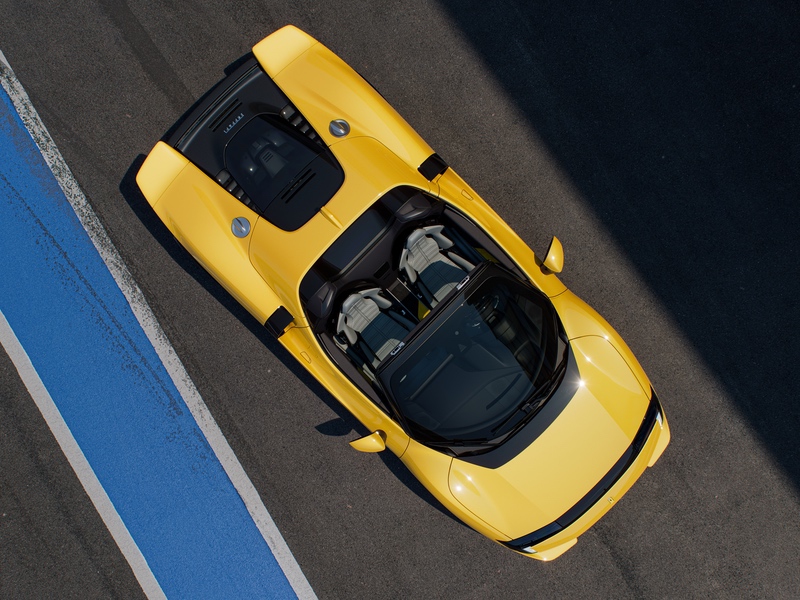
The Spider’s retractable hardtop is central to the car’s character. A folding metal roof gives the car the security and insulation of a coupe when closed, while allowing open-air driving when lowered. This is important for buyers who want usability as well as drama. A soft-top might save weight, but it would not deliver the same premium feel or high-speed refinement.
The roof mechanism inevitably adds weight and packaging complexity, but Ferrari has integrated it cleanly. With the roof closed, the Spider remains close in profile to the coupe. With the roof open, the rear deck becomes more visually prominent, giving the car a more exotic, lifestyle-focused appearance.
Aerodynamics
Aerodynamics play a major role in the 849 Testarossa Spider’s design. The coupe is reported to generate up to 415 kg of downforce at 250 km/h, and the Spider uses the same broad aerodynamic philosophy with additional attention to cabin airflow management.
For an open-top car, controlling airflow is especially important. Excessive buffeting would undermine the car’s usability, while poor aerodynamic balance would compromise high-speed confidence. Ferrari has therefore used wind-management solutions, including cabin airflow control and rear-deck aerodynamic treatment, to preserve stability and comfort.
Interior Design
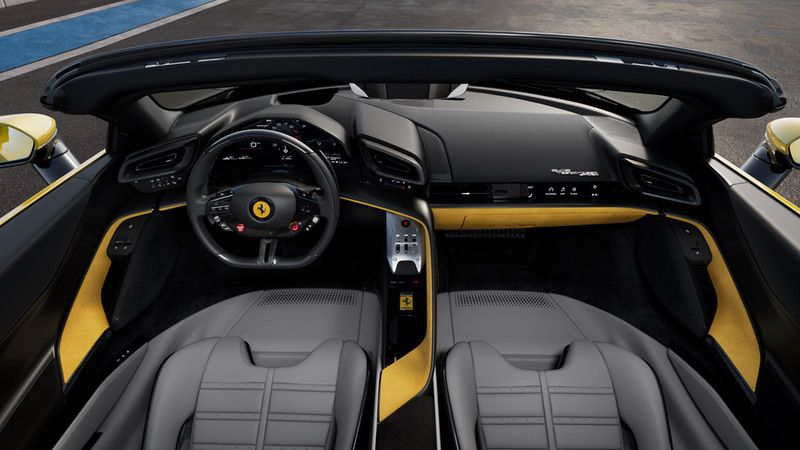
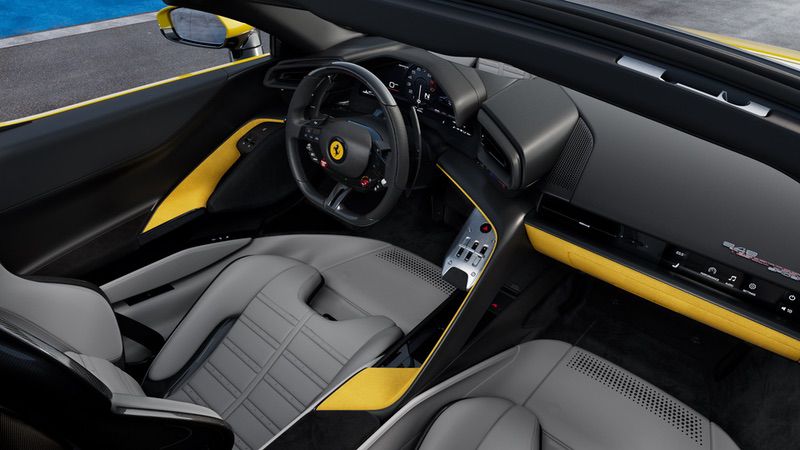
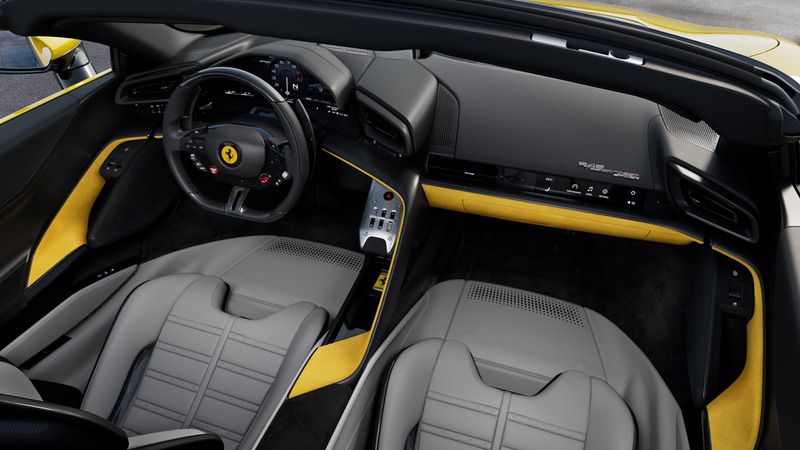
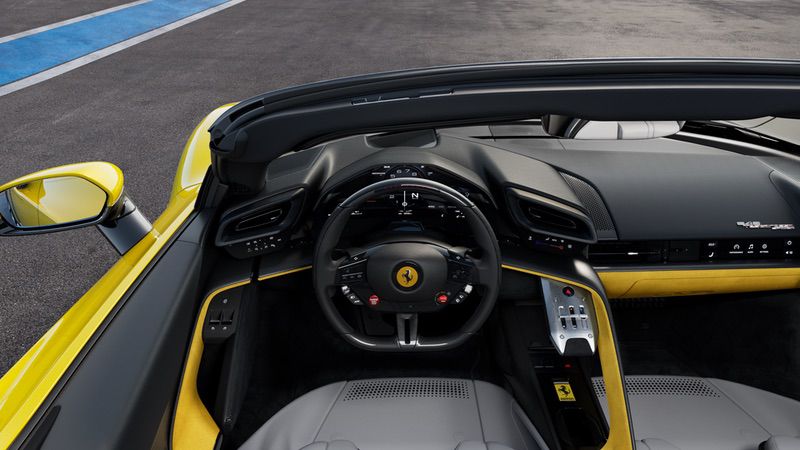
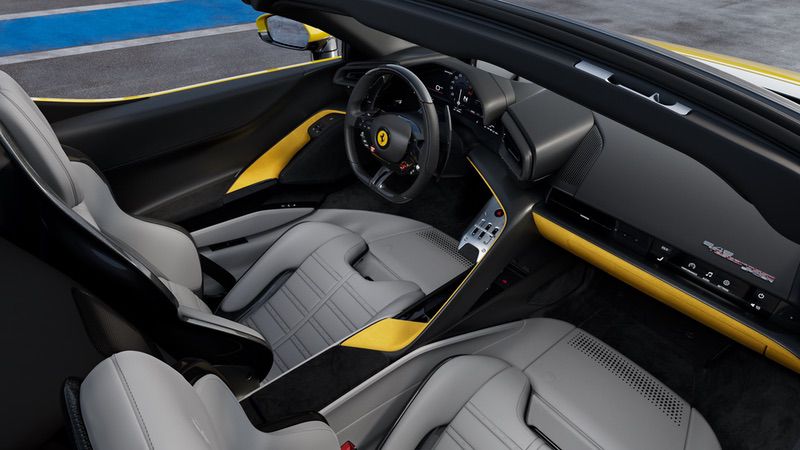
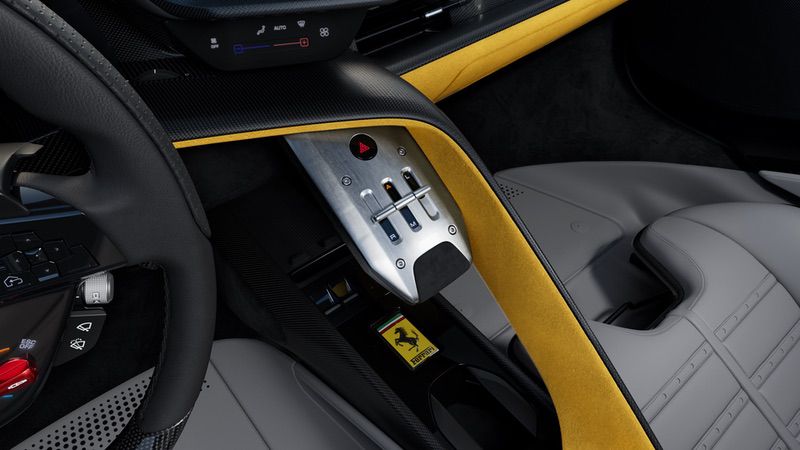
The cabin follows Ferrari’s current high-technology cockpit approach. It is driver-focused, digital, and performance-led. However, compared with some earlier modern Ferraris, the 849 Testarossa Spider appears to place greater emphasis on usability and control layout. The aim is not just to impress visually, but to make the car easier to operate at speed.
The Spider format also changes the interior experience. With the roof down, the cabin becomes part of the exterior drama. Material choices, seat design, wind protection, and ergonomics all matter more because the driver and passenger are more exposed to the environment. The result is a car that feels more emotional than the coupe, even if the underlying technology is very similar.
4. Engine & Technical Specifications
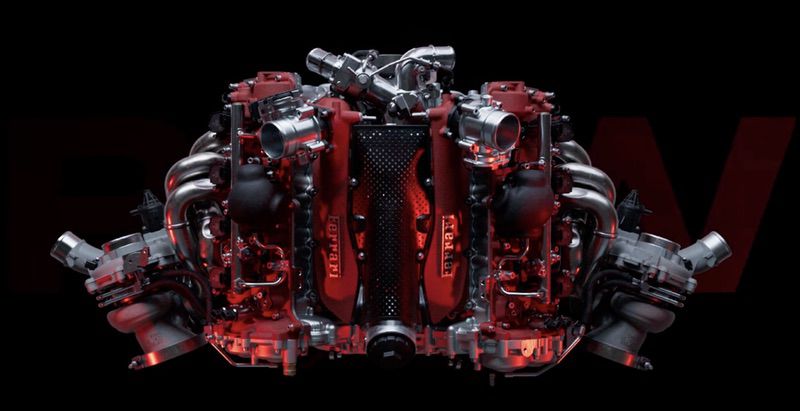
The Ferrari 849 Testarossa Spider uses a plug-in hybrid powertrain built around a 4.0-litre twin-turbocharged V8 and three electric motors. The V8 produces 830 cv, while the combined hybrid output reaches 1,050 cv. Ferrari describes this as an absolute record for a production Ferrari.
Powertrain Layout
The layout is inherited conceptually from the SF90 Spider but developed further. The combustion engine sits behind the driver, while the hybrid system uses one electric motor at the rear and two electric motors on the front axle. This gives the car all-wheel drive and allows precise torque distribution between the axles.
This configuration matters because it transforms how the car applies power. A conventional rear-wheel-drive supercar with over 1,000 hp would be extremely traction-limited in many real-world conditions. The 849 Testarossa Spider uses electric front-axle assistance to deploy its power more effectively, especially out of corners and during hard acceleration.
Core Technical Figures
Key figures include:
- Engine: 4.0-litre twin-turbocharged V8
- Hybrid system: three electric motors
- Total output: 1,050 cv / approximately 1,036 hp
- Drivetrain: plug-in hybrid all-wheel drive
- Transmission: 8-speed dual-clutch automatic
- 0–100 km/h: under 2.3 seconds
- Top speed: around 330 km/h / 205 mph
- Electric-only range: approximately 25 km / 15 miles
- Battery: reported at around 7.45 kWh
The Spider is heavier than the coupe because of the retractable hardtop and structural reinforcements. Top Gear reported a 90 kg weight penalty for the Spider compared with the coupe.
Why the Hybrid System Matters
The electric motors are not simply there to improve emissions figures. They fundamentally shape the driving experience. They provide instant response before the turbocharged V8 reaches full boost, reduce the sensation of lag, and allow the front axle to help pull the car out of corners.
The plug-in hybrid system also allows limited electric-only driving. This will not be the main reason anyone buys an 849 Testarossa Spider, but it improves urban usability. Being able to leave a residential area quietly or move through traffic without constantly using the combustion engine gives the car a more modern ownership profile.
Technical Character
The 849 Testarossa Spider is not a traditional mechanical Ferrari. It is an integrated performance system. The engine, motors, battery, gearbox, braking, aerodynamics, and chassis electronics all work together to produce speed. For some buyers, that will be the attraction. For others, especially those who prefer naturally aspirated simplicity, it may be the point of hesitation.
5. Performance
The Ferrari 849 Testarossa Spider delivers performance that would have been hypercar territory only a few years ago. Ferrari claims the 849 Testarossa can accelerate from 0–100 km/h in under 2.3 seconds, reach 0–200 km/h in around 6.35 seconds, and achieve a top speed of around 330 km/h.
Acceleration
The defining feature of the 849 Testarossa Spider’s acceleration is not only how fast it is, but how immediately the power arrives. The electric motors provide instant torque, while the twin-turbocharged V8 delivers huge top-end power. The result is a layered power delivery: electric response fills the initial gap, then the combustion engine builds with force.
Compared with a naturally aspirated Ferrari, the sensation will be different. There is less of the progressive climb toward peak performance and more of an instant, compressed surge. The car is likely to feel brutally effective rather than delicate. That suits its positioning as Ferrari’s technological flagship.
Open-Top Speed Sensation
The Spider version adds another dimension: exposure. With the roof down, the same acceleration feels more dramatic because the driver receives more wind, more sound, and more environmental feedback. At legal road speeds, this can make the Spider feel more exciting than the coupe, even if the coupe is marginally sharper on paper.
This matters in the real world. Very few owners will regularly exploit the full performance of an 849 Testarossa Spider on public roads. The Spider’s advantage is that it makes moderate speeds feel more special. The sound of the V8, the rush of air, and the sense of exposure all add emotional value without requiring maximum attack.
Handling
The Spider’s additional weight means it is unlikely to feel quite as crisp as the coupe at the limit. However, Ferrari’s chassis systems compensate heavily. All-wheel drive, torque-vectoring, rear-biased power delivery, adaptive control systems, and aerodynamic stability should make the car feel secure and very fast across a wide range of conditions.
The front electric motors are particularly important because they allow the car to pull itself through corner exits with immense traction. This should make the 849 Testarossa Spider easier to drive quickly than a traditional rear-drive supercar of similar power.
Braking and Stability
At this level of performance, braking confidence is as important as acceleration. The 849 Testarossa Spider relies on Ferrari’s latest braking and stability systems to manage weight transfer, energy recovery, and stopping power. The aim is not merely to stop quickly, but to give the driver confidence when approaching corners at serious speed.
Real-World Performance
In real use, the car’s biggest challenge is restraint. The 849 Testarossa Spider will reach high speeds extremely quickly, so the driver must be disciplined. The car’s performance is most meaningful on track, open roads, or controlled environments. On normal roads, its appeal will come from response, sound, steering, roof-down theatre, and the sense that the car has enormous depth in reserve.
6. Variants & Special Editions
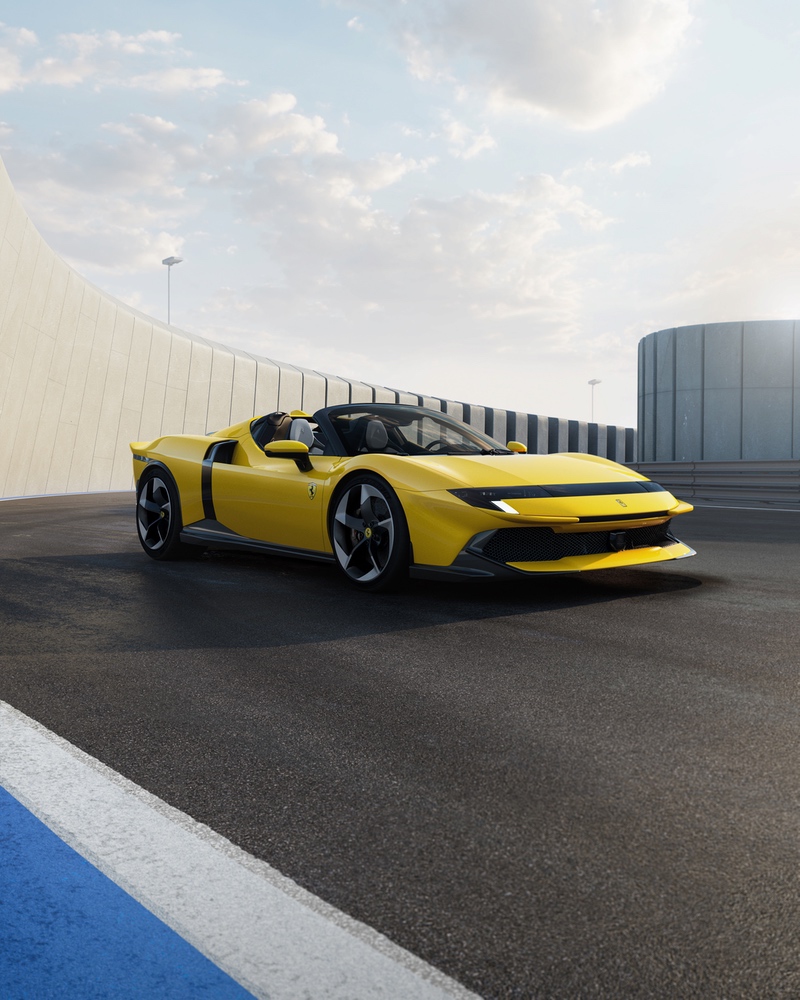
The Ferrari 849 Testarossa Spider is part of a broader 849 Testarossa range that includes both coupe and Spider body styles, with the Assetto Fiorano package available for buyers who want a more focused specification.
849 Testarossa Coupe
The coupe is the more rigid and lighter version of the platform. It will likely appeal to buyers who prioritise track use, long-term collectability, and maximum dynamic precision. Reported UK pricing starts at around £407,617, with US pricing for the coupe listed from around $565,685.
Compared with the Spider, the coupe is less theatrical but more focused. For collectors who value purity, it may be the preferred long-term version.
849 Testarossa Spider
The Spider is the open-top model and the focus of this page. Reported UK pricing starts at around £442,467, while US pricing has been listed from around $577,437.
The Spider’s appeal is experiential. It gives buyers access to Ferrari’s most advanced production supercar powertrain with the added sensory benefit of roof-down driving. In markets such as the Middle East, Southern Europe, California, and Florida, the Spider may be more desirable than the coupe because it aligns better with climate, lifestyle, and buyer preference.
Assetto Fiorano Package
The Assetto Fiorano package is the key performance option. It is available for both coupe and Spider versions and is designed for buyers who want a more track-focused setup. Reports state that the package can reduce weight and add more aggressive aerodynamic elements, with the Spider Assetto Fiorano quoted at around 1,660 kg in one published specification summary.
The package is not just cosmetic. It is aimed at drivers who will use the car hard, including track days. It may include lighter materials, more focused suspension tuning, enhanced aerodynamic components, and other performance-oriented upgrades.
However, buyers should be realistic. Assetto Fiorano may make the Spider sharper, but it can also make it less comfortable on poor roads. For collectors, the package may improve desirability. For buyers planning relaxed road use, the standard Spider may be the better fit.
Future Special Editions
Ferrari may later create more extreme versions, as it did with the SF90 XX Stradale and SF90 XX Spider. If that happens, those cars are likely to be more limited, more expensive, and significantly harder to obtain. They may also become the most collectible versions of the platform.
For now, the 849 Testarossa Spider range gives buyers a clear choice: standard Spider for open-top usability, or Assetto Fiorano for sharper performance and stronger collector appeal.
7. Driving Experience
The Ferrari 849 Testarossa Spider should be understood as a high-technology driving experience rather than an analogue one. Its character comes from the interaction of combustion power, electric torque, all-wheel-drive traction, and Ferrari’s chassis electronics.
Low-Speed Driving
At low speeds, the Spider should feel surprisingly civilised. The hybrid system allows quiet electric movement over short distances, which is useful in cities, residential areas, hotel entrances, and early-morning starts. The dual-clutch gearbox should be smooth in gentle use, and the electric motors help make the car feel responsive without needing high revs.
This is one of the key advantages of modern Ferrari hybrid technology. The car has extreme performance available, but it does not need to feel difficult or awkward in ordinary driving.
Roof-Down Character
With the roof lowered, the Spider becomes more emotionally engaging. The V8 soundtrack is more present, wind movement adds drama, and the sense of speed is amplified. This is where the Spider justifies itself over the coupe. It may not be the sharpest version, but it is likely to be the more memorable car at road speeds.
The sound will not be like a naturally aspirated V12, and buyers should not expect it to be. Instead, the 849 Testarossa Spider offers a more modern soundtrack: turbocharged V8 intensity, hybrid immediacy, and mechanical aggression layered with airflow and road noise.
Fast-Road Driving
On fast roads, the car should feel devastatingly capable. The steering is likely to be quick and precise in typical modern Ferrari fashion. The front motors should improve traction, especially when exiting corners. The car will likely feel lighter on its feet than its technology suggests, although the Spider’s weight will always be part of the equation.
Track Driving
On track, the 849 Testarossa Spider should be extremely fast, but serious track users may still prefer the coupe. The Spider gives away some weight and rigidity. However, with Assetto Fiorano, it should remain a highly capable track machine.
For most owners, the Spider will not be bought primarily as a track tool. It will be bought because it combines enormous performance with open-top usability. That is its real strength.
8. Ownership Insights
Owning a Ferrari 849 Testarossa Spider will be expensive, even by Ferrari standards. It combines flagship pricing, hybrid complexity, high-performance tyres, carbon-ceramic braking, specialist servicing, and significant insurance costs.
Running Costs
Realistic annual running cost estimates will vary depending on mileage, location, storage, and driver profile, but buyers should budget carefully.
Indicative annual costs:
- Insurance: £8,000–£18,000 / $10,000–$23,000+
- Tyres: £2,000–£3,500 / $2,500–$4,500 per set
- Paint protection film: £5,000–£8,000 / $6,000–$10,000
- Warranty extension after initial cover: potentially several thousand pounds/dollars annually
- Track use: significantly higher due to tyres, brakes, fluids, and inspection requirements
Fuel costs will be high when driven hard, although short electric-only operation can reduce consumption during low-speed urban use. The hybrid system is not there to make the car cheap to run; it is there to improve performance, response, and usability.
Servicing Reality
Ferrari’s seven-year maintenance programme is expected to cover scheduled servicing, as with other modern Ferraris. However, owners should not confuse scheduled maintenance with total ownership cost. Wear items, tyres, brakes, accident repairs, bodywork, wheels, batteries, and cosmetic damage remain expensive.
The 849 Testarossa Spider should be serviced through Ferrari main dealers or highly specialised Ferrari independents once outside warranty. Because it is a high-voltage plug-in hybrid, generalist servicing is not appropriate. Battery diagnostics, hybrid system checks, software updates, and factory procedures will be essential.
Reliability Expectations
Modern Ferraris are generally far more reliable than older stereotypes suggest, but the 849 Testarossa Spider is complex. The V8 engine is based on Ferrari’s proven twin-turbo architecture, but the hybrid system adds front motors, rear electric assistance, battery cooling, power electronics, software, and high-voltage components.
A pre-purchase inspection will be essential once used examples enter the market. Buyers should check battery health, service history, warranty status, option list, accident history, tyre age, brake wear, roof operation, charging function, and evidence of track use.
Real-World Usability
The Spider is usable, but not casual. It is low, wide, expensive, and attention-grabbing. The retractable hardtop improves practicality, and electric-only operation helps in urban settings, but this is still a flagship Ferrari supercar. It suits weekend drives, events, road trips, and special journeys. It is not the obvious choice for daily commuting.
9. Market Value & Depreciation
The Ferrari 849 Testarossa Spider enters the market at a high price point. UK pricing has been reported from around £442,467, while US pricing has been listed from around $577,437, before options. Assetto Fiorano, carbon fibre, paint, wheels, interior upgrades, and Tailor Made personalisation can push transaction prices much higher.
New Market Position
The Spider is positioned above the 296 GTS and below Ferrari’s ultra-limited halo cars. It is the open-top version of Ferrari’s current flagship production supercar. That gives it strong desirability, but not automatic immunity from depreciation.
Depreciation Factors
Depreciation will likely depend on:
- Supply volume
- Specification quality
- Mileage
- Colour combination
- Assetto Fiorano package
- Ferrari service history
- Warranty status
- Market sentiment toward hybrid Ferraris
Because the car is not expected to be strictly limited, early depreciation is possible once supply normalises. However, desirable specifications may remain strong, particularly in markets where Spider variants are in high demand.
Long-Term Outlook
The Testarossa name may support long-term collector interest, but it does not guarantee appreciation. The strongest cars are likely to be low-mileage, well-specified examples with full Ferrari history, desirable paint, strong options, and no accident or track-abuse concerns.
The Spider may outperform the coupe in warm-weather markets because open-top Ferraris often have broader lifestyle appeal. However, the coupe may remain more attractive to purist collectors. The best investment approach is therefore specification discipline: buy the right car, maintain it properly, document everything, and avoid excessive mileage if long-term value is a priority.
10. Competitors
Lamborghini Revuelto Roadster
The Lamborghini Revuelto Roadster is likely to be the Ferrari’s most direct emotional rival. It offers hybrid assistance, all-wheel drive, extreme performance, and open-top drama. The key difference is the engine philosophy. Lamborghini retains a naturally aspirated V12, while Ferrari uses a twin-turbo V8 plug-in hybrid system.
In real terms, the Lamborghini will likely feel more theatrical and more naturally dramatic. The Ferrari should feel sharper, more technical, and more precise. Buyers choosing between them are not simply choosing performance numbers. They are choosing between Lamborghini’s V12 spectacle and Ferrari’s hybrid control.
McLaren 750S Spider
The McLaren 750S Spider is a very different proposition. It is lighter, rear-wheel drive, and less technologically complex. It cannot match the Ferrari’s total power or all-wheel-drive launch performance, but it may offer a more transparent steering and chassis experience.
For drivers who value feedback, delicacy, and low weight, the McLaren is highly compelling. For buyers who want the most advanced open-top Ferrari flagship, the 849 Testarossa Spider sits higher in price, power, and complexity.
Aston Martin Valhalla Roadster
If Aston Martin develops an open-top Valhalla derivative, it would compete philosophically with the Ferrari: hybrid power, exotic design, and flagship positioning. Aston’s appeal would be rarity and brand distinction. Ferrari’s advantage is deeper experience with mid-engined supercars, stronger hybrid performance credentials, and a more established high-performance dealer ecosystem.
Ferrari SF90 Spider
The SF90 Spider is the 849 Testarossa Spider’s most important used-market rival. It offers a similar layout, extreme performance, and likely lower used prices. For value-conscious buyers, the SF90 Spider may make more financial sense.
However, the 849 Testarossa Spider offers more power, revised design, sharper aerodynamics, and the Testarossa name. For buyers who want the latest and most complete version of Ferrari’s hybrid Spider formula, the 849 is the stronger choice.
Ferrari 296 GTS
The 296 GTS is smaller, lighter, and less expensive. It uses a V6 hybrid powertrain and is likely to feel more agile and approachable. The 849 Testarossa Spider is faster, more powerful, more prestigious, and more expensive.
The 296 GTS may be the better driver’s car for some roads. The 849 Testarossa Spider is the flagship statement.
11. FAQs
Is the Ferrari 849 Testarossa Spider a V12?
No. Despite the Testarossa name, the 849 Testarossa Spider does not use a V12 or flat-12 engine. It is powered by a 4.0-litre twin-turbocharged V8 combined with three electric motors. Total system output is 1,050 cv.
Is the 849 Testarossa Spider the replacement for the SF90 Spider?
Yes. The 849 Testarossa Spider replaces the SF90 Spider as Ferrari’s flagship plug-in hybrid convertible supercar. It keeps the same broad layout but adds more power, revised design, updated aerodynamics, and a more dramatic identity.
How much does the Ferrari 849 Testarossa Spider cost?
UK pricing has been reported from around £442,467, while US pricing has been listed from around $577,437, before options. Highly specified cars, especially with the Assetto Fiorano package, can cost significantly more.
How fast is the Ferrari 849 Testarossa Spider?
Ferrari claims the 849 Testarossa can accelerate from 0–100 km/h in under 2.3 seconds and reach a top speed of around 330 km/h / 205 mph. The Spider may carry a small weight penalty, but real-world performance remains extreme.
Is the Ferrari 849 Testarossa Spider suitable for daily driving?
It can be used regularly, but it is not an ideal daily driver. The hybrid system improves low-speed refinement, and the retractable hardtop adds usability, but the car remains low, wide, expensive, and highly attention-grabbing. It is better suited to weekend use, road trips, events, and occasional track driving.
Is the Assetto Fiorano package worth choosing?
For buyers who want the sharpest and most collectible version, yes. Assetto Fiorano is likely to improve focus and desirability. However, it may also make the car firmer and less relaxed on normal roads. For owners who mainly want road use and open-air comfort, the standard Spider may be the more enjoyable specification.
Will the 849 Testarossa Spider hold its value?
It should be desirable, but value retention will depend on supply, specification, mileage, condition, and Ferrari market sentiment. Low-mileage, well-optioned cars with full Ferrari history and strong colour combinations are likely to perform best. The Testarossa name helps desirability, but it does not remove depreciation risk.
12. Related Articles
- Ferrari 849 Testarossa
- Ferrari SF90 Spider
- Ferrari SF90 XX Spider
- Ferrari 296 GTS
- Ferrari 12Cilindri Spider
- Ferrari F80
- Lamborghini Revuelto Roadster
- McLaren 750S Spider
- Aston Martin Valhalla
- Ferrari LaFerrari Aperta
13. Are You Ready?
- Looking to buy a Ferrari 849 Testarossa Spider? Click to find available cars.
- Need insurance? Click to apply for Supercar Insurance.
- Need a service? Click to book a specialist service.
- Buying one? Click to request a PPI inspection.
- Selling your car? Click to request a valuation.