1. Introduction
The Ferrari 849 Testarossa is Ferrari’s new flagship plug-in hybrid supercar, replacing the SF90 Stradale and reviving one of the most emotionally loaded names in Ferrari history. Unlike the original 1980s Testarossa, however, this is not a naturally aspirated flat-12 grand tourer. The 849 Testarossa is a mid-engined, all-wheel-drive hybrid supercar powered by a twin-turbocharged V8 and three electric motors, producing a combined 1,050 cv—the highest output yet for a series-production Ferrari.
This makes the car important for two reasons. First, it sits at the very top of Ferrari’s regular production supercar range, above the 296 GTB and alongside the most technologically advanced cars the brand has ever built. Second, it represents Ferrari’s attempt to make the hybrid supercar feel less like an engineering exercise and more like a truly emotional Ferrari. The SF90 Stradale was brutally fast, but some buyers and reviewers felt it could be more clinical than charismatic. The 849 Testarossa appears designed to answer that criticism directly.
Its market position is therefore very specific. This is not a lightweight analogue Ferrari. It is not a purist V12 GT like the 12Cilindri. It is not a limited-run hypercar like the F80. Instead, the 849 Testarossa is Ferrari’s most advanced mainstream performance car: a car built around hybrid response, torque-vectoring, extreme aerodynamic load, and huge power delivered through all four wheels.
For buyers, owners, and sellers, that distinction matters. The 849 Testarossa is likely to appeal to clients who want the most capable Ferrari currently available without entering the ultra-limited hypercar market. It is also likely to attract buyers who missed out on, or outgrew, the SF90 Stradale but want something more aggressive, more resolved, and more emotionally engaging.
Pricing reflects that status. UK pricing has been reported from around £407,617 for the coupe, with the Spider from around £442,467; in the United States, Car and Driver lists the 2027 849 Testarossa from $565,685, rising significantly with trim and options.
The 849 Testarossa is therefore not simply “the new SF90.” It is Ferrari’s attempt to sharpen the hybrid flagship formula: more power, more downforce, more visual drama, and, crucially, a stronger connection to Ferrari’s past through the Testarossa name. For SupercarTribe readers, the key question is not whether the car is fast. It obviously is. The more relevant question is whether it has the depth, usability, desirability, and ownership appeal to become one of the defining modern Ferraris.
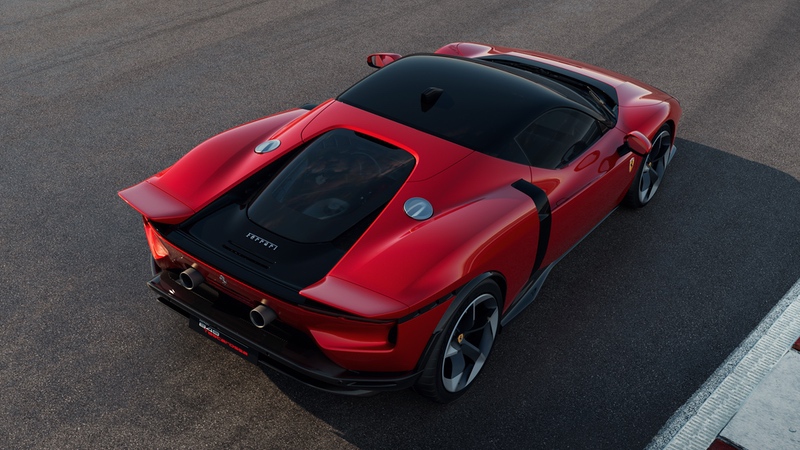
2. Production & History
The Ferrari 849 Testarossa was unveiled in 2025 as the successor to the SF90 Stradale, Ferrari’s first series-production plug-in hybrid supercar. The SF90 was a landmark car because it introduced a new performance hierarchy within Ferrari: one where electrification was not used for efficiency alone, but as a tool for acceleration, traction, and dynamic control. The 849 Testarossa continues that formula, but with a more assertive identity.
The decision to revive the Testarossa name is significant. Historically, “Testa Rossa” referred to Ferrari’s red-painted cam covers and became associated with some of the marque’s most important sports racing cars of the 1950s and 1960s. Later, the Testarossa name became globally famous through the 1984 Ferrari Testarossa, one of the defining supercars of the 1980s. Ferrari had also recently secured a legal win over the Testarossa trademark in Europe, reinforcing the commercial and symbolic importance of the name.
However, the 849 Testarossa is not a retro remake. It does not attempt to recreate the 1980s car mechanically or visually in a literal sense. Instead, Ferrari uses the name to signal flagship status, technical ambition, and emotional weight. The “849” name itself refers to the car’s eight-cylinder layout and the approximate displacement per cylinder, linking the naming convention directly to the powertrain.
Production is expected to begin in 2026, with European deliveries starting first and US deliveries following later. Like the SF90, the 849 Testarossa is not expected to be a numbered limited-production model, but supply will still be constrained by Ferrari’s allocation process, factory capacity, and buyer demand. In practice, this means early cars will likely be prioritised for established Ferrari clients.
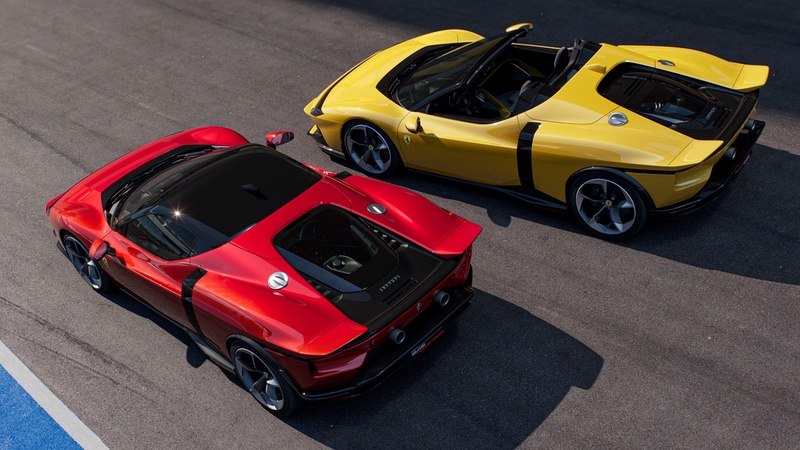
The 849 Testarossa is also available as a Spider, which broadens the model’s appeal, especially in markets such as the Middle East, California, Florida, and Southern Europe. For Ferrari, offering coupe and Spider versions from the outset allows the car to compete not only with closed-roof hybrid rivals, but also with open-top supercars from McLaren, Lamborghini, and Aston Martin.
Historically, Ferrari’s flagship mid-engined line has evolved through cars such as the 288 GTO, F40, F50, Enzo, LaFerrari, SF90 Stradale, and now the 849 Testarossa. The 849 is not a direct replacement for the LaFerrari or F80 type of limited hypercar, but it carries some of that technical influence into a production model. This is a key part of its appeal: it offers near-hypercar performance without the extreme scarcity or multi-million-pound entry point of Ferrari’s halo cars.
From a collector’s point of view, its long-term significance will depend on three things: how buyers respond to the Testarossa name, how well the hybrid systems age, and whether Ferrari continues to develop plug-in hybrid flagships beyond this generation. If the 849 becomes known as the model that made Ferrari’s hybrid flagship formula more emotional and more complete, its place in Ferrari history could become stronger over time.
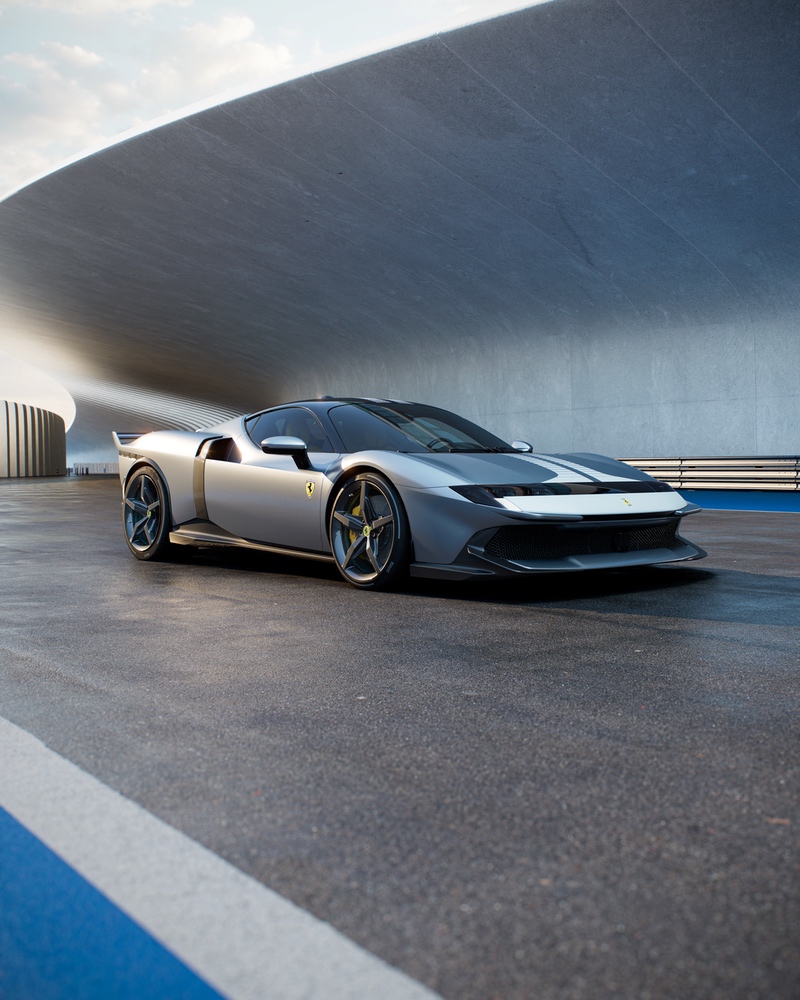
3. Design & Styling
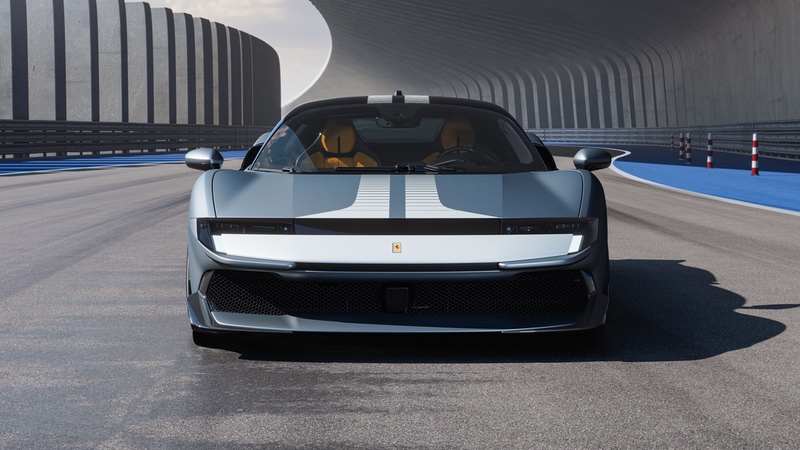
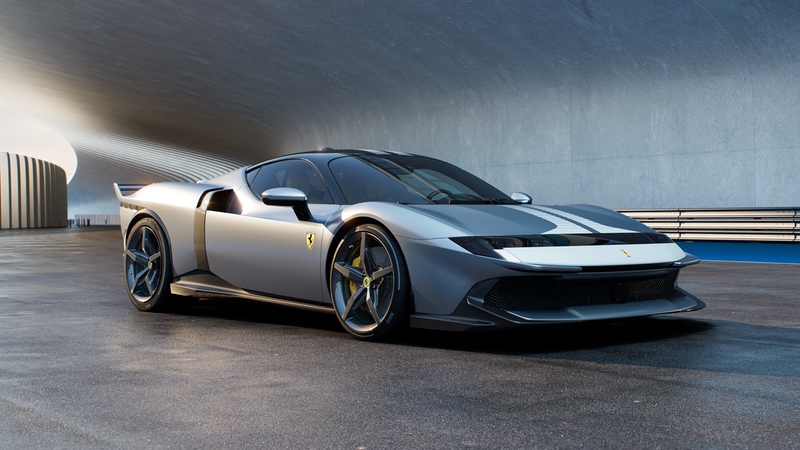
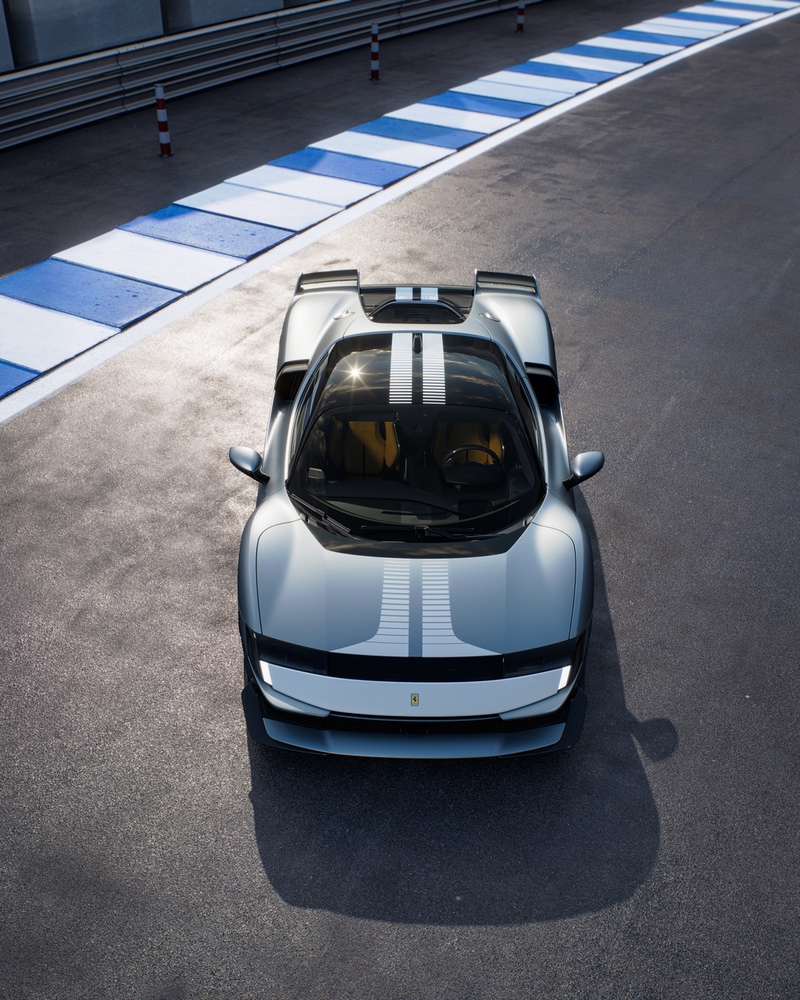
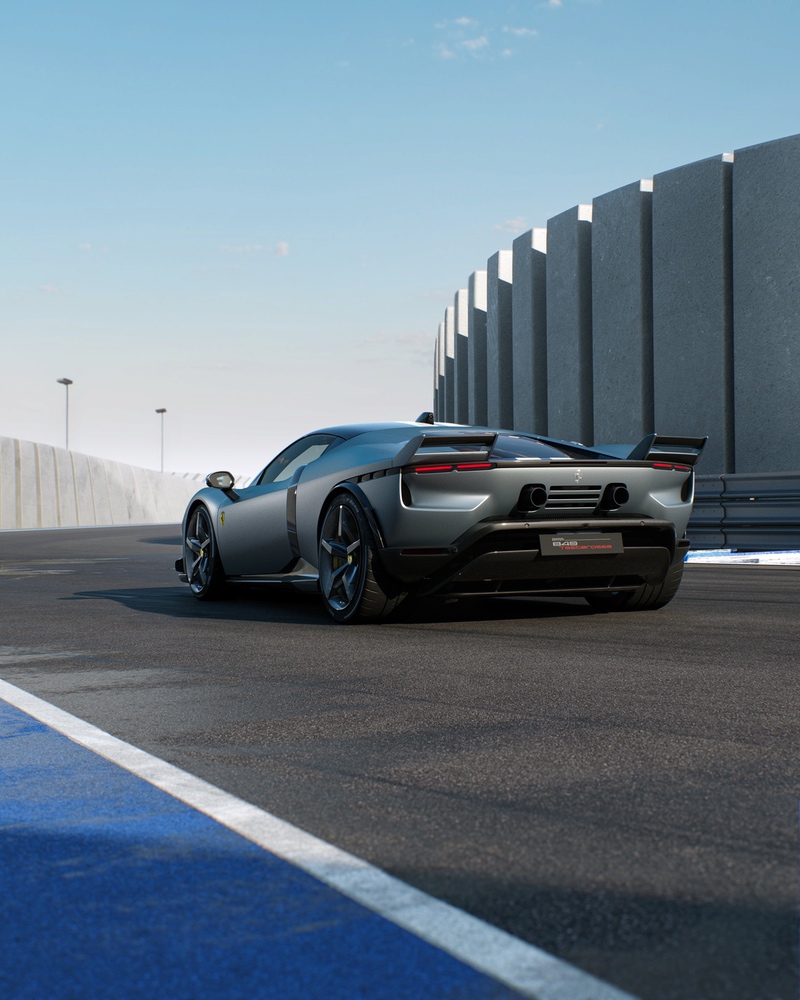
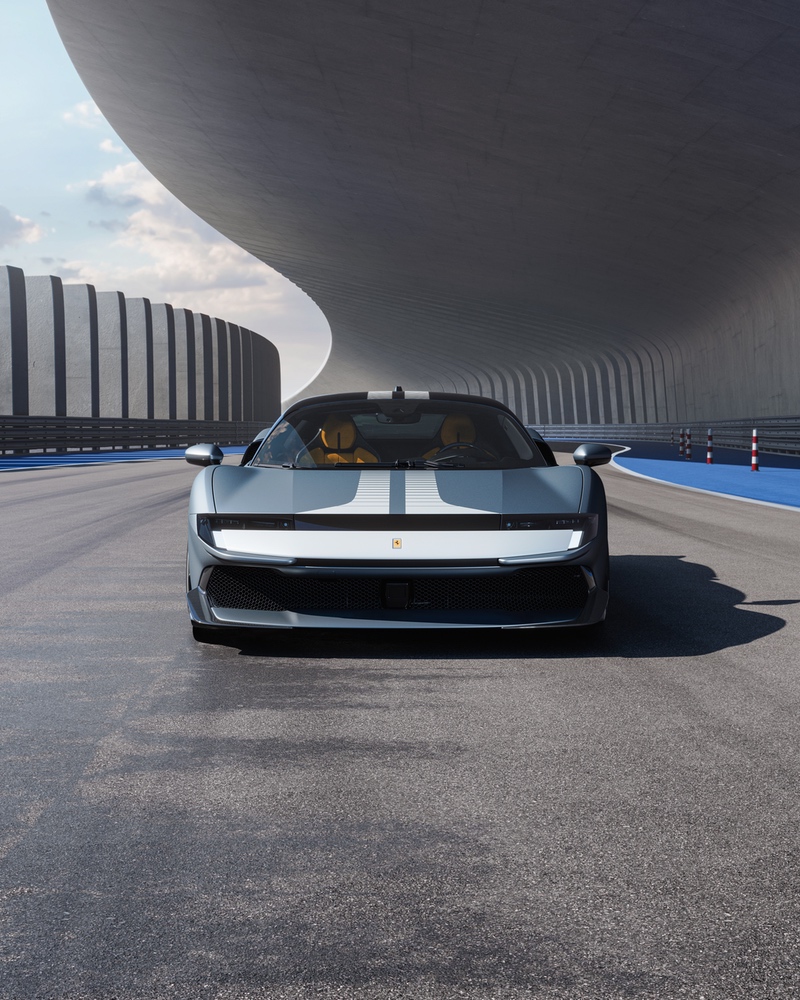
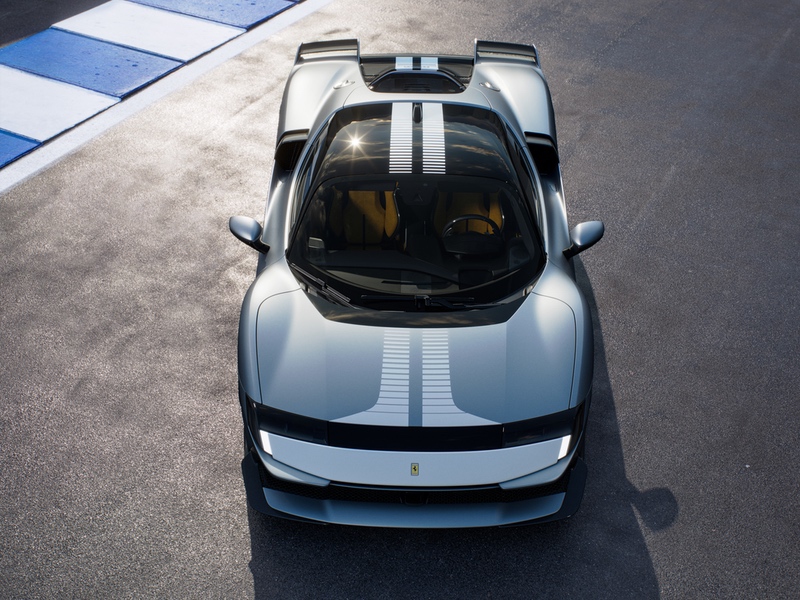
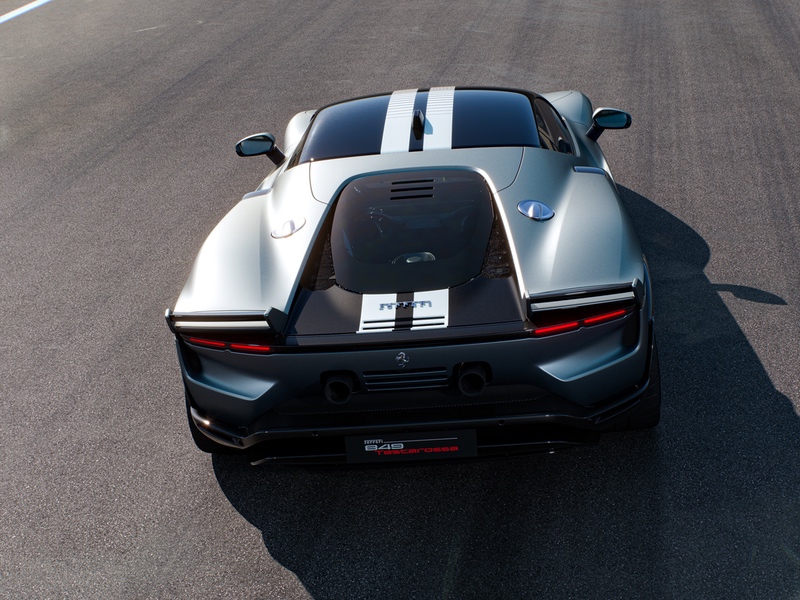
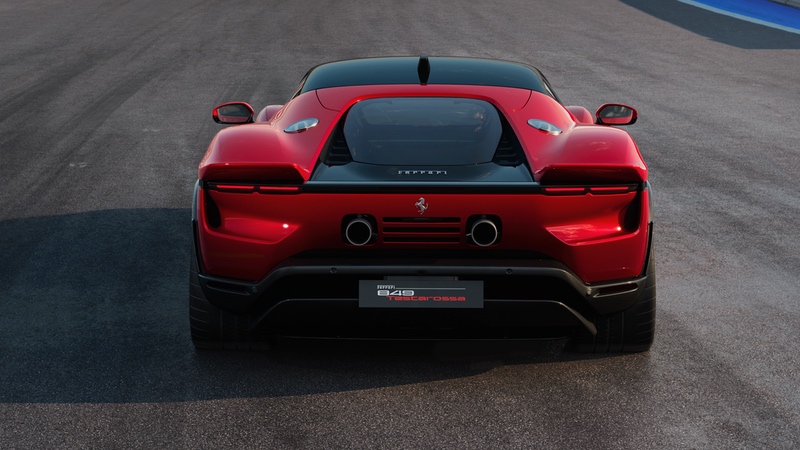
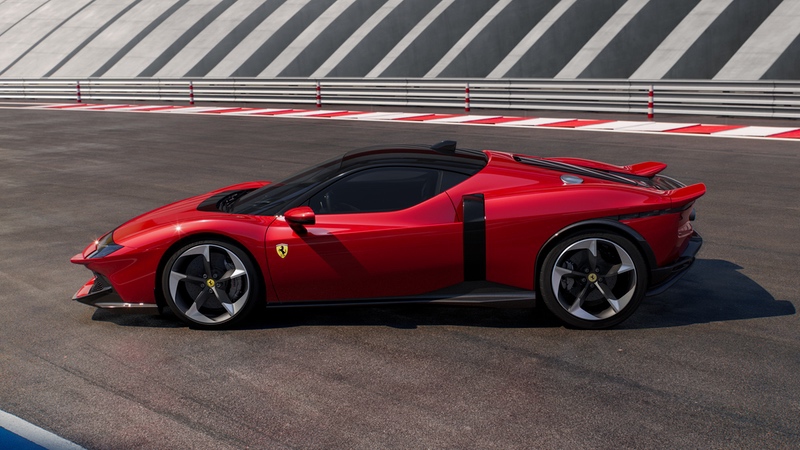
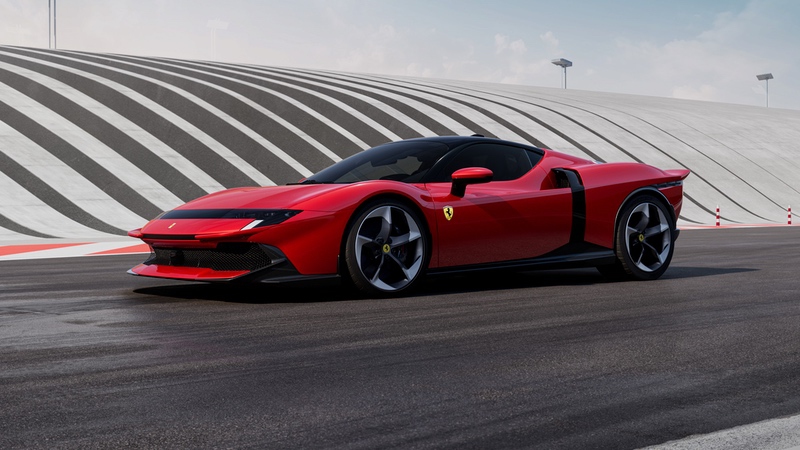
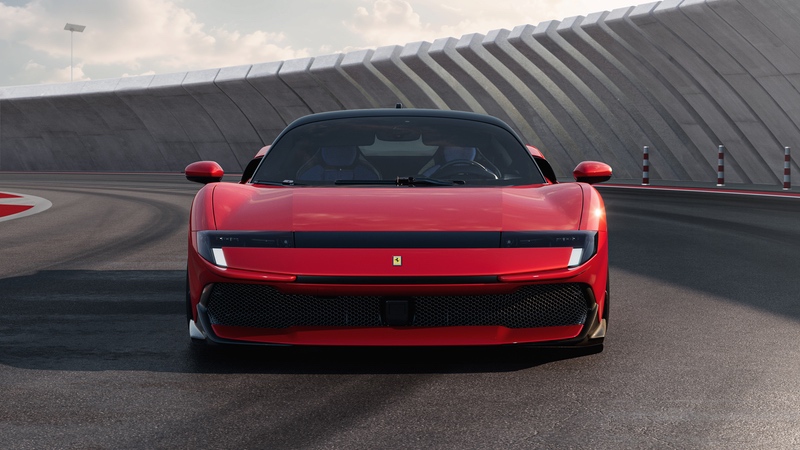
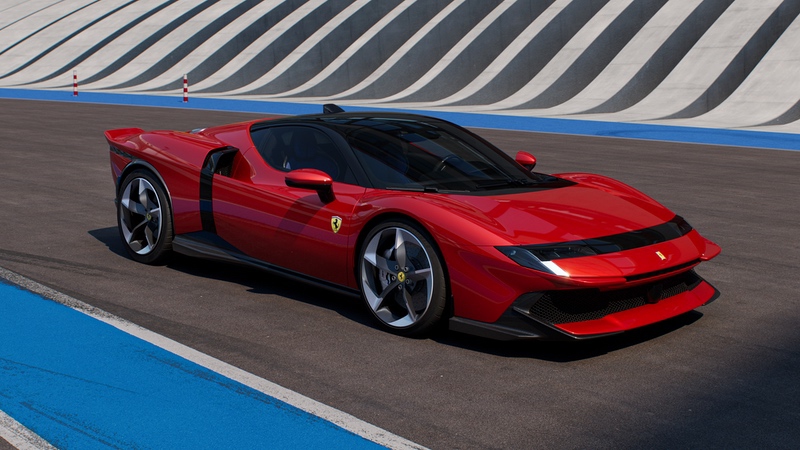
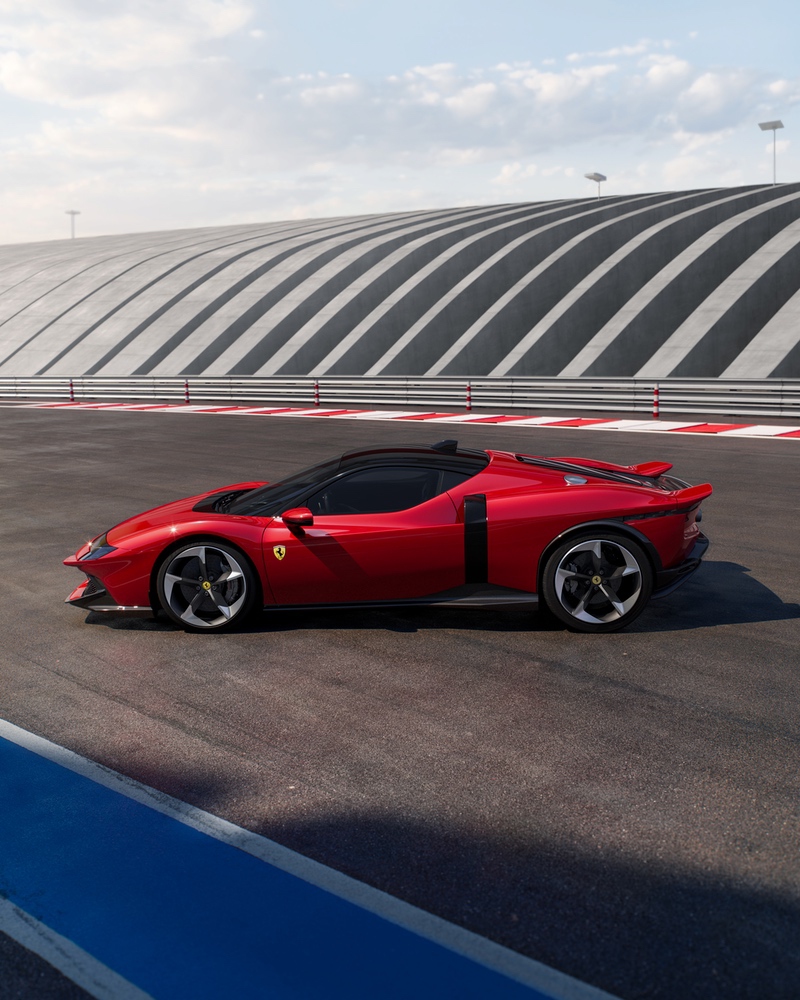
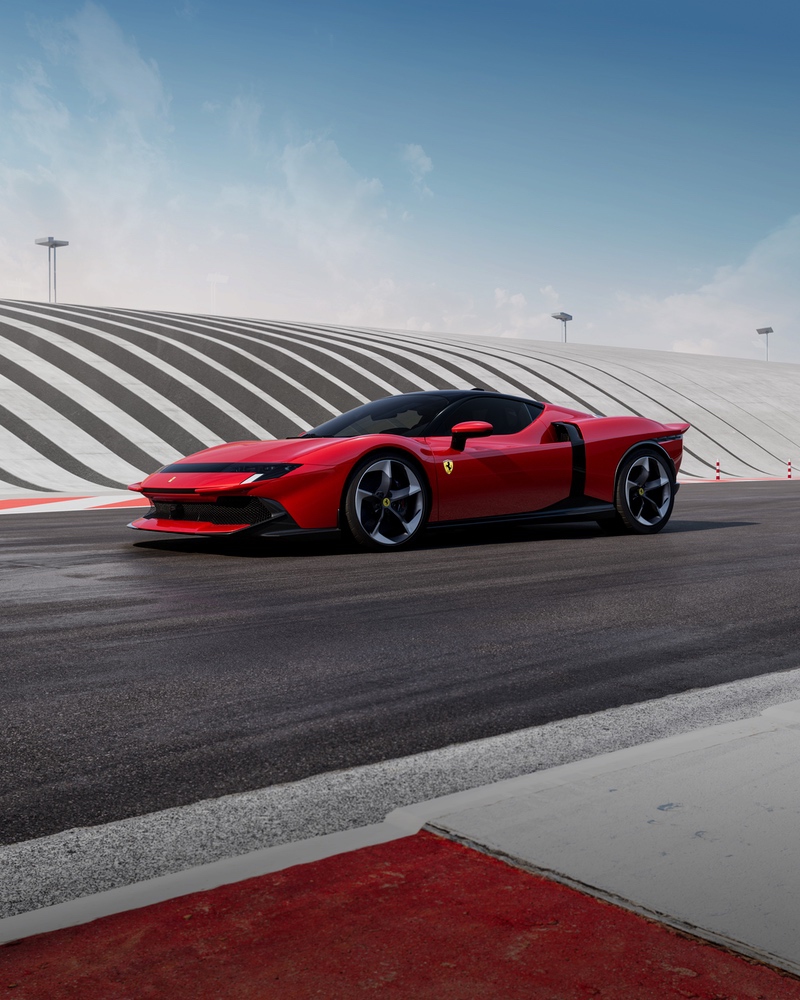
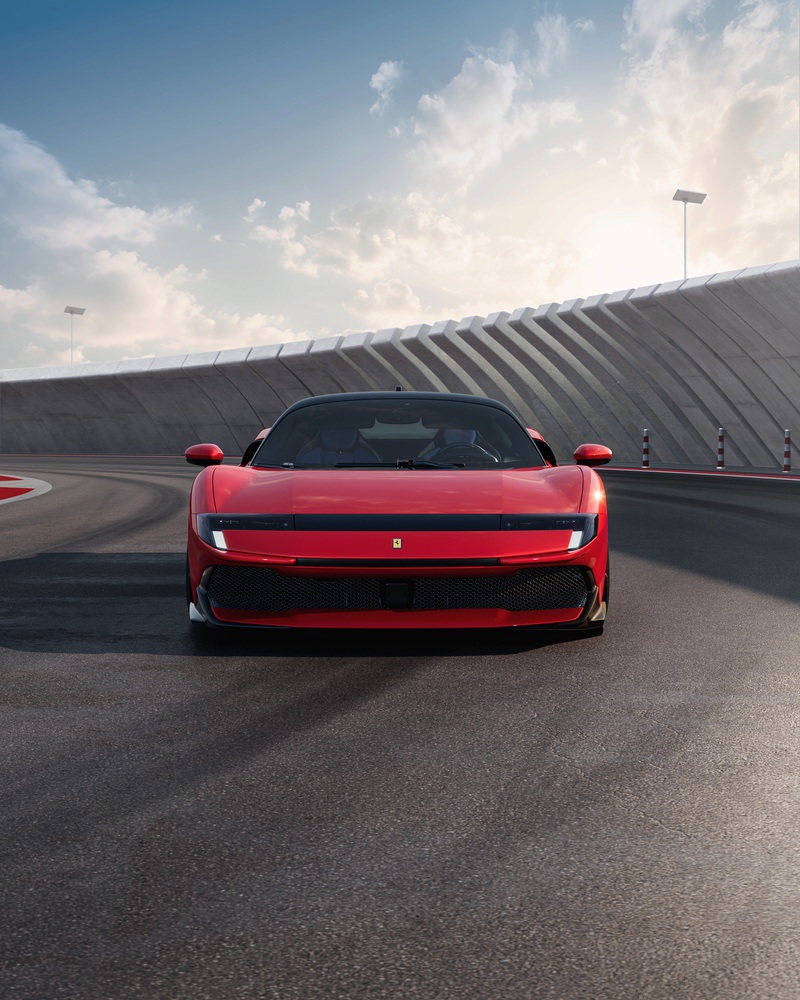
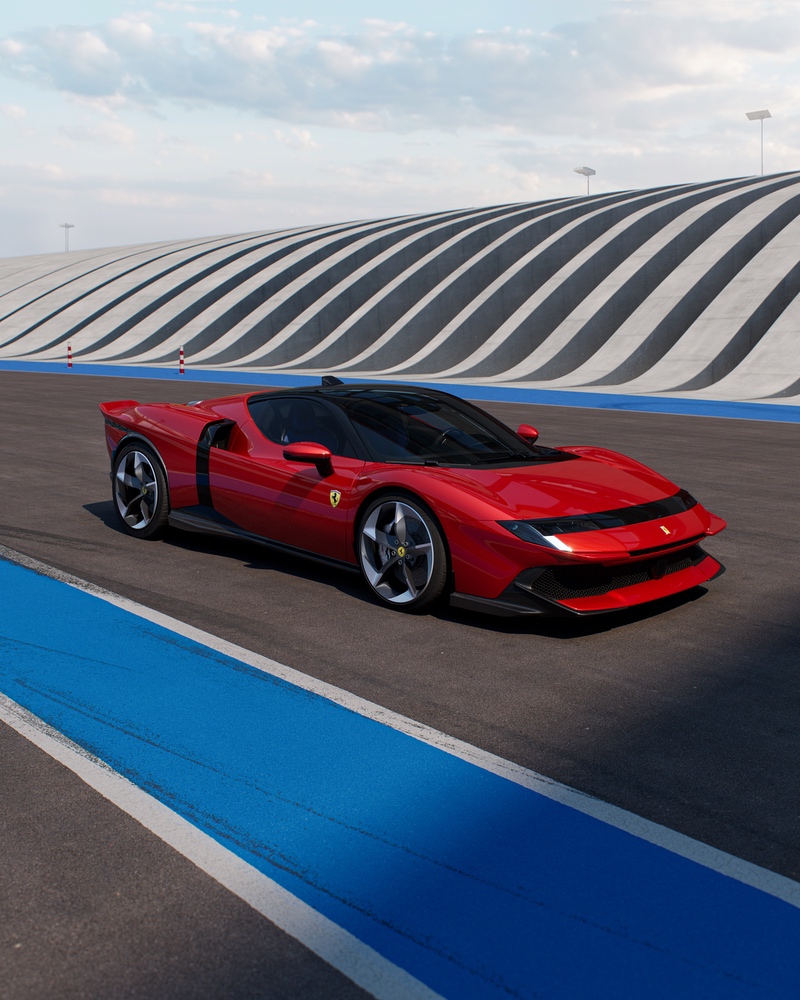
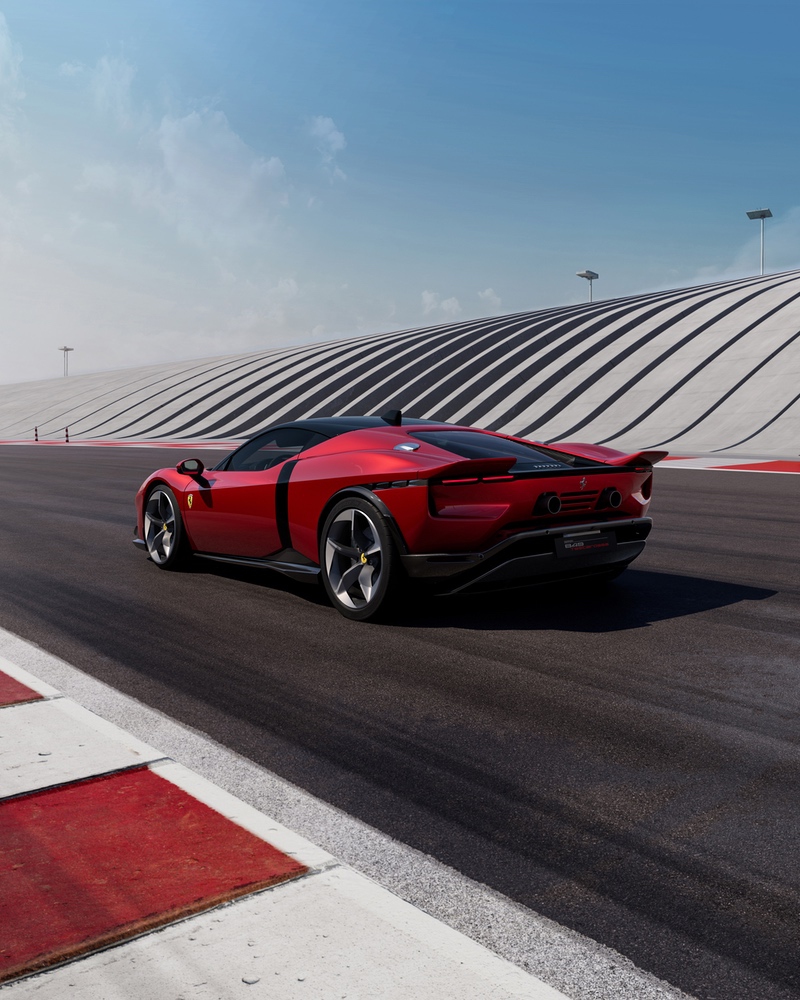
The Ferrari 849 Testarossa has a more aggressive and futuristic design language than the SF90 Stradale. Where the SF90 looked technical and compact, the 849 Testarossa appears wider, sharper, and more visually assertive. Ferrari has not attempted to create a simple nostalgic tribute to the 1980s Testarossa, but there are clear historical references, particularly in the car’s horizontal graphic elements, rear treatment, and muscular stance.
Exterior Philosophy
The exterior design is built around aerodynamic function. This is a car shaped by airflow, cooling requirements, and hybrid packaging. The front end is low and wide, with a strong horizontal emphasis that gives the car a more planted appearance. The bodywork appears clean from some angles, but closer inspection reveals significant aero detailing, including channels, vents, and surfaces designed to manage air across and beneath the car.
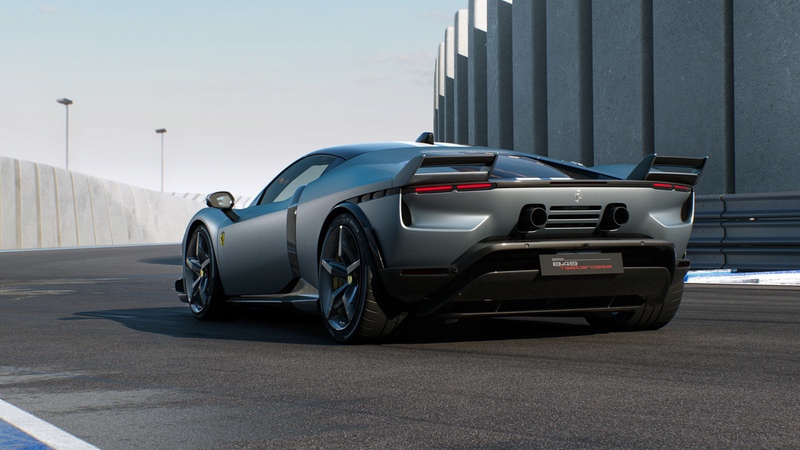
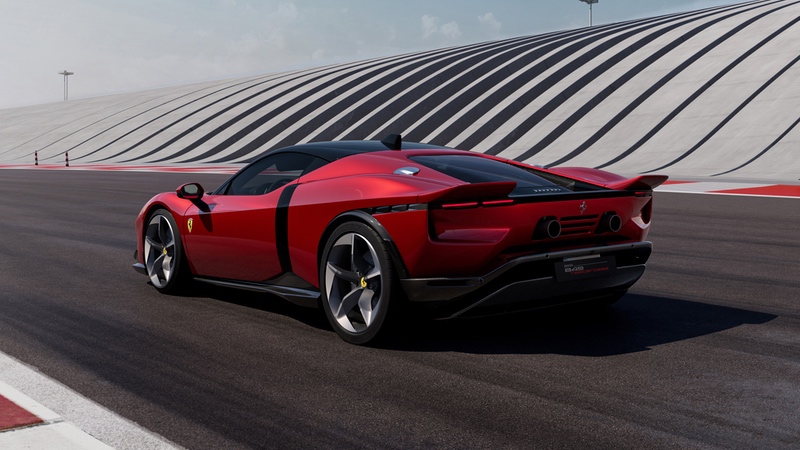
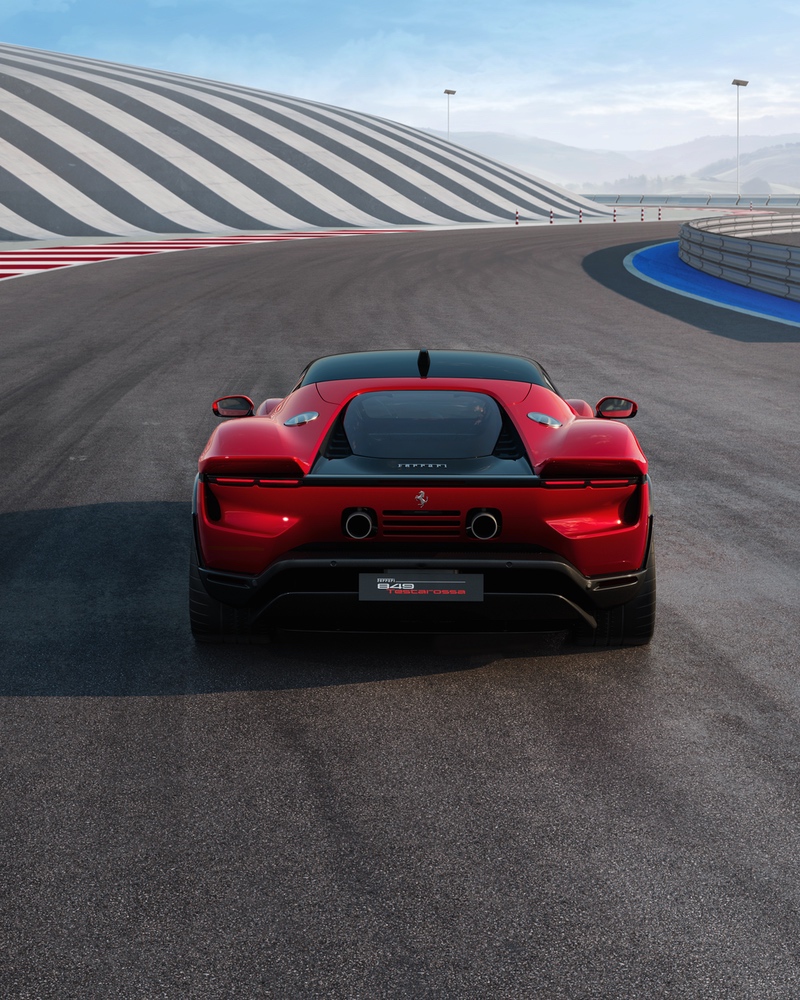
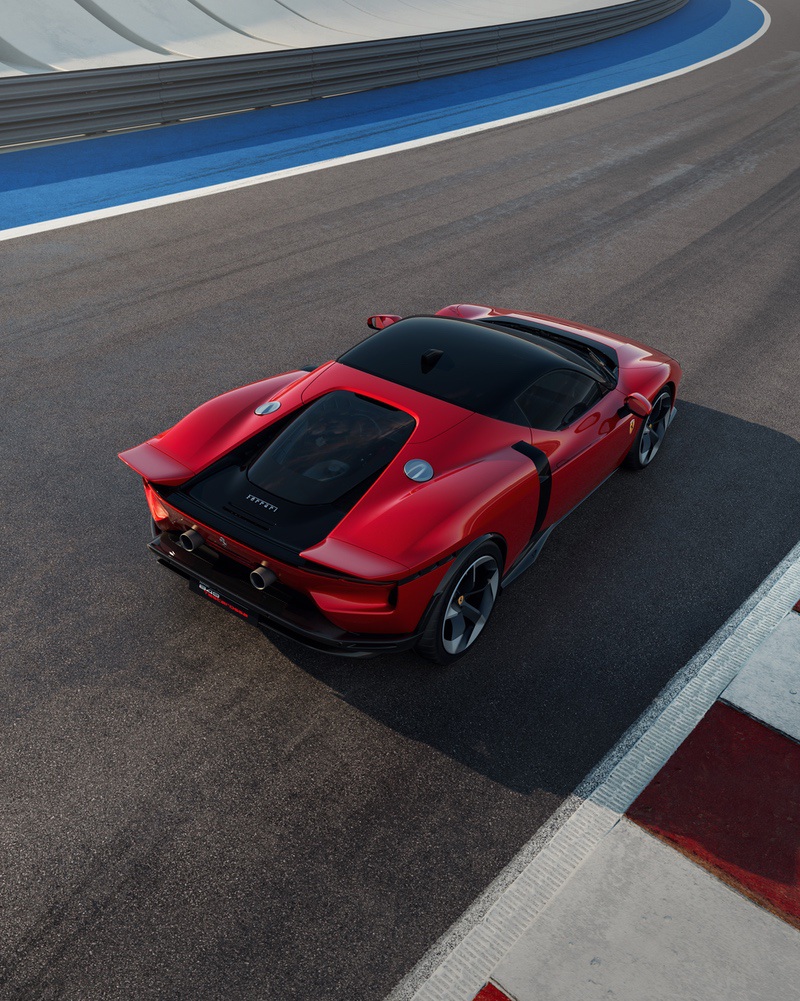
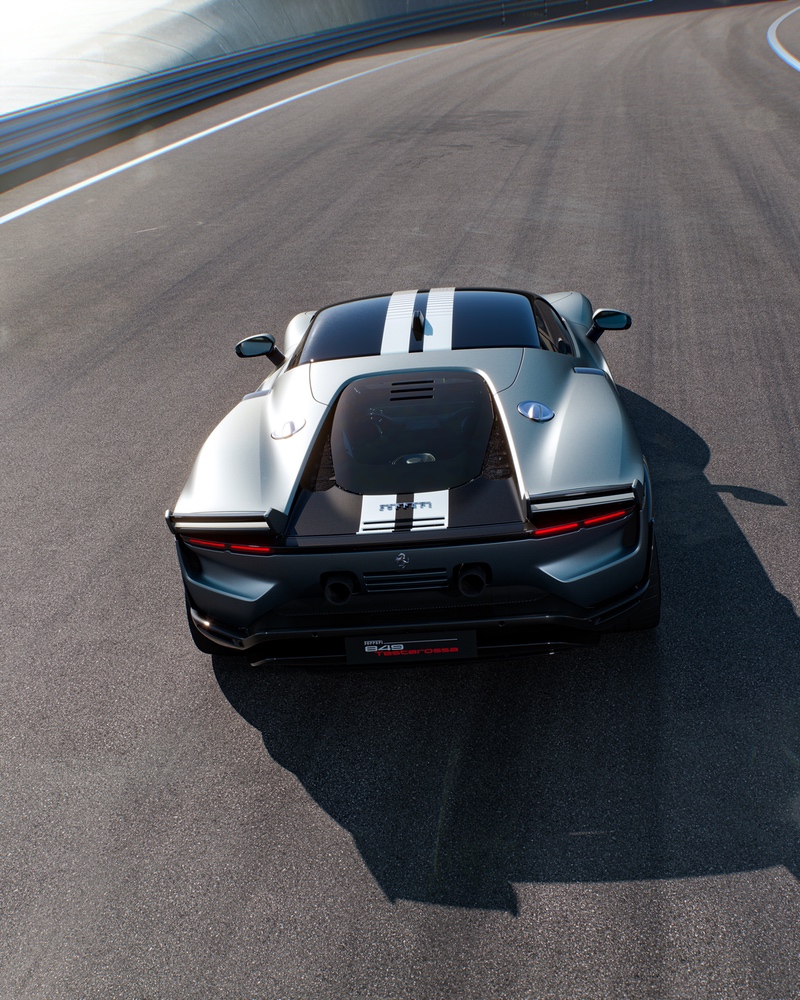
At the rear, the 849 Testarossa adopts a dramatic full-width design treatment. Rather than relying on traditional round Ferrari tail lights, the rear section emphasises width and visual tension. This gives the car a more technical appearance and distances it from the softer, more elegant proportions of older V8 Ferraris.
Aerodynamic Function
Ferrari has significantly increased aerodynamic performance. Reports state that the car can generate around 415 kg of downforce at 250 km/h, assisted by an active rear spoiler and redesigned underbody surfaces. This is not cosmetic aero. It directly supports the car’s dynamic purpose: stability at very high speed, sharper track performance, and greater confidence during braking and cornering.
Interior Design
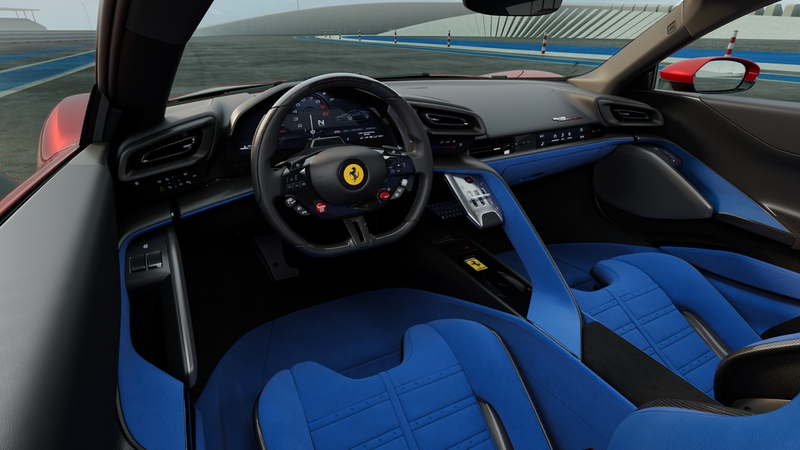
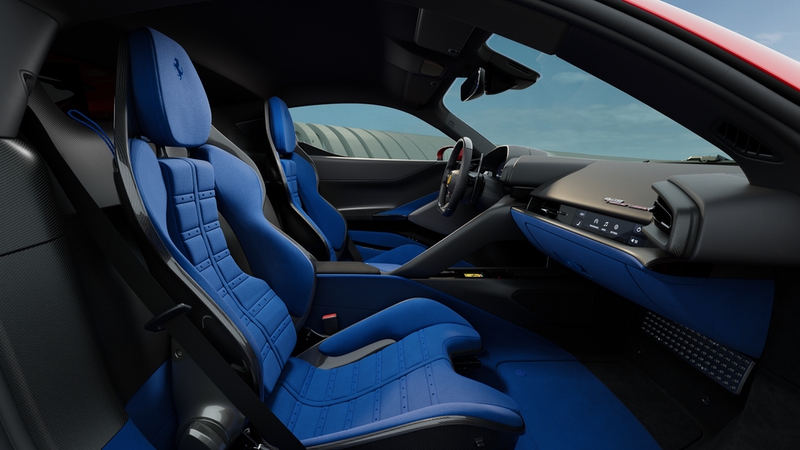
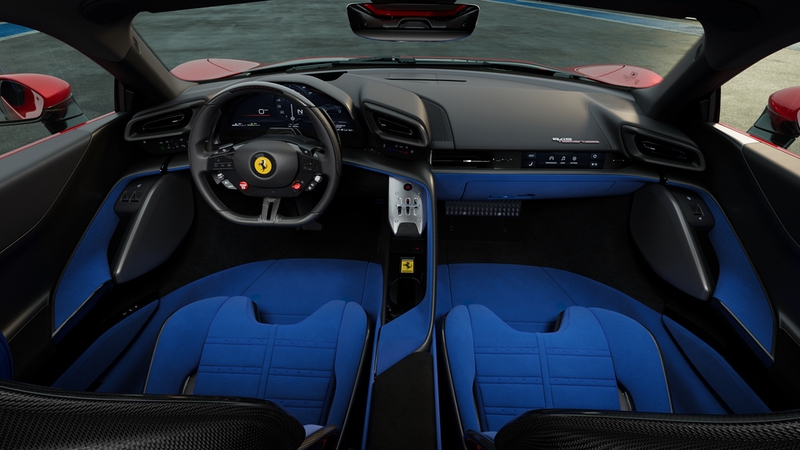
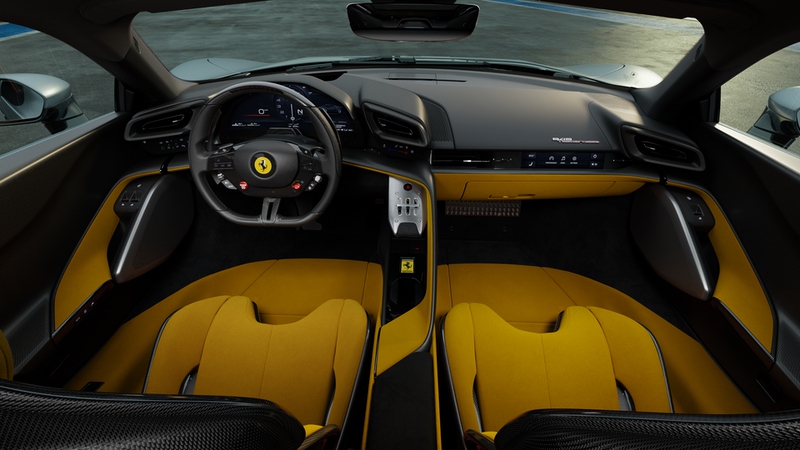
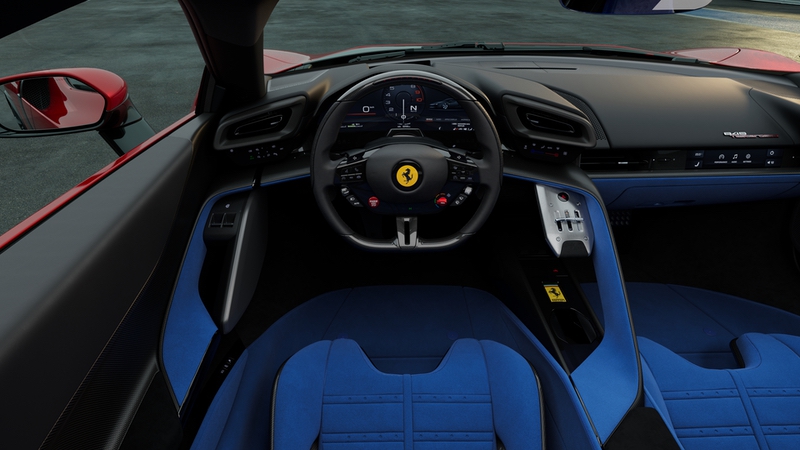
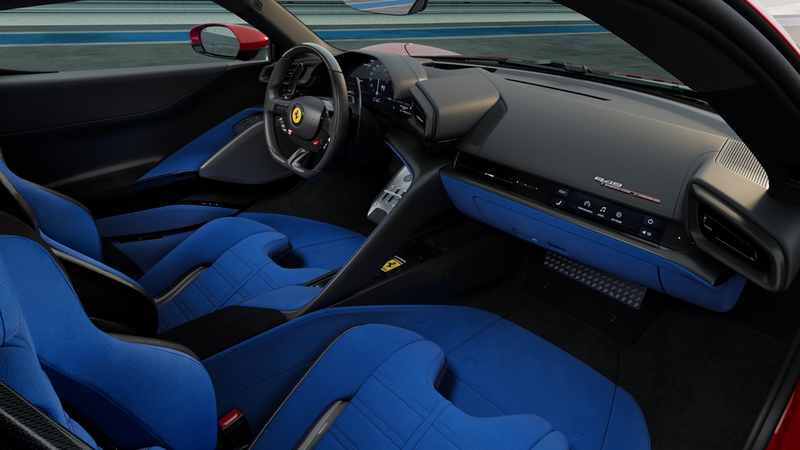
Inside, the 849 Testarossa follows Ferrari’s modern digital cockpit philosophy but with ergonomic improvements over earlier models. The SF90’s highly touch-sensitive interior divided opinion, and Ferrari appears to have responded by refining the interface and improving usability. The cabin remains driver-focused, but the layout is more mature, with a more structured centre area and better integration of infotainment and controls.
The overall impression is of a supercar designed for serious use rather than occasional theatre. It remains exotic and expensive, but not fragile or ornamental. The design communicates a clear message: this is Ferrari’s high-technology performance flagship, not a traditional GT and not a nostalgic revival.
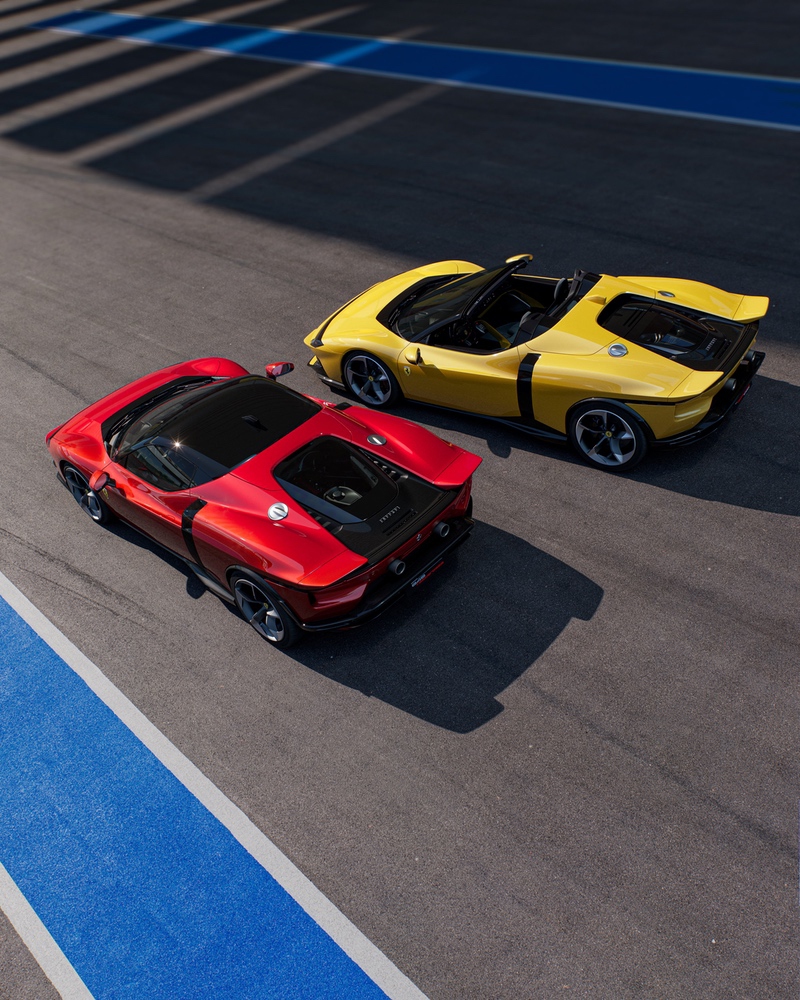
4. Engine & Technical Specifications
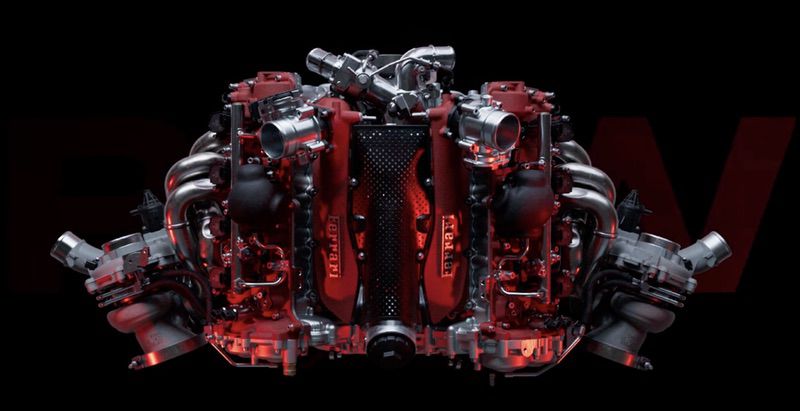
The Ferrari 849 Testarossa uses a heavily revised version of Ferrari’s 4.0-litre twin-turbocharged V8, combined with three electric motors. The combustion engine alone produces around 830 cv, while the total hybrid system output reaches 1,050 cv. Ferrari describes this as a record for a production Ferrari.
Powertrain Layout
The car uses a mid-rear-mounted V8 supported by:
- One electric motor integrated with the rear powertrain
- Two electric motors driving the front axle
- An 8-speed dual-clutch transmission
- All-wheel drive through hybrid torque-vectoring
This layout is conceptually similar to the SF90 Stradale but significantly updated. The front motors provide traction and torque-vectoring, while the rear electric motor assists the combustion engine with torque fill, response, and low-speed electric operation.
Key Technical Figures
Core figures include:
- Engine: 4.0-litre twin-turbocharged V8
- Hybrid system: three electric motors
- Total output: 1,050 cv / approximately 1,036 hp
- Transmission: 8-speed dual-clutch automatic
- Drivetrain: plug-in hybrid all-wheel drive
- 0–100 km/h: under 2.3 seconds
- Top speed: approximately 330 km/h / 205 mph
- Battery: around 7.45 kWh, with limited electric-only range reported at around 15 miles
Why the Hybrid System Matters
The hybrid system is not simply there to add headline power. Its main benefit is control. Electric torque can be deployed instantly, helping to fill any delay from the turbocharged engine. The front motors also help pull the car out of corners with enormous traction, making the car more exploitable than a purely rear-wheel-drive car with similar output.
The result is not a traditional Ferrari powertrain experience. It will not have the rising mechanical purity of a naturally aspirated V12. Instead, the 849 Testarossa offers a different kind of performance: immediate, layered, electronically managed, and brutally effective.
5. Performance
The Ferrari 849 Testarossa is one of the fastest road-going Ferraris ever built. Ferrari claims a 0–100 km/h time of under 2.3 seconds, a top speed of around 330 km/h, and a Fiorano lap time of 1 minute 17.5 seconds, making it faster than the SF90 Stradale and close to the extreme SF90 XX.
Acceleration
Acceleration is the car’s most obvious strength. The combination of twin-turbo V8 power, electric torque fill, and all-wheel drive means the 849 Testarossa launches with extraordinary force. Unlike older rear-drive Ferraris, where throttle application required patience and judgement, the 849 uses hybrid torque-vectoring to deploy power with immense efficiency.
This changes the character of the car. The acceleration is not just dramatic; it is highly managed. The car is designed to convert enormous power into forward motion with minimal waste. That makes it exceptionally quick on road and track, but it also means the driver experience is less about taming mechanical excess and more about working with an advanced control system.
Cornering and Track Use
The 849 Testarossa’s performance is not limited to straight-line speed. The aerodynamic package, all-wheel-drive traction, and electronic control systems give it very high corner-exit capability. On track, this should make the car easier to drive quickly than many older high-powered Ferraris.
Its Fiorano lap time is particularly important because Ferrari uses Fiorano as an internal benchmark. A 1:17.5 lap places the 849 among Ferrari’s most capable production cars, showing that it is not merely an SF90 with more power, but a materially faster and more developed car.
Braking and Stability
With this level of speed, braking performance is central to the experience. Ferrari’s latest brake-by-wire and ABS systems are designed to maximise stability under heavy braking, especially when the car is transitioning from high speed into tight corners. In practical terms, this should make the 849 feel more secure than its power output suggests.
Real-World Performance
On public roads, the challenge is not accessing the car’s performance but managing how quickly it arrives. The 849 Testarossa will be devastatingly fast in short bursts, often reaching serious speeds before the driver has fully processed the acceleration. This means the car’s best real-world quality may not be its absolute speed, but the way it delivers response, traction, and confidence at ordinary road speeds.
For many buyers, that is the real appeal. It offers hypercar-level speed, but without the intimidation or rarity of a limited-series Ferrari. It is not subtle, but it is usable. That combination is central to its market positioning.
6. Variants & Special Editions
The Ferrari 849 Testarossa range is expected to include the coupe, Spider, and higher-performance configurations through optional packages. As with the SF90 before it, Ferrari is likely to use equipment packages and future derivatives to appeal to different buyer profiles.
Ferrari 849 Testarossa Coupe
The coupe is the core model and will likely be the preferred choice for buyers focused on maximum rigidity, track use, and long-term purity. It is lighter than the Spider and better suited to customers who value precision over open-air theatre. UK pricing has been reported from around £407,617, while US pricing is listed from approximately $565,685.
Ferrari 849 Testarossa Spider
The Spider brings the same powertrain and core performance concept to an open-top format. It will be slightly heavier and more expensive, but for many markets it may be the more desirable version. Top Gear reports UK Spider pricing from around £442,467, while Car and Driver lists the Spider from around $577,437 in the US.
The Spider’s appeal is experiential rather than numerical. With the roof down, the hybrid V8 soundtrack, turbo response, and speed sensation become more immediate. It may not be the purist’s choice, but it will likely be the lifestyle buyer’s preference.
Assetto Fiorano Package
The Assetto Fiorano package is expected to be the key enthusiast option. On the SF90, Assetto Fiorano added lightweight components, more focused suspension, and track-biased upgrades. For the 849 Testarossa, Top Gear suggests the package pushes the UK coupe price to around £449,732, while the Spider with the package reaches around £484,582, before further options.
For buyers intending to drive the car hard, Assetto Fiorano will likely be the specification to consider. It should improve response, reduce weight, and sharpen the car’s behaviour. However, it may also compromise ride comfort and increase running costs through more aggressive components.
Future Limited Editions
Ferrari may later introduce a more extreme version, following the precedent of the SF90 XX Stradale and SF90 XX Spider. If that happens, those models will likely be more collectible, more expensive, and more difficult to access through normal allocation channels.
For most buyers, the standard 849 Testarossa or Assetto Fiorano-equipped car will be the realistic choice. The best specification will depend on intended use: standard coupe for mixed road use, Assetto Fiorano for track-focused buyers, and Spider for those prioritising open-air drama.
7. Driving Experience
The 849 Testarossa is likely to feel very different from a traditional Ferrari V8 or V12. Its driving character comes from the interaction between combustion power, electric torque, all-wheel-drive traction, and advanced software. It is not analogue, and it should not be judged as though it is trying to be.
At Low Speeds
At low speeds, the hybrid system should make the car unusually refined for something with this level of performance. Electric operation allows quiet movement in urban areas, while the dual-clutch gearbox should be smooth when driven gently. This makes the 849 more usable than its figures suggest.
The front electric motors also help with confidence. In slippery or imperfect conditions, the car can distribute torque in a way that a conventional rear-drive Ferrari cannot. That does not make it an everyday commuter, but it does make it less intimidating.
On Fast Roads
On a fast road, the 849 Testarossa should feel explosive but controlled. The electric motors sharpen the response before the turbocharged V8 reaches full force. This means throttle inputs are met with immediate acceleration, rather than the slight pause sometimes associated with large turbocharged engines.
The steering is expected to be quick and light in the modern Ferrari style. This can make the car feel agile despite its complexity, although some drivers may prefer the heavier, more natural feedback of older Ferraris. The key difference is confidence: the 849 gives the driver huge ability, but filters much of the workload through electronics.
On Track
On track, the car’s depth should become clearer. The aerodynamic load, hybrid torque-vectoring, braking systems, and power delivery combine to create a car that can sustain serious pace. The 849 is not merely fast in a straight line; it is engineered to repeat that performance through corners, braking zones, and exits.
For a serious buyer, the driving experience should be understood honestly. This is not a car for someone seeking mechanical simplicity. It is a car for someone who wants Ferrari’s most complete high-technology performance experience.
8. Ownership Insights
Owning a Ferrari 849 Testarossa will require a different mindset from owning a traditional naturally aspirated Ferrari. The car combines supercar running costs with hybrid system complexity, high-performance tyres, carbon-ceramic brakes, and expensive optional equipment.
Running Costs
Expected annual running costs will vary heavily depending on mileage and usage, but realistic estimates include:
- Insurance: approximately £7,000–£15,000 / $9,000–$20,000+ depending on location, driver profile, storage, and agreed value
- Tyres: approximately £1,800–£3,000 / $2,300–$4,000 per set
- Brake components: potentially very expensive if used regularly on track
- Fuel: high when driven hard, although electric running may reduce short-distance consumption
- Charging: minimal cost relative to ownership, but useful for short urban movement
Ferrari’s seven-year maintenance programme is likely to reduce scheduled servicing costs, but it does not make the car cheap to run. Wear items, tyres, insurance, paint protection, storage, and warranty extensions remain significant.
Servicing Reality
The 849 Testarossa should be serviced through Ferrari main dealers or highly specialised Ferrari independents once outside warranty. Because this is a complex plug-in hybrid with high-voltage systems, it is not a car for generalist servicing. Diagnostic capability, battery system knowledge, and factory procedures matter.
Owners should also think carefully about software updates, recalls, and battery health. Modern Ferraris are increasingly dependent on electronic systems, and the long-term ownership experience will depend partly on how well those systems are maintained.
Reliability Expectations
Modern Ferraris are generally more robust than older stereotypes suggest, but the 849 is still a highly complex machine. The engine itself is a development of Ferrari’s proven twin-turbo V8 architecture, but the hybrid system, front motors, battery pack, cooling systems, and control electronics increase complexity.
A proper pre-purchase inspection will be essential once cars enter the used market. Buyers should check service records, battery health, accident history, warranty status, option specification, tyre condition, brake wear, and evidence of track use.
Real-World Usability
The 849 Testarossa is more usable than a hypercar, but less practical than a grand tourer. It is low, wide, expensive to park, and likely to attract attention everywhere. For occasional road trips, weekend use, and supercar events, it should be excellent. For daily use, the 296 GTB, Roma, or even Purosangue will make more sense.
9. Market Value & Depreciation
The Ferrari 849 Testarossa enters the market at a very high price point, with UK coupe pricing reported from around £407,617 and US pricing listed from $565,685. With options, Assetto Fiorano, paint, carbon fibre, wheels, interior upgrades, and personalisation, many cars will likely transact far above base price.
New Market Position
Compared with the SF90 Stradale, the 849 Testarossa is more expensive, more powerful, and more visually assertive. It is positioned as Ferrari’s current production performance flagship rather than a limited collector hypercar. That means demand should be strong, but not necessarily immune to depreciation.
Depreciation Outlook
The depreciation curve will likely depend on three factors:
- Supply levels
- Option specification
- Market sentiment toward hybrid Ferraris
Historically, regular-production Ferrari flagships can depreciate in the early years if supply catches up with demand. However, desirable specifications, low mileage, Assetto Fiorano cars, and early allocation examples may remain stronger.
Long-Term Collectability
The Testarossa name may support long-term desirability, but it does not automatically guarantee appreciation. Collectors will judge the car on how it drives, how rare desirable specifications become, and whether it represents a meaningful step forward from the SF90.
The safest long-term buys are likely to be well-specified coupes with desirable colours, Assetto Fiorano package, low mileage, and full Ferrari history. The Spider may have stronger lifestyle demand, especially in warm-weather markets, but the coupe may carry more appeal among performance-focused collectors.
10. Competitors
Lamborghini Revuelto
The Lamborghini Revuelto is the most obvious rival. Like the Ferrari, it uses hybrid assistance, all-wheel drive, and extreme performance. However, the philosophy is different. The Revuelto retains a naturally aspirated V12, which gives it a more dramatic combustion-engine identity, while the Ferrari uses a twin-turbo V8 hybrid system to deliver sharper torque response and immense technical efficiency.
In real terms, the Lamborghini feels more theatrical and more visually extroverted. The Ferrari is likely to feel more precise, more technical, and more focused on lap-time efficiency. Buyers choosing between them are really choosing between two emotional languages: V12 spectacle versus Ferrari hybrid precision.
McLaren 750S
The McLaren 750S is lighter, simpler, and more rear-drive focused. It does not match the Ferrari’s total power output or hybrid all-wheel-drive traction, but it may offer a purer steering and chassis experience. For drivers who value delicacy, feedback, and low weight, the McLaren remains a serious alternative.
The Ferrari is more technologically advanced and faster in many conditions. The McLaren may be more involving at lower speeds. This makes the comparison less about numbers and more about driver preference.
Aston Martin Valhalla
The Aston Martin Valhalla is another hybrid supercar, positioned as a mid-engined flagship with strong performance credentials. Its appeal lies in rarity, design, and Aston Martin’s move into serious mid-engined territory. However, Ferrari has far deeper experience building mid-engined supercars at this level.
The Valhalla may appeal to buyers wanting something less obvious than Ferrari, but the 849 Testarossa benefits from stronger brand equity, dealer infrastructure, and proven Ferrari hybrid architecture.
Ferrari SF90 Stradale
The SF90 Stradale is not just a predecessor; it is a used-market competitor. A well-specified SF90 may offer much of the same performance philosophy for less money. However, the 849 Testarossa brings more power, sharper aero, improved dynamics, and the added appeal of the Testarossa name.
For value-focused buyers, the SF90 may make more sense. For buyers wanting the latest and most resolved version of Ferrari’s hybrid flagship formula, the 849 is the stronger choice.
11. FAQs
Is the Ferrari 849 Testarossa a V12?
No. Despite the historic Testarossa name, the 849 Testarossa is not powered by a V12 or flat-12 engine. It uses a 4.0-litre twin-turbocharged V8 combined with three electric motors. The total system output is 1,050 cv, making it the most powerful series-production Ferrari to date.
Is the Ferrari 849 Testarossa the replacement for the SF90 Stradale?
Yes. The 849 Testarossa is widely understood as the successor to the SF90 Stradale. It keeps the same broad formula—mid-mounted V8, plug-in hybrid system, three electric motors, all-wheel drive—but increases power and introduces major revisions to design, aerodynamics, and vehicle dynamics.
How much does the Ferrari 849 Testarossa cost?
UK pricing has been reported from around £407,617 for the coupe and £442,467 for the Spider. US pricing listed by Car and Driver starts from around $565,685, rising with version and options. Highly specified cars, especially with the Assetto Fiorano package, can cost significantly more.
How fast is the Ferrari 849 Testarossa?
Ferrari claims 0–100 km/h in under 2.3 seconds, with a top speed of around 330 km/h / 205 mph. It has also been reported to lap Fiorano in 1:17.5, making it faster than the SF90 Stradale.
Is the 849 Testarossa good for daily driving?
It is more usable than its performance figures suggest, thanks to hybrid assistance, electric-only capability, and all-wheel-drive traction. However, it is still a very low, wide, expensive, and complex supercar. It can be driven regularly, but most owners will use it for weekends, events, special journeys, and occasional track days rather than daily commuting.
Is the Assetto Fiorano package worth it?
For buyers who want the sharpest, most focused version, yes. The Assetto Fiorano package should improve track performance, reduce weight, and add more focused suspension and aerodynamic elements. However, it may also make the car firmer and less comfortable for road use. Buyers who mainly want a road car may prefer the standard specification.
Will the Ferrari 849 Testarossa be collectible?
Potentially, but collectability will depend on specification, production numbers, condition, and future Ferrari model strategy. The Testarossa name gives the car historical weight, but buyers should not assume automatic appreciation. The strongest examples will likely be low-mileage, well-optioned cars with full Ferrari service history and desirable specifications.
12. Related Articles
- Ferrari SF90 Stradale
- Ferrari SF90 XX Stradale
- Ferrari 296 GTB
- Ferrari 12Cilindri
- Ferrari F80
- Lamborghini Revuelto
- McLaren 750S
- Aston Martin Valhalla
13. Are You Ready?
- Looking to buy a Ferrari 849 Testarossa? Click to find available cars.
- Need insurance? Click to apply for Supercar Insurance.
- Need a service? Click to book a specialist service.
- Buying one? Click to request a PPI inspection.
- Selling your car? Click to request a valuation.