1. Introduction
The Ferrari Purosangue is one of the most strategically important cars Ferrari has ever produced. It is the first four-door, four-seat production Ferrari, and although Ferrari avoids calling it an SUV, the market inevitably places it in the same conversation as the Lamborghini Urus, Aston Martin DBX707, Bentley Bentayga Speed, and Porsche Cayenne Turbo GT. Ferrari describes it as the first four-door, four-seater car in the company’s 75-year history, which immediately explains why it matters beyond the usual new-model cycle.
The Purosangue is not simply Ferrari’s answer to the luxury performance SUV segment. It is Ferrari’s attempt to redefine that segment around the brand’s own principles: a naturally aspirated front-mid-mounted V12, rear-biased dynamics, a transaxle-style layout, four individual seats, and a body style that sits somewhere between high-riding grand tourer, performance crossover, and luxury shooting brake. The result is a car that deliberately resists being reduced to “Ferrari SUV,” even though that phrase will inevitably dominate search traffic.
For buyers, the Purosangue’s appeal is clear. It offers the Ferrari experience with a level of practicality that older models could not provide. A 812 Superfast gives you the V12 theatre, but not rear-seat usability. A GTC4Lusso offered four seats and grand touring ability, but did not have the same elevated driving position or market relevance. The Purosangue combines Ferrari’s most emotive road-car engine layout with the usability expected by clients who already own Range Rovers, Bentleys, Rolls-Royces and Lamborghini Urus models.
The key technical headline is the engine. The Purosangue uses a 6.5-litre naturally aspirated V12 producing 725 cv / 715 hp and 716 Nm / 528 lb ft of torque. Ferrari quotes 0–100 km/h in 3.3 seconds, 0–200 km/h in 10.6 seconds, and a top speed of over 310 km/h / 193 mph. These figures matter because Ferrari chose not to use a downsized turbocharged engine or hybridised V8. Instead, it positioned the Purosangue around the most emotionally significant engine in its portfolio.
Pricing reflects both its technical status and demand. UK RRP guidance has placed the Purosangue around £364,293, while US pricing has commonly been listed from around the $400,000+ range before options, with real-world transaction prices often much higher depending on specification and market availability. For many buyers, however, the issue is not only price but allocation. Demand has been strong, and Ferrari has been careful not to let the Purosangue become too common, because exclusivity is central to the brand’s positioning.
The Purosangue is therefore best understood as a Ferrari for owners who want one car to do more: family use, long-distance travel, bad-weather capability, luggage space, daily usability, and genuine Ferrari performance. It is not the purest Ferrari, but it may be one of the most usable Ferraris ever made.
2. Production & History
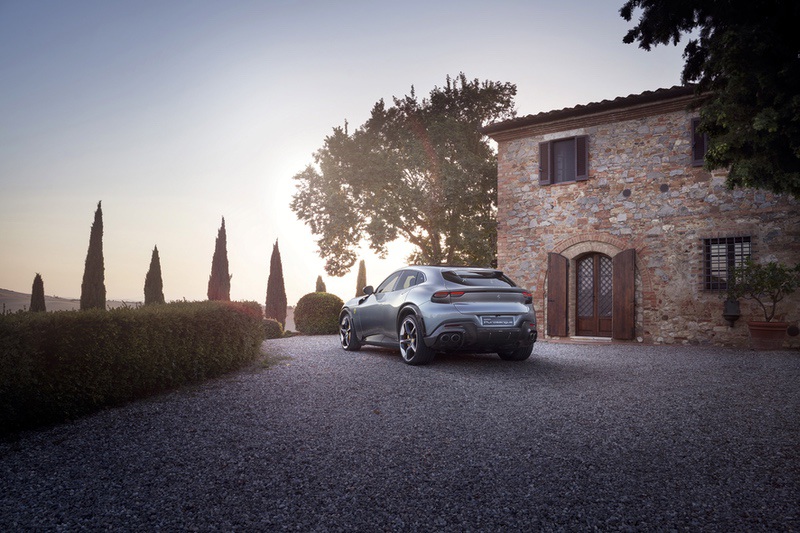
The Ferrari Purosangue was officially unveiled in September 2022 and entered production for the 2023 model year. Its launch marked a major historical shift because it was the first production Ferrari with four doors and four full seats. Ferrari had previously built practical grand tourers, including the FF and GTC4Lusso, but those were two-door shooting brakes rather than four-door vehicles.
The Purosangue name translates loosely as “thoroughbred,” which is an important branding choice. Ferrari clearly wanted to present the car not as a compromise or concession to SUV demand, but as a legitimate Ferrari. That matters because the company had resisted the idea of building an SUV for years. The challenge was not whether Ferrari could build a high-performance luxury utility vehicle; the challenge was whether it could build one without damaging the brand’s sporting credibility.
From FF and GTC4Lusso to Purosangue
The Purosangue did not appear from nowhere. Ferrari had already experimented with practical performance cars through the FF and GTC4Lusso. Those cars introduced the idea of a four-seat Ferrari with all-wheel-drive capability and a front-mounted V12. However, they were niche products. Their shooting-brake proportions gave them character, but they did not directly address the global demand for high-riding luxury performance vehicles.
The Purosangue takes the same broad idea—V12 performance with real-world usability—and moves it into a more commercially relevant format. It has four doors, a higher seating position, more accessible rear seating, and a stronger presence on the road. This makes it far more competitive against vehicles like the Lamborghini Urus and Aston Martin DBX707.
Ferrari’s Reluctance and Strategic Reality
Ferrari’s reluctance to call the Purosangue an SUV is understandable. The company has always built its identity around racing, performance, and exclusivity. A conventional SUV could have looked like a brand dilution exercise. Instead, Ferrari created what it calls a different type of four-door car, with engineering priorities that are closer to a grand tourer than a traditional utility vehicle.
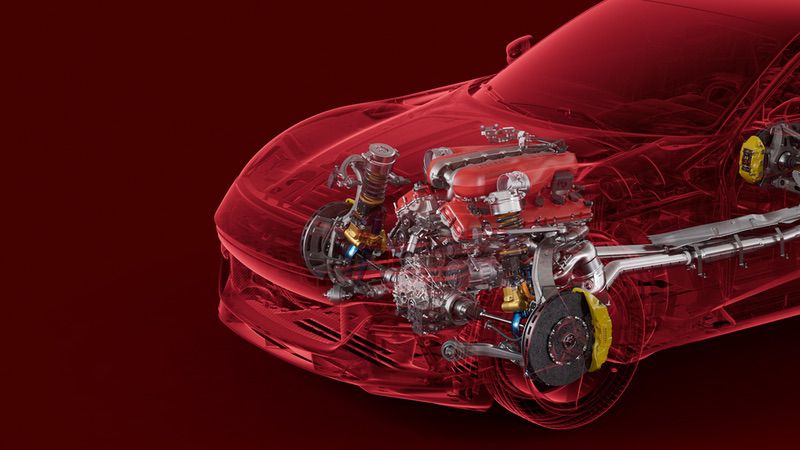
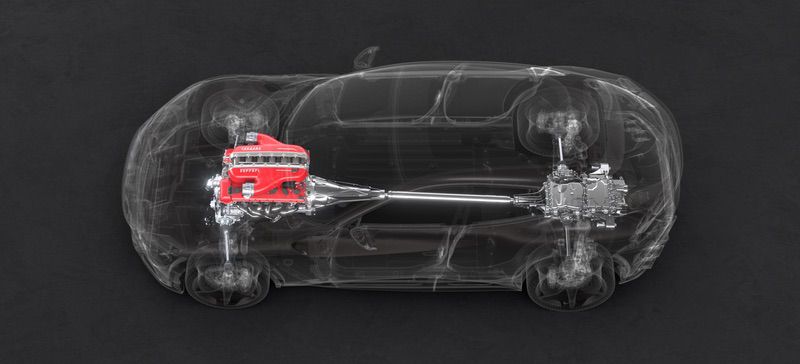
The engineering choices support that claim. Ferrari used a naturally aspirated V12 rather than a turbocharged V8. It mounted the engine behind the front axle for better balance. It used an 8-speed dual-clutch gearbox positioned to support Ferrari-style weight distribution, and it developed advanced active suspension to control body movement. The result is not a conventional SUV with a Ferrari badge; it is a Ferrari performance car adapted for a broader use case.
Production and Allocation
The Purosangue is not a limited-production numbered special, but Ferrari has restricted its volume carefully. This protects exclusivity and residual values. Reports in 2025 also noted that Ferrari reduced the number of cars sent to the UK after changes to non-dom tax status affected luxury demand, with the company seeking to stabilise residual values.
This matters for buyers and sellers. The Purosangue’s market performance is tied not just to product desirability, but also to Ferrari’s supply discipline. If production remains controlled, values should remain stronger than they would for a mass-produced luxury SUV. If supply increases significantly, depreciation pressure could rise.
Historically, the Purosangue will likely be remembered as the car that finally moved Ferrari into the four-door luxury performance market. The important point is that Ferrari did it on its own terms: V12, high performance, design-led, and deliberately positioned above most rivals.
3. Design & Styling
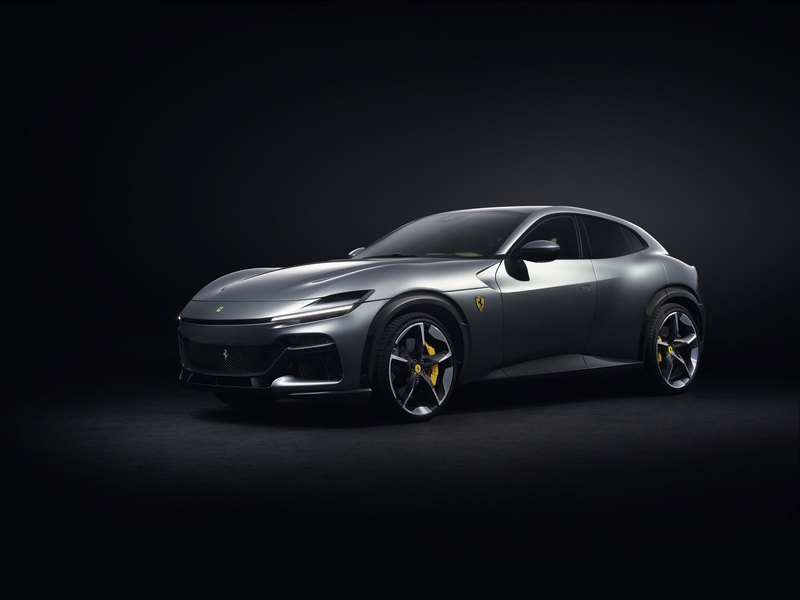
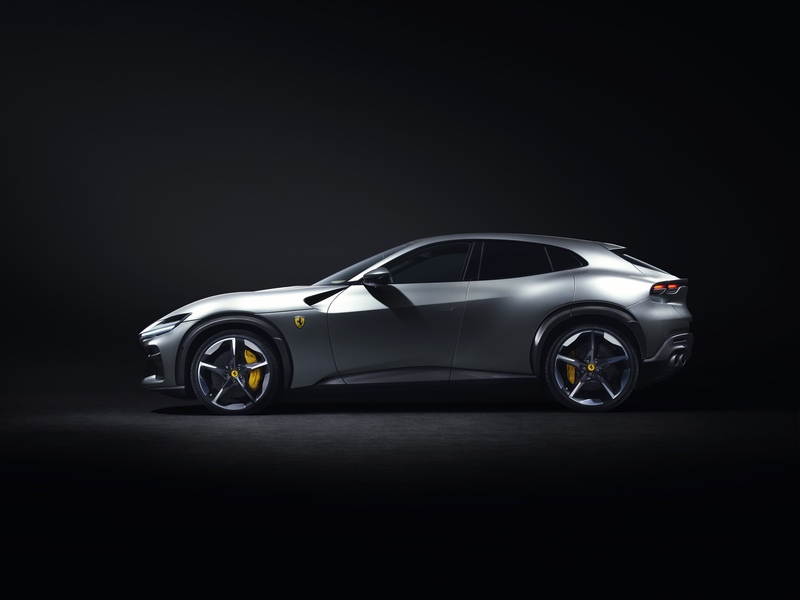
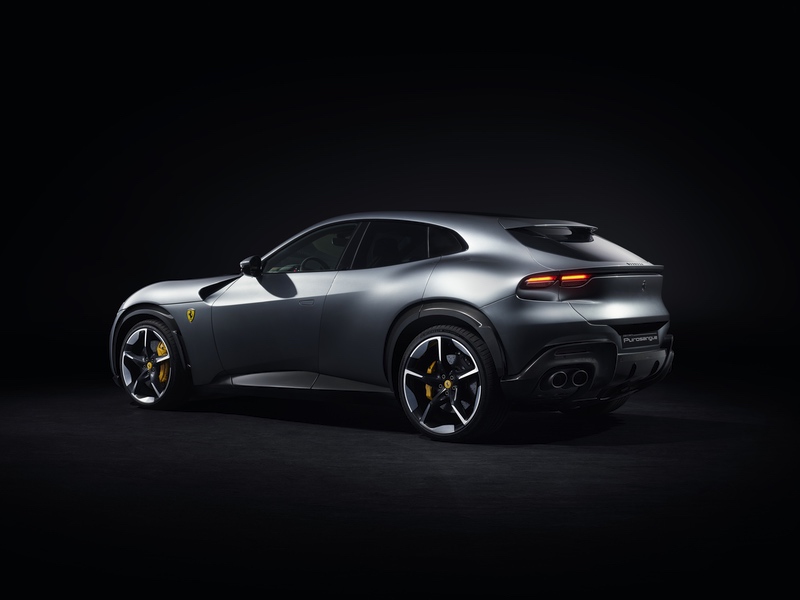
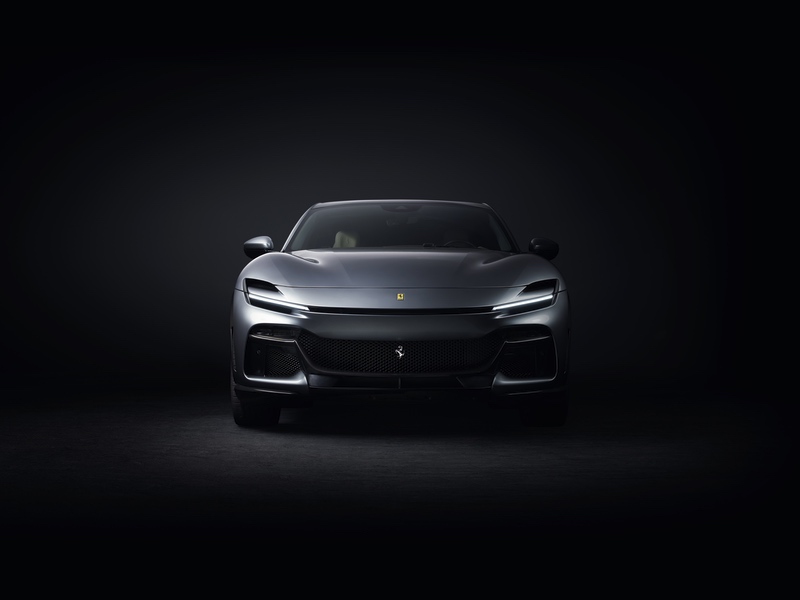
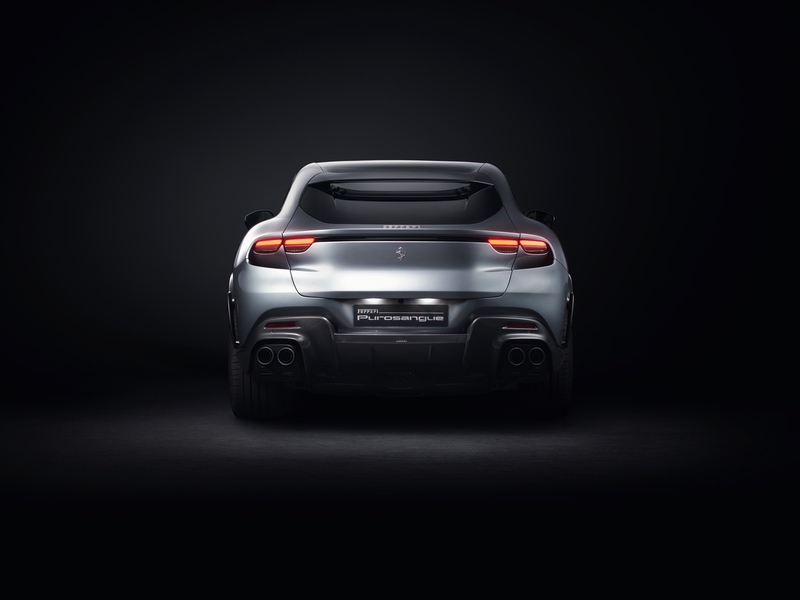
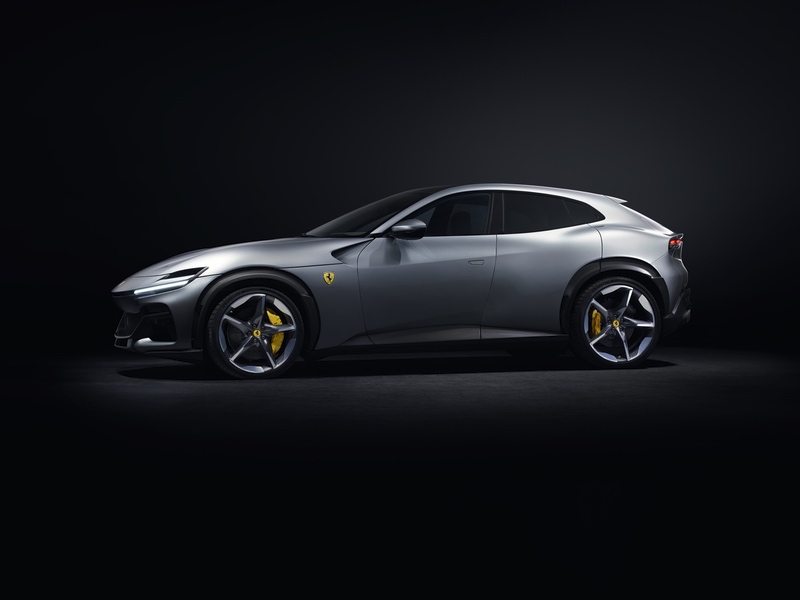
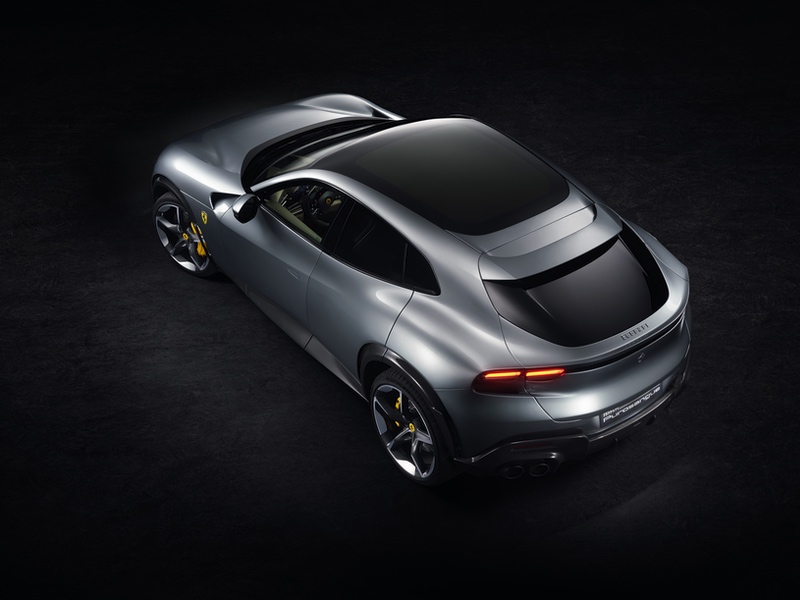
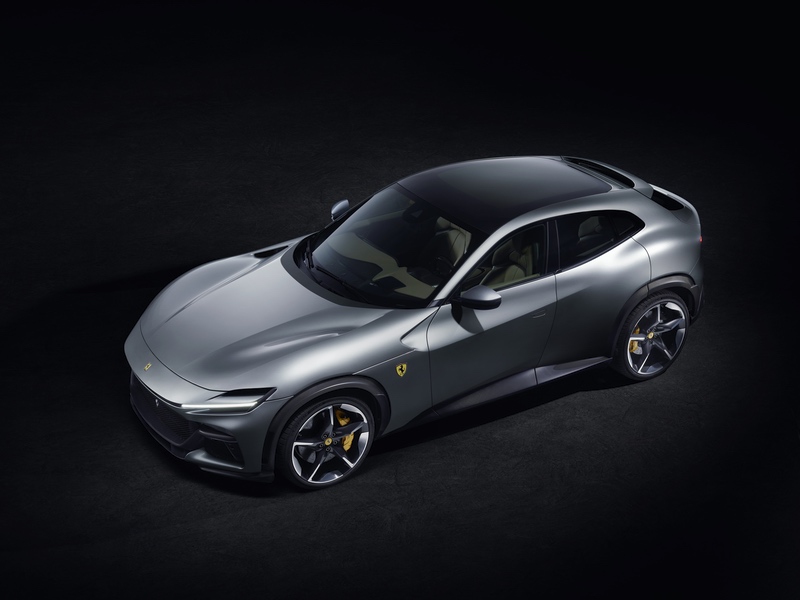
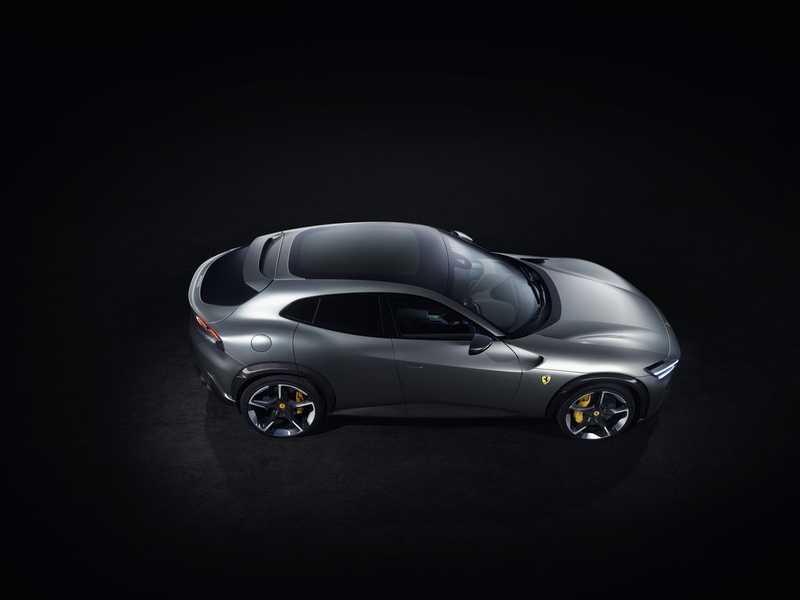
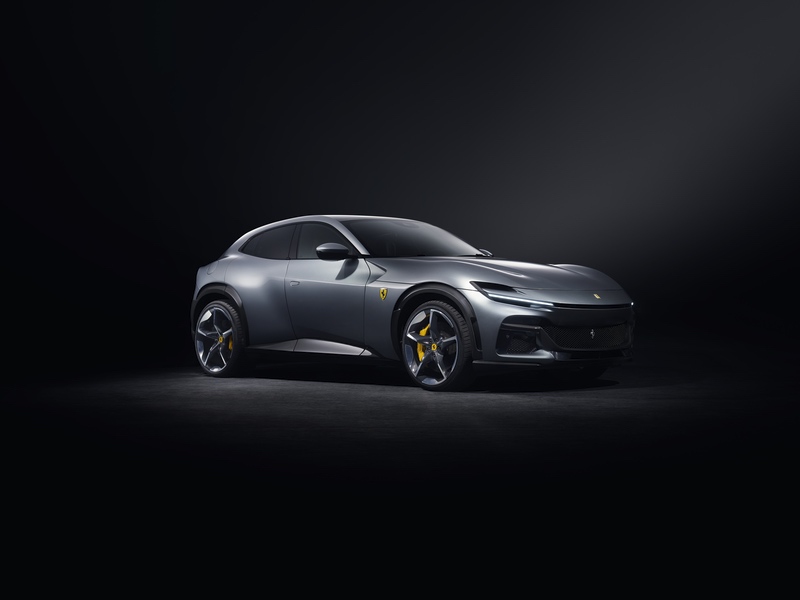
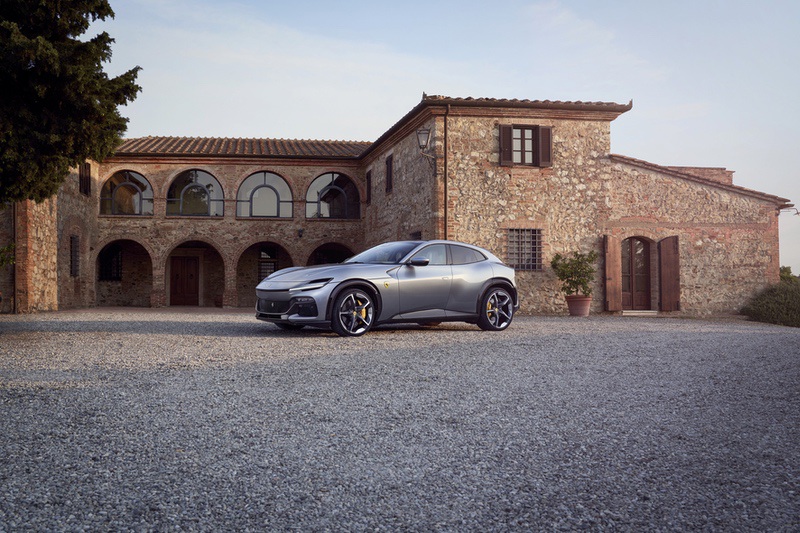
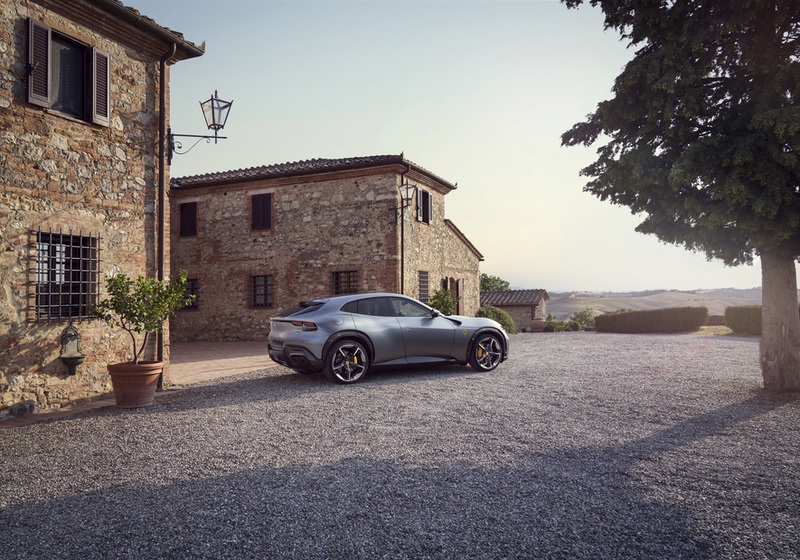
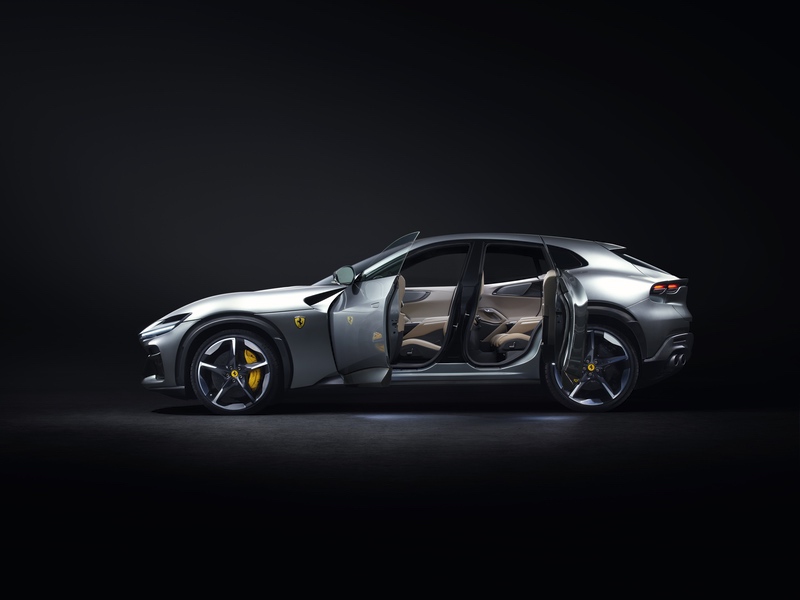
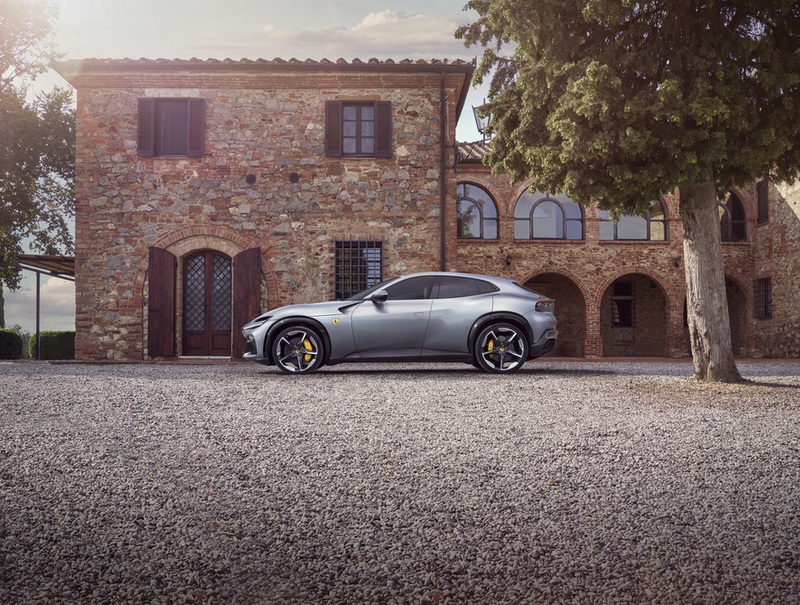
The Ferrari Purosangue’s design is one of its strongest assets because it avoids looking like a conventional SUV. Instead of a boxy utility shape, it has a fastback profile, a long bonnet, a set-back cabin, a muscular rear section, and a stance that appears lower and more athletic than most rivals. Ferrari’s own positioning emphasises that this is the first four-door, four-seat Ferrari, not a traditional SUV.
Exterior Proportions
The proportions are central to the car’s identity. The long bonnet reflects the front-mid-mounted V12, while the cabin sits relatively far back, creating a grand touring silhouette. This makes the Purosangue visually closer to a high-riding shooting brake than a square-edged luxury SUV.
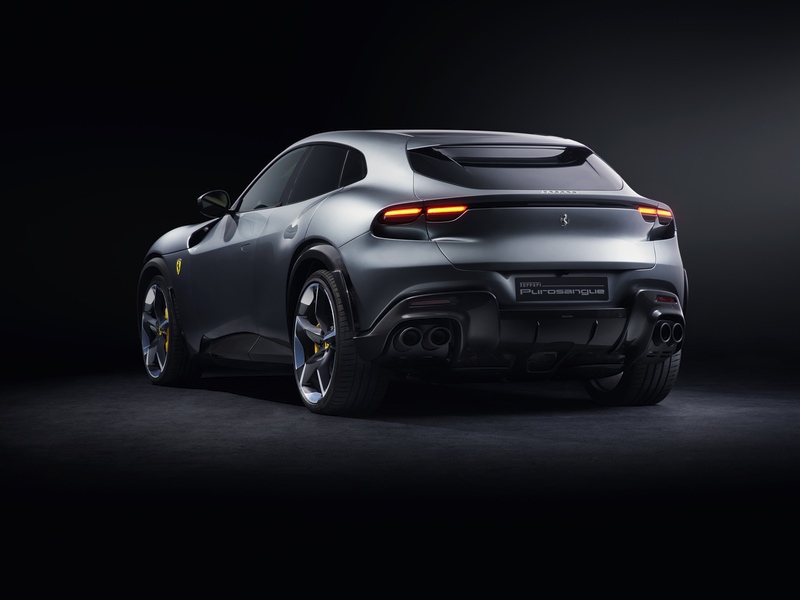
The front end is sharp and technical, with slim lighting elements and aerodynamic channels that reduce visual mass. The body sides are sculpted rather than slab-sided, which helps disguise the car’s size. The rear is compact and muscular, giving the car a more performance-oriented stance than a typical luxury crossover.
Rear-Hinged Rear Doors
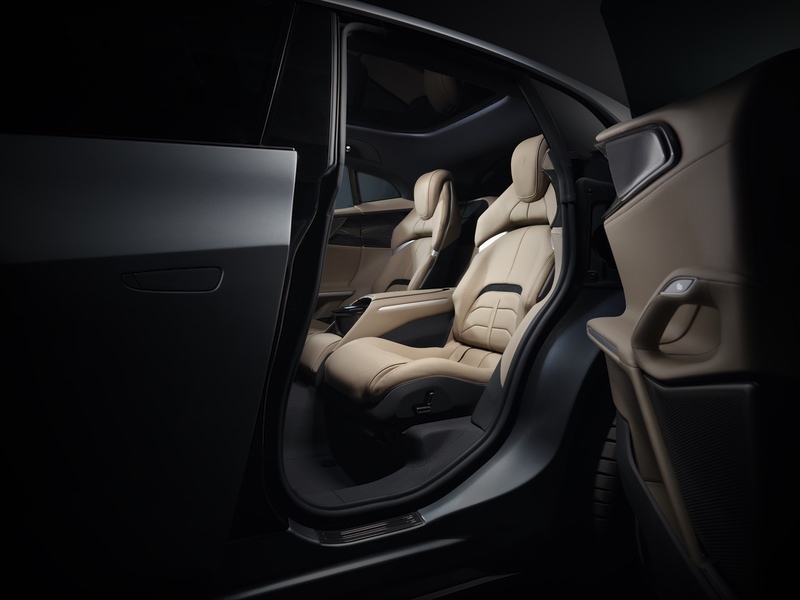
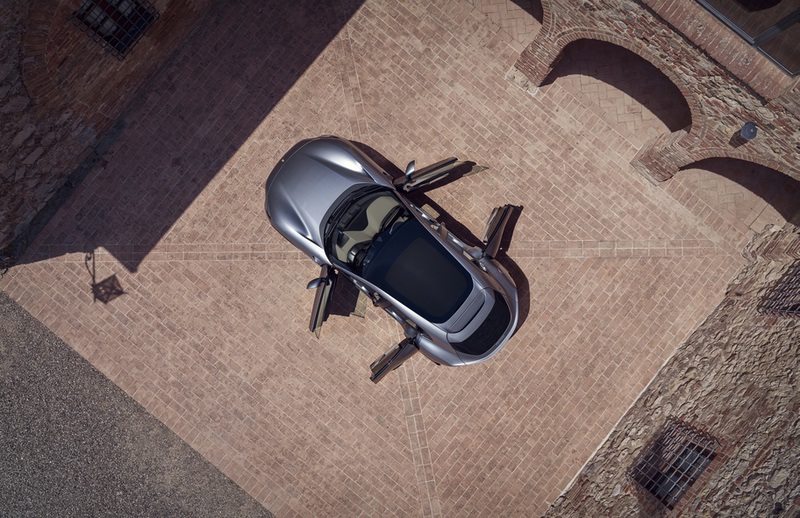
One of the most distinctive design features is the rear-hinged rear door layout. The rear doors open in a coach-door style, with a fixed B-pillar, improving access to the rear seats while preserving a clean side profile. This is not just a visual trick. It makes the Purosangue feel more special as a four-seat Ferrari and differentiates it from conventional SUVs.
Interior Design
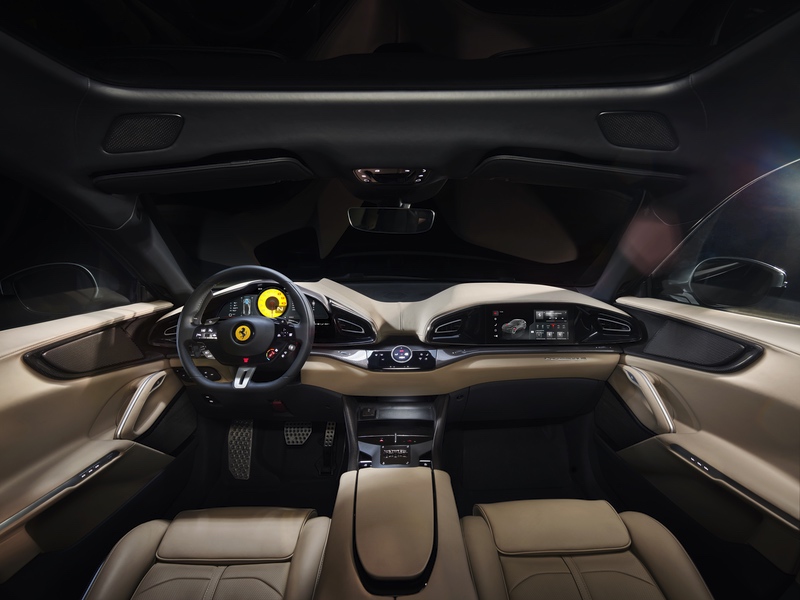
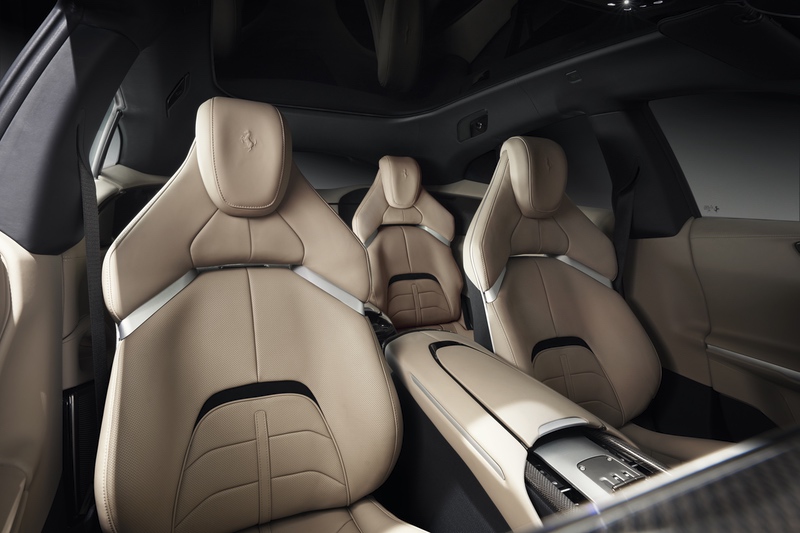
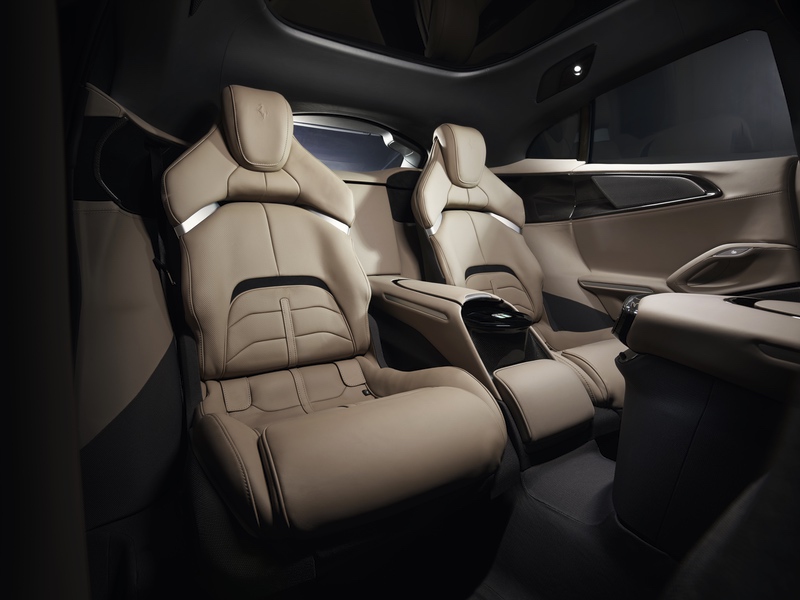
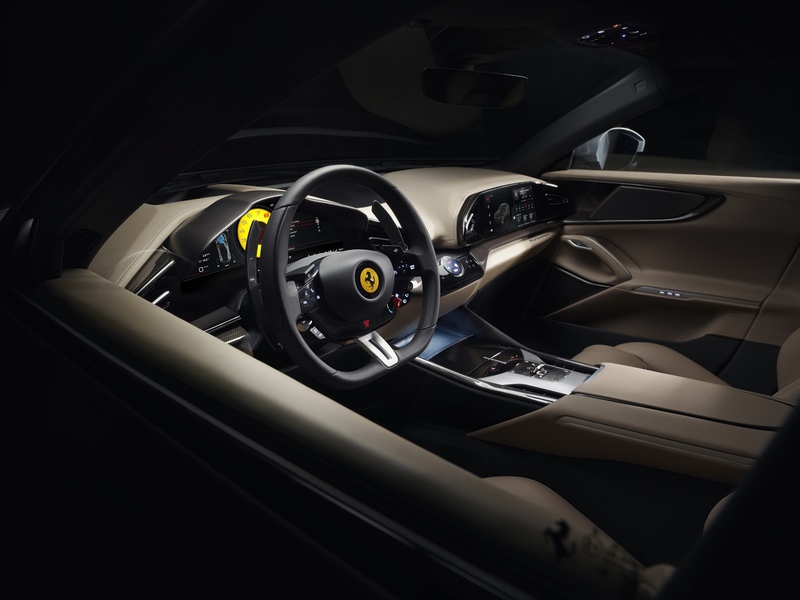
Inside, the Purosangue uses a four-seat layout with individual seats for all occupants. This is important because Ferrari did not try to turn the car into a seven-seat family SUV. It remains a performance-luxury car first and a practical car second. The rear passengers get a genuine Ferrari environment rather than a compromised bench seat.
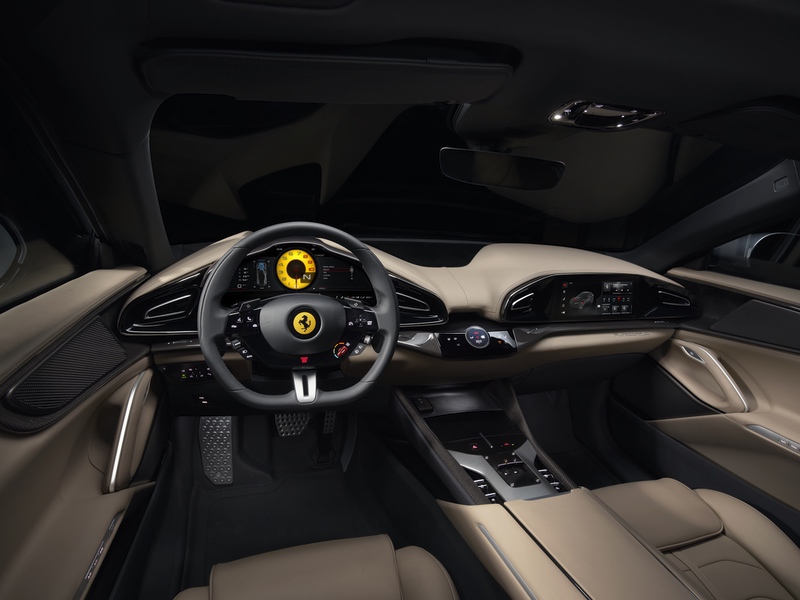
The cabin is driver-focused but more luxurious than Ferrari’s mid-engined supercars. Materials, seating, trim, displays, and personalisation options matter greatly. A well-specified Purosangue can feel closer to a bespoke luxury product than a conventional SUV.
Design Positioning
The design succeeds because it communicates Ferrari without copying existing Ferrari sports cars. It has enough practicality to appeal to buyers who need space, but enough visual drama to avoid feeling ordinary. That balance is why the Purosangue has been so important commercially. It gives Ferrari access to the most profitable part of the luxury market while preserving a distinctive brand identity.
4. Engine & Technical Specifications
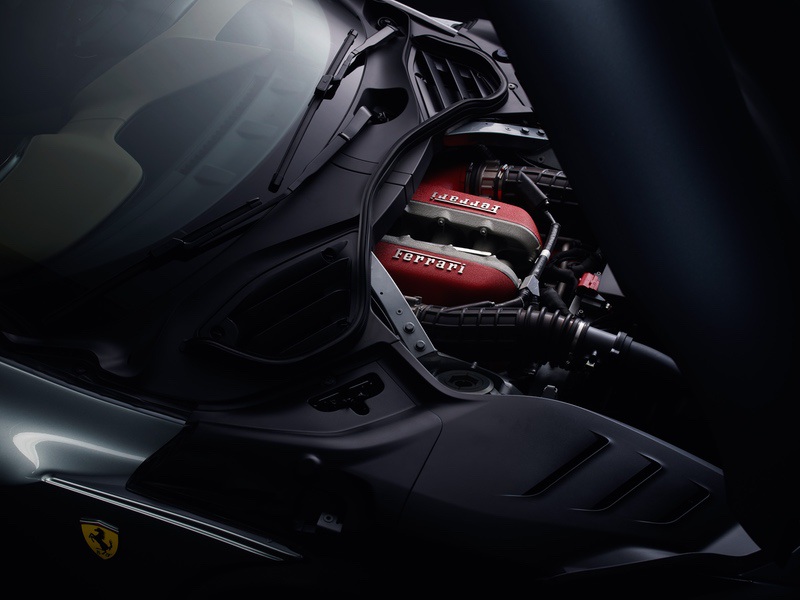
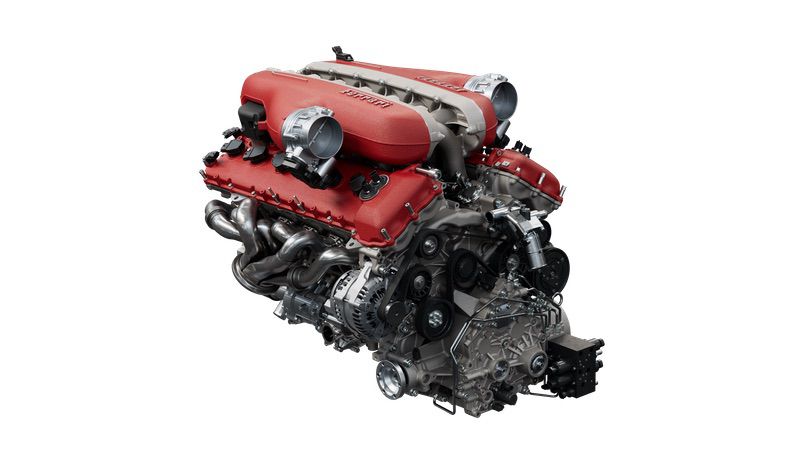
The Purosangue’s defining feature is its engine. Ferrari chose a 6.5-litre naturally aspirated V12, producing 725 cv / 715 hp at 7,750 rpm and 716 Nm / 528 lb ft of torque at 6,250 rpm. This decision is central to the car’s identity. Ferrari could have used a turbocharged V8, a hybrid system, or a lower-cost powertrain. Instead, it gave the Purosangue the engine layout most closely associated with Ferrari’s heritage.
Core Technical Specification
Key figures include:
- Engine: 6.5-litre naturally aspirated V12
- Power: 725 cv / 715 hp
- Torque: 716 Nm / 528 lb ft
- Transmission: 8-speed dual-clutch automatic
- Drivetrain: all-wheel drive
- Layout: front-mid engine
- 0–100 km/h: 3.3 seconds
- 0–200 km/h: 10.6 seconds
- Top speed: over 310 km/h / 193 mph
- Seating: four individual seats
- Doors: four-door layout with rear-hinged rear doors
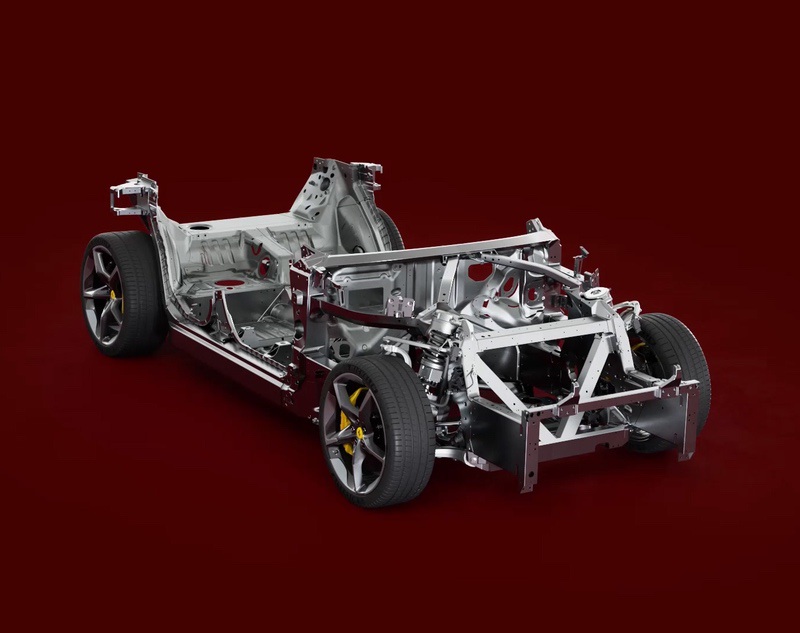
Ferrari’s technical release also highlighted a 49:51% weight distribution, helped by the placement of the engine and transmission architecture. This is highly unusual for a high-riding four-door performance car and explains why Ferrari insists the Purosangue should not be judged like a normal SUV.
Transmission and Drivetrain
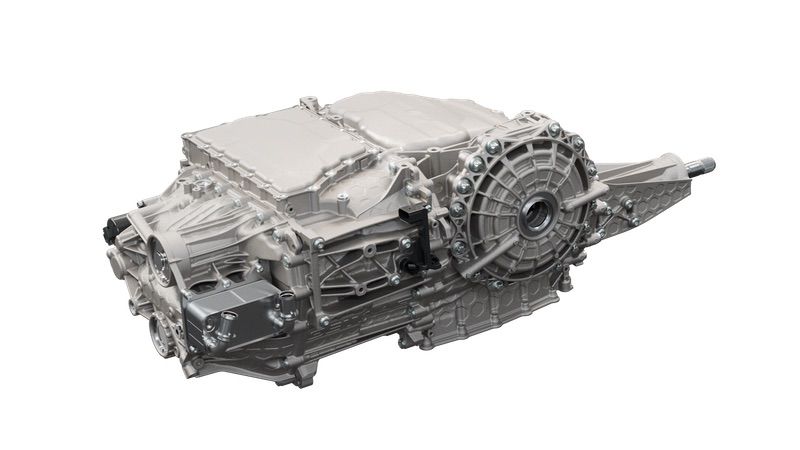
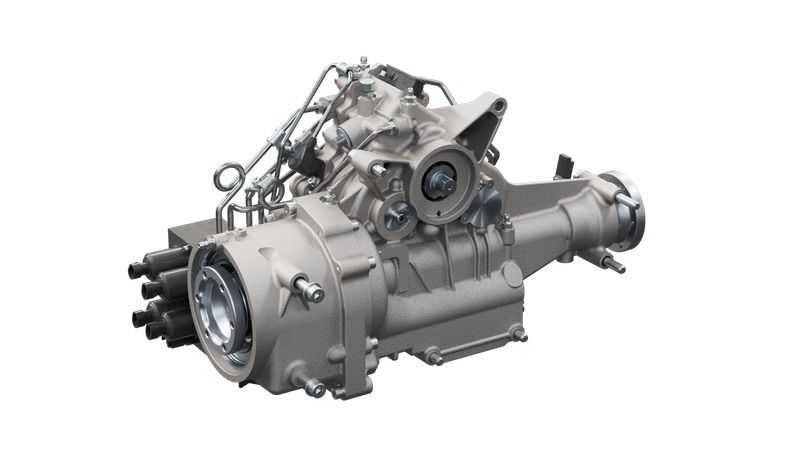
The 8-speed dual-clutch gearbox is related in concept to Ferrari’s latest performance transmissions, designed for fast shifts and strong response. The all-wheel-drive system is intended to provide traction without making the car feel front-led or inert. Ferrari’s challenge was to deliver security in poor conditions while keeping the car rear-biased and responsive.
The Purosangue uses a complex all-wheel-drive system, with a Power Transfer Unit at the front of the engine. This helps package the drivetrain while preserving Ferrari’s preferred handling balance.
Suspension and Chassis
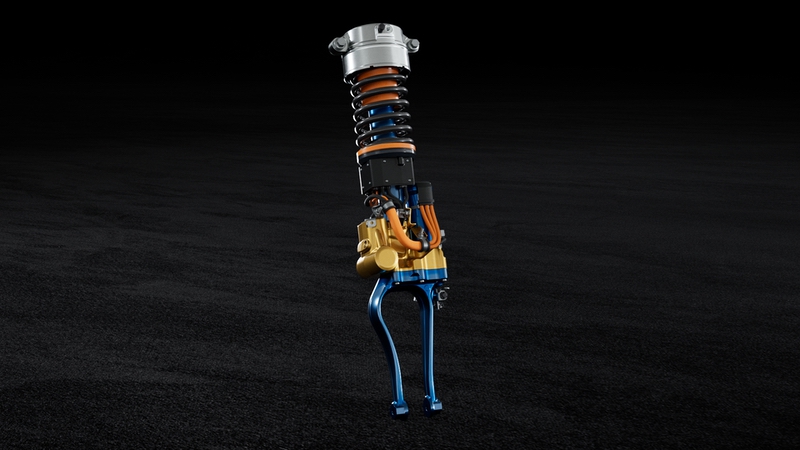
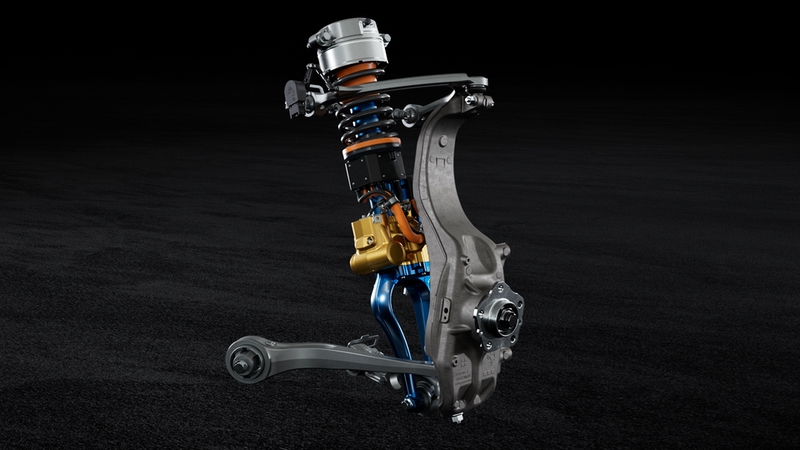
A major technical feature is the active suspension system. Rather than relying only on stiff springs and anti-roll bars, the Purosangue uses advanced suspension technology to control body movement. This is essential because the car is taller and heavier than a typical Ferrari sports car. The goal is to maintain composure without making the ride harsh.
Why the V12 Matters
The V12 is not only about numbers. It defines the car’s personality. A turbocharged V8 SUV can be fast, but a naturally aspirated V12 changes throttle response, sound, smoothness, and emotional appeal. It gives the Purosangue an identity no rival directly matches.
5. Performance
The Ferrari Purosangue is extremely fast by any normal measure, but its performance should be understood differently from a mid-engined Ferrari. It is not trying to be a 296 GTB or SF90 Stradale with extra seats. It is a V12 four-seat performance car designed to cover distance quickly, comfortably, and with genuine driver engagement.
Acceleration
Ferrari quotes 0–100 km/h in 3.3 seconds and 0–200 km/h in 10.6 seconds. For a four-door car with four seats, these are serious figures. The Purosangue is not quite as explosive as Ferrari’s hybrid supercars, but that is not its brief. Its acceleration is more progressive and more naturally delivered.
The naturally aspirated V12 gives the car a different character from turbocharged rivals. In a Lamborghini Urus or Aston Martin DBX707, torque arrives in a thick, boosted wave. In the Purosangue, the engine builds speed with a cleaner, more linear delivery. That gives the driver more connection to throttle input and engine speed.
High-Speed Capability
The top speed is over 310 km/h / 193 mph, placing the Purosangue among the fastest luxury performance crossovers on sale. But again, the number is less important than the way the car reaches it. A V12 Ferrari at high revs has a sense of mechanical progression that turbocharged SUVs cannot replicate.
At motorway speeds, the Purosangue should feel composed and stable. Its long wheelbase, active suspension, aerodynamic design, and all-wheel-drive system are designed to support high-speed cruising. This is where the car’s grand touring side becomes most obvious.
Handling
Handling is the Purosangue’s biggest challenge and one of its greatest achievements. A tall, heavy four-door car cannot feel exactly like a two-seat Ferrari, but Ferrari has worked hard to reduce the usual compromises. The rear-biased weight distribution, active suspension, sharp steering, and controlled body movement help the car feel far more agile than its size suggests.
It will not have the delicacy of a 296 GTB or the compactness of a Roma. Buyers should not expect that. What it does offer is a rare combination: four-seat practicality with Ferrari-style response, sound, and balance.
Braking and Control
At this level of weight and speed, braking performance is essential. The Purosangue uses high-performance braking hardware and advanced electronic systems to manage stopping power and stability. On road, the car’s ability to repeatedly slow from high speed matters more than headline acceleration.
Real-World Performance
In real-world use, the Purosangue’s strength is its breadth. It can drive through poor weather, carry passengers, cover long distances, and still deliver a proper Ferrari V12 experience when the road opens up. That versatility is what separates it from both traditional Ferraris and conventional luxury SUVs.
6. Variants & Special Editions
The Ferrari Purosangue range is currently centred around the V12 model, but Ferrari’s history suggests that variants, special editions, and highly personalised specifications will play an important role in the car’s long-term appeal.
Standard Ferrari Purosangue
The standard Purosangue is already highly specified in concept: four doors, four seats, naturally aspirated V12, all-wheel drive, active suspension, and Ferrari-level performance. Unlike some rivals, it does not rely on a hierarchy of lower-output versions. Ferrari launched the car as a flagship statement rather than a broad SUV range.
This is important for buyers. A Lamborghini Urus can be understood through multiple versions and derivatives. The Purosangue is more focused. It is not designed to be a volume SUV line. It is a single high-end Ferrari product with enormous personalisation potential.
Personalisation and Tailor Made
Personalisation is arguably the most important “variant” of the Purosangue. Buyers can create very different cars through paint, leather, Alcantara, carbon fibre, wheels, contrast stitching, seat design, luggage options, and interior trim. This matters because the Purosangue will be used more frequently than many Ferraris, so interior specification has a major effect on ownership satisfaction.
A restrained dark exterior with a luxury leather cabin creates a sophisticated grand tourer. A brighter Ferrari colour with extensive carbon fibre and racing-inspired details makes the car feel more aggressive. Both approaches can work, but resale depends heavily on taste.
Potential Future Versions
Ferrari has not needed to rush out additional Purosangue variants because demand for the core model has been strong. However, future possibilities could include special regional editions, design-led Tailor Made collections, or a hybrid successor. Ferrari’s broader movement toward electrification makes it likely that future high-performance four-door models will eventually use hybrid or electric powertrains.
A more extreme Purosangue variant is possible in theory, but Ferrari must be careful. If it makes the car too aggressive, it risks undermining the comfort and usability that make the Purosangue attractive. A lightweight, track-focused four-door Ferrari would be interesting, but it would not necessarily suit the car’s main buyer profile.
Collectability of Early Cars
Early Purosangue examples may become desirable because they represent Ferrari’s first four-door production car and one of the few V12-powered luxury performance crossovers. However, collectability will depend heavily on specification, mileage, history, and supply.
For buyers, the best approach is to choose a specification that suits real use while remaining tasteful enough for resale. Overly unusual combinations may be memorable, but they can narrow the future buyer pool.
7. Driving Experience
The Ferrari Purosangue driving experience is built around contrast. It is practical but not ordinary, luxurious but not passive, fast but not purely numerical. The most important thing to understand is that it does not feel like a conventional SUV with a powerful engine. Ferrari has engineered it to feel closer to a grand tourer with added ride height and four-door usability.
Low-Speed Driving
At low speeds, the Purosangue is more usable than most Ferraris. The driving position is higher, access is easier, visibility is better than in a mid-engined supercar, and the four-door layout makes family use realistic. The dual-clutch gearbox is smooth enough for town driving, and the V12 is civilised when not being pushed.
However, it remains a large and expensive Ferrari. Tight parking spaces, narrow urban roads, steep ramps, and kerbs still require caution. This is not a casual city car, even if it is more usable than a 812 Superfast.
V12 Character
The engine dominates the experience. A naturally aspirated Ferrari V12 has a particular progression: smooth at low revs, increasingly urgent in the middle, and genuinely special near the top of the rev range. This makes the Purosangue feel more emotionally engaging than turbocharged rivals.
The sound is also central. Many performance SUVs are fast, but few sound genuinely exotic. The Purosangue’s V12 gives it a sense of theatre that makes even ordinary journeys feel significant.
Handling Feel
The active suspension helps the car stay composed without feeling excessively stiff. On fast roads, the Purosangue feels more controlled than its size suggests. It does not shrink to the size of a 296 GTB, but it avoids the heavy, rolling sensation common in performance SUVs.
The steering is quick and precise, while the chassis balance feels more Ferrari-like than expected. The car is still tall and heavy, but Ferrari has managed the compromises intelligently.
Long-Distance Ability
This may be where the Purosangue is strongest. It can carry passengers and luggage, cruise at high speed, handle poor weather, and still deliver V12 performance. For owners who want one Ferrari to use frequently, the Purosangue may be the most convincing modern option.
8. Ownership Insights
Owning a Ferrari Purosangue is different from owning a mid-engined Ferrari because it is likely to be used more often. That increases the importance of running costs, servicing, tyres, brakes, interior wear, and warranty coverage.
Running Costs
Indicative annual running costs will vary significantly by mileage, location, and usage, but buyers should budget realistically:
- Insurance: £6,000–£15,000 / $8,000–$20,000+
- Tyres: £2,000–£3,500 / $2,500–$4,500 per set
- Fuel: high, especially with city use and enthusiastic driving
- Paint protection film: £5,000–£8,000 / $6,000–$10,000
- Warranty extension after factory cover: several thousand pounds/dollars annually
- Detailing and ceramic coating: £1,000–£3,000 / $1,500–$4,000
Fuel consumption is not a strength. Car and Driver lists EPA economy at 12 mpg city, 16 mpg highway, and 13 mpg combined for the 2026 Purosangue. UK official figures have also been quoted around 16 mpg, depending on version and testing basis.
Servicing Reality
Ferrari’s seven-year maintenance programme is a major benefit for new buyers, but it does not eliminate ownership costs. Scheduled servicing may be covered, but tyres, brakes, cosmetic repairs, warranty extensions, and accidental damage are separate considerations.
The Purosangue should be maintained through Ferrari main dealers or recognised Ferrari specialists. The V12 engine, active suspension, all-wheel-drive system, electronic architecture, and body hardware require proper diagnostic equipment and experience.
Reliability Expectations
Modern Ferraris are generally far more robust than older stereotypes suggest, but the Purosangue is complex. Its naturally aspirated V12 is a proven Ferrari engine family, but the active suspension, drivetrain systems, electronics, and luxury features all add complexity. Buyers should prioritise service history, warranty status, software updates, and evidence of careful use.
Real-World Usability
This is where the Purosangue excels. It has genuine rear seats, usable luggage space, all-weather traction, and a more comfortable cabin than most Ferraris. It can serve as a family car, long-distance GT, luxury daily driver, or high-performance weekend car.
That said, it is not a Range Rover replacement for every owner. It is expensive, attention-grabbing, wide, and costly to repair. It is best suited to buyers who want Ferrari character with more usability, not buyers who simply want the most practical SUV.
9. Market Value & Depreciation
The Ferrari Purosangue has been one of the strongest-demand modern Ferrari models because it combines rarity, practicality, V12 power, and brand significance. UK on-the-road RRP guidance has placed it around £364,293, but real-world values can vary significantly depending on availability, mileage, condition, and specification.
Value Drivers
Key factors influencing Purosangue values include:
- Colour and specification
- Mileage
- Ferrari dealer history
- Warranty status
- Interior condition
- Wheel choice
- Carbon fibre options
- Luggage and luxury options
- Market supply
- Regional demand
The Purosangue is especially specification-sensitive because it is both a Ferrari and a luxury four-seat vehicle. Buyers care not only about exterior colour and performance options, but also about interior materials, rear-seat comfort, trim quality, and everyday usability.
Depreciation Outlook
The Purosangue may be more resilient than many luxury SUVs because supply is controlled and the car has a naturally aspirated V12. However, it is not immune from market movement. Reports in 2025 suggested that some Ferrari values in the UK, including Purosangue and SF90 Stradale, had softened as wider tax and demand changes affected the market.
This does not mean the Purosangue is weak. It means buyers should not assume any modern Ferrari is depreciation-proof. Buying well matters.
Long-Term Outlook
The long-term case is strong if Ferrari does not continue producing naturally aspirated V12 four-door models indefinitely. The Purosangue may eventually be seen as a rare moment: Ferrari’s first four-door car, powered by a naturally aspirated V12, launched before full electrification reshaped the market.
For owners, the best value strategy is straightforward: buy the right specification, keep mileage sensible, maintain full Ferrari history, protect the paint and interior, and avoid unusual configurations that may be hard to resell.
10. Competitors
Lamborghini Urus Performante / Urus S
The Lamborghini Urus is the Purosangue’s most obvious market rival, but the two cars have different philosophies. The Urus is a turbocharged V8 performance SUV designed for aggression, practicality, and daily usability. It feels more conventional in layout but more extroverted in personality.
The Purosangue is more expensive, more exclusive, and more Ferrari-like. Its naturally aspirated V12 gives it a completely different emotional character. The Urus is easier to understand as a fast luxury SUV. The Purosangue feels more like a Ferrari grand tourer adapted for four-door use.
Aston Martin DBX707
The Aston Martin DBX707 is a serious competitor because it combines luxury, performance, and everyday usability at a lower price point. Its twin-turbocharged V8 delivers huge torque and effortless acceleration. It is also more conventionally practical than the Purosangue.
The Ferrari, however, offers greater exclusivity, a V12 engine, and a stronger sense of occasion. The DBX707 is arguably the more rational luxury performance SUV. The Purosangue is the more emotional and collectible choice.
Bentley Bentayga Speed
The Bentley Bentayga Speed prioritises luxury more than driver engagement. It is quieter, more comfort-focused, and more traditional in its luxury presentation. For buyers who want refinement above all else, the Bentley may be more appropriate.
The Purosangue is more athletic, more responsive, and far more exotic. It does not match the Bentley for rear-seat opulence, but it offers a driving experience the Bentayga cannot replicate.
Porsche Cayenne Turbo GT
The Porsche Cayenne Turbo GT is a dynamic benchmark among performance SUVs. It is brutally effective, relatively usable, and significantly less expensive than the Ferrari. It may also be easier to own and service.
However, the Porsche lacks the Purosangue’s exclusivity, V12 character, and Ferrari identity. It is an outstanding performance SUV, but it does not feel like an event in the same way.
Rolls-Royce Cullinan
The Rolls-Royce Cullinan competes at the luxury end rather than the performance end. It offers more status, more comfort, and more rear-seat luxury. It is not trying to be a driver’s car.
The Purosangue is for the owner-driver. The Cullinan is for those who value ultimate luxury and presence. They may share wealthy buyers, but their characters are fundamentally different.
11. FAQs
Is the Ferrari Purosangue an SUV?
Ferrari does not position the Purosangue as a conventional SUV, but in market terms it competes with high-performance luxury SUVs and crossovers. It is best understood as a four-door, four-seat Ferrari with elevated usability, V12 power, all-wheel drive, and a fastback body style.
What engine does the Ferrari Purosangue use?
The Purosangue uses a 6.5-litre naturally aspirated V12 producing 725 cv / 715 hp and 716 Nm / 528 lb ft of torque. This is one of the main reasons it stands apart from turbocharged rivals.
How fast is the Ferrari Purosangue?
Ferrari quotes 0–100 km/h in 3.3 seconds, 0–200 km/h in 10.6 seconds, and a top speed of over 310 km/h / 193 mph.
How much does the Ferrari Purosangue cost?
UK RRP guidance places the Purosangue around £364,293, depending on version and specification. In the US, pricing is commonly listed from the $400,000+ range before options, with many real-world examples costing substantially more once specified.
Is the Purosangue practical?
Yes, by Ferrari standards. It has four doors, four individual seats, all-wheel drive, and usable luggage space. It is not as practical as a conventional large SUV, but it is far more usable than Ferrari’s two-seat supercars.
Is the Ferrari Purosangue good to drive?
Yes. The Purosangue is designed to feel more like a high-riding Ferrari grand tourer than a traditional SUV. The V12 engine, rear-biased balance, active suspension, and sharp steering give it a level of driver engagement that rivals struggle to match.
Will the Ferrari Purosangue hold its value?
It should remain desirable, especially because of its V12 engine and historical importance as Ferrari’s first four-door production car. However, values depend on mileage, specification, market supply, warranty status, and broader Ferrari demand. It should not be treated as depreciation-proof.
12. Related Articles
- Ferrari GTC4Lusso
- Ferrari FF
- Ferrari 12Cilindri
- Ferrari 812 Superfast
- Lamborghini Urus
- Aston Martin DBX707
- Bentley Bentayga Speed
- Porsche Cayenne Turbo GT
- Rolls-Royce Cullinan
- Ferrari Roma
13. Are You Ready?
- Looking to buy a Ferrari Purosangue? Click to find available cars.
- Need insurance? Click to apply for Supercar Insurance.
- Need a service? Click to book a specialist service.
- Buying one? Click to request a PPI inspection.
- Selling your car? Click to request a valuation.