1. Introduction
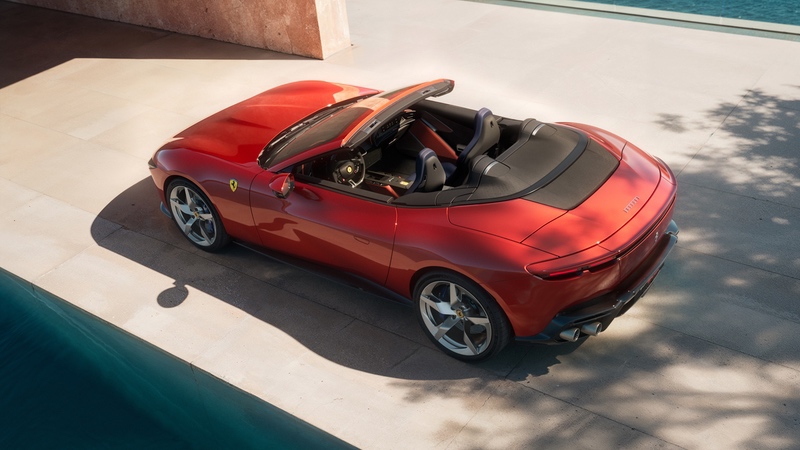
The Ferrari Amalfi Spider is Ferrari’s open-top front-engined V8 grand tourer, designed to replace the Roma Spider and sit as one of the most elegant, usable and lifestyle-focused cars in the modern Ferrari range. It is not Ferrari’s most extreme supercar, nor is it intended to be. Instead, the Amalfi Spider is positioned as a refined 2+ convertible grand tourer: fast enough to feel unmistakably Ferrari, elegant enough to sit outside a five-star hotel without looking theatrical, and usable enough to be driven more often than the brand’s mid-engined performance cars.
Ferrari officially unveiled the Amalfi Spider in March 2026 as a new front-mid-engined V8 Spider featuring a 640 cv twin-turbocharged V8 and open-air grand touring character. Ferrari describes it as combining elegant design, open-air driving pleasure and 2+ versatility, which captures the car’s core market role: it is a Ferrari for buyers who want performance and drama, but not the intensity or compromise of a track-biased supercar.
Mechanically, the Amalfi Spider uses the same broad formula as the Amalfi coupé: a 3.9-litre twin-turbocharged V8, rear-wheel drive, an 8-speed dual-clutch gearbox and a front-mid-engine layout. The difference is emotional rather than purely numerical. By removing the fixed roof and replacing it with a sophisticated fabric soft-top, Ferrari has created a car that prioritises sensory engagement: more engine noise, more wind, more atmosphere, and a stronger connection to the road and surroundings.
That matters because grand touring is not only about speed. A true GT should feel special at 40 mph as well as 140 mph. The Amalfi Spider is designed for coastal roads, long-distance touring, city arrivals, weekend drives and occasional daily use. It is the kind of Ferrari that should be easy to enjoy without needing a racetrack or a deserted mountain pass.
Pricing places it firmly in Ferrari’s premium GT space. The Amalfi coupé was reported from around €240,000 / $281,000, while early reporting suggests the Amalfi Spider starts closer to €270,000 in Europe. UK pricing is likely to sit above the coupé’s reported £202,459 starting point once Spider premium and options are added.
For buyers, the Ferrari Amalfi Spider makes sense if the priority is elegance, open-air motoring and usability rather than maximum lap time. It is less aggressive than a 296 GTS, more relaxed than an 849 Testarossa Spider, and more sporting than a Bentley Continental GTC. In the Ferrari range, it is the sophisticated open-top GT: a car for owners who want the Ferrari badge, the V8 soundtrack and genuine performance, but also comfort, discretion and everyday flexibility.
2. Production & History
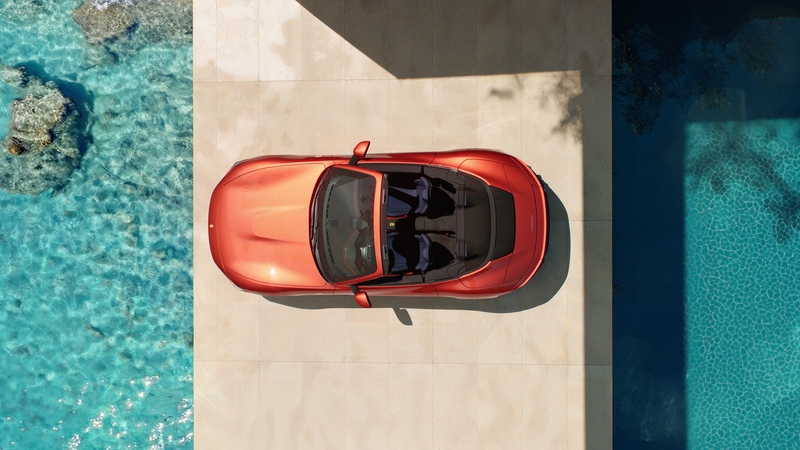
The Ferrari Amalfi Spider was revealed in March 2026 as the open-top version of the Ferrari Amalfi and the successor to the Roma Spider. This places it within one of Ferrari’s most important modern product lines: front-engined, V8-powered grand tourers designed to combine high performance with everyday usability.
The Amalfi name itself arrived first with the coupé, unveiled in 2025 as the replacement for the Roma. Ferrari used the name “Amalfi” deliberately. Rather than naming the car after a circuit, number sequence or technical concept, Ferrari chose a name associated with the Amalfi Coast: elegance, travel, landscape and Italian sophistication. The Spider version deepens that theme because open-air driving naturally suits the imagery of coastal roads, Mediterranean touring and lifestyle-led Ferrari ownership.
Historically, the Amalfi Spider sits in a lineage that includes the Ferrari California, California T, Portofino, Portofino M and Roma Spider. These cars have always played a slightly different role from Ferrari’s mid-engined supercars. They are not the most extreme cars in the range. Instead, they are designed to be used more frequently, by owners who want Ferrari identity without the full commitment of a two-seat track-oriented car.
The Roma Spider was a particularly important predecessor because it moved Ferrari back to a fabric soft-top for its front-engined convertible GT. The Amalfi Spider continues that approach. Rather than using a heavy retractable metal roof, Ferrari has opted for a five-layer fabric roof designed to offer insulation and refinement close to a retractable hardtop when closed. Top Gear reported that the roof opens or closes in 13.5 seconds and can be operated at speeds of up to 37 mph, while Ferrari claims roof-up insulation comparable to a retractable hardtop.
This is historically significant because it shows Ferrari’s current GT philosophy. The brand is not simply chasing technical complexity for its own sake. A fabric roof can reduce weight, preserve elegance and create a more classic Spider character. For a car like the Amalfi Spider, that suits the brief better than a heavier folding metal roof.
The Amalfi Spider also arrives at a time when Ferrari’s product range is changing quickly. The company now offers plug-in hybrid supercars, V12 GTs, the Purosangue four-door and future electric models. In that context, the Amalfi Spider stands out as a relatively traditional Ferrari: petrol-powered, V8, rear-wheel drive and designed around grand touring rather than electrified performance.
Production is expected to follow Ferrari’s normal controlled-volume approach. The Amalfi Spider is not a numbered limited-edition model, but supply will still be managed through Ferrari’s dealer network and allocation process. Early cars are likely to be highly specified, and demand may be strongest in warm-weather markets such as Southern Europe, the Middle East, California and Florida.
Long-term, the Amalfi Spider may become important if Ferrari moves further away from pure petrol V8 grand tourers. It is not a hardcore collector model in the way a limited-series Ferrari might be, but it represents a refined and potentially late-stage expression of Ferrari’s front-engined V8 Spider formula.
3. Design & Styling
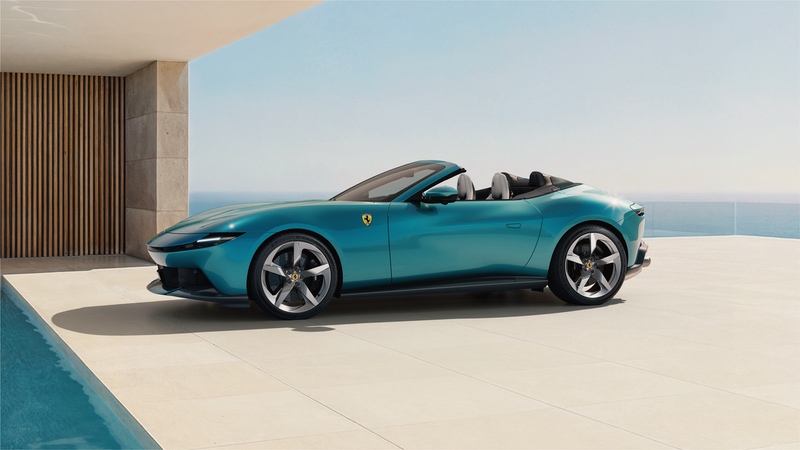
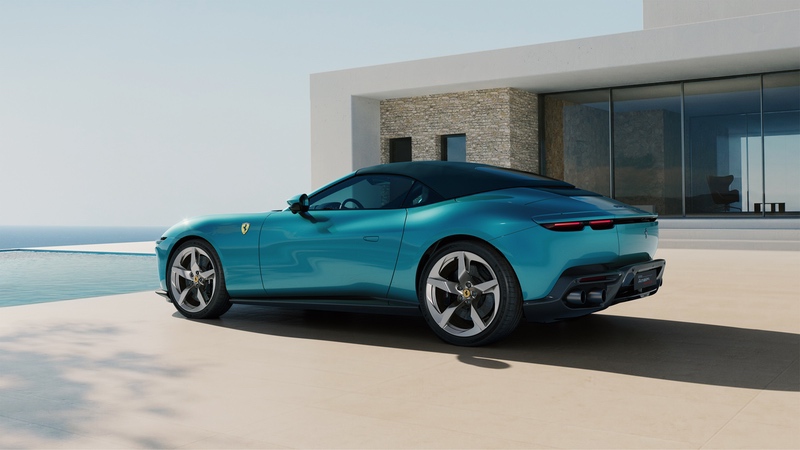
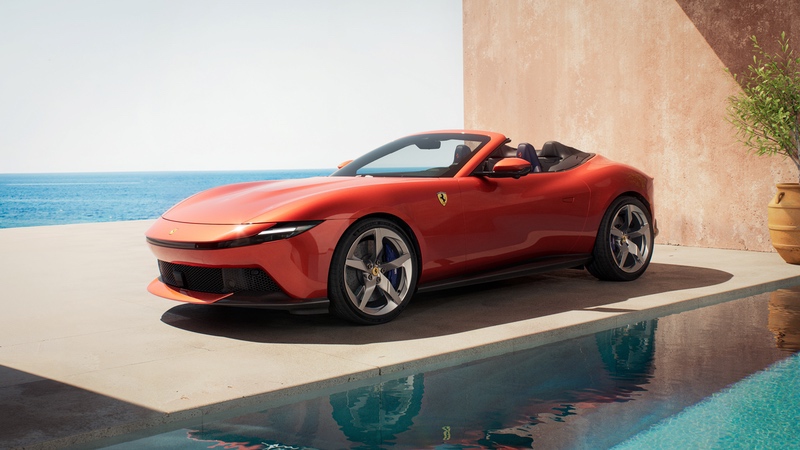
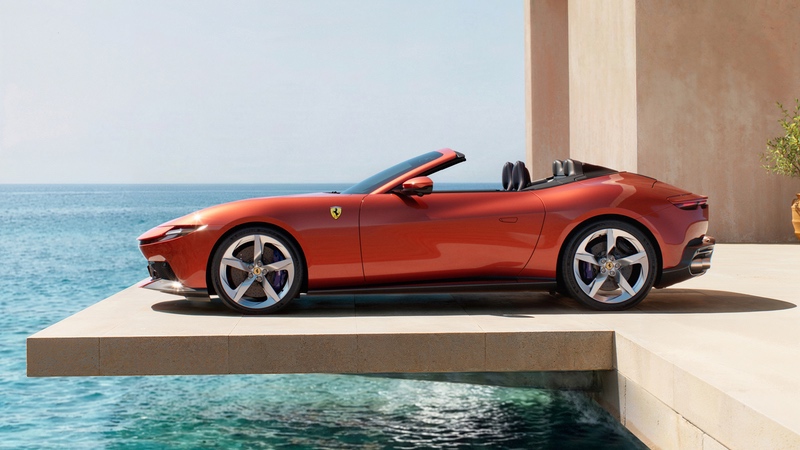
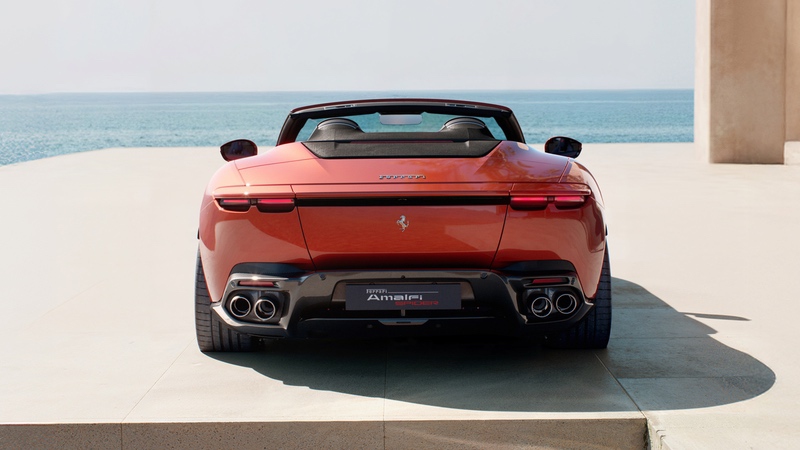
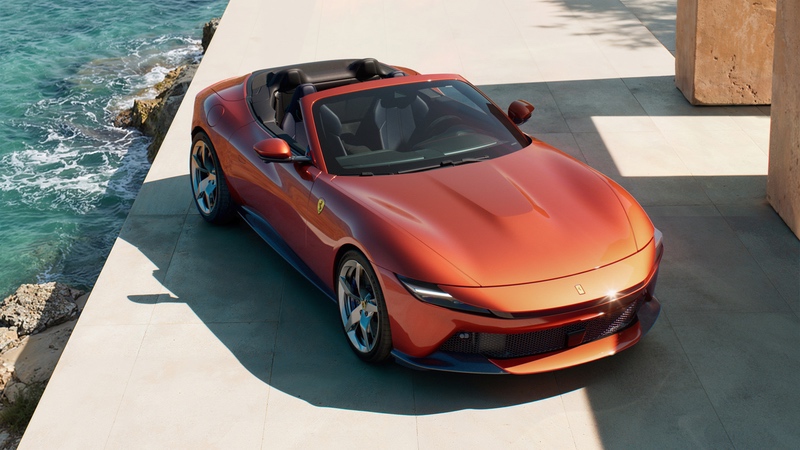
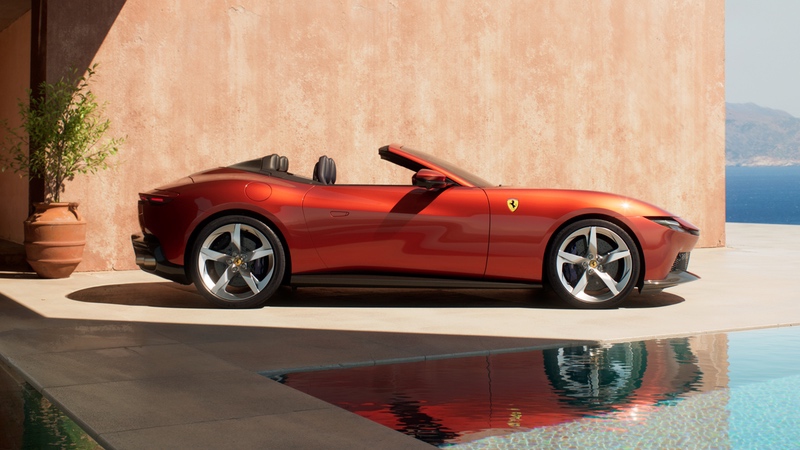
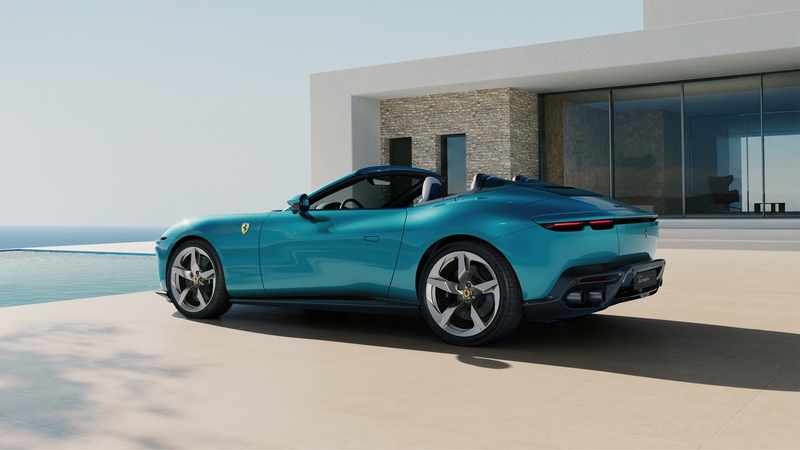
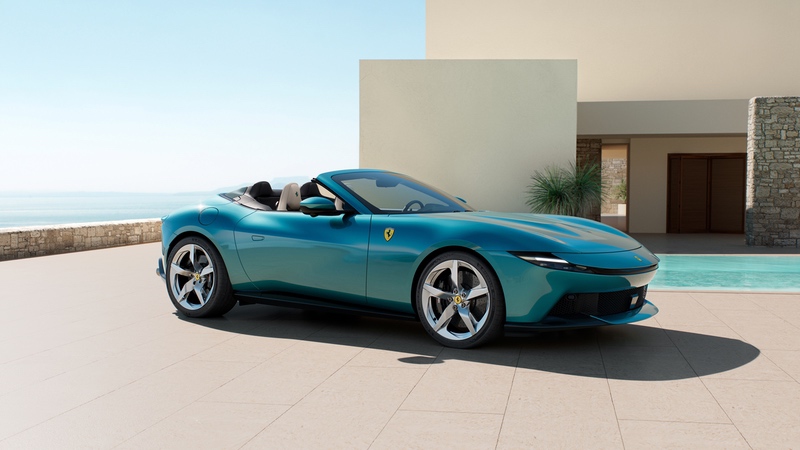
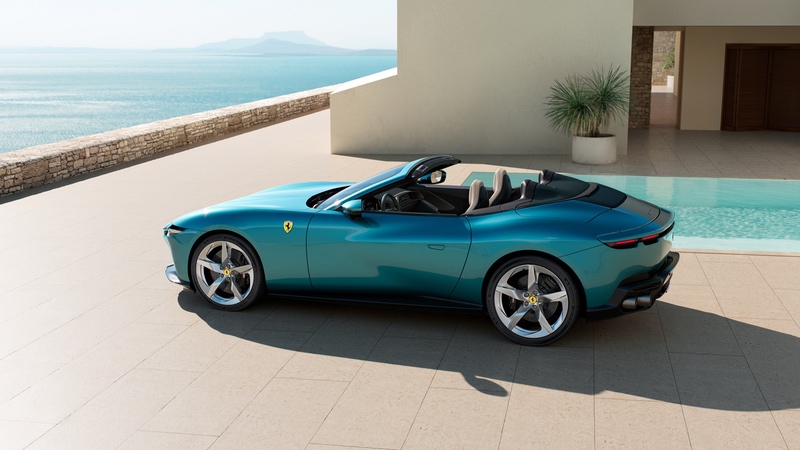
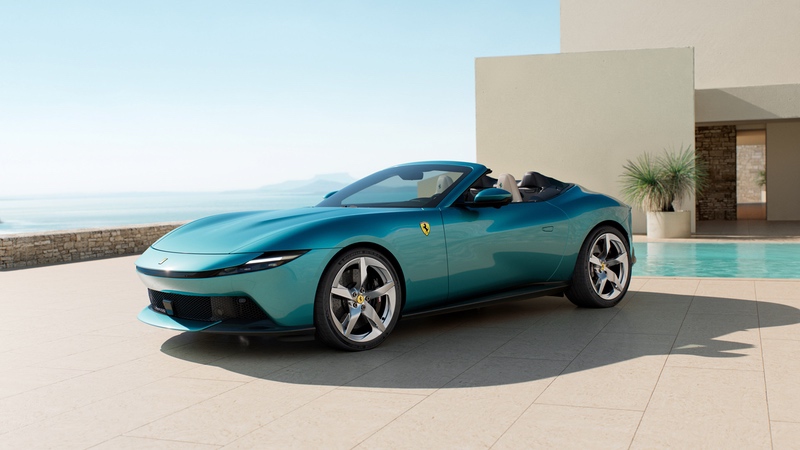
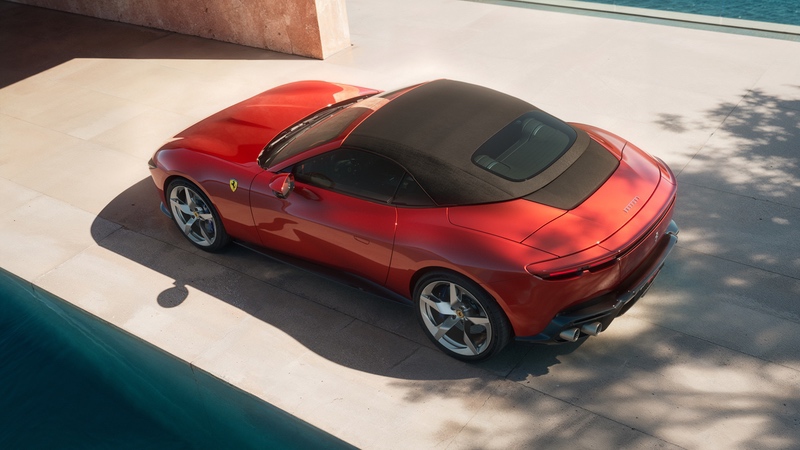
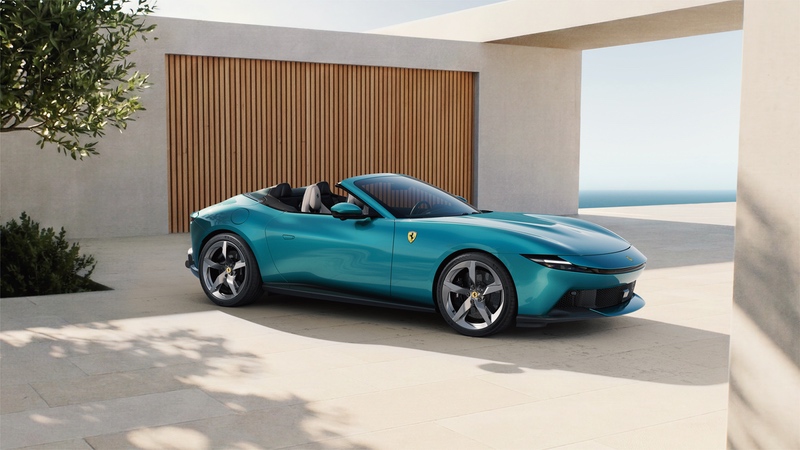
The Ferrari Amalfi Spider is designed as a sophisticated open-top GT rather than an aggressive convertible supercar. Its styling follows the Amalfi coupé’s clean, modern language, but adapts it around the fabric soft-top and open-air proportions. The result is more restrained than a mid-engined Ferrari and more sporting than a traditional luxury cabriolet.
Exterior Proportions
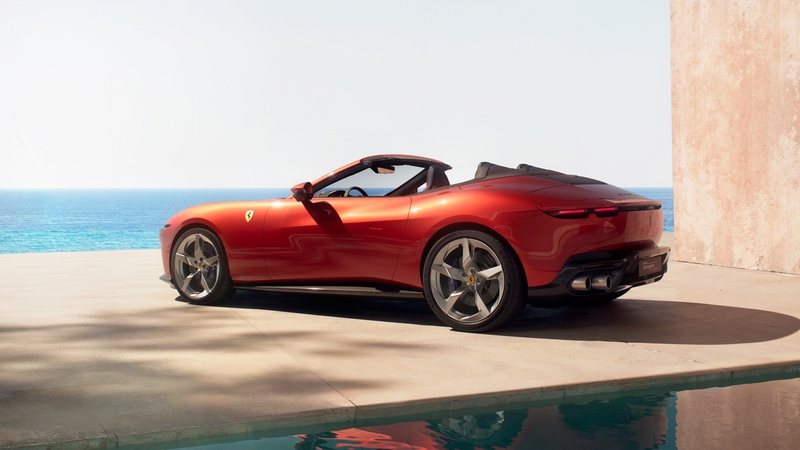
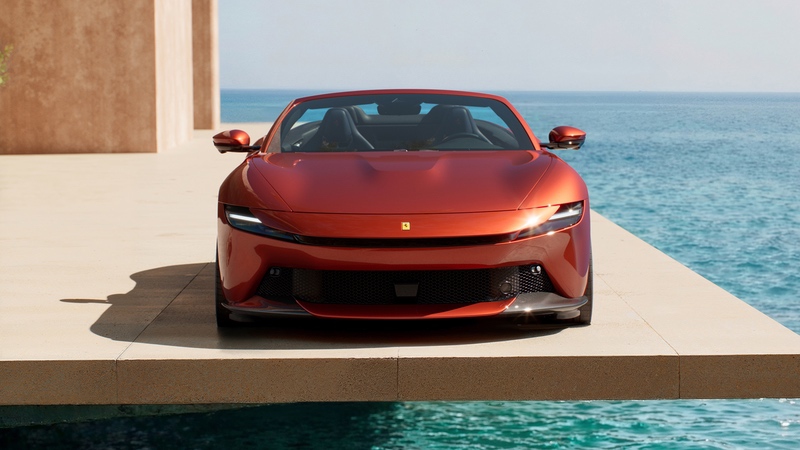
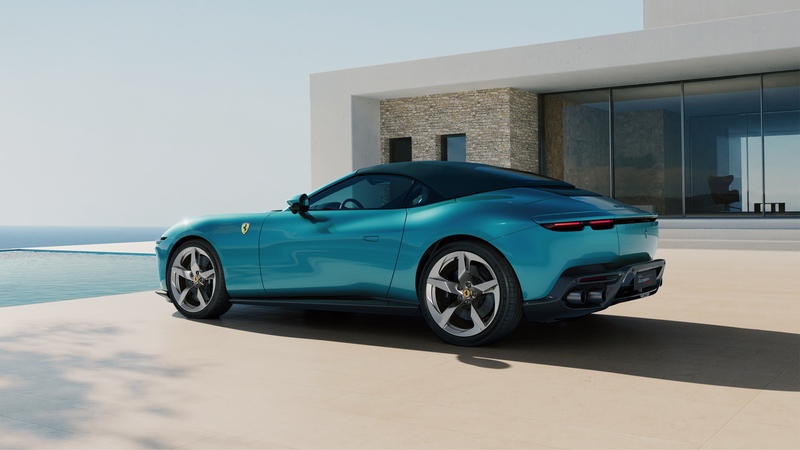
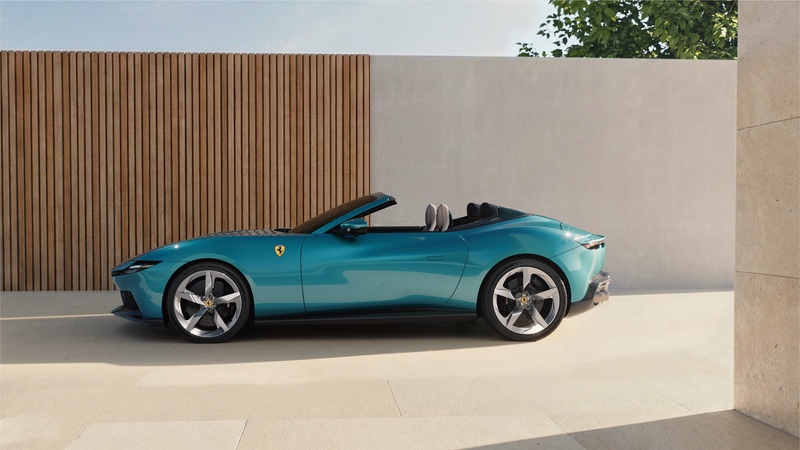
The Amalfi Spider uses classic Ferrari GT proportions: long bonnet, rear-set cabin, compact rear deck and muscular haunches. These proportions are important because they communicate the car’s front-mid-engined layout. The engine sits ahead of the cabin but behind the front axle line, helping the car avoid the nose-heavy look of some front-engined GTs.
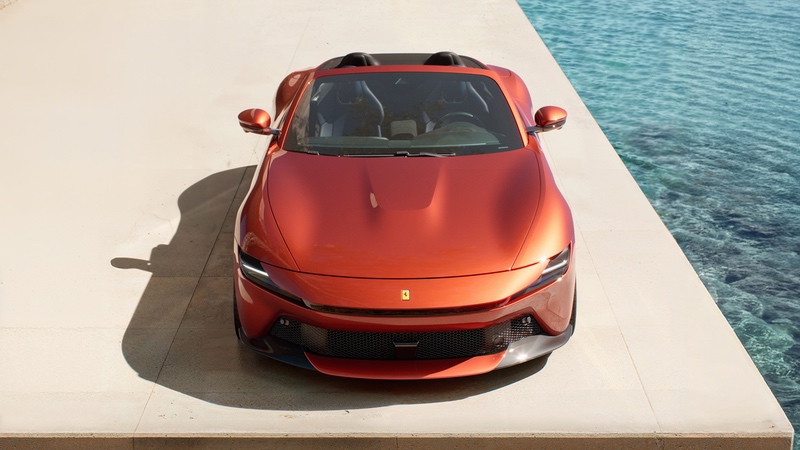
Compared with the Roma Spider, the Amalfi Spider looks sharper and more contemporary. The front end has a cleaner, more technical appearance, while the body surfaces feel more disciplined. It is not covered in vents or oversized aerodynamic devices, because that would conflict with its grand touring role. The design relies more on proportion, surface quality and subtle aerodynamic integration.
Soft-Top Integration
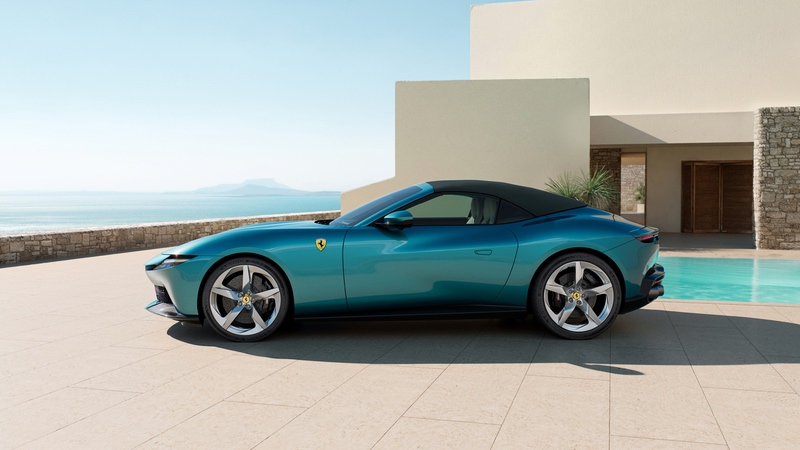
The fabric roof is one of the car’s most important design decisions. A soft-top gives the Amalfi Spider a more traditional convertible profile than a folding hardtop. When closed, it preserves a clean GT silhouette. When open, it allows the car to look relaxed and elegant rather than mechanically complex.
The roof’s operation is also practical. Opening or closing in 13.5 seconds at up to 37 mph means the driver can respond quickly to weather or traffic conditions without stopping completely. For a real-world grand tourer, that matters. A roof mechanism that only works when stationary is less useful in daily ownership.
Aerodynamics
Ferrari has had to manage the usual Spider challenge: preserving stability and refinement when the roof is down. Convertibles create airflow complications around the cabin, especially at higher speeds. The Amalfi Spider therefore requires careful wind management so that open-top driving feels enjoyable rather than tiring.
The coupé’s active aerodynamic philosophy also carries relevance. The Amalfi coupé uses an integrated active rear spoiler to improve stability, and the Spider’s bodywork must preserve that balance while accommodating the roof structure.
Interior Design
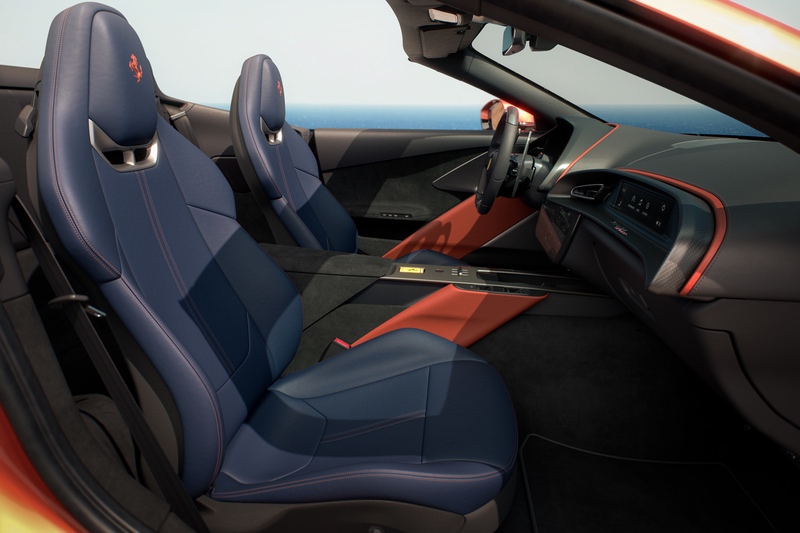
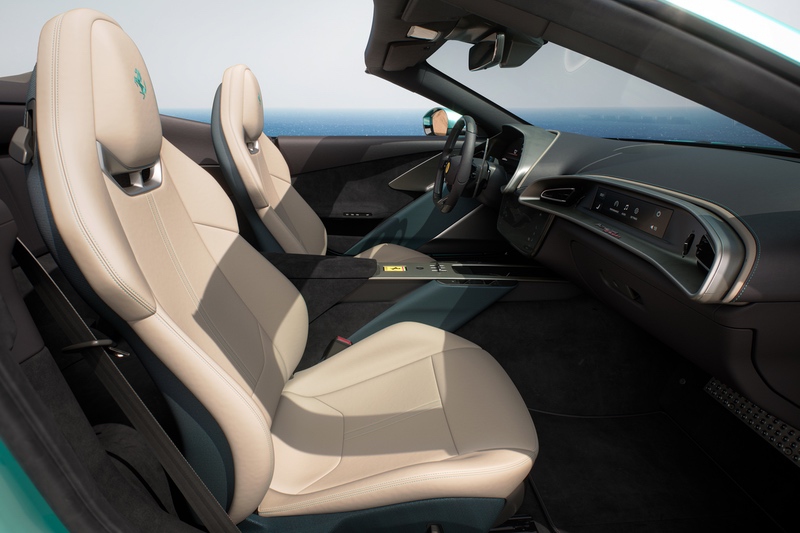
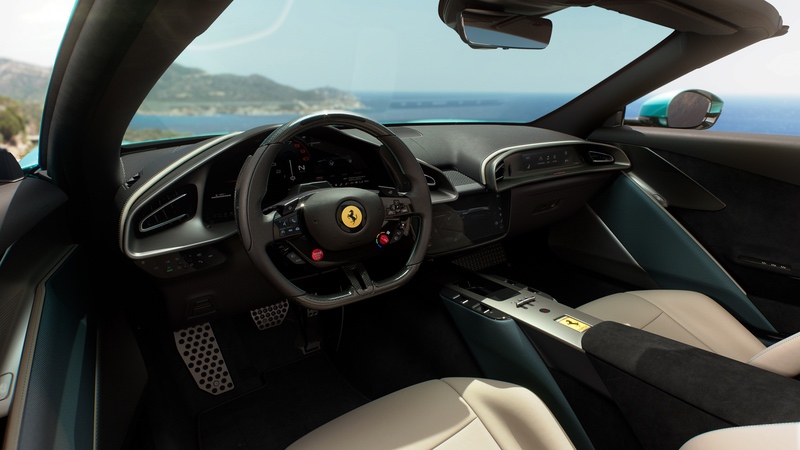
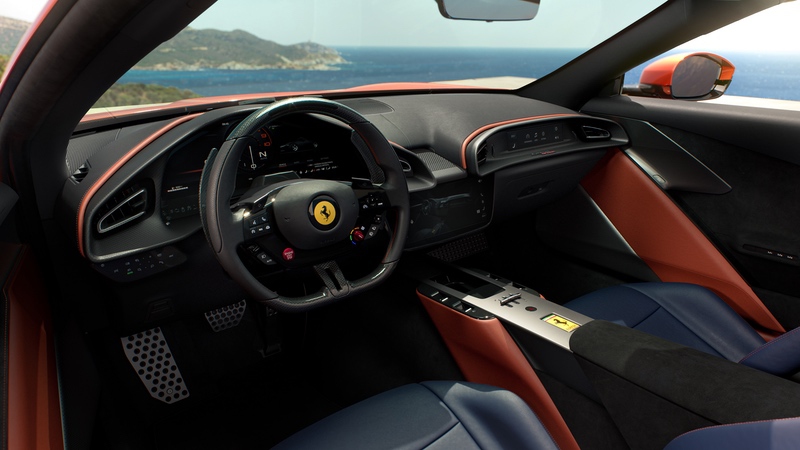
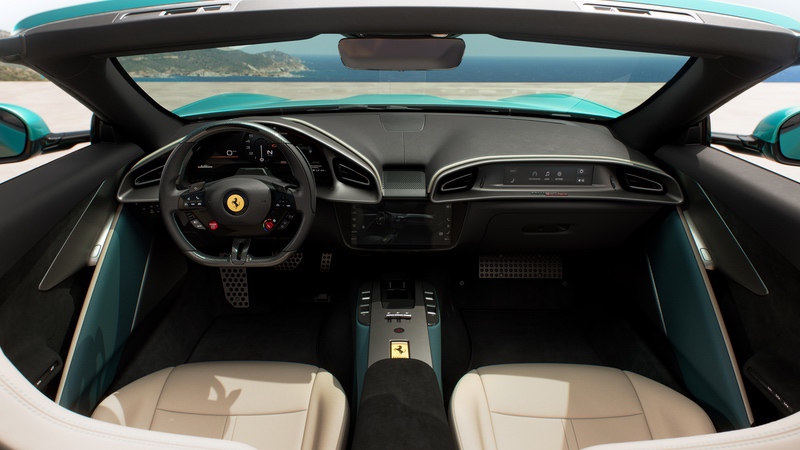
Inside, the Amalfi Spider is designed around luxury, technology and usability. This is particularly important because the Roma generation received criticism for its touch-sensitive controls. Ferrari has been moving back toward more physical control solutions in newer cars, including the Amalfi, after customer feedback on haptic-heavy steering wheels.
The cabin remains driver-focused, but it is not as sparse or uncompromising as a track car. The 2+ layout provides rear seats, though these should be considered occasional seating rather than full adult accommodation. In practice, they are useful for children, short journeys or additional luggage.
Specification will heavily influence the car’s visual appeal. Leather colour, stitching, wheels, paint, carbon fibre and seat choice can make the Amalfi Spider feel either understated and elegant or more sporting and extroverted.
4. Engine & Technical Specifications
The Ferrari Amalfi Spider uses a 3.9-litre twin-turbocharged V8, producing 640 cv. Ferrari’s own Amalfi Spider page confirms the latest evolution of the twin-turbo V8 produces 640 cv and revs to 7,600 rpm.
Core Specification
Expected and confirmed key figures include:
- Engine: 3.9-litre twin-turbocharged V8
- Power: 640 cv / approximately 631 bhp
- Torque: approximately 760 Nm
- Transmission: 8-speed dual-clutch automatic
- Drivetrain: rear-wheel drive
- Layout: front-mid engine
- Body style: 2-door 2+ Spider
- Roof: five-layer fabric soft-top
- Roof operation: 13.5 seconds, up to 37 mph
- 0–100 km/h: expected around 3.3 seconds
- 0–200 km/h: approximately 9 seconds for Amalfi platform
- Top speed: around 320 km/h
Ferrari’s official configurator for the Amalfi platform lists 0–100 km/h in 3.3 seconds, 0–200 km/h in 9 seconds, 320 km/h maximum speed, and 3,855 cm³ displacement for the twin-turbo V8.
Engine Character
This V8 belongs to Ferrari’s proven twin-turbo engine family, but in the Amalfi Spider it is tuned for grand touring rather than maximum aggression. That means the car should deliver strong low- and mid-range torque, quick response and a refined soundtrack, while still feeling recognisably Ferrari when extended.
The important point is that the Amalfi Spider is not hybridised. Unlike the 296 GTS, it does not use an electric motor to fill torque or provide electric-only driving. This gives it a more traditional mechanical character. There is no plug-in charging, no battery management in normal ownership and no electric-only mode. For some buyers, that simplicity will be a strength.
Transmission and Drivetrain
The 8-speed dual-clutch gearbox is central to the driving experience. In relaxed use, it should shift smoothly and help the car feel refined. In sportier modes, it should deliver the fast, decisive shifts expected of a modern Ferrari.
Rear-wheel drive is equally important. Many luxury GT rivals use all-wheel drive to deploy power more securely, but Ferrari’s choice preserves a more classic driving feel. The Amalfi Spider should feel lighter, more adjustable and more engaging than an all-wheel-drive cabriolet, even if it gives away some poor-weather traction.
Technical Positioning
The Amalfi Spider’s specification places it below Ferrari’s hybrid supercars but above conventional luxury GT convertibles. It is not built around the most extreme numbers in the Ferrari range. Instead, its technical package is designed to deliver a balance of performance, refinement and usability.
5. Performance
The Ferrari Amalfi Spider delivers serious performance, but its character is different from Ferrari’s mid-engined and hybrid models. It is not designed to feel like a 296 GTS or 849 Testarossa Spider. It is a front-engined V8 grand tourer, so its performance is intended to be fast, fluid and usable rather than brutally intense.
Acceleration
With 640 cv and rear-wheel drive, the Amalfi Spider should accelerate from 0–100 km/h in roughly the same region as the coupé, which Ferrari lists at 3.3 seconds. The platform’s 0–200 km/h time is listed at 9 seconds, with a maximum speed of 320 km/h.
Those figures make the Amalfi Spider extremely quick in any real-world setting. It is not as explosive as Ferrari’s plug-in hybrid supercars, but it does not need to be. The point of the Amalfi Spider is not to dominate drag races; it is to offer effortless pace with refinement.
Power Delivery
The twin-turbo V8 should deliver strong mid-range performance. This is where the car will feel most useful. On a motorway, a fast A-road or a long continental journey, the Amalfi Spider should be able to accelerate decisively without requiring constant high-rev driving.
Compared with a naturally aspirated V12 Ferrari, the Amalfi Spider will feel more torque-rich and easier to drive quickly at everyday speeds. Compared with a hybrid Ferrari, it will feel more traditional and more directly mechanical, although without the instant torque-fill of an electric motor.
Roof-Down Performance Sensation
The open-top format changes how speed feels. With the roof down, acceleration feels more dramatic because the driver is more exposed to the engine note, road noise and airflow. This is one of the main reasons to choose the Spider over the coupé. On paper, the coupé may be cleaner and potentially sharper; on the road, the Spider may feel more special at ordinary speeds.
This matters because most owners will not regularly exploit the car’s top speed. What they will experience is the sound of the V8, the movement of air through the cabin and the sense of occasion when accelerating out of a bend with the roof lowered.
Handling
The Amalfi Spider should feel more relaxed than a mid-engined Ferrari but still sharper than conventional luxury convertibles. The front-mid-engine layout helps balance, while rear-wheel drive gives the car a more traditional Ferrari feel.
It will not have the compact agility of a 296 GTS. It will also be heavier than the coupé because of the roof mechanism and associated structural reinforcement. However, that does not undermine its purpose. A Spider GT should offer confidence, precision and flow rather than track-car stiffness.
Real-World Performance
The Amalfi Spider’s real strength is usable speed. It can be enjoyed on normal roads, longer journeys and weekend drives without feeling excessive or intimidating. That makes it one of the more accessible ways to experience modern Ferrari performance.
6. Variants & Special Editions
The Ferrari Amalfi Spider forms part of the wider Amalfi family, sitting alongside the coupé and replacing the Roma Spider in Ferrari’s front-engined V8 convertible line-up.
Ferrari Amalfi Coupé
The Amalfi coupé is the fixed-roof version and the purer interpretation of the platform. It offers the cleanest styling, likely lower weight and the most structurally focused driving experience. For buyers who prioritise design purity and long-term elegance, the coupé will be the natural choice.
The coupé was reported from around €240,000 / $281,000, with UK pricing from around £202,459 before options.
Ferrari Amalfi Spider
The Amalfi Spider adds open-air driving and a fabric roof. Early reporting suggests European pricing around €270,000, reflecting a premium over the coupé.
The Spider is likely to be the more emotionally engaging road car. It will be slightly heavier and more expensive, but the roof-down experience may make it more desirable in certain markets. For buyers in warm-weather regions, the Spider may be the more natural choice.
Roma Spider as Predecessor
The Roma Spider remains important because it will be the key used-market alternative. It has a similar front-engined V8 layout and open-top GT character, but the Amalfi Spider brings updated styling, more power and improved interior ergonomics.
Buyers looking for value may consider a used Roma Spider. Buyers wanting the latest version, updated controls and sharper design will prefer the Amalfi Spider.
Potential Future Editions
Ferrari has not positioned the Amalfi Spider as a track-focused model, so a hardcore version is unlikely to be the most natural fit. However, Ferrari may produce special Tailor Made editions, regional commissions or design-led limited runs. These would suit the Amalfi Spider’s character better than a stripped-out track variant.
Tailor Made and Specification Choices
Personalisation will be central to the Amalfi Spider’s appeal. Buyers should think carefully about:
- Exterior colour
- Roof colour
- Wheel design
- Leather and stitching
- Carbon fibre exterior trim
- Carbon fibre interior trim
- Seat style
- Suspension lift
- Premium audio
- Driver assistance features
The roof colour is especially important because it affects the car’s profile when closed. A black roof gives a classic convertible look, while more unusual roof colours may create a stronger bespoke identity but could narrow resale appeal.
Collectability
The Amalfi Spider is not expected to be a numbered limited model, so it should not be bought as a guaranteed investment. However, if it becomes one of Ferrari’s final non-hybrid V8 Spiders, it may gain long-term interest. The most desirable examples will likely be low-mileage, tastefully specified cars with full Ferrari history.
7. Driving Experience
The Ferrari Amalfi Spider should deliver a refined, open-air driving experience rather than the intense aggression of Ferrari’s mid-engined supercars. Its appeal lies in balance: fast but comfortable, sporting but elegant, emotional but usable.
Around Town
At low speeds, the Amalfi Spider should feel easier to manage than a mid-engined Ferrari. The front-engined layout gives a more natural sense of the car’s nose, while the dual-clutch gearbox should be smooth in traffic. The car is still low, expensive and relatively wide, so care is needed in tight streets, multi-storey car parks and steep driveways.
The 2+ layout adds useful flexibility. The rear seats are limited, but they can carry children, small passengers for short journeys or extra luggage. For a Ferrari Spider, that makes the car more usable than a strict two-seater.
Roof-Down Character
The roof-down experience is the main reason to choose the Amalfi Spider. With the top lowered, the V8 becomes more present, the road feels closer and even ordinary journeys become more memorable. This is exactly what a Ferrari Spider should offer.
The Amalfi Spider is not about chasing maximum lap times. It is about the quality of the drive: the steering response, the engine note, the gearshift speed, the view down the bonnet and the sense of movement through open air.
Fast Roads
On a fast road, the Amalfi Spider should feel composed and fluent. The engine has enough torque to make overtaking effortless, while rear-wheel drive should give the car a more engaging balance than many all-wheel-drive GT rivals.
It will not feel as sharp as a 296 GTS, but it should feel more relaxed and more natural over distance. This is an important distinction. The 296 GTS is the more aggressive driver’s car; the Amalfi Spider is the more elegant GT.
Long-Distance Touring
Long-distance touring is where the car should excel. With the roof closed, the five-layer fabric roof is designed to provide strong insulation and refinement. With the roof open, the car becomes a more emotional long-distance companion.
This duality is the Amalfi Spider’s strength. It can be quiet and refined when required, then engaging and theatrical when conditions allow.
8. Ownership Insights
The Ferrari Amalfi Spider should be one of the more usable modern Ferraris, but it will still require serious ownership budgeting. It is a premium front-engined convertible GT with expensive tyres, insurance, servicing, bodywork and optional equipment.
Running Costs
Indicative annual running costs are likely to include:
- Insurance: £5,000–£11,000 / $6,500–$14,000+
- Tyres: £1,500–£2,700 / $1,900–$3,500 per set
- Paint protection film: £4,000–£7,000 / $5,000–$9,000
- Detailing and ceramic coating: £800–£2,500 / $1,000–$3,200
- Warranty extension after factory cover: several thousand pounds/dollars annually
- Roof maintenance and inspection: important once the car ages
- Fuel: high when driven hard, though lower than a V12 Ferrari
The Amalfi coupé’s combined performance and fuel figures include a listed WLTP combined fuel consumption of 11.2 l/100 km, which gives a useful indication of what owners can expect from the platform in official testing. Real-world use will depend heavily on driving style.
Servicing Reality
Ferrari’s current seven-year maintenance programme should help reduce scheduled servicing costs for new owners, assuming coverage follows Ferrari’s standard new-car practice. However, scheduled servicing is only part of ownership. Wear items, cosmetic damage, tyres, brakes, roof mechanisms, wheels and warranty extensions remain owner costs.
The Amalfi Spider should be serviced by Ferrari main dealers or recognised Ferrari specialists. The V8 architecture is proven, but the car still includes modern electronic systems, active aero, advanced braking systems and convertible roof hardware.
Reliability Expectations
The twin-turbo V8 is based on a mature Ferrari engine family, which should support reliability expectations. However, convertible mechanisms introduce additional long-term considerations. Buyers should check roof operation, seals, drainage, alignment, fabric condition and wind noise.
Once used examples reach the market, a PPI will be essential. Buyers should verify service history, accident history, paint condition, tyre age, brake wear, warranty status, software updates and evidence of hard use.
Real-World Usability
The Amalfi Spider should be very usable by Ferrari standards. It has a front-engined layout, usable cabin storage, occasional rear seats, strong roof insulation and enough refinement for touring. It can be used for weekends, longer trips and occasional daily driving.
It is not a normal daily car, however. It is low, expensive and attention-grabbing, and any damage will be costly. It suits an owner who wants to drive their Ferrari regularly, but still treats it as a specialist car.
9. Market Value & Depreciation
The Ferrari Amalfi Spider will enter the market above the Amalfi coupé, with early European pricing reported around €270,000. The coupé was reported around €240,000 / $281,000, and UK coupé pricing around £202,459, so a realistic UK Spider starting point would likely sit meaningfully above that once official UK pricing and options are included.
New Market Position
The Amalfi Spider is positioned as Ferrari’s elegant V8 convertible GT. It is less expensive than Ferrari’s V12 and flagship hybrid models, but still significantly more exclusive and expensive than many luxury convertibles. It will compete not only with other open-top supercars, but also with high-end GT convertibles from Aston Martin, Bentley and Porsche.
Depreciation Factors
Key value drivers will include:
- Mileage
- Exterior colour
- Roof colour
- Interior specification
- Carbon fibre options
- Wheel choice
- Dealer history
- Warranty status
- Condition of roof mechanism
- Market supply
- Roma Spider used prices
Specification will matter greatly. A tasteful colour combination with a desirable roof, strong interior and sensible options will likely be easier to sell. Highly unusual combinations may appeal to the original buyer but reduce the resale audience.
Comparison with Roma Spider
The Roma Spider will be the key value benchmark. If used Roma Spider prices soften, some buyers may choose the older car as a more affordable route into a modern Ferrari V8 Spider. The Amalfi Spider will need to justify its premium through updated styling, stronger performance and improved ergonomics.
Long-Term Outlook
The long-term case depends on Ferrari’s future powertrain direction. If Ferrari continues moving toward hybrid and electric models, the Amalfi Spider may gain appeal as a late petrol-only V8 Spider. However, standard production Ferraris are not automatically investment cars.
The safest buying strategy is simple: choose a strong specification, maintain full Ferrari history, keep mileage sensible and protect the car cosmetically.
10. Competitors
Aston Martin DB12 Volante
The Aston Martin DB12 Volante is one of the Amalfi Spider’s closest rivals. It is a front-engined V8 convertible GT with strong performance and a luxury-led personality. The Aston feels more muscular and more traditional, with greater emphasis on torque and long-distance comfort.
The Ferrari should feel lighter, sharper and more exotic. The DB12 Volante may be the better choice for buyers who prioritise comfort and cabin space. The Amalfi Spider is likely to appeal more to those who want sharper dynamics and Ferrari identity.
Bentley Continental GTC
The Bentley Continental GTC is more luxurious, heavier and more comfort-focused. It offers greater refinement, a more substantial cabin and stronger daily usability. It is less sporting than the Ferrari but more relaxing over long distances.
The Amalfi Spider is more agile, more emotional and more exclusive in feel. The Bentley is the better luxury convertible; the Ferrari is the better driver’s GT.
Porsche 911 Turbo S Cabriolet
The Porsche 911 Turbo S Cabriolet is faster in many real-world conditions, thanks to all-wheel drive and devastating traction. It is also easier to use daily and likely cheaper to maintain.
However, the Porsche does not offer the same sense of Ferrari occasion. The Amalfi Spider is more elegant, rarer and more emotionally engaging. The Porsche is the rational high-performance convertible; the Ferrari is the more romantic choice.
Maserati GranCabrio Trofeo
The Maserati GranCabrio Trofeo offers Italian style, open-top GT character and a more relaxed ownership image. It is less expensive and less intense than the Ferrari. However, it cannot match the Amalfi Spider’s brand prestige, dynamic sharpness or resale strength.
The Maserati suits buyers wanting understated Italian luxury. The Ferrari suits buyers wanting a more focused and prestigious open-top GT.
Ferrari Roma Spider
The Roma Spider is the Amalfi Spider’s most important internal rival. It offers a similar format and may become significantly better value used. The Amalfi Spider, however, brings newer styling, stronger performance and improved ergonomics.
For buyers seeking value, the Roma Spider is compelling. For buyers wanting the latest Ferrari V8 Spider, the Amalfi Spider is the stronger choice.
11. FAQs
Is the Ferrari Amalfi Spider officially announced?
Yes. Ferrari officially unveiled the Amalfi Spider in March 2026 as a new front-mid-engined V8 2+ Spider.
What engine does the Ferrari Amalfi Spider use?
The Amalfi Spider uses Ferrari’s twin-turbocharged V8 producing 640 cv. Ferrari states that the engine revs to 7,600 rpmand is the latest evolution of its twin-turbo V8.
Is the Ferrari Amalfi Spider a hybrid?
No. The Amalfi Spider is petrol-powered and does not use plug-in hybrid assistance. This separates it from models such as the 296 GTS and 849 Testarossa Spider.
How fast is the Ferrari Amalfi Spider?
The Amalfi platform is listed with 0–100 km/h in 3.3 seconds, 0–200 km/h in 9 seconds and a maximum speed of 320 km/h.
How much does the Ferrari Amalfi Spider cost?
Early reporting suggests the Amalfi Spider starts at around €270,000 in Europe. The Amalfi coupé was reported from around €240,000 / $281,000, with UK pricing from around £202,459, so UK and US Spider pricing will likely sit above the coupé once officially specified.
Does the Amalfi Spider have a hardtop?
No. It uses a five-layer fabric soft-top, not a retractable metal hardtop. The roof opens or closes in 13.5 seconds and can operate at speeds up to 37 mph.
Is the Ferrari Amalfi Spider practical?
By Ferrari standards, yes. It has a front-engined layout, 2+ seating, a refined cabin and a roof designed for strong insulation. The rear seats are best for children, short journeys or luggage rather than regular adult use.
Is the Amalfi Spider better than the Roma Spider?
The Amalfi Spider is newer, more powerful and benefits from updated design and improved cabin usability. The Roma Spider may offer better used-market value, but the Amalfi Spider is the more current and technically updated model.
12. Related Articles
- Ferrari Amalfi
- Ferrari Roma Spider
- Ferrari Roma
- Ferrari Portofino M
- Ferrari California T
- Ferrari 296 GTS
- Ferrari 12Cilindri Spider
- Aston Martin DB12 Volante
- Bentley Continental GTC
- Porsche 911 Turbo S Cabriolet
- Maserati GranCabrio Trofeo
13. Are You Ready?
- Looking to buy a Ferrari Amalfi Spider? Click to find available cars.
- Need insurance? Click to apply for Supercar Insurance.
- Need a service? Click to book a specialist service.
- Buying one? Click to request a PPI inspection.
- Selling your car? Click to request a valuation.