1. Introduction
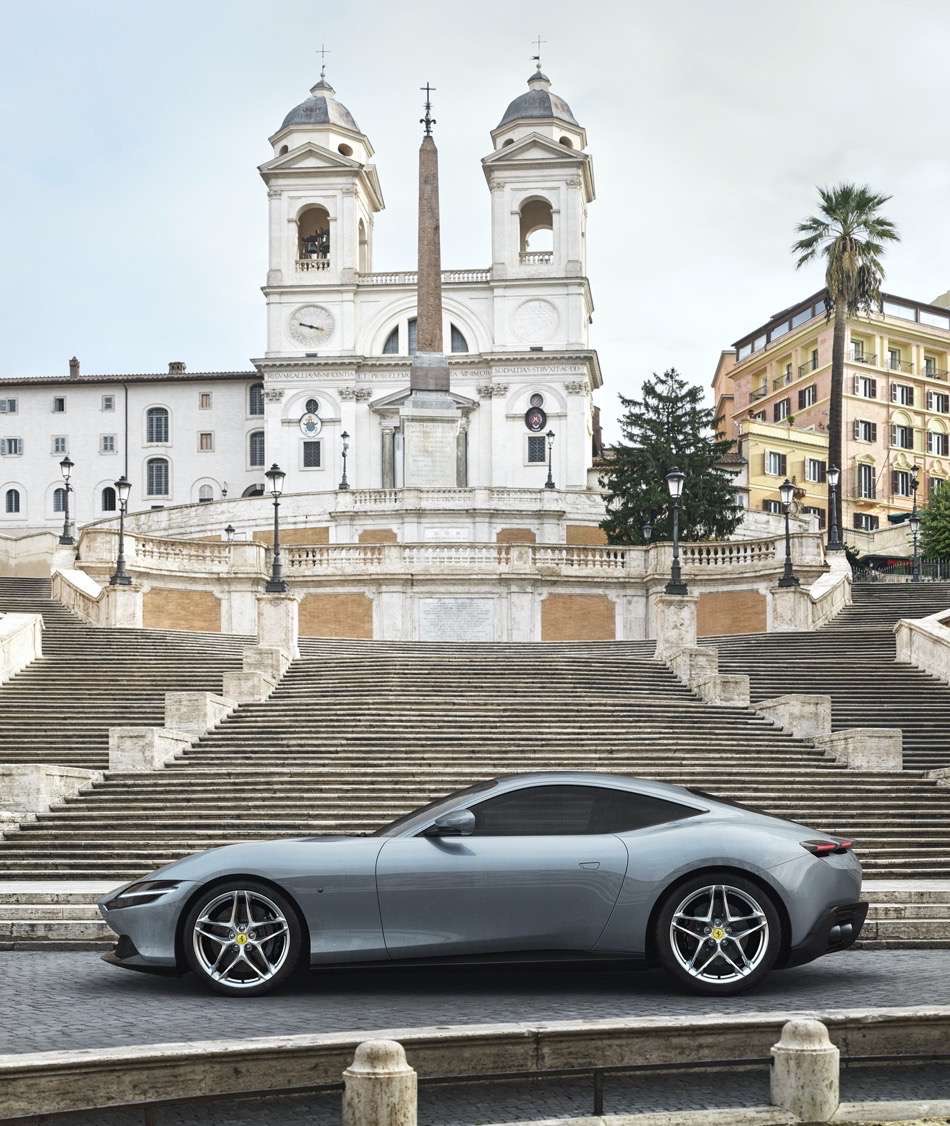
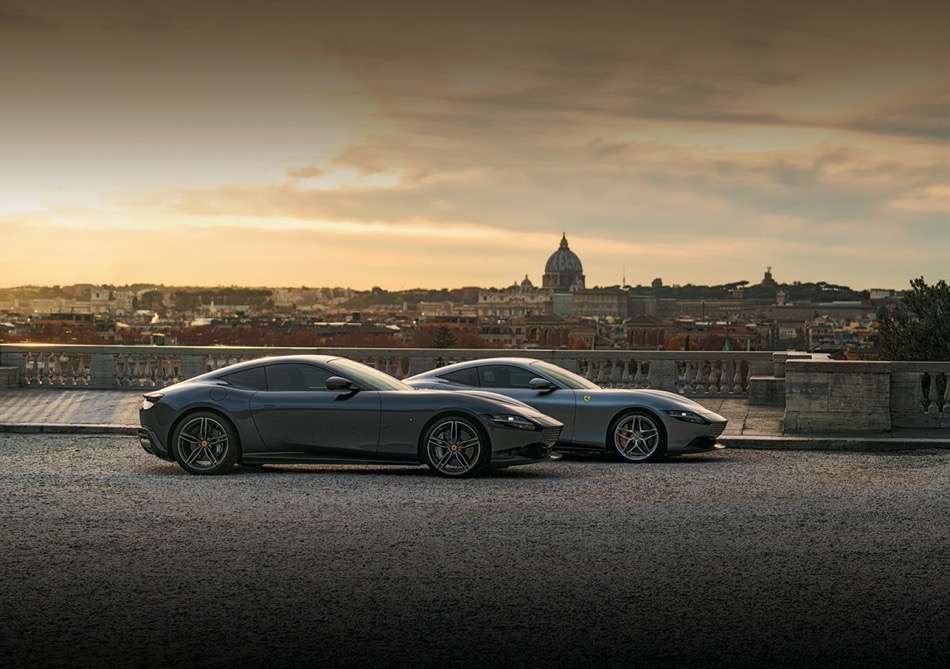
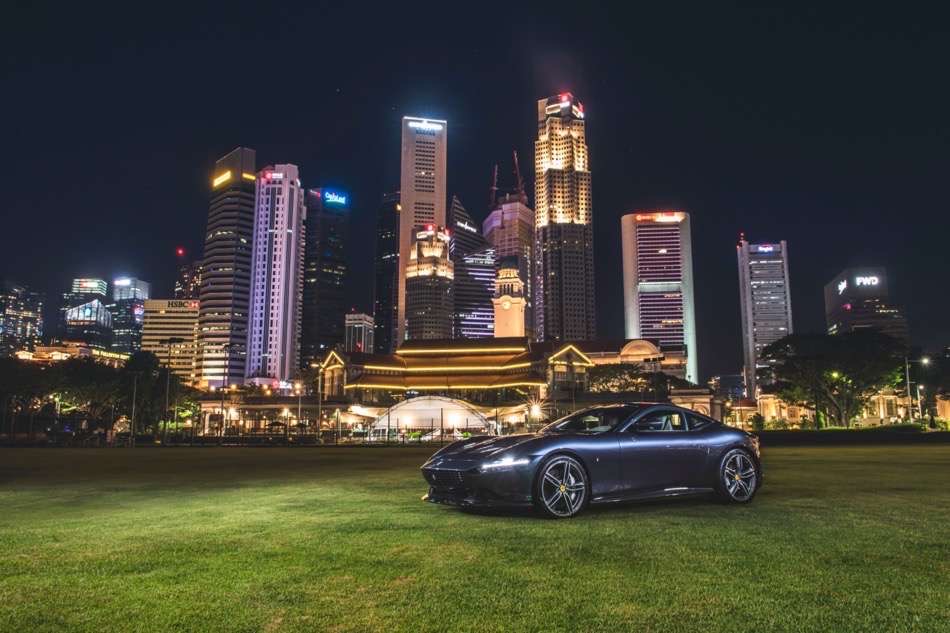
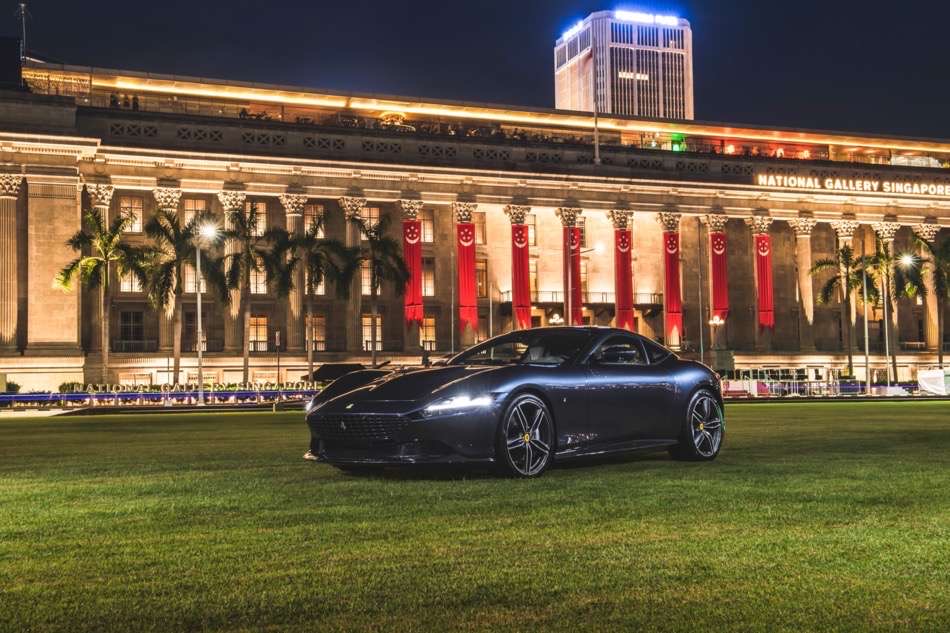
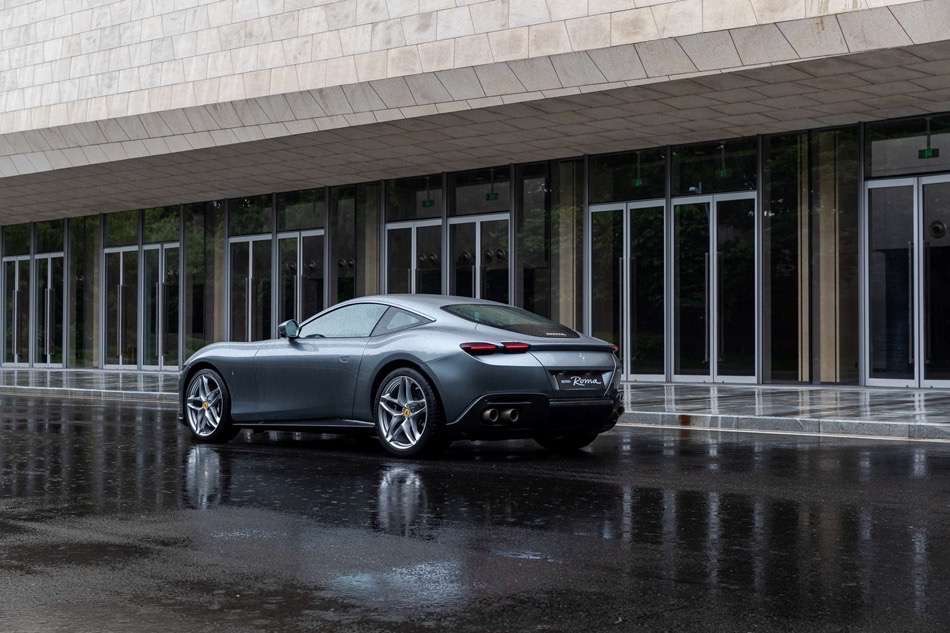
The Ferrari Roma is Ferrari’s modern front-engined V8 grand tourer, designed to combine classic Italian elegance with serious supercar performance. It is not the most aggressive Ferrari, the most powerful Ferrari, or the most expensive Ferrari, but it occupies one of the most important positions in the brand’s range: the refined, usable, beautifully styled GT that can be driven more often than Ferrari’s more extreme mid-engined cars.
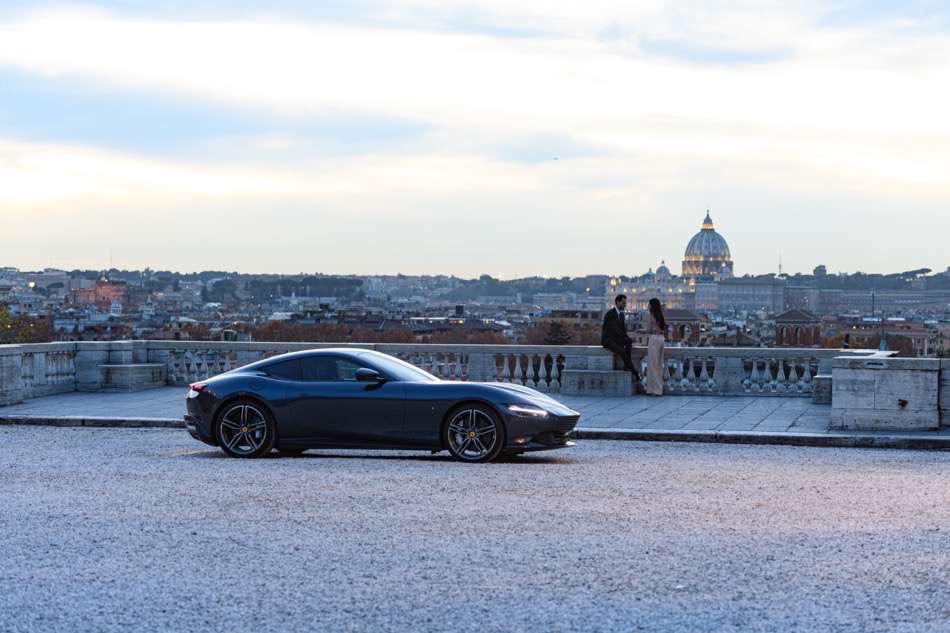
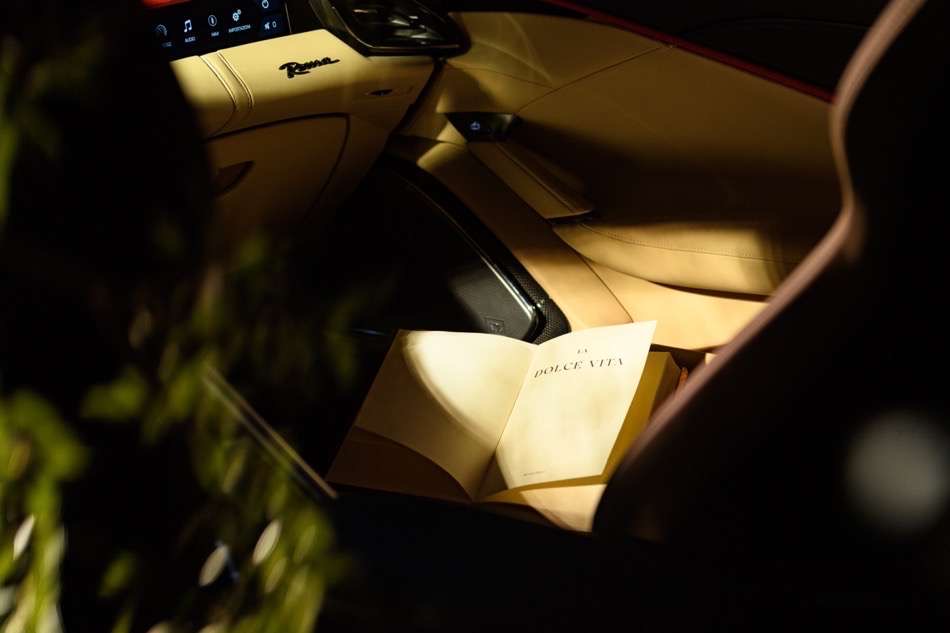
Launched as a 2+ coupé, the Roma was built around the idea of “La Nuova Dolce Vita” — Ferrari’s modern interpretation of relaxed Italian sophistication. That positioning matters. The Roma is not trying to be a 296 GTB, SF90 Stradale or 812 Superfast. It is a front-mid-engined, rear-wheel-drive Ferrari with a twin-turbocharged V8, elegant proportions, a compact cabin, and enough everyday usability to make it attractive to buyers who want a Ferrari that can be used for weekend trips, city driving, business arrivals, and long-distance touring.
Mechanically, the Roma uses Ferrari’s 3.9-litre twin-turbocharged V8, producing 620 cv / 612 bhp and 760 Nm / 561 lb ft of torque. Power is sent to the rear wheels through an 8-speed dual-clutch transmission, a gearbox related to the unit introduced in the SF90 Stradale. Ferrari quotes 0–100 km/h in 3.4 seconds, 0–200 km/h in 9.3 seconds, and a top speed of over 320 km/h / 199 mph. These figures place the Roma firmly in modern supercar territory, even if its styling and market positioning are more restrained.
The Roma’s significance lies in balance. It offers Ferrari performance without the visual aggression of a mid-engined supercar. It offers grand touring comfort without becoming soft or detached. It offers luxury and elegance without turning into a Bentley-style cruiser. For many buyers, especially those new to Ferrari ownership, the Roma is one of the most approachable modern Ferraris.
Pricing also makes it attractive relative to the wider Ferrari range. UK on-the-road RRP guidance places the Roma at around £212,943, while US pricing for the 2026 Ferrari Roma starts from around $279,965. Used-market values vary significantly by year, mileage, specification and condition, with UK cars commonly advertised from the low-to-mid £130,000s upward and Ferrari Approved US examples around the $200,000+ region.
For SupercarTribe readers, the Roma should be understood as a Ferrari for those who value taste, usability and performance in equal measure. It is less dramatic than a 296 GTB, less prestigious than a V12 Ferrari, and less practical than a Purosangue, but it may be one of the easiest modern Ferraris to enjoy regularly.
2. Production & History
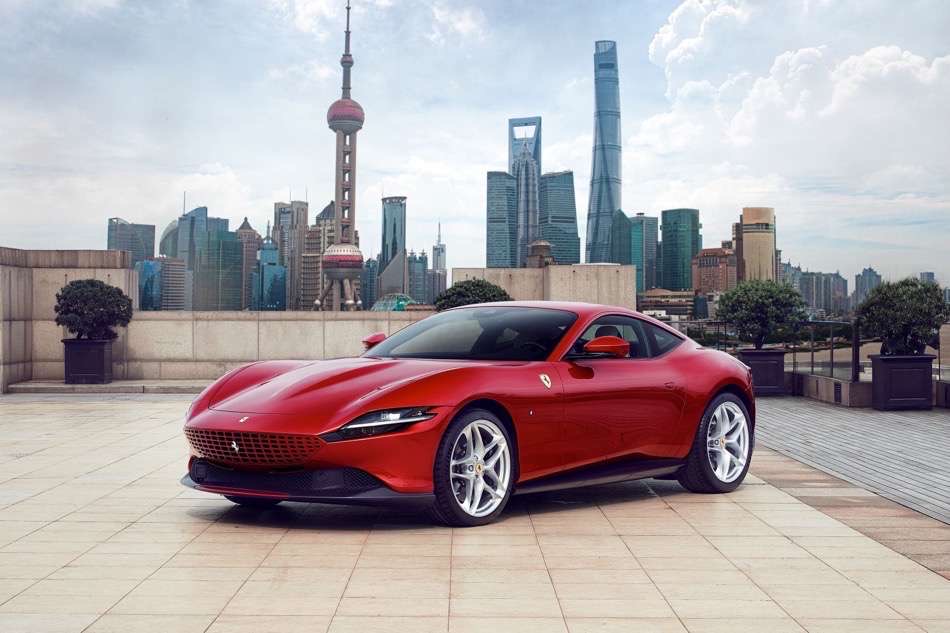
The Ferrari Roma was unveiled in 2019 as a new front-engined coupé designed to sit below Ferrari’s V12 grand tourers and offer a more elegant alternative to the brand’s mid-engined supercars. It entered production as a modern successor in spirit to several Ferrari GT models, including the 456 GT, 612 Scaglietti, California, Portofino and, more indirectly, classic front-engined Ferraris of the 1950s and 1960s.
The Roma’s launch was important because Ferrari needed a car that could attract buyers who wanted the brand’s design, performance and exclusivity, but not necessarily the uncompromising personality of a two-seat mid-engined supercar. The Portofino had already served as Ferrari’s more usable front-engined convertible, but the Roma introduced a more sophisticated coupé identity. It was lower, cleaner and more visually refined, with styling that deliberately avoided excessive vents, wings and aggression.
The Roma’s Place in Ferrari’s GT Lineage
Ferrari has always had two broad personalities. One is the racing-derived, mid-engined supercar identity seen in models such as the 458 Italia, 488 GTB, F8 Tributo and 296 GTB. The other is the grand touring identity: front-engined, elegant, powerful, capable of crossing countries at speed. The Roma belongs firmly to the second tradition.
Its historical references are subtle rather than literal. The long bonnet, compact cabin and flowing rear section recall classic Ferraris such as the 250 GT Lusso and 250 GT Berlinetta, but the Roma is not a retro car. It uses modern materials, turbocharged performance, digital interfaces and active aerodynamics. The point was not to copy the past; it was to create a contemporary Ferrari that felt less visually aggressive and more timeless.
From Roma to Amalfi
The Roma later gave way to the Ferrari Amalfi, which continues the same front-engined V8 GT concept with revised styling, more power and updated interior ergonomics. The arrival of the Amalfi does not make the Roma irrelevant. In fact, it strengthens the Roma’s used-market appeal because buyers can now access a relatively modern Ferrari GT at a more attractive price than a new replacement model.
The Roma also influenced the Roma Spider, which replaced the Portofino M and brought the same design philosophy into open-top form. This makes the Roma family one of Ferrari’s most important modern GT lines.
Production and Market Role
The Roma was not a limited-production model, and Ferrari produced it as part of its regular model range. However, as with all Ferraris, supply was controlled and heavily influenced by dealer allocation, global demand and specification choices. Early demand was strong because the car offered a compelling mix of beauty, usability and price positioning.
Its production period coincided with Ferrari’s broader transition toward hybridisation. The SF90 Stradale and 296 GTB showed Ferrari’s electrified future, while the Roma remained a more traditional petrol-powered V8 GT. That context may help its long-term appeal. It is modern enough to be usable and fast, but still mechanically simpler than Ferrari’s plug-in hybrid models.
Historically, the Roma may be remembered as one of Ferrari’s cleanest modern designs and one of the brand’s most successful attempts to reintroduce elegance into the entry-level GT segment. It is not the most extreme Ferrari of its era, but it is one of the most visually resolved.
3. Design & Styling
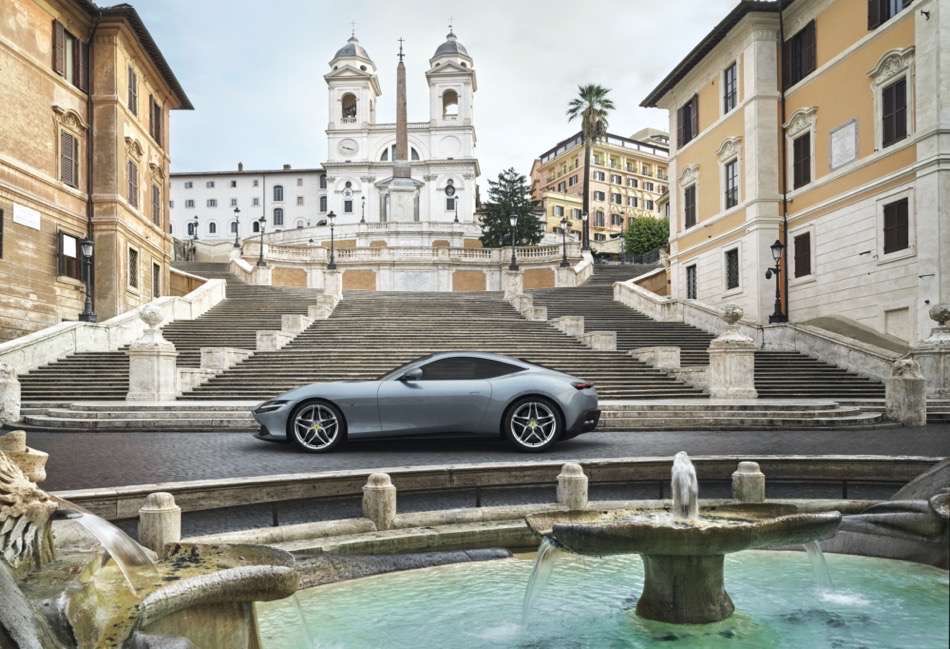
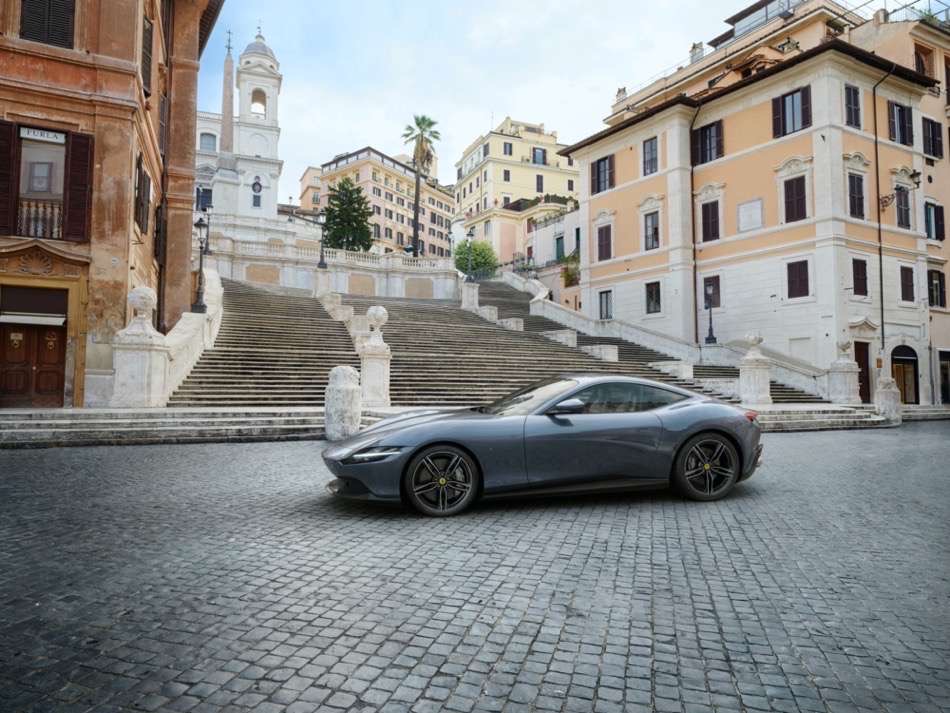
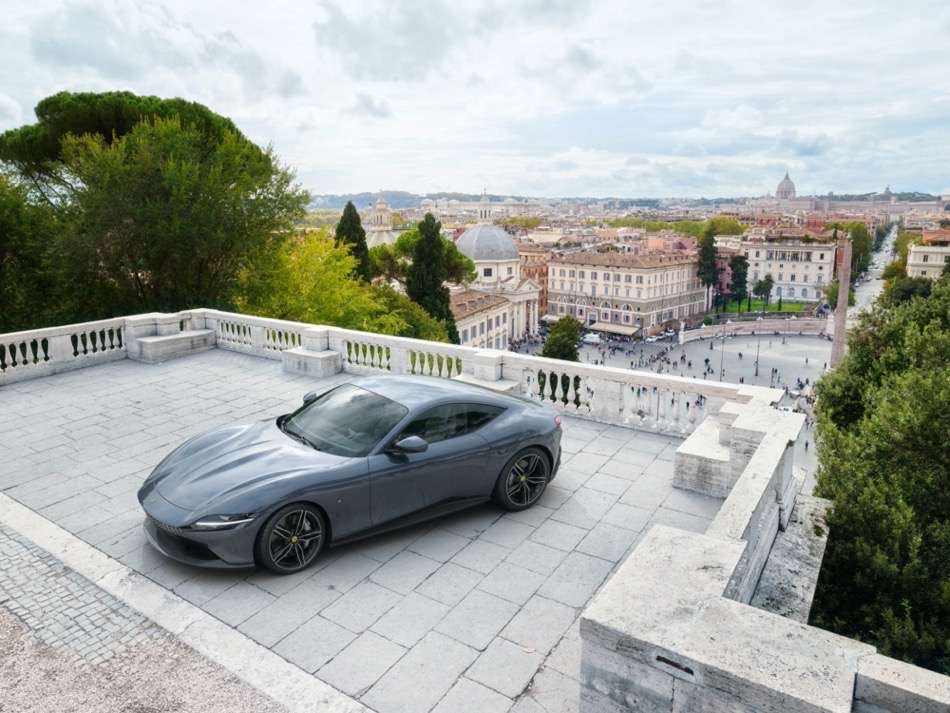
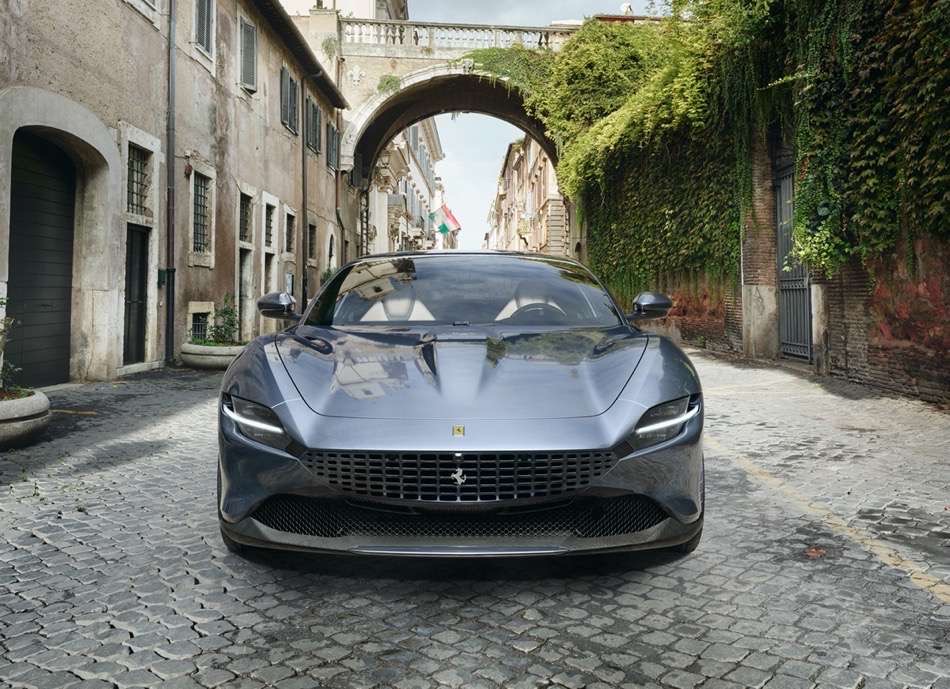
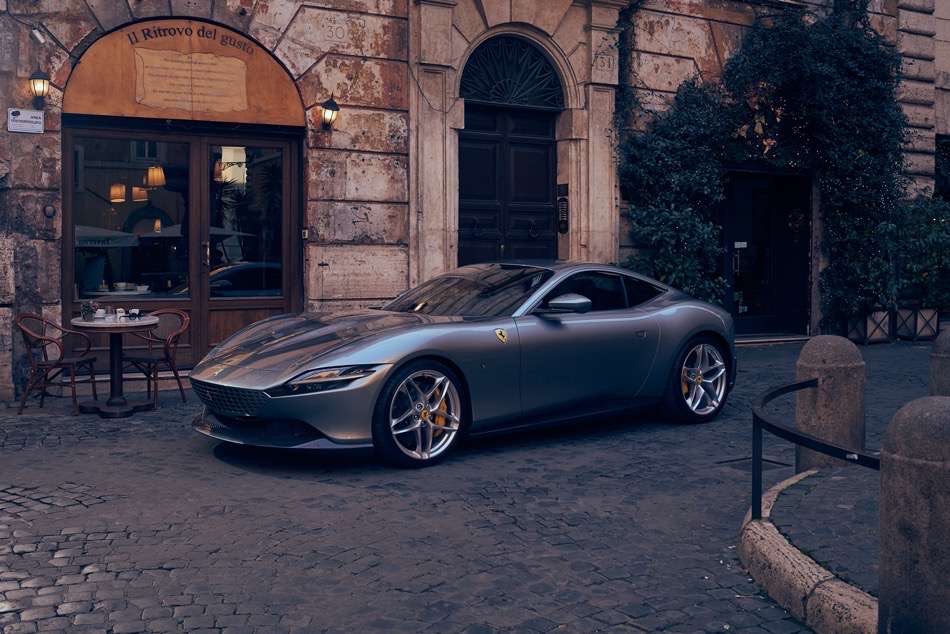
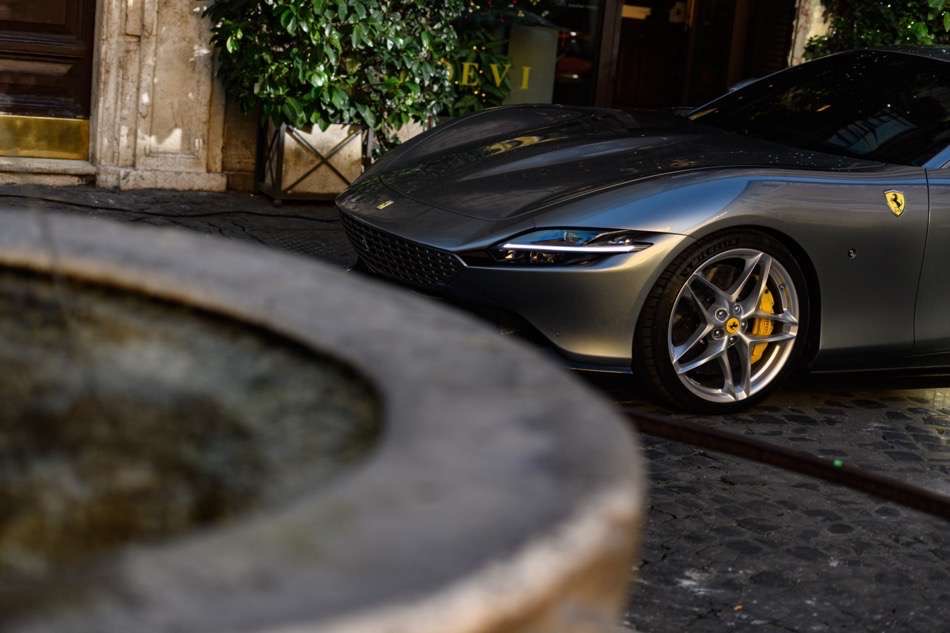
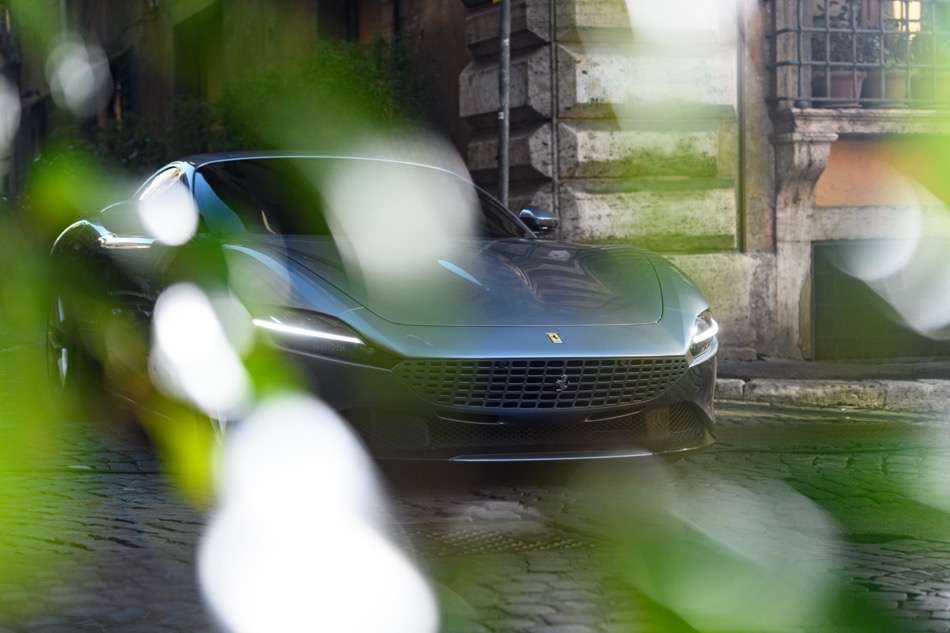
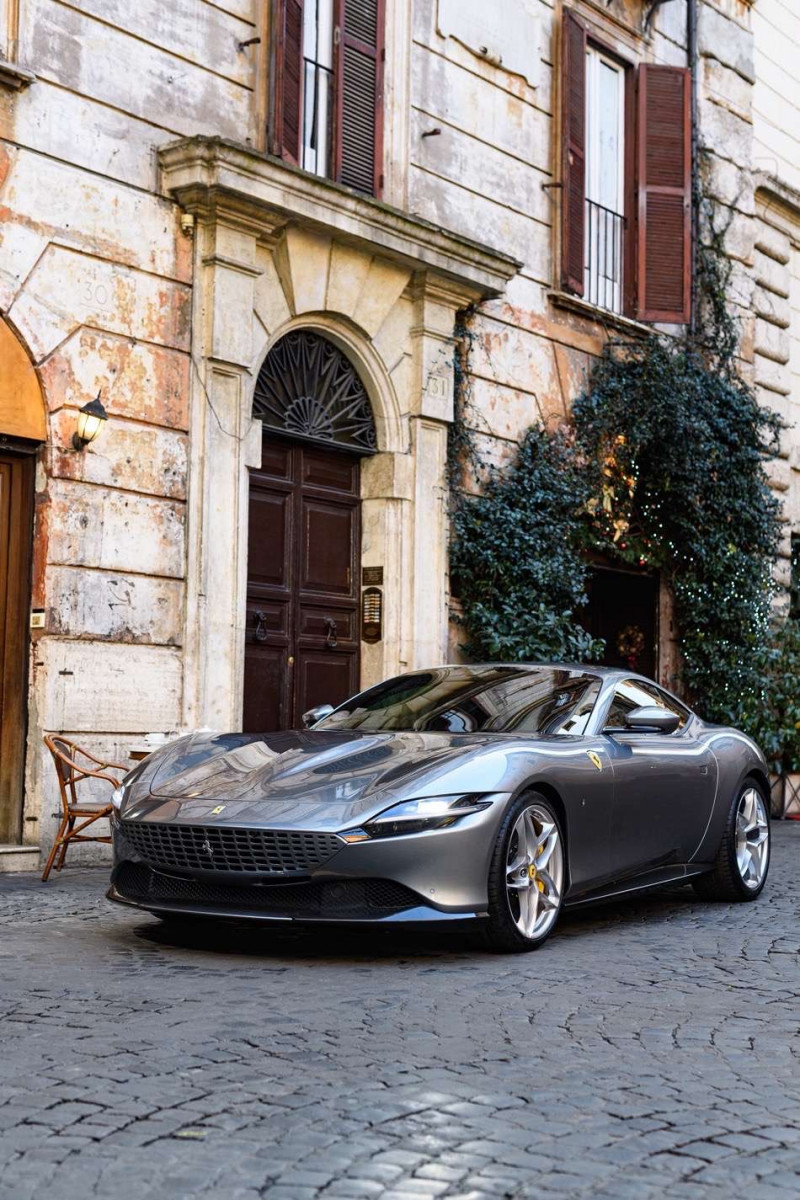
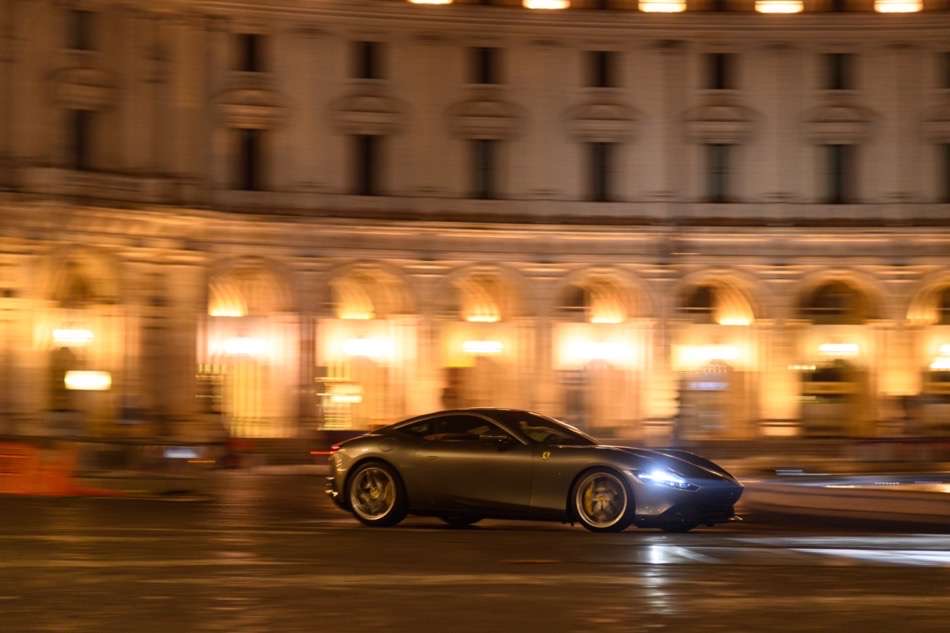
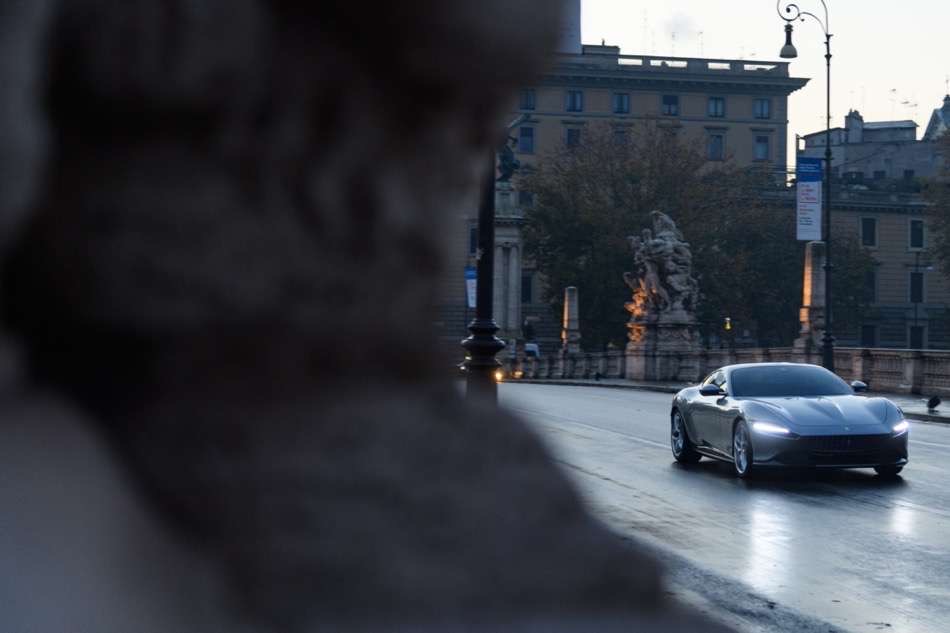
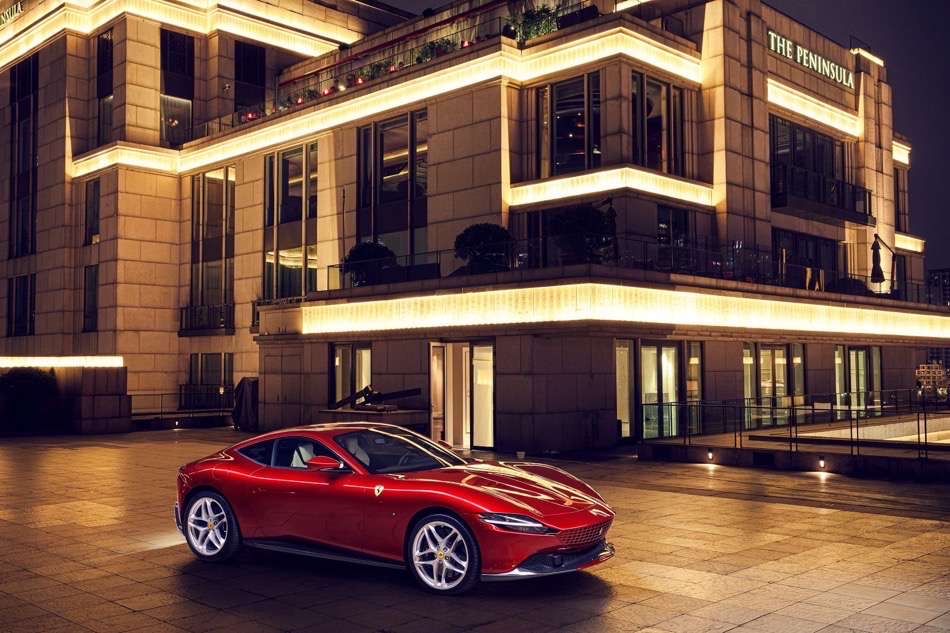
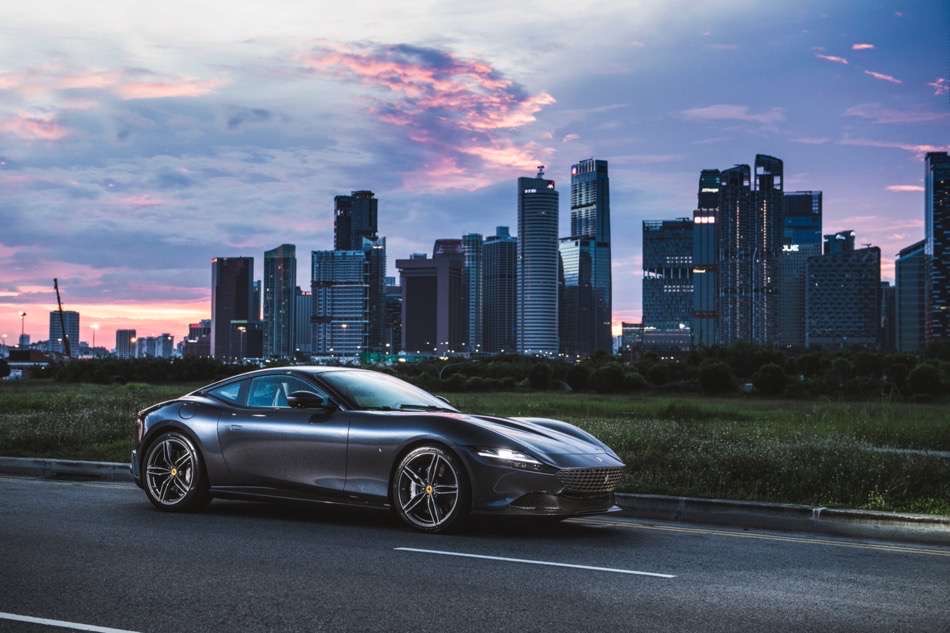
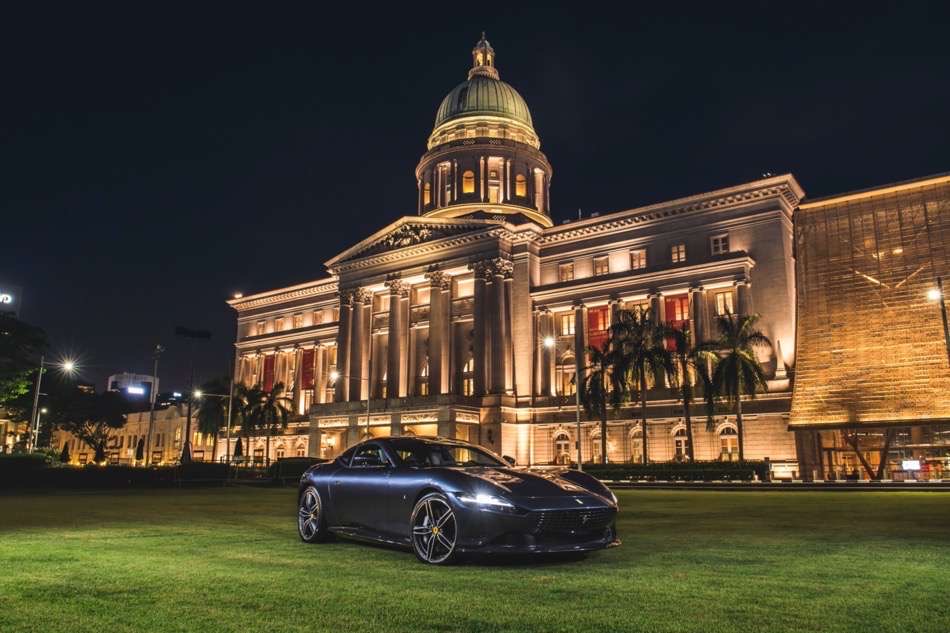
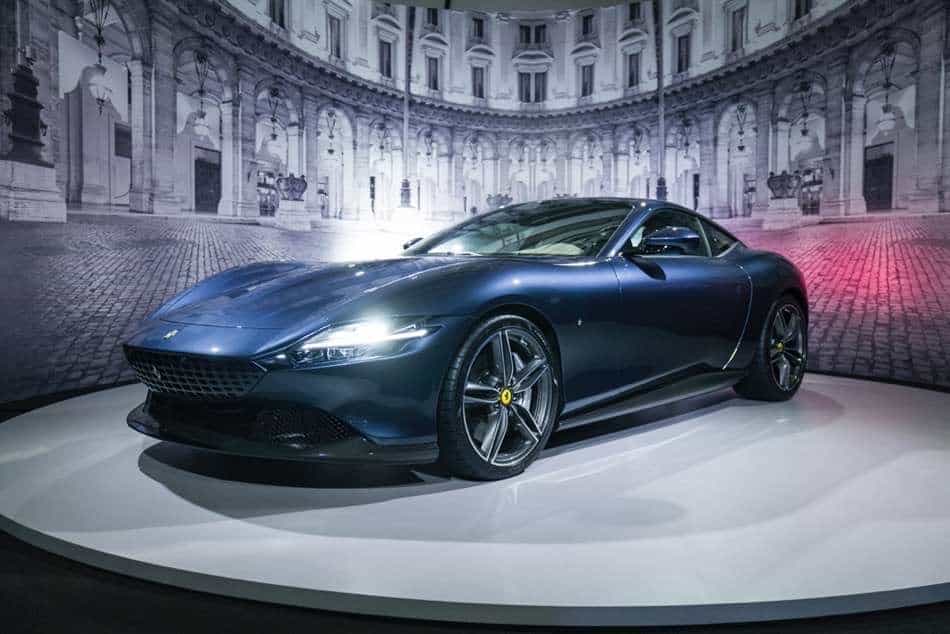
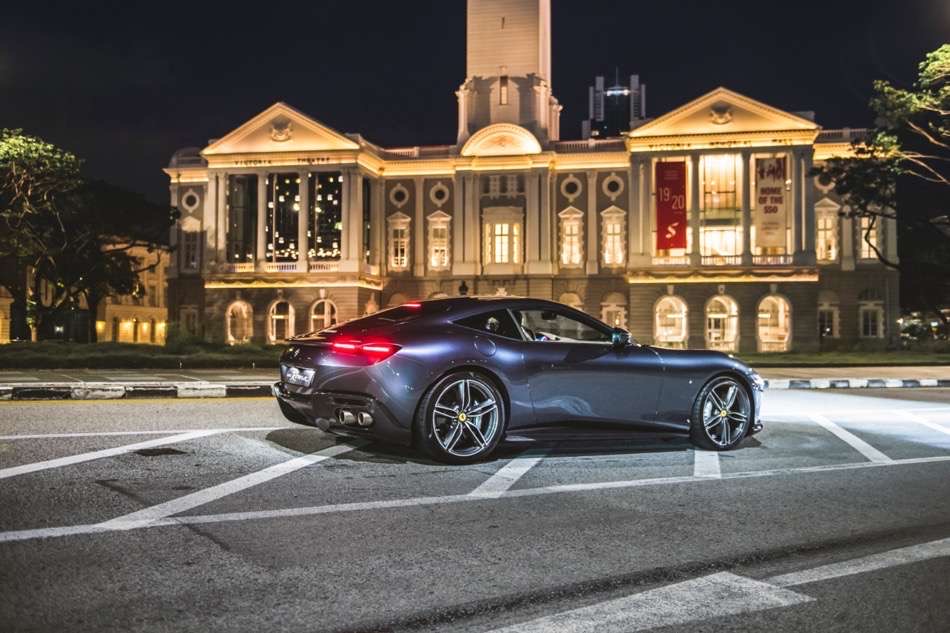
The Ferrari Roma’s design is one of its defining strengths. It is deliberately cleaner and more understated than many modern supercars, giving it a more mature and timeless character. Ferrari designed the Roma to evoke elegance rather than aggression, and that is why it remains one of the most visually distinctive modern Ferraris.
Exterior Proportions
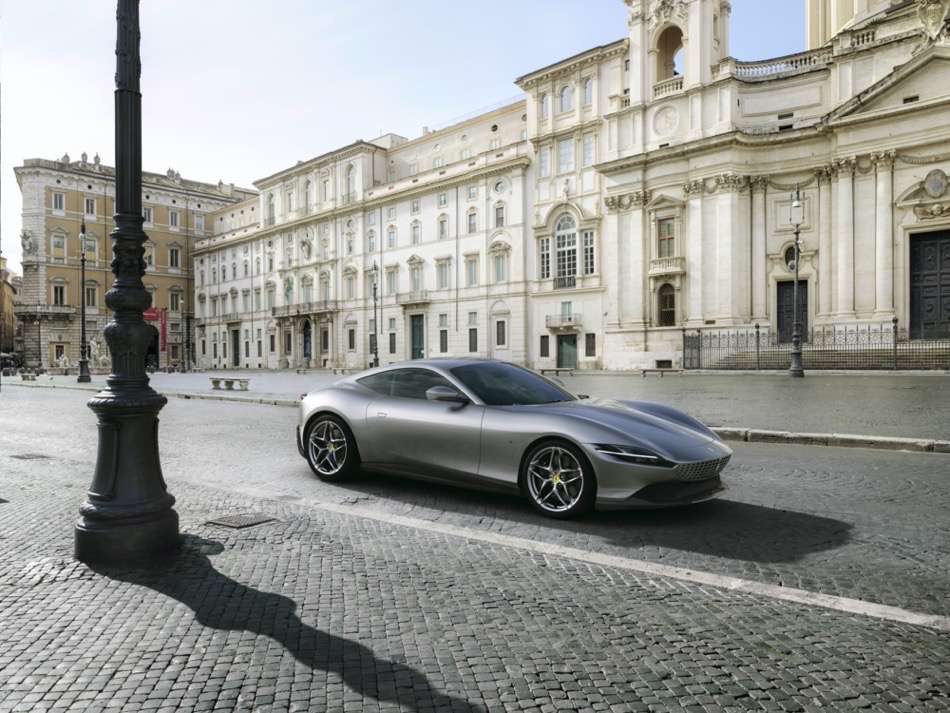
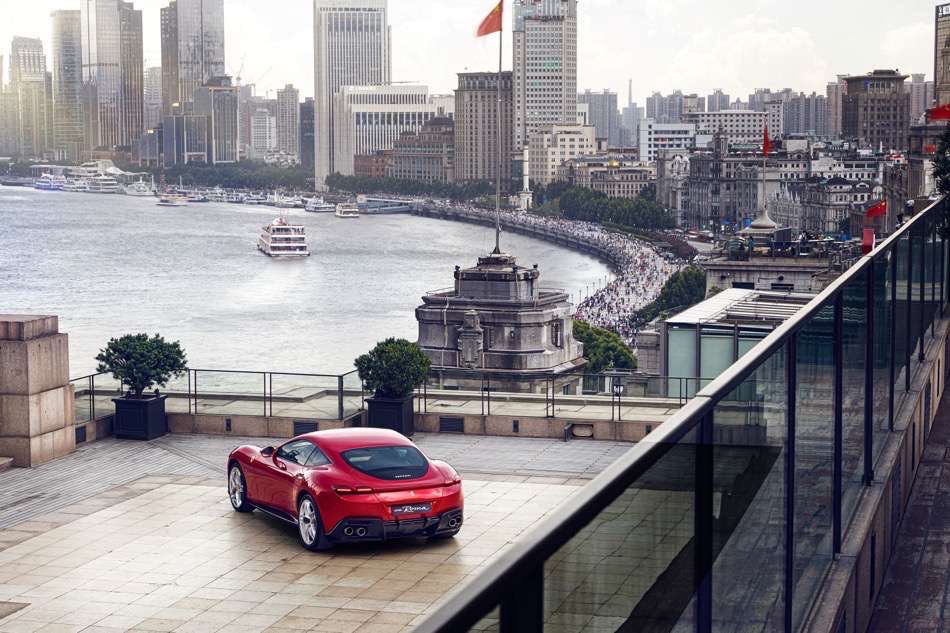
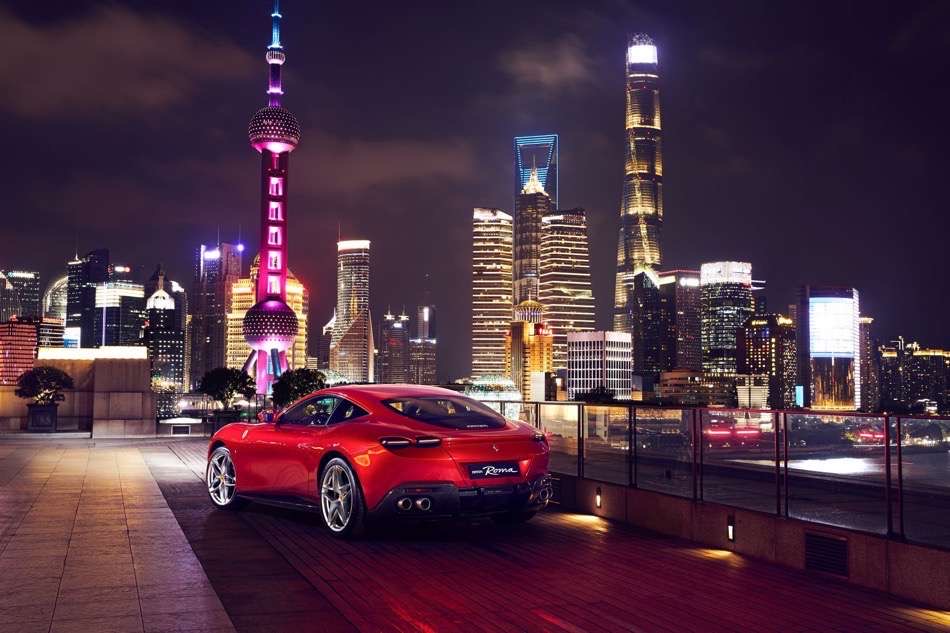
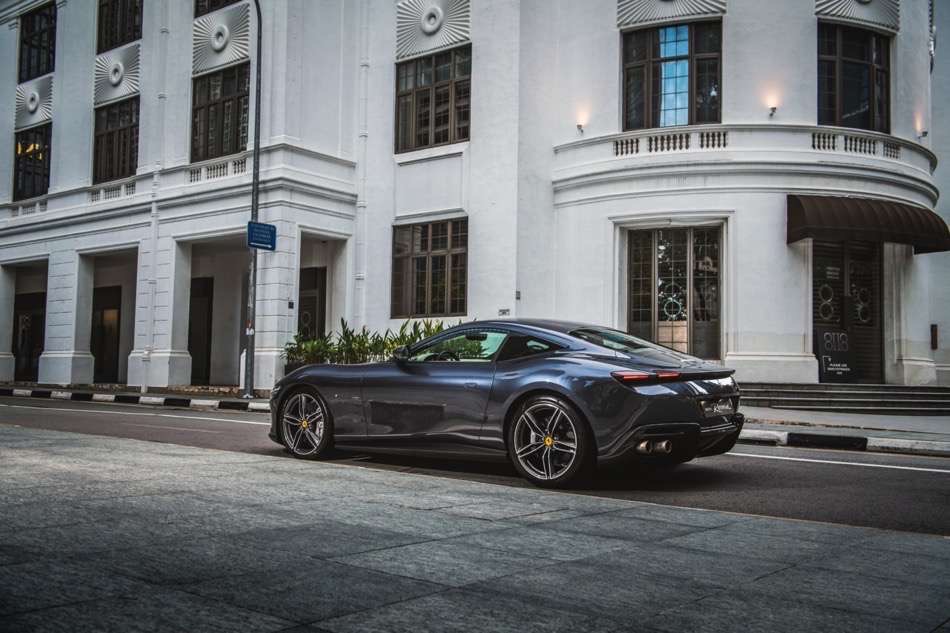
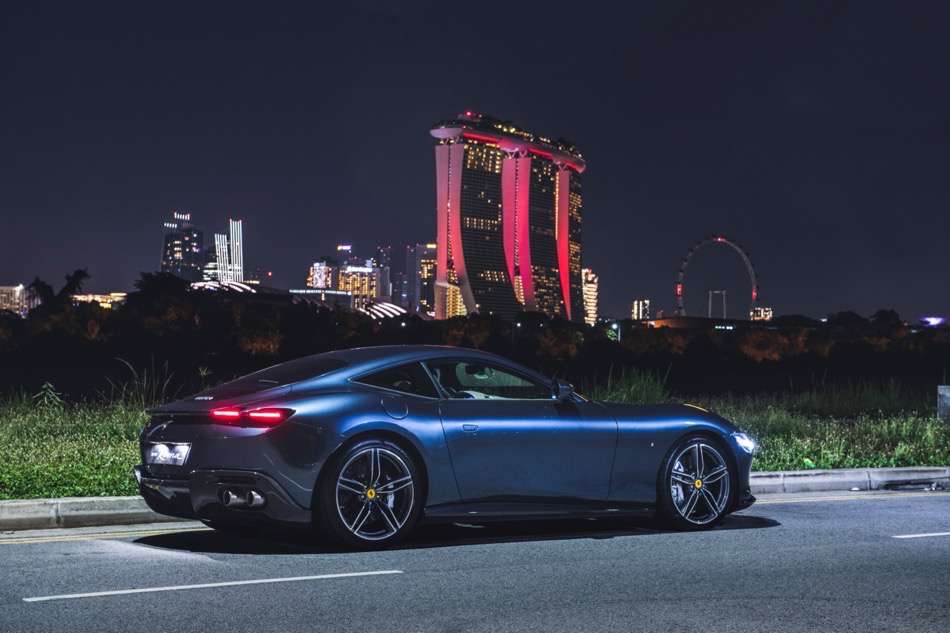
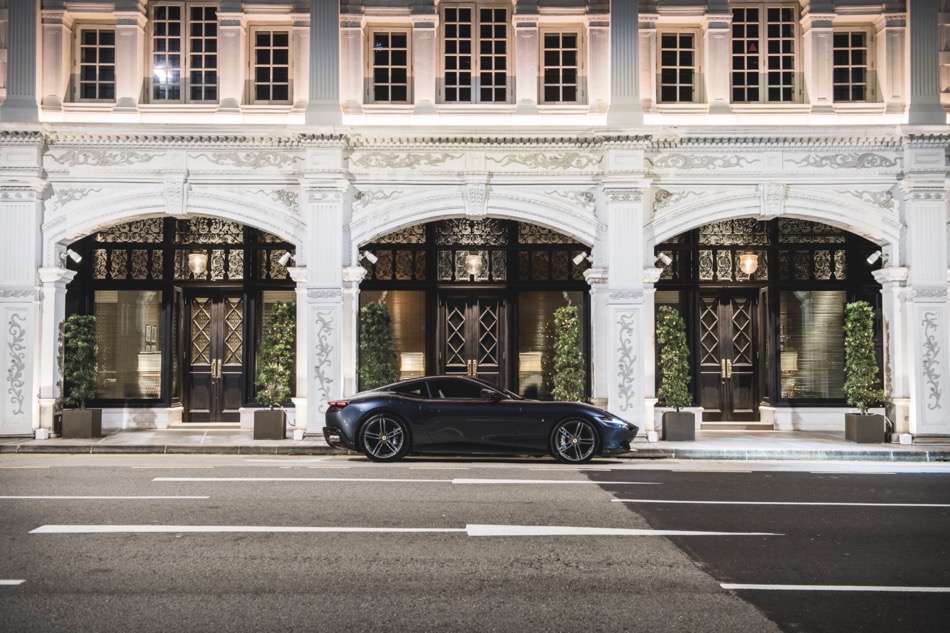
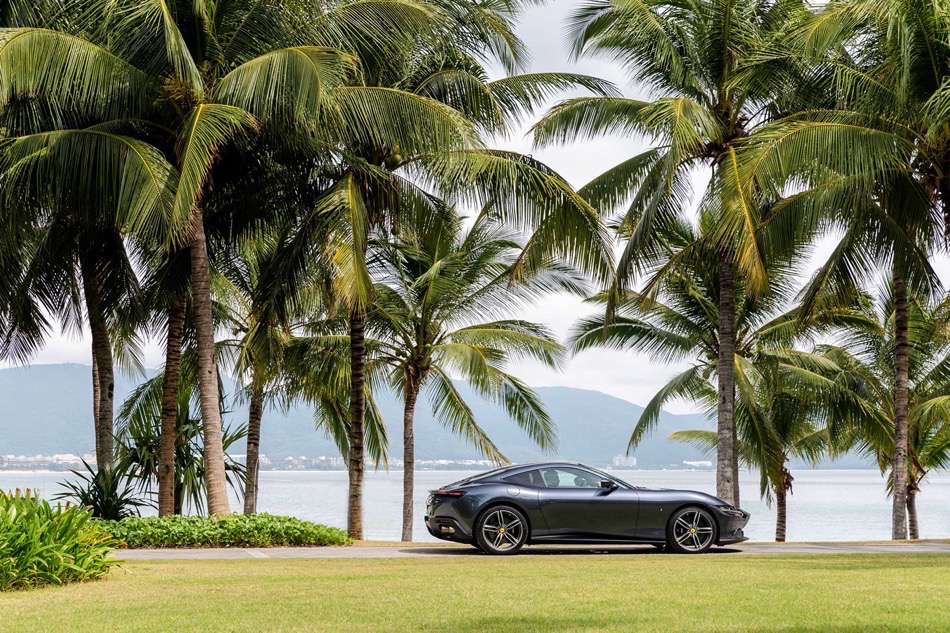
The Roma uses classic front-engined GT proportions: a long bonnet, a cabin pushed rearward, a short rear deck and a low, wide stance. This gives it a natural elegance that is difficult to achieve with mid-engined packaging. The car looks fast, but not forced. It does not need exaggerated aero appendages to communicate performance.
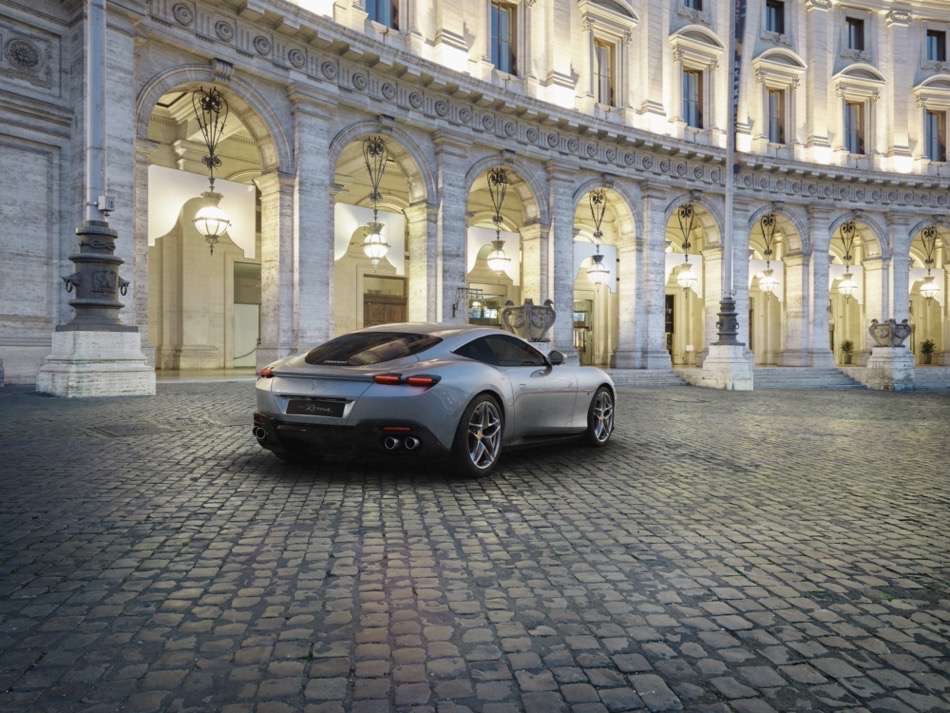
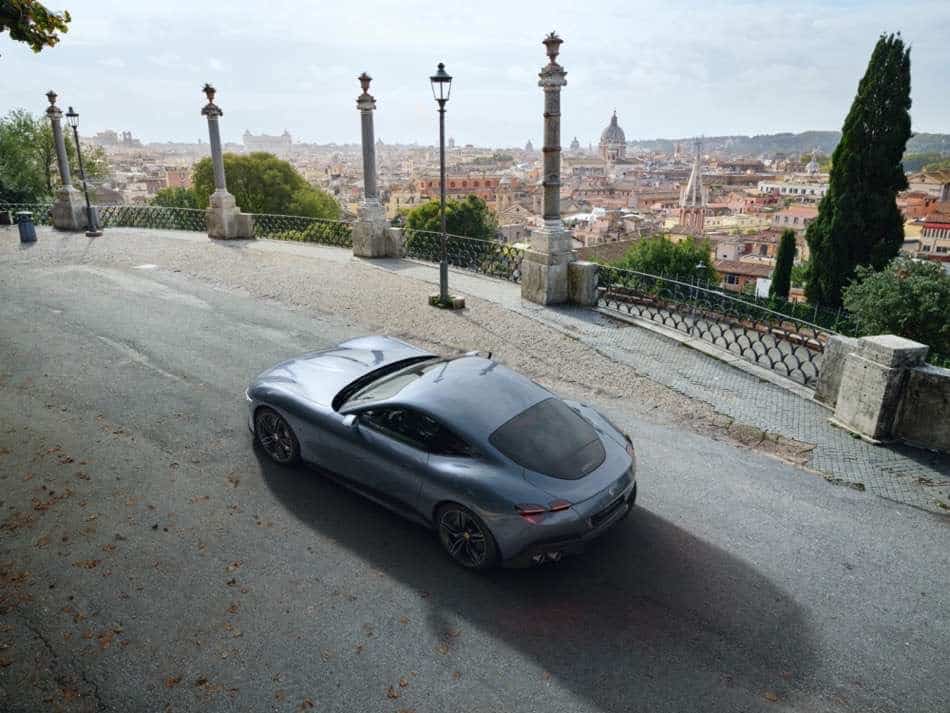
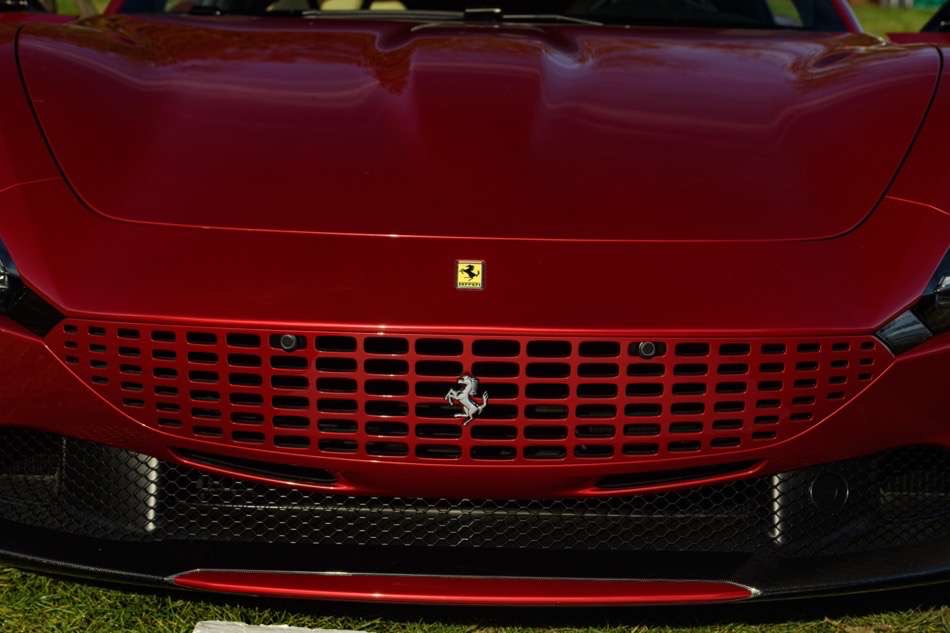
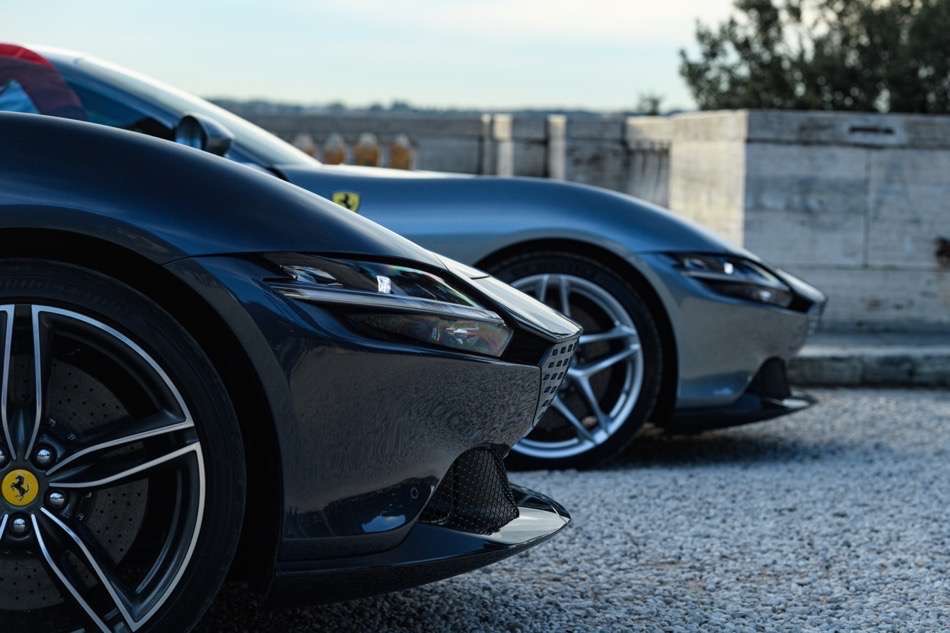
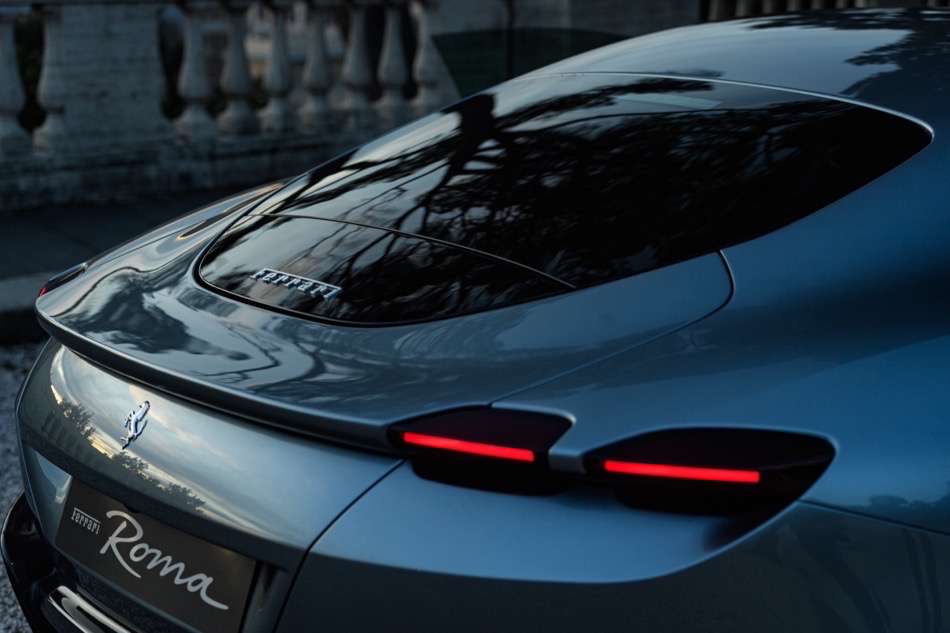
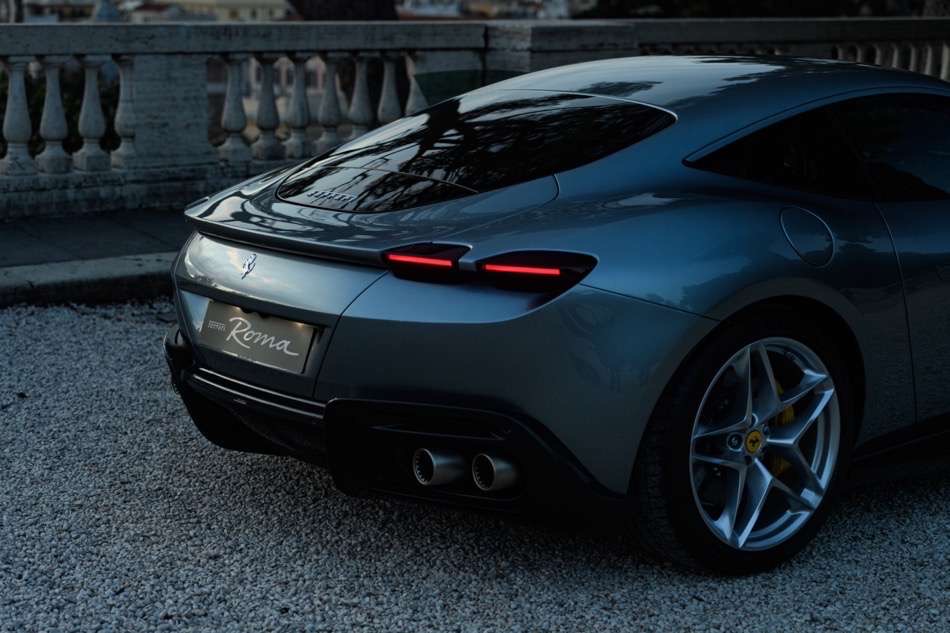
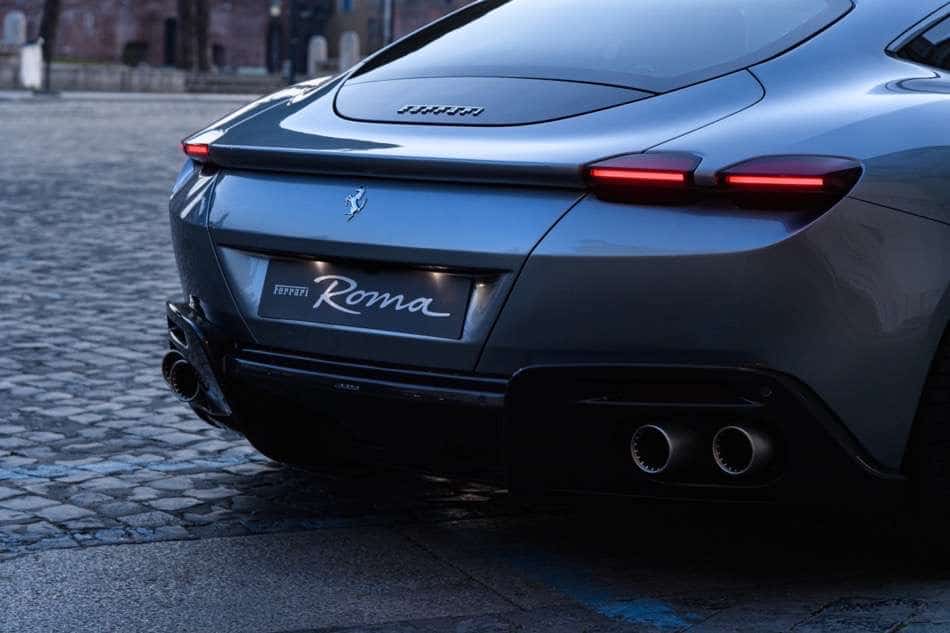
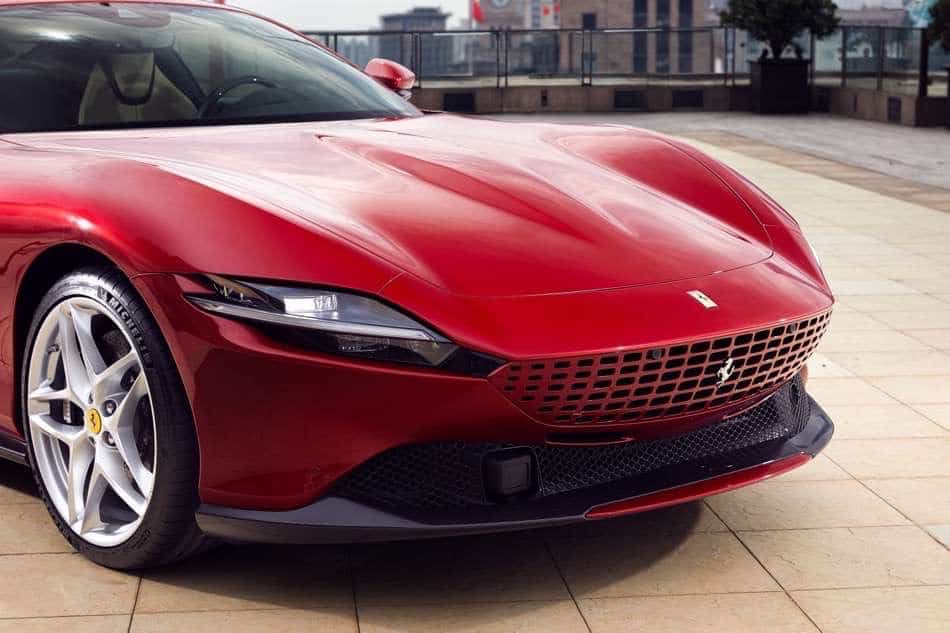
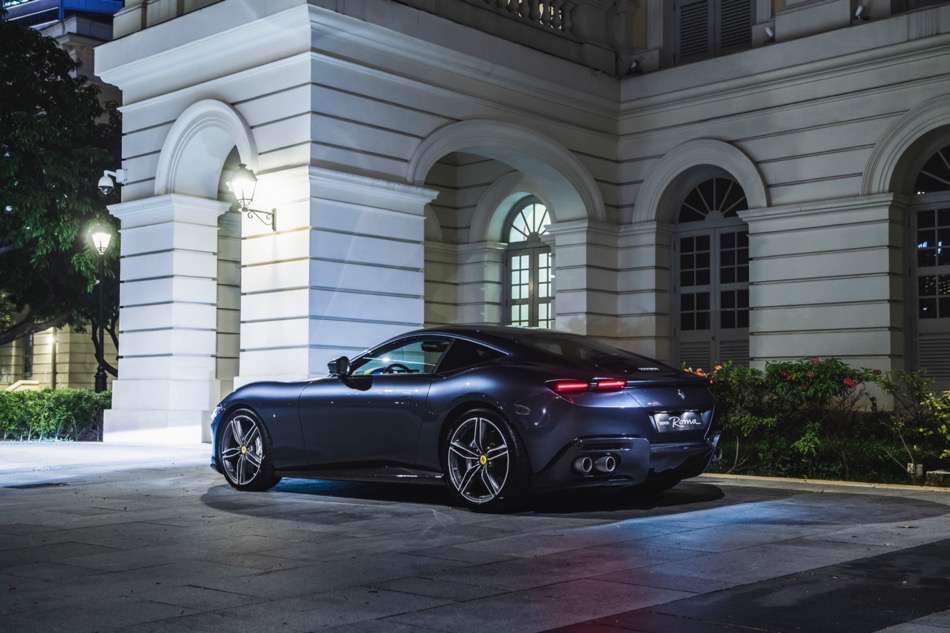
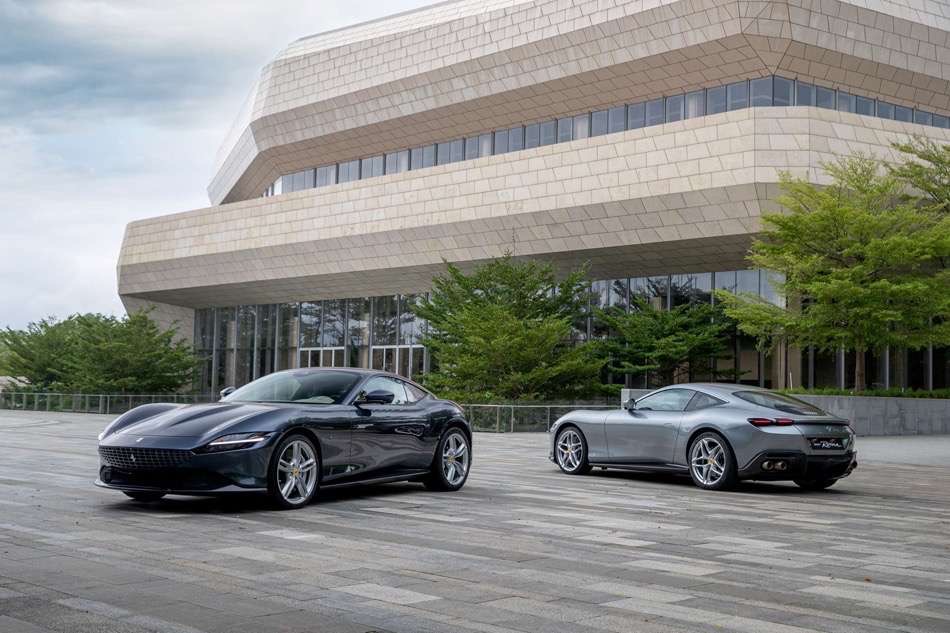
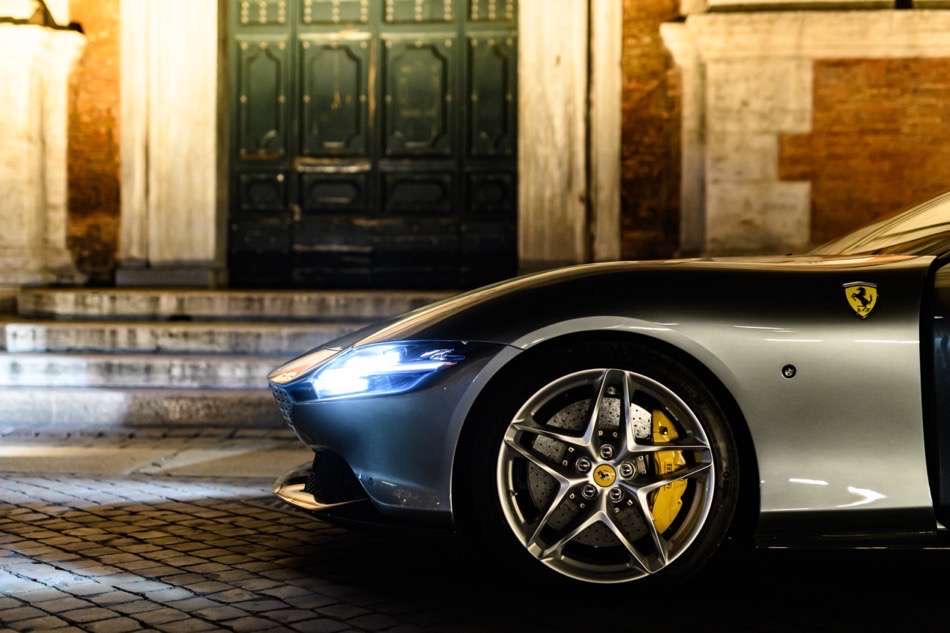
The front end is particularly restrained. The grille treatment is integrated into the bodywork rather than being visually dominant, and the slim headlights give the car a calm, technical expression. The body sides are smooth and sculptural, avoiding unnecessary creases. At the rear, the lights are slim and horizontal, reinforcing width without disrupting the clean surface language.
Aerodynamics
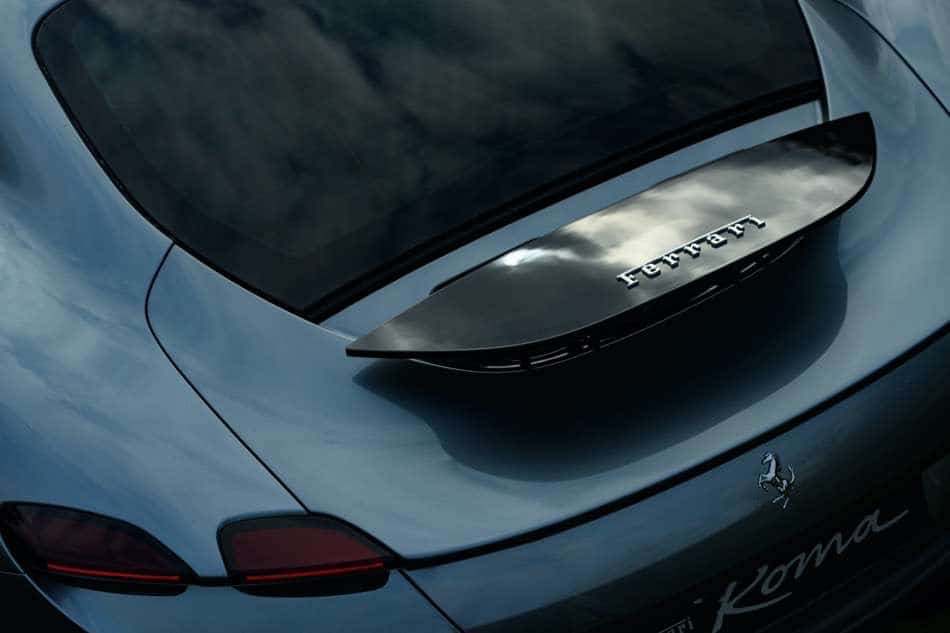
The Roma is not merely a styling exercise. It uses active aerodynamic technology, including a rear wing that deploys automatically at speed. The active rear spoiler can generate up to 95 kg of downforce at 250 km/h, depending on mode and driving conditions. This allows the car to retain its clean silhouette in normal use while gaining stability when required.
This is important because the Roma is a GT, not a track special. Ferrari needed aerodynamic performance without compromising elegance. The active spoiler achieves that balance.
Interior Design
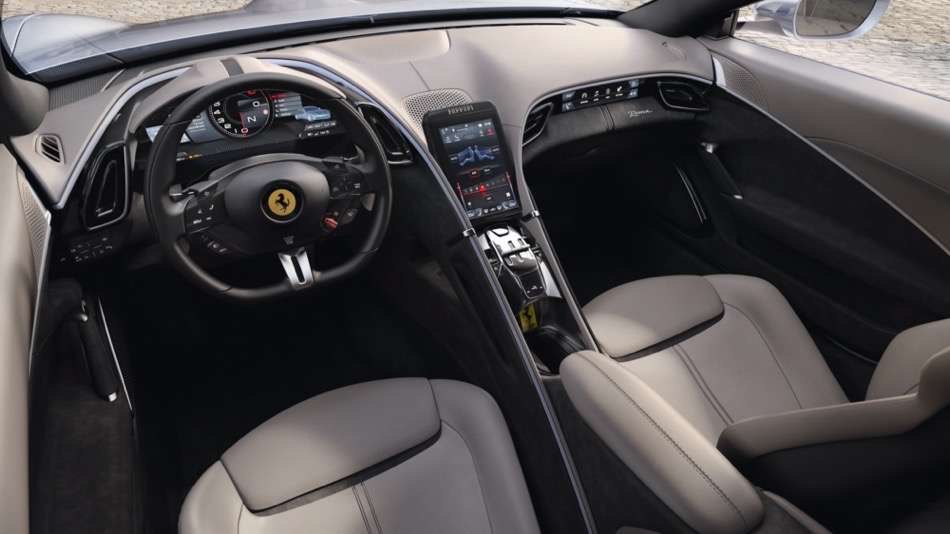
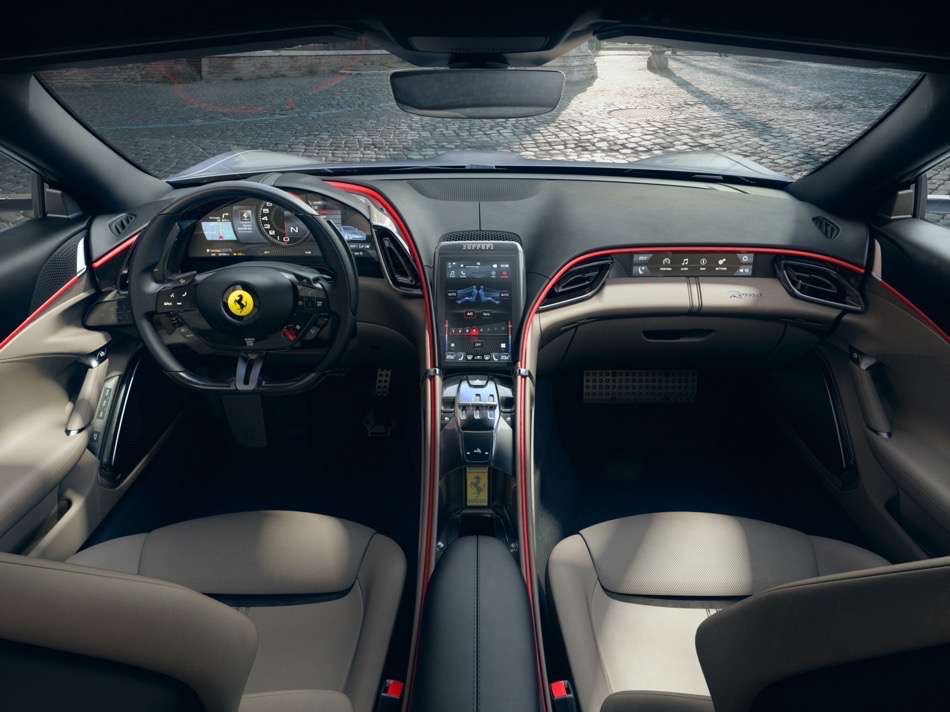
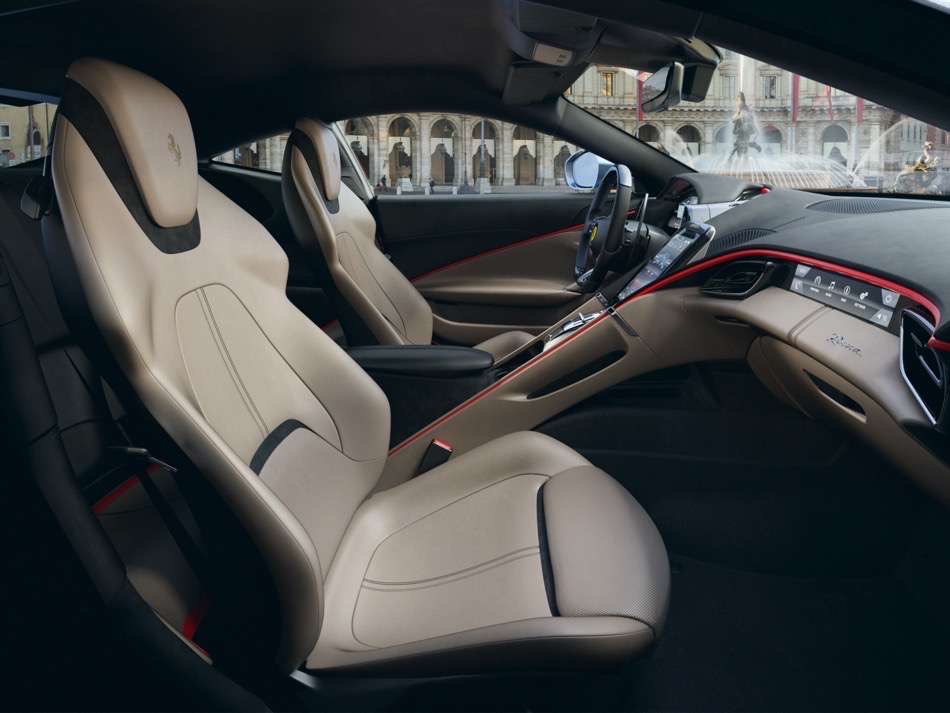
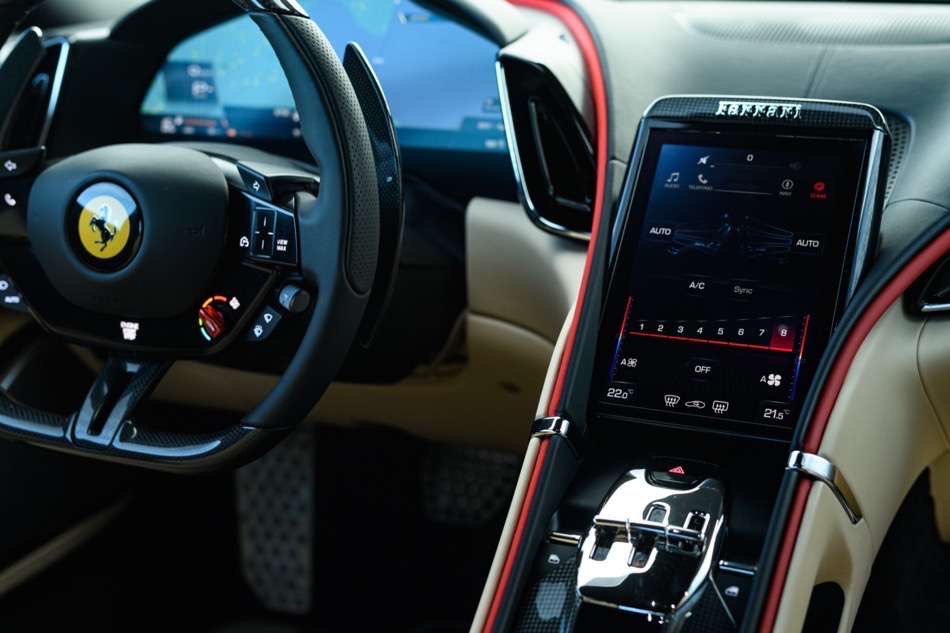
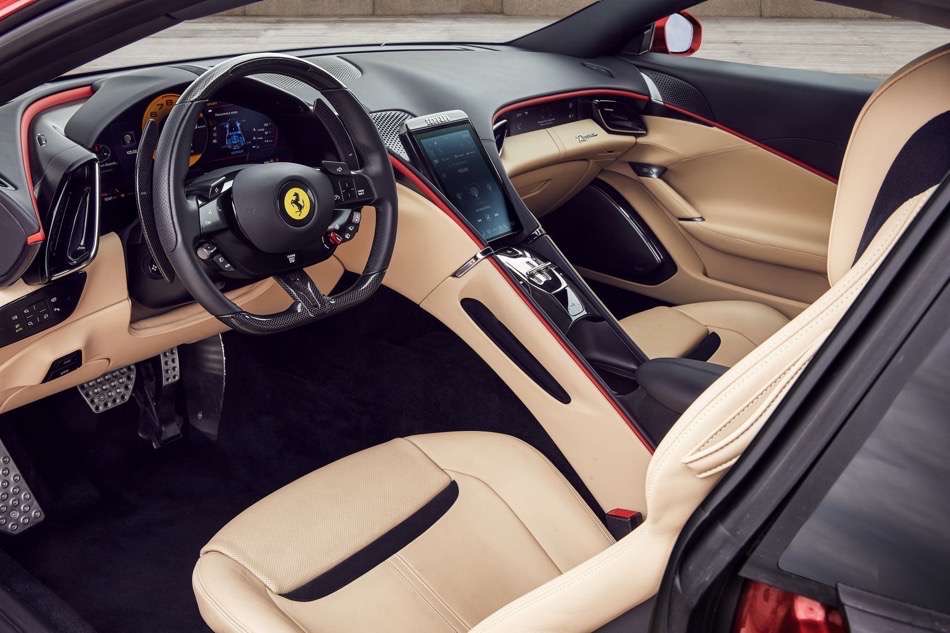
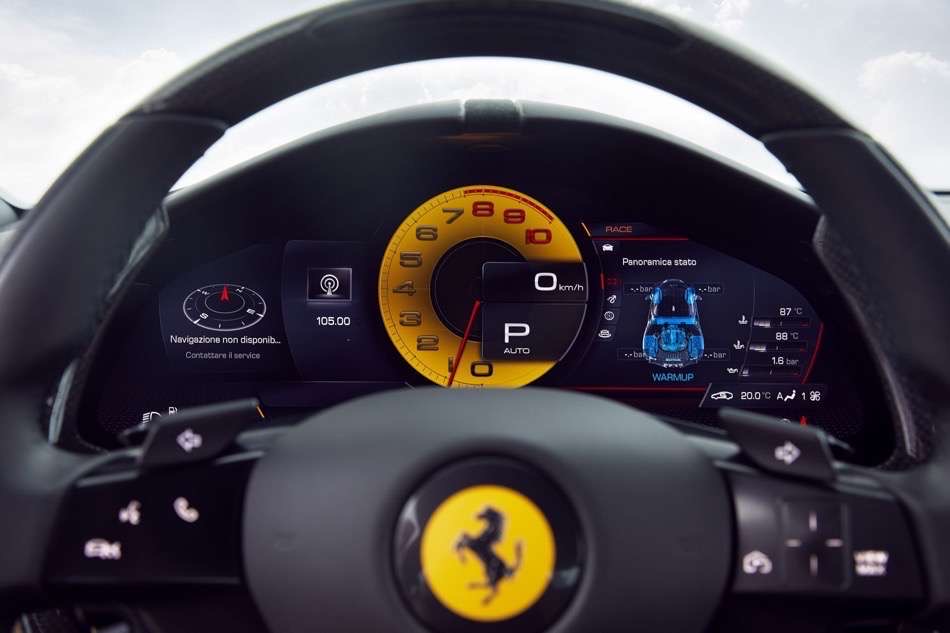
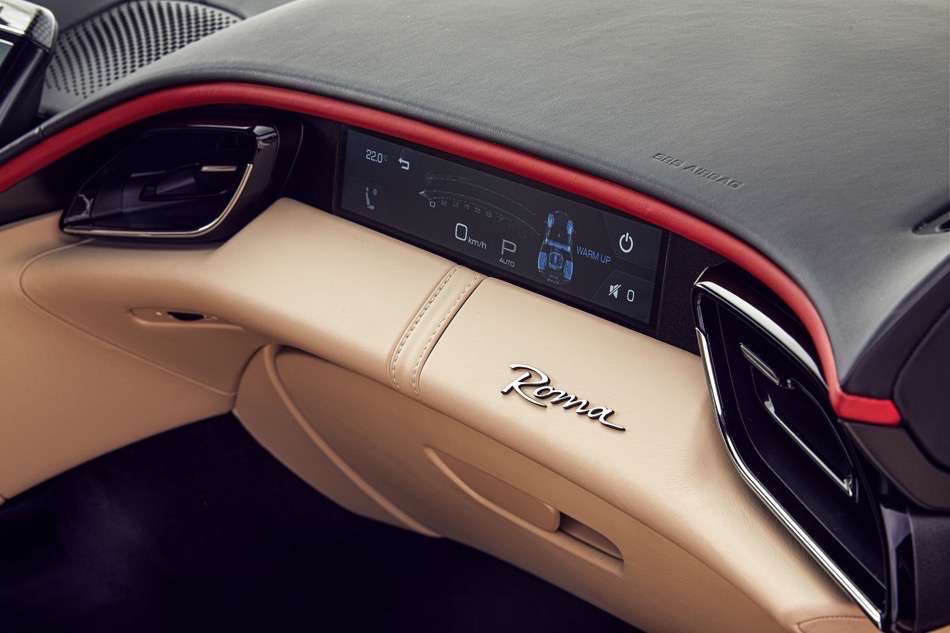
The interior introduced Ferrari’s dual-cockpit design philosophy, separating driver and passenger into distinct zones. This layout creates a more intimate cabin than many luxury GTs. The driver sits low, the dashboard wraps around the cockpit, and the digital instrument display provides a modern feel.
However, the Roma’s interior is not without criticism. The heavy use of touch-sensitive controls, particularly on the steering wheel, divided opinion. Some owners appreciate the futuristic minimalism; others find it less intuitive than traditional physical buttons. This became important enough that Ferrari moved toward improved control ergonomics in later models such as the Amalfi.
Design Longevity
The Roma’s greatest design achievement is restraint. Many supercars look exciting when new but age quickly because their styling is too aggressive. The Roma is more likely to age gracefully because it relies on proportion and surface quality. For buyers thinking about long-term ownership, that matters.
4. Engine & Technical Specifications
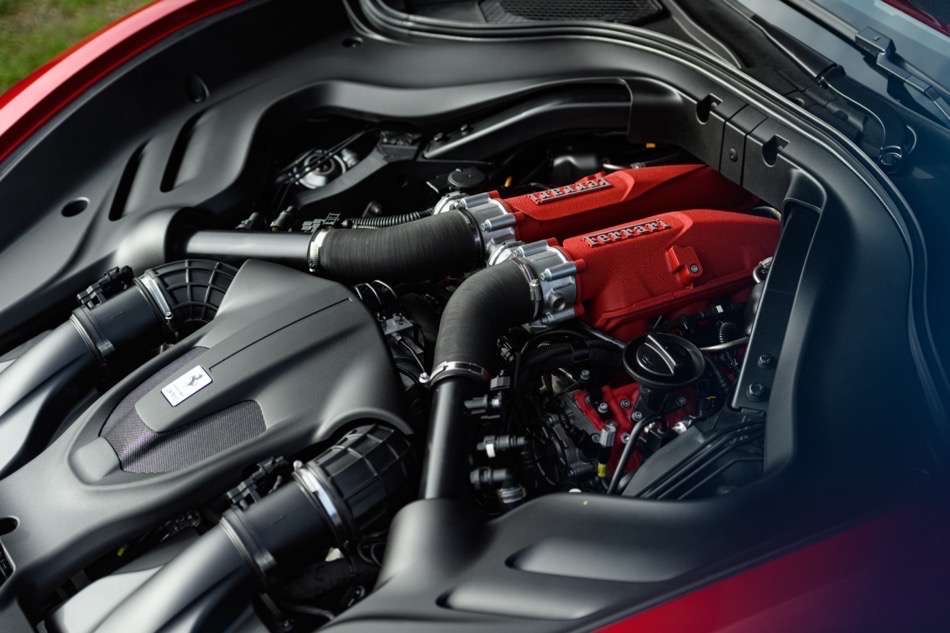
The Ferrari Roma is powered by a 3,855 cc twin-turbocharged 90-degree V8, part of Ferrari’s F154 engine family. In the Roma, it produces 620 cv / 612 bhp between 5,750 and 7,500 rpm and 760 Nm / 561 lb ft of torque between 3,000 and 5,750 rpm. The engine is paired with an 8-speed dual-clutch transmission and sends power to the rear wheels.
Core Technical Specification
Key figures include:
- Engine: 3,855 cc twin-turbocharged V8
- Power: 620 cv / 612 bhp
- Torque: 760 Nm / 561 lb ft
- Transmission: 8-speed dual-clutch automatic
- Drivetrain: rear-wheel drive
- Layout: front-mid engine
- 0–100 km/h: 3.4 seconds
- 0–200 km/h: 9.3 seconds
- Top speed: over 320 km/h / 199 mph
- Kerb weight: approximately 1,570 kg
- Weight distribution: approximately 50:50
Engine Character
The Roma’s V8 is not as theatrical as Ferrari’s naturally aspirated V12s, but it is highly effective. The twin-turbo setup gives the car strong low- and mid-range torque, making it easy to drive quickly without constantly chasing high revs. This suits the Roma’s grand touring brief.
The engine is also smoother and more flexible than older naturally aspirated Ferrari units. In town, it can feel civilised. On open roads, it becomes much more aggressive, especially when the gearbox is placed in a more responsive mode.
Transmission
The 8-speed dual-clutch gearbox is one of the Roma’s major technical improvements over older Ferrari GTs. Compared with the previous 7-speed unit used in cars such as the Portofino, the newer gearbox provides faster shifts, improved efficiency and stronger intermediate acceleration. Ferrari claimed increased longitudinal pull in third gear compared with the previous generation gearbox.
Rear-Wheel Drive Balance
The Roma’s rear-wheel-drive layout is essential to its character. Many luxury GT rivals use all-wheel drive for traction and security, but Ferrari keeps the Roma more traditional. This gives the car a lighter, more adjustable feel and helps distinguish it from heavier grand tourers.
Technical Positioning
The Roma is not a hybrid and does not offer electric-only driving. In today’s Ferrari range, that makes it feel relatively traditional. For many buyers, especially those concerned about long-term hybrid complexity, that may be part of its appeal.
5. Performance
The Ferrari Roma delivers performance that is more serious than its elegant styling might suggest. With 620 cv, 0–100 km/h in 3.4 seconds, 0–200 km/h in 9.3 seconds and a top speed above 320 km/h, it is a genuine supercar in terms of speed, even though its personality is closer to a grand tourer.
Acceleration
The Roma accelerates with strong, smooth urgency rather than brutal violence. The twin-turbo V8 produces substantial torque from low revs, so the car feels responsive in normal driving. It does not require constant high-rev commitment to feel fast.
This makes it different from older naturally aspirated Ferraris, where the drama often came from working the engine hard. In the Roma, speed is more accessible. A firm throttle input produces immediate, muscular acceleration, supported by fast gearshifts and strong mid-range torque.
Mid-Range Performance
The Roma’s most useful performance is in the mid-range. Overtaking is effortless, motorway acceleration is strong, and the car feels relaxed at high cruising speeds. This is exactly what a front-engined Ferrari GT should do. It should not feel like it needs a racetrack to make sense.
The wide torque band gives the car flexibility. It can be driven gently in automatic mode, then sharpened instantly through the manettino and paddle shifters.
Handling
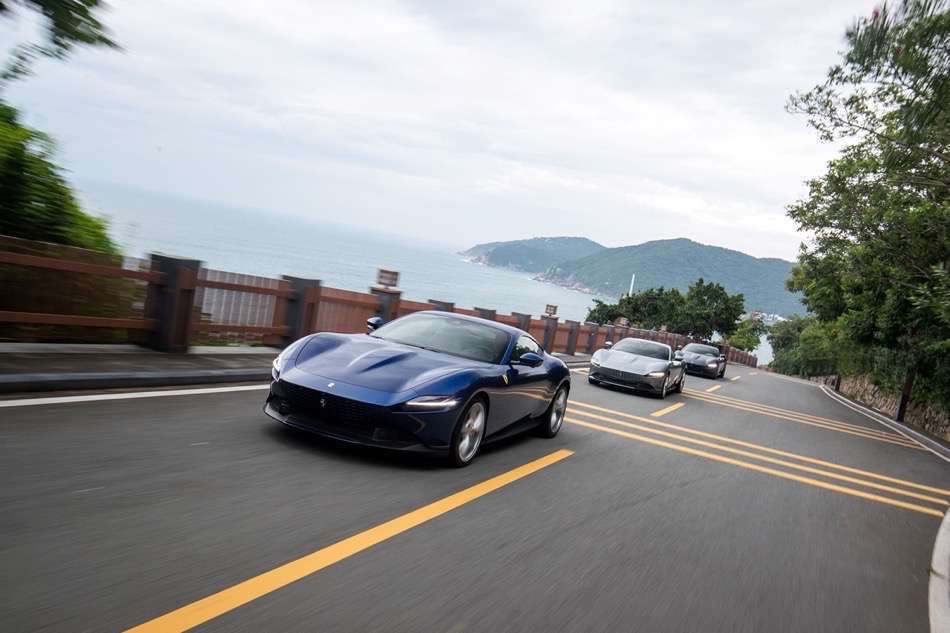
The Roma’s handling is more agile than many buyers expect from a front-engined GT. The engine is mounted behind the front axle, helping balance, while the rear-wheel-drive layout gives the car a more natural feel than all-wheel-drive rivals. The chassis is precise, but not nervous.
It is not as sharp or compact as a 296 GTB, and it does not have the raw intensity of a track-focused Ferrari. That is not a flaw. The Roma is designed to flow down roads rather than attack them. It rewards smooth inputs and confident driving rather than constant aggression.
Braking and Stability
The braking system is strong and well suited to fast road use. The car has the stopping power expected of a Ferrari, but the overall experience is more refined than in a hardcore supercar. Stability systems provide reassurance without making the car feel inert.
Real-World Performance
The Roma’s real-world performance advantage is usability. It is fast enough to feel special on every journey, but not so extreme that it becomes frustrating. Compared with a 296 GTB, it is less explosive. Compared with a Bentley Continental GT, it is sharper and more exotic. Compared with a Porsche 911 Turbo S, it is less clinical and more emotionally styled.
That balance is the Roma’s core appeal.
6. Variants & Special Editions
The Ferrari Roma range is relatively simple compared with some Ferrari model families, but it still includes important distinctions that matter for buyers.
Ferrari Roma Coupé
The Roma coupé is the original and purest version. It offers the cleanest design, the lowest weight and the most elegant proportions. For buyers who value styling and long-term design purity, the coupé is likely the stronger choice.
The coupé’s fixed roof also gives it a slightly more focused dynamic character than the Spider. It is the better choice for those who prioritise structure, quietness and visual simplicity.
Ferrari Roma Spider
The Roma Spider introduced open-top motoring to the Roma platform and replaced the Portofino M in Ferrari’s range. It uses the same basic V8 powertrain but adds a fabric soft-top, increasing emotional appeal and lifestyle usability.
The Spider is more expensive and slightly heavier, but it may be more desirable in warm-weather markets. Buyers choosing between the Roma coupé and Roma Spider should think carefully about use case. If the car will be used for touring, coast roads and occasional summer driving, the Spider makes sense. If the buyer wants the cleanest design and best value, the coupé is compelling.
Tailor Made and Personalisation
The most meaningful “variants” of the Roma are often created through specification. Ferrari’s personalisation options can dramatically change the car’s character.
Important specification areas include:
- Exterior colour
- Wheels
- Brake caliper colour
- Interior leather
- Contrast stitching
- Carbon fibre trim
- Seat type
- Passenger display
- Magneride suspension
- Premium audio
- Suspension lift
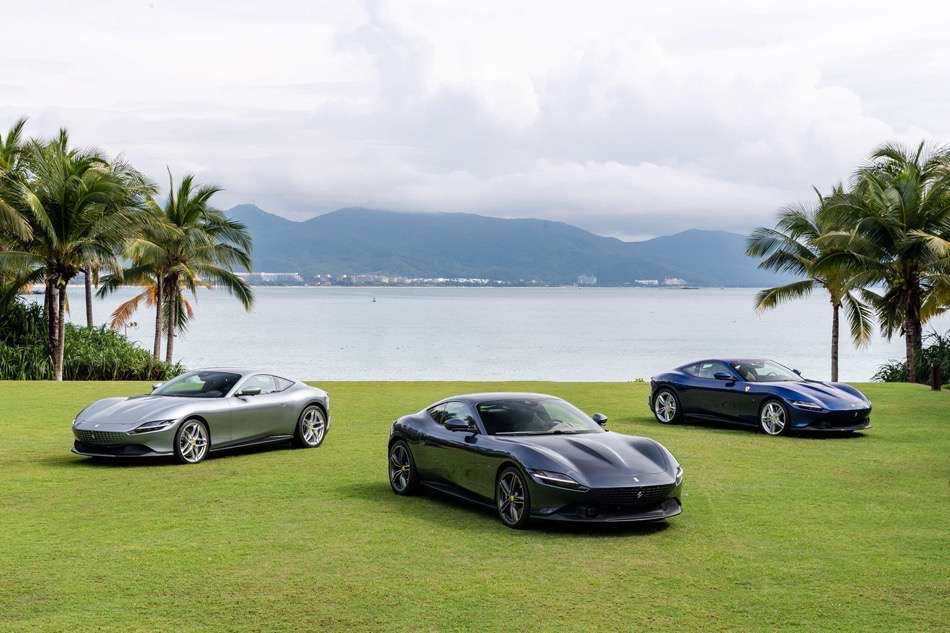
Because the Roma is an elegant GT, restrained specification often suits it best. Classic colours, darker metallics, elegant interiors and tasteful contrast details tend to work well. Extremely aggressive specifications can make the car feel less coherent.
Special Editions
The Roma did not receive the same kind of major special-series treatment as mid-engined Ferraris such as the 458 Speciale or 488 Pista. This makes sense because the Roma was never intended as a track-focused model. Its role is refinement and style, not lap-time optimisation.
However, one-off Tailor Made cars and dealer-commissioned specifications may hold additional appeal if executed tastefully.
Successor: Ferrari Amalfi
The Ferrari Amalfi now succeeds the Roma coupé. This is relevant because it changes the Roma’s market position. The Roma is no longer the newest Ferrari V8 GT, but that may improve its value proposition. Buyers can obtain a modern Ferrari GT at a lower price than a new Amalfi, while retaining a very similar overall ownership concept.
For many buyers, that makes the Roma one of the most attractive used Ferraris in the current market.
7. Driving Experience
The Ferrari Roma’s driving experience is defined by elegance and accessibility. It is not a raw Ferrari, and it is not trying to be. It is a car that makes high performance feel smooth, polished and usable.
Around Town
At low speeds, the Roma is relatively easy to use. The front-engined layout gives better visibility than a mid-engined Ferrari, the gearbox is smooth in automatic mode, and the cabin feels more comfortable than Ferrari’s more focused supercars.
It is still a low, expensive Ferrari, so speed bumps, kerbs, parking ramps and narrow streets require care. However, it is much less intimidating than a 488 GTB or 296 GTB in urban settings.
Fast Roads
On a fast road, the Roma feels balanced and fluent. The steering is quick, the chassis is composed, and the V8 has more than enough torque to make overtaking effortless. The car rewards smooth driving rather than aggressive inputs.
The rear-wheel-drive layout gives the car a sense of adjustability that is missing from some all-wheel-drive GTs. It feels more alive than a Bentley Continental GT and more exotic than a Porsche 911, but less demanding than Ferrari’s mid-engined cars.
Long-Distance Touring
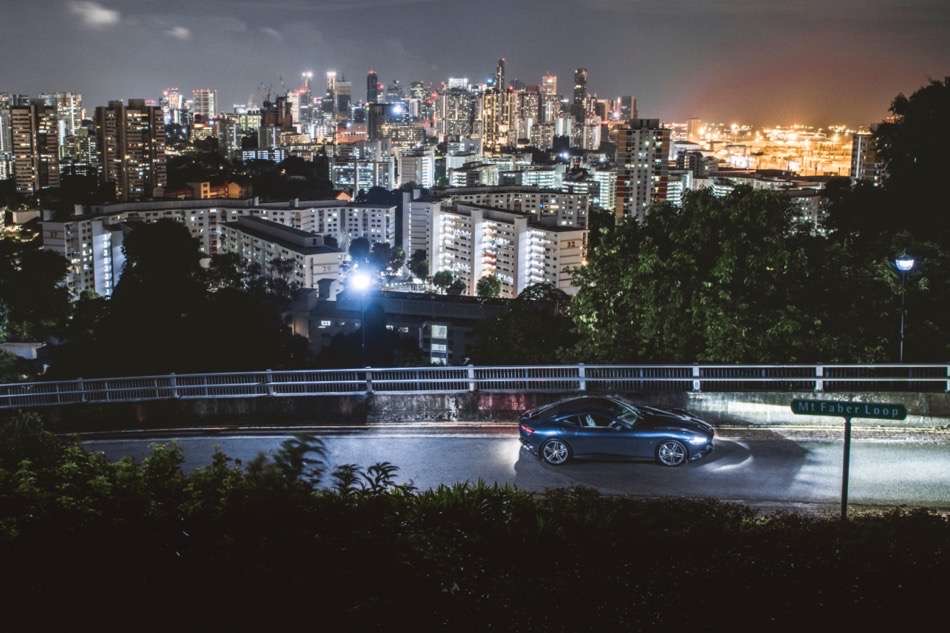
The Roma is at its best as a long-distance GT. It has enough comfort for extended journeys, enough luggage space for weekends away, and enough performance to make every journey feel special. The cabin is compact rather than spacious, but for two people it works well.
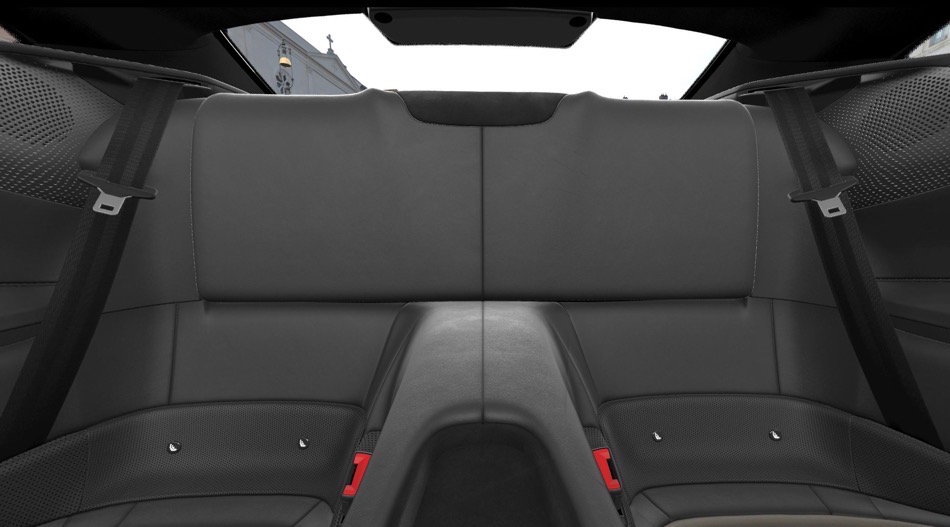
The rear seats are limited, but useful for bags or occasional short journeys. This gives the Roma more flexibility than a strict two-seat Ferrari.
Emotional Character
The Roma’s emotional appeal is subtle. It does not overwhelm the driver with noise, aggression or drama. Instead, it builds appeal through design, balance and refinement. It feels like a Ferrari that can be used frequently without becoming tiring.
That is why it suits a particular buyer very well: someone who wants Ferrari ownership, but values elegance over extremity.
8. Ownership Insights
Owning a Ferrari Roma is generally more manageable than owning a mid-engined Ferrari, but it still requires serious budgeting. It is a high-performance, high-value Ferrari with expensive tyres, brakes, servicing, insurance and cosmetic repair costs.
Running Costs
Indicative annual ownership costs include:
- Insurance: £4,000–£10,000 / $5,000–$13,000+
- Tyres: £1,300–£2,400 / $1,700–$3,000 per set
- Paint protection film: £3,500–£6,500 / $4,500–$8,500
- Detailing and ceramic coating: £800–£2,000 / $1,000–$2,500
- Warranty extension after factory coverage: several thousand pounds/dollars annually
- Fuel: high when driven hard, but more manageable than a V12 Ferrari
Fuel economy varies heavily with driving style. US EPA figures for the Roma have been listed around 17 mpg city, 22 mpg highway and 19 mpg combined, while UK official figures are commonly quoted around 25 mpg depending on testing basis.
Servicing Reality
Modern Ferraris usually benefit from Ferrari’s seven-year maintenance programme, which helps reduce scheduled servicing costs for qualifying cars. However, buyers should not confuse scheduled servicing with total ownership cost. Tyres, brakes, fluids, cosmetics, wheel damage, battery issues, warranty extension and accident repairs remain expensive.
The Roma should be serviced by Ferrari main dealers or respected Ferrari specialists. The V8 engine is proven, but the car’s electronic systems, gearbox, suspension and active aero require proper diagnostic capability.
Reliability Expectations
The Roma’s twin-turbo V8 is based on a proven Ferrari engine family, which supports reliability confidence. However, modern Ferrari ownership still depends heavily on maintenance, software updates and correct use. The most common concerns are likely to relate not to catastrophic engine failure, but to electronics, trim, infotainment, battery health, sensors and wear items.
Real-World Usability
The Roma is one of the more usable Ferraris. It can handle weekend trips, occasional commuting, touring and regular use more comfortably than many mid-engined models. It is not a family car, but the rear seats add useful luggage flexibility.
For buyers wanting a Ferrari they will actually drive, the Roma is a strong candidate.
9. Market Value & Depreciation
The Ferrari Roma is now one of the more interesting modern Ferrari purchases because it sits between new-car desirability and used-market value. UK on-the-road RRP guidance places the Roma around £212,943, while US pricing for the 2026 Roma starts from around $279,965.
Used Market
Used prices vary significantly by mileage, age, specification and condition. UK listings have shown cars from around the low £130,000s upward, while Ferrari Approved US listings have shown used Roma examples around $200,000–$227,000+ depending on year and mileage.
This means the Roma has already experienced meaningful depreciation from new in some markets, especially for earlier cars or less desirable specifications. For used buyers, that can make it very attractive.
Depreciation Factors
Key value drivers include:
- Mileage
- Colour
- Interior specification
- Carbon fibre options
- Wheel choice
- Ferrari service history
- Warranty status
- Accident history
- Condition of touch-sensitive controls and interior trim
- Whether buyers prefer the newer Amalfi
The arrival of the Amalfi may place downward pressure on Roma prices, but it also clarifies the Roma’s value proposition. Buyers who want the latest model will choose the Amalfi; buyers who want similar character at a lower price will consider the Roma.
Long-Term Outlook
The Roma’s long-term outlook is likely to be stable rather than explosive. It is not a limited-edition Ferrari, and it is unlikely to become a major collector car in the short term. However, its elegant design, non-hybrid V8 powertrain and relative usability may support future desirability.
The best examples will be low-mileage, well-specified cars with full Ferrari history, tasteful colours and strong condition. Poorly specified or high-mileage examples will remain more price-sensitive.
10. Competitors
Aston Martin DB11 / DB12
The Aston Martin DB11 and DB12 are among the Roma’s closest philosophical rivals. They offer front-engined GT character, elegant styling and strong performance. The Aston feels more traditional and more muscular, especially in DB12 form, with a greater emphasis on torque and luxury.
The Roma is sharper, lighter in feel and more exotic. The Aston may be more comfortable over long distances, but the Ferrari feels more special and more agile. Buyers choosing between them are choosing between British grand touring muscle and Italian sporting elegance.
Bentley Continental GT
The Bentley Continental GT is more luxurious, more spacious and more refined. It is a better daily grand tourer if comfort and interior richness are priorities. However, it is heavier and less sporting than the Roma.
The Ferrari is the more driver-focused car. It cannot match the Bentley’s cabin space or effortless luxury, but it offers a sharper chassis, stronger sense of occasion and more distinctive brand appeal.
Porsche 911 Turbo S
The Porsche 911 Turbo S is faster in many real-world conditions, more usable daily and more technically clinical. Its all-wheel drive and rear-engine traction make it devastatingly effective.
However, the Porsche does not offer the Roma’s elegance or Ferrari identity. The 911 is the rational choice; the Roma is the emotional one. A buyer focused on usability and speed may choose the Porsche. A buyer seeking beauty, theatre and brand prestige may prefer the Ferrari.
Maserati GranTurismo Trofeo
The Maserati GranTurismo Trofeo offers Italian GT appeal at a different level of intensity. It is stylish and more relaxed, but it does not match the Roma’s performance, brand strength or resale desirability.
The Maserati is a softer, more understated alternative. The Ferrari is more focused, more valuable and more prestigious.
Ferrari Portofino M
The Portofino M is the Roma’s open-top predecessor in spirit. It offers a similar V8 GT concept but with a folding hardtop and a more relaxed character. The Roma is more elegant, sharper and visually cleaner.
For buyers wanting open-top usability, the Portofino M is worth considering. For buyers wanting the purest design and coupé elegance, the Roma is stronger.
11. FAQs
What engine does the Ferrari Roma use?
The Ferrari Roma uses a 3,855 cc twin-turbocharged V8 producing 620 cv / 612 bhp and 760 Nm / 561 lb ft of torque. It is paired with an 8-speed dual-clutch transmission and rear-wheel drive.
How fast is the Ferrari Roma?
Ferrari quotes 0–100 km/h in 3.4 seconds, 0–200 km/h in 9.3 seconds, and a top speed of over 320 km/h / 199 mph.
How much does the Ferrari Roma cost?
UK on-the-road RRP guidance places the Roma around £212,943. US pricing for the 2026 Roma starts from around $279,965. Used prices vary significantly by year, mileage and specification.
Is the Ferrari Roma a hybrid?
No. The Ferrari Roma is not a hybrid. It uses a petrol-powered twin-turbocharged V8 with no plug-in hybrid assistance. This gives it a more traditional character than Ferrari models such as the 296 GTB or SF90 Stradale.
Is the Ferrari Roma practical?
By Ferrari standards, yes. It has a front-engined layout, a usable boot, a refined cabin and occasional rear seats. The rear seats are best used for children, short journeys or extra luggage rather than regular adult passengers.
Is the Ferrari Roma reliable?
The Roma uses a proven Ferrari V8 engine family, but it is still a complex modern Ferrari. Buyers should prioritise full Ferrari service history, warranty status, low mileage, careful ownership and a professional pre-purchase inspection.
Is the Ferrari Roma better than the Ferrari Portofino?
The Roma is generally sharper, more elegant and more modern in feel. The Portofino offers open-top driving and more relaxed usability. The better choice depends on whether the buyer values coupé elegance or convertible flexibility.
Will the Ferrari Roma hold its value?
The Roma has already depreciated in some markets, which may make it attractive as a used buy. Long-term values will depend on specification, mileage, condition, service history and demand relative to the newer Ferrari Amalfi.
12. Related Articles
- Ferrari Roma Spider
- Ferrari Amalfi
- Ferrari Amalfi Spider
- Ferrari Portofino M
- Ferrari California T
- Ferrari 296 GTB
- Ferrari 296 GTS
- Ferrari 12Cilindri
- Aston Martin DB12
- Bentley Continental GT
13. Are You Ready?
- Looking to buy a Ferrari Roma? Click to find available cars.
- Need insurance? Click to apply for Supercar Insurance.
- Need a service? Click to book a specialist service.
- Buying one? Click to request a PPI inspection.
- Selling your car? Click to request a valuation.