1. Introduction
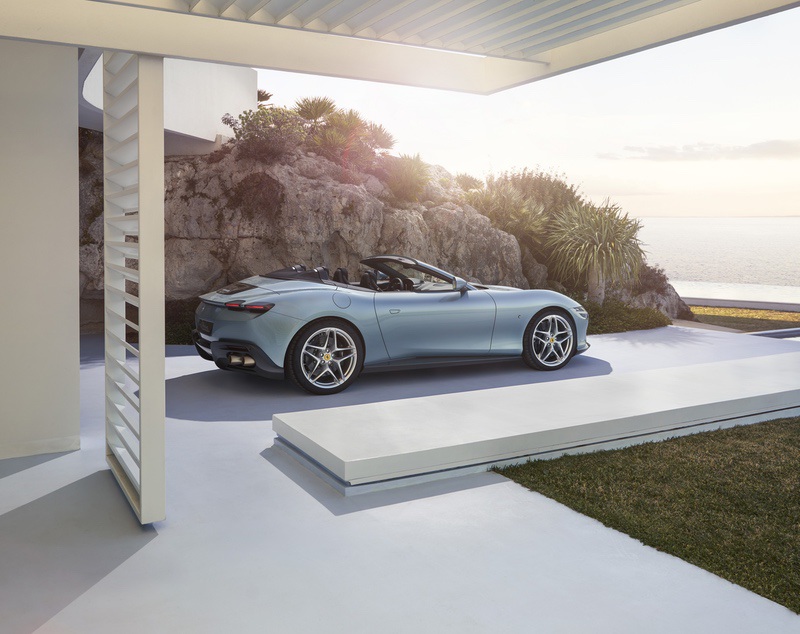
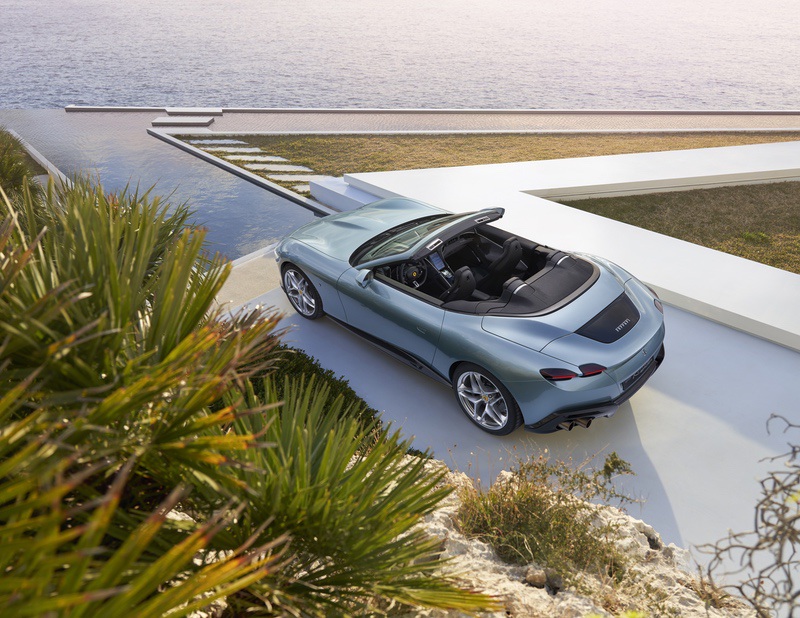
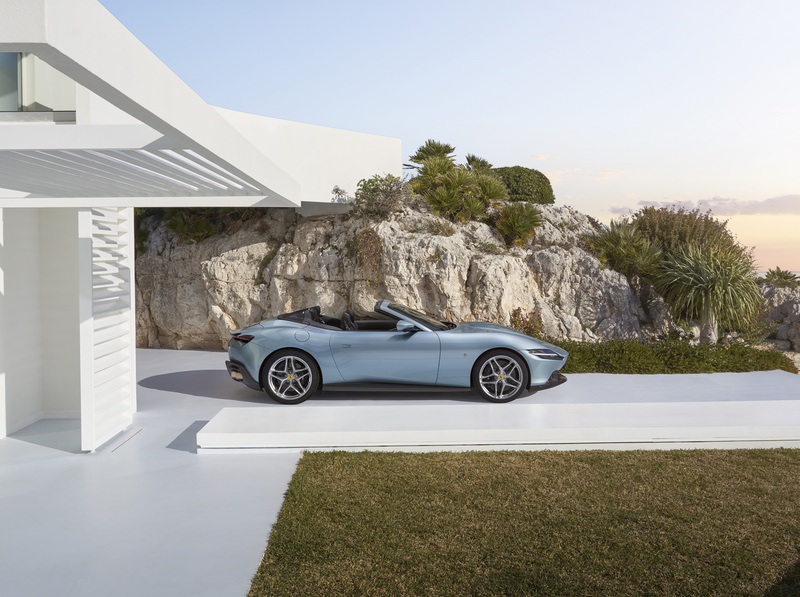
The Ferrari Roma Spider is Ferrari’s open-top interpretation of its modern front-engined V8 grand tourer. It takes the elegant, restrained character of the Roma coupé and adds a fabric soft-top, creating a car that is less about maximum aggression and more about style, usability, open-air performance, and long-distance pleasure. For buyers who want a Ferrari that can be enjoyed regularly without the intensity of a mid-engined supercar, the Roma Spider is one of the most appealing models in the modern range.
Launched in 2023, the Roma Spider replaced the Portofino M as Ferrari’s front-engined V8 convertible. That shift matters. The Portofino M was a folding-hardtop convertible with a slightly more relaxed personality. The Roma Spider feels more elegant, more focused, and more aesthetically mature. Ferrari deliberately returned to a fabric roof for the Roma Spider, the first front-engined Ferrari soft-top since the 1969 365 GTS4. The result is a car that feels more classically proportioned and visually cleaner than a metal-roof convertible.
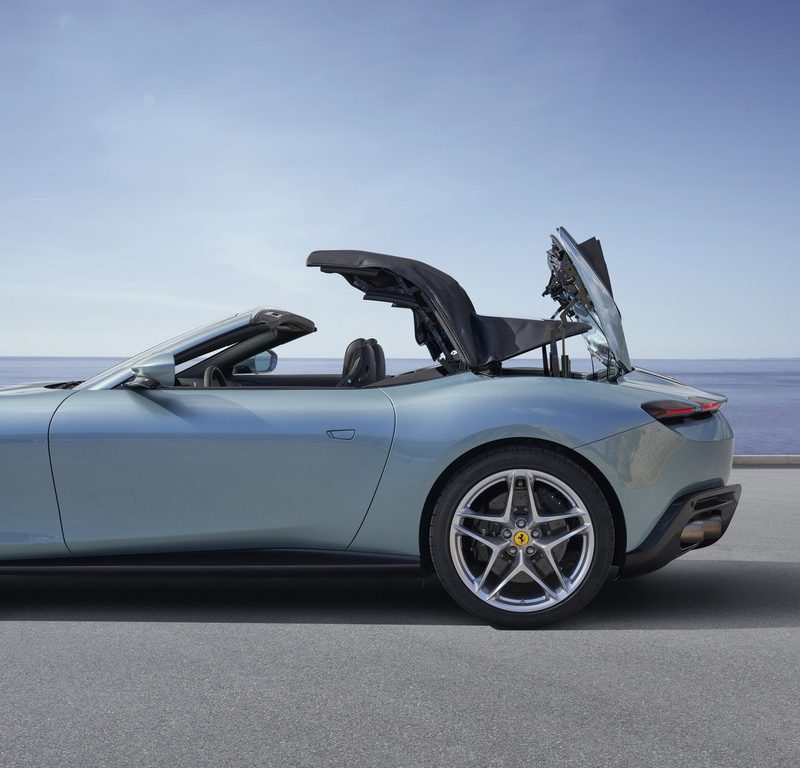
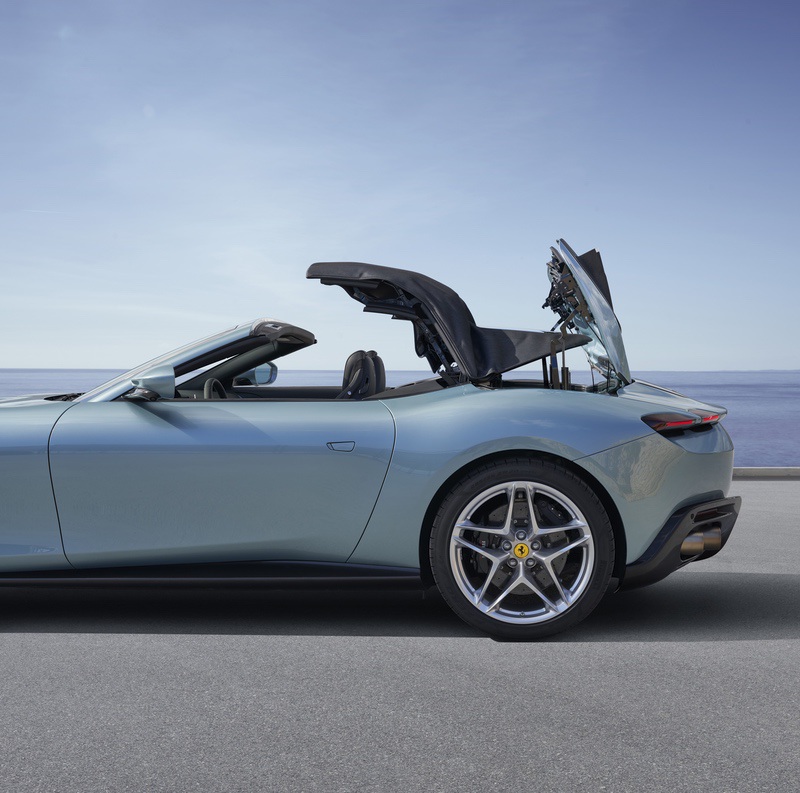
Mechanically, the Roma Spider uses Ferrari’s 3,855 cc twin-turbocharged V8, producing 620 cv / 612 bhp and 760 Nm / 561 lb ft of torque. It is paired with an 8-speed dual-clutch gearbox and sends power to the rear wheels. Ferrari quotes 0–100 km/h in 3.4 seconds, 0–200 km/h in 9.7 seconds, and a top speed of over 320 km/h / 199 mph. The soft-top opens or closes in 13.5 seconds and can operate at speeds up to 60 km/h / 37 mph.
The Roma Spider’s appeal lies in balance. It is fast enough to satisfy serious drivers, refined enough for long-distance touring, and elegant enough to feel appropriate in places where a more aggressive supercar might seem excessive. It is not as sharp as a 296 GTS, not as dramatic as a 12Cilindri Spider, and not as practical as a Purosangue, but it occupies a carefully judged position between those extremes.
Pricing reflects that positioning. UK pricing has been reported at around £210,838 before options, while US Ferrari Approved examples have been listed around $309,000 depending on specification and mileage. UK Ferrari Approved examples have appeared from around £199,995, showing that used values vary significantly with age, mileage, colour and options.
For SupercarTribe readers, the Roma Spider should be understood as a Ferrari for the owner who values elegance as much as acceleration. It is a grand tourer, a style statement, and a genuinely rapid open-top Ferrari in one package.
2. Production & History
The Ferrari Roma Spider was revealed in 2023 as the open-top version of the Roma coupé and as the successor to the Portofino M. Its arrival marked an important shift in Ferrari’s V8 GT strategy because it moved the brand away from the folding-metal-roof formula used by the California, California T, Portofino and Portofino M. Instead, Ferrari returned to a fabric soft-top, giving the Roma Spider a more traditional, elegant and lightweight convertible character.
From Portofino M to Roma Spider
The Portofino M was a capable and popular Ferrari, but it carried a broader “entry Ferrari” image. It was usable, fast and relatively practical, but it did not have the same design purity as the Roma family. The Roma Spider therefore repositioned Ferrari’s front-engined V8 convertible as something more sophisticated. It retained the usability buyers wanted, but presented it through a cleaner and more premium design language.
This change was not only aesthetic. A fabric roof allowed Ferrari to preserve the Roma’s proportions more effectively than a folding hardtop would have done. It also gave the car a softer, more romantic identity, better aligned with Ferrari’s “La Nuova Dolce Vita” theme.
Return of the Soft-Top Ferrari GT
Ferrari’s decision to use a soft-top is historically significant. The Roma Spider became the first front-engined Ferrari soft-top for decades, following a long gap after models such as the 365 GTS4 Daytona Spider. Ferrari’s own launch material described the Roma Spider as bringing back the soft-top to a front-engined Ferrari after 54 years.
This matters because Ferrari could easily have used a retractable metal roof for perceived practicality. Instead, it chose emotional authenticity and visual elegance. In a GT Spider, that decision makes sense. A soft-top looks lighter, preserves the car’s silhouette better, and gives the car a more classic roadster character.
Position in Ferrari’s Range
The Roma Spider sits below Ferrari’s more extreme open-top models, such as the 296 GTS and 12Cilindri Spider. It is also less practical than the Purosangue and less technically complex than Ferrari’s plug-in hybrid models. Its purpose is different. It is designed for buyers who want a stylish, high-performance open-top GT rather than a track-focused supercar.
Production is not limited by a numbered run, but Ferrari still controls supply through its dealer network. Availability depends on market, allocation, specification and model lifecycle. As the Roma Spider has now been succeeded conceptually by the Amalfi Spider, it becomes particularly interesting in the used market. Buyers can access a modern Ferrari soft-top GT at a lower price than the newest replacement model.
Historical Significance
The Roma Spider may not become a major collector Ferrari immediately, because it is not a limited-production special. However, it has clear historical relevance. It brought the front-engined Ferrari soft-top back into the modern era, replaced the Portofino M with a more elegant product, and represents one of Ferrari’s last non-hybrid V8 convertible GTs before broader electrification reshapes the range.
For buyers who care about long-term narrative, that gives the Roma Spider more depth than its “usable Ferrari convertible” image might suggest.
3. Design & Styling
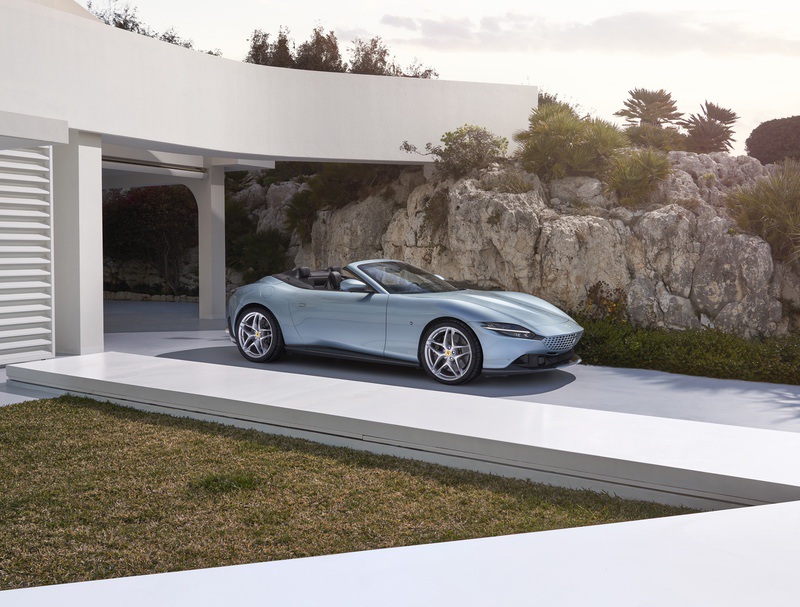
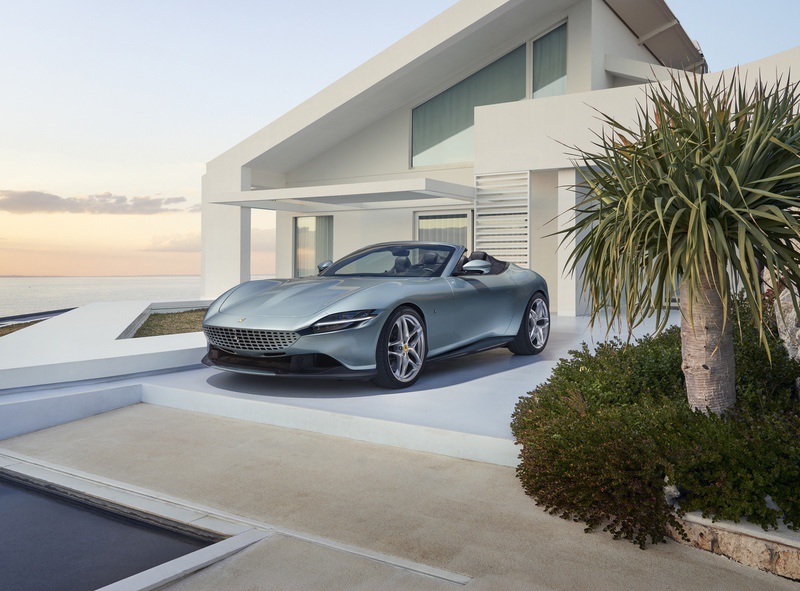
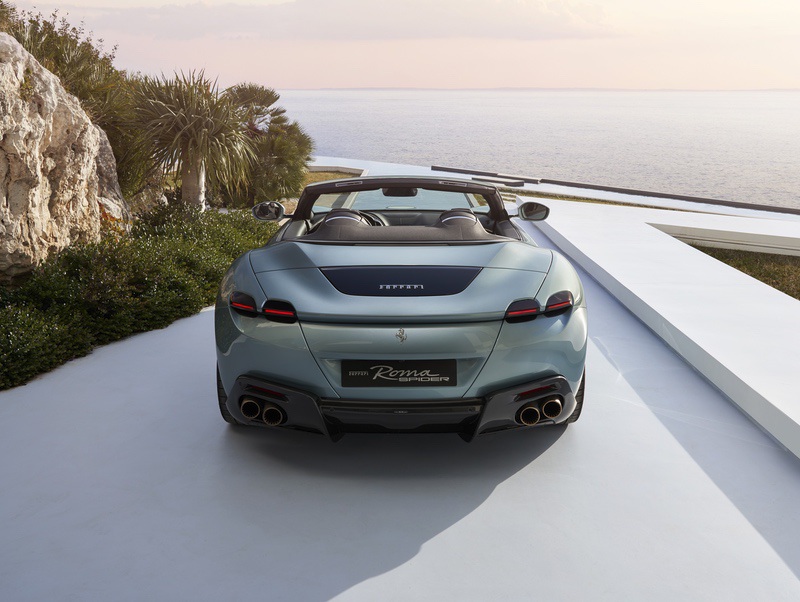
The Ferrari Roma Spider is one of Ferrari’s most elegant modern designs. Where many supercars rely on aggression, vents and exaggerated surfaces, the Roma Spider uses proportion and restraint. It looks expensive without needing to shout. That is a difficult balance, and it is central to the car’s appeal.
Exterior Proportions
The Roma Spider retains the coupé’s classic long-bonnet, rear-set-cabin proportions. The front-mid-mounted V8 allows the car to maintain a traditional GT silhouette, while the short rear deck and muscular haunches give it enough sporting presence to avoid looking soft.
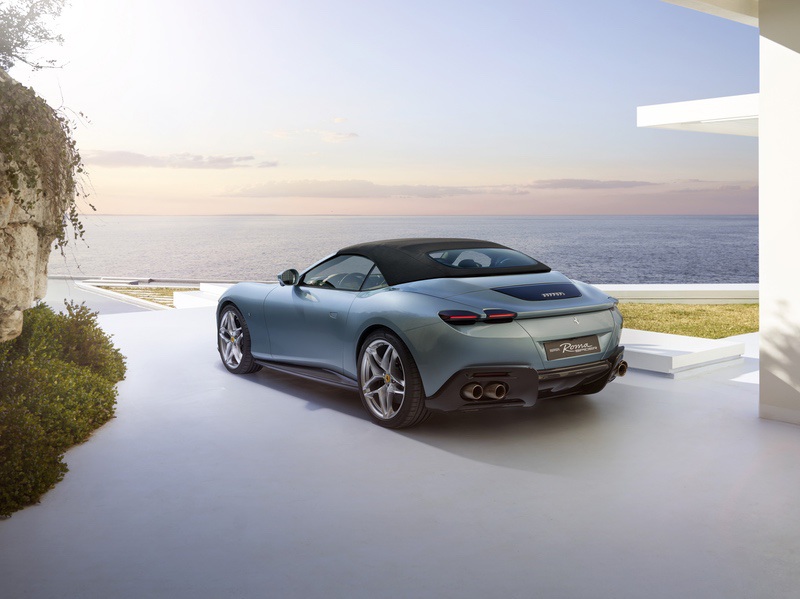
Compared with the Portofino M, the Roma Spider feels more cohesive. The bodywork is smoother, the surfacing is cleaner, and the whole car appears more resolved. It looks less like an open-top sports car trying to be practical and more like a proper Ferrari GT designed around elegance from the start.
Fabric Roof Integration
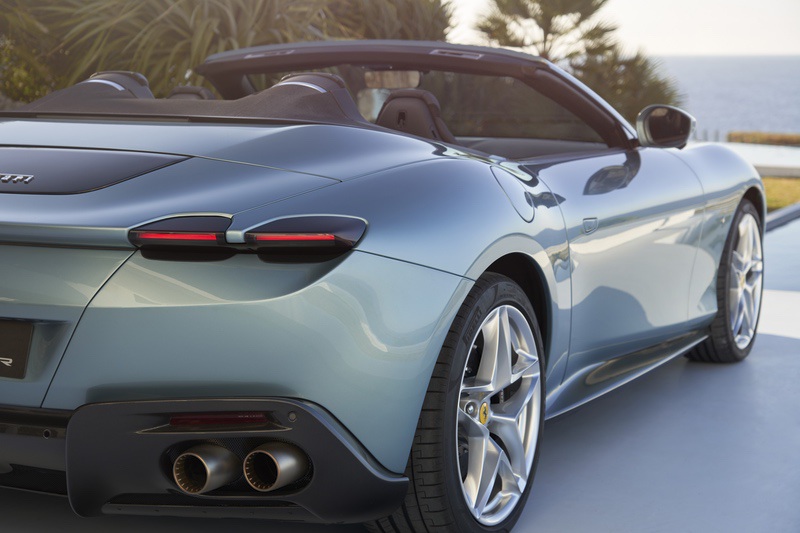
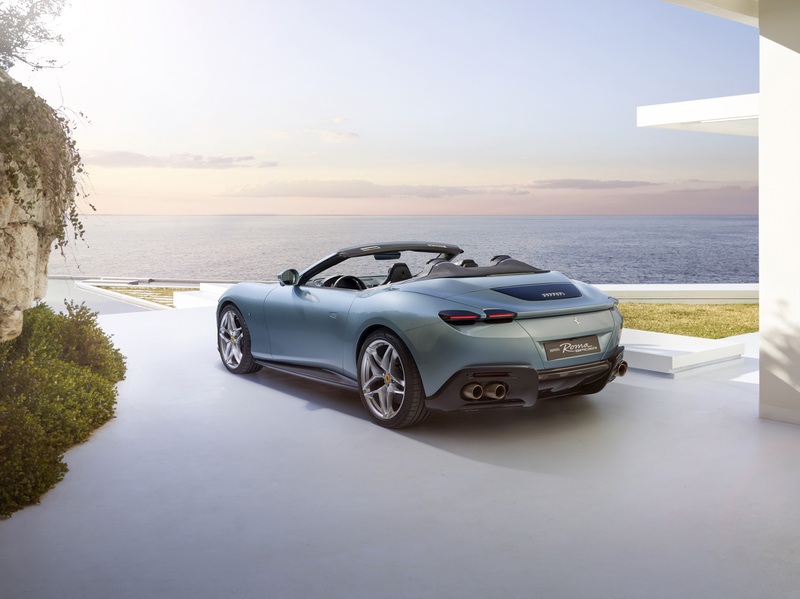
The soft-top is the most important design feature. Ferrari’s five-layer fabric roof gives the car a refined appearance when closed and folds neatly without creating the bulk often associated with retractable metal roofs. This is one of the main reasons the Roma Spider looks so balanced.
The roof can open or close in 13.5 seconds at speeds up to 60 km/h / 37 mph, which makes it genuinely usable in real-world conditions. That means owners can react to changing weather or traffic without stopping completely.
Aerodynamic Considerations
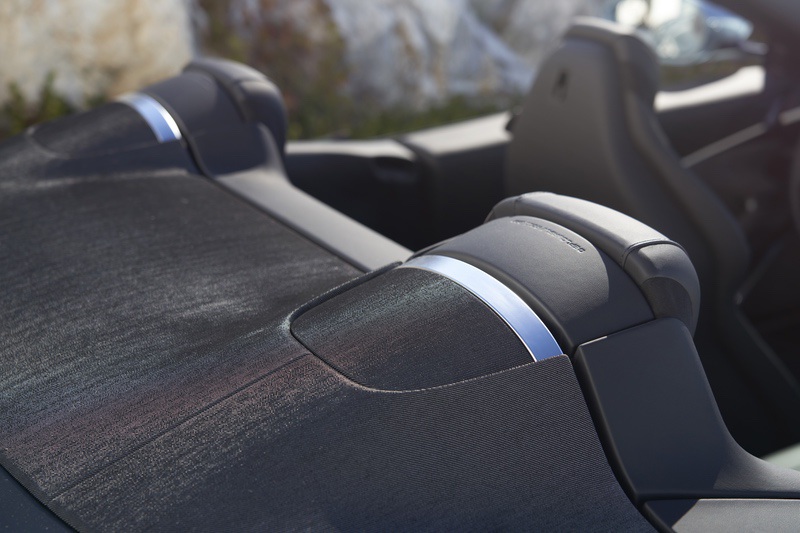
A Spider must manage air differently from a coupé. Ferrari has designed the Roma Spider to reduce turbulence and preserve comfort when the roof is down. The car includes a patented wind deflector system integrated into the rear backrest area, helping make open-air driving less tiring at speed.
This is crucial for a GT. A convertible that looks good but becomes uncomfortable above town speeds fails at its core purpose. The Roma Spider is intended to be driven over distance, not just around city centres.
Interior Design
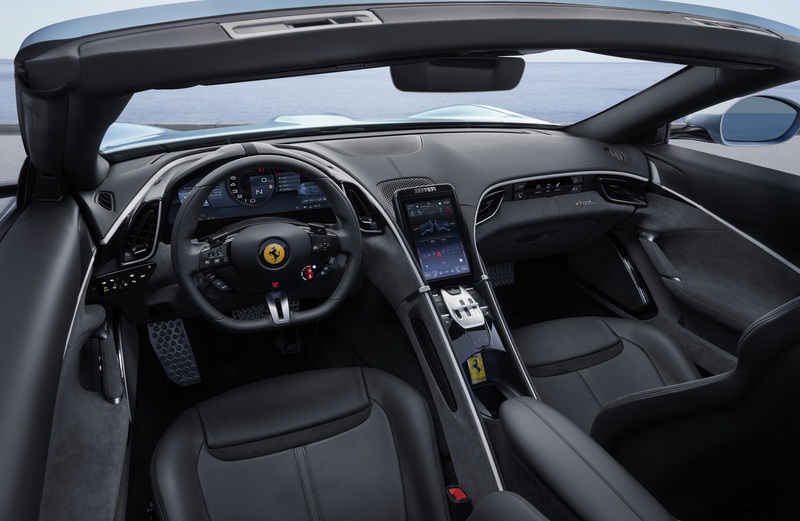
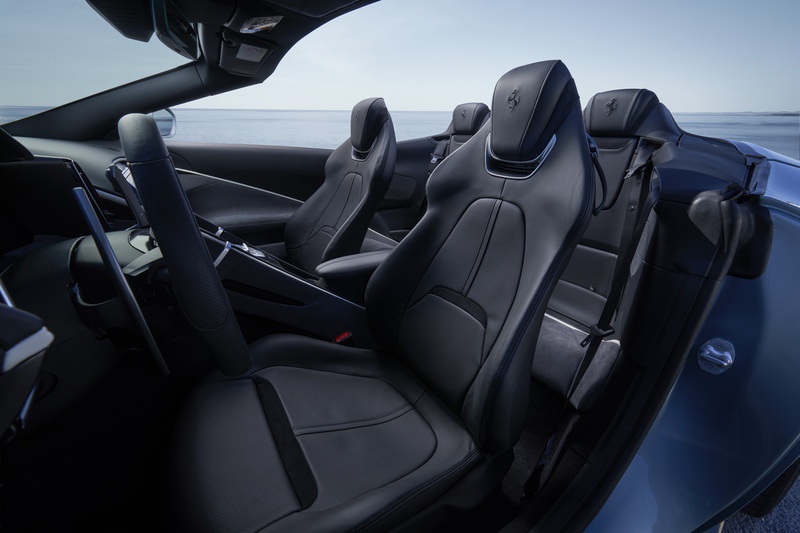
Inside, the Roma Spider uses Ferrari’s dual-cockpit layout, separating driver and passenger with a high centre console and digital displays. The cabin feels modern and driver-focused, though the touch-sensitive steering-wheel controls remain divisive. Some owners appreciate the minimalism; others prefer more physical buttons.
Specification is especially important. A Roma Spider with elegant leather, tasteful stitching and carefully chosen exterior paint feels like a sophisticated GT. A poorly specified example can lose some of the car’s subtle appeal. For resale, colour and interior combinations matter heavily.
4. Engine & Technical Specifications
The Ferrari Roma Spider is powered by Ferrari’s 3.9-litre twin-turbocharged V8, officially 3,855 cc, producing 620 cv at 7,500 rpm and 760 Nm of torque. This engine is paired with Ferrari’s 8-speed dual-clutch transmission, sending power to the rear wheels.
Core Technical Specification
Key figures include:
- Engine: 3,855 cc 90-degree twin-turbocharged V8
- Power: 620 cv / 612 bhp
- Torque: 760 Nm / 561 lb ft
- Transmission: 8-speed dual-clutch automatic
- Drivetrain: rear-wheel drive
- Layout: front-mid engine
- Roof: five-layer fabric soft-top
- 0–100 km/h: 3.4 seconds
- 0–200 km/h: approximately 9.7 seconds
- Top speed: over 320 km/h / 199 mph
- Length: 4,656 mm
- Width: 1,974 mm
- Height: approximately 1,306 mm
- Wheelbase: 2,670 mm
- Dry weight: approximately 1,556 kg depending on specification
Engine Character
The Roma Spider’s V8 is not the most exotic engine Ferrari makes, but it suits the car extremely well. It offers strong torque, smooth response and enough top-end character to feel special. The engine’s strength is flexibility. Around town, it can be calm and refined. On open roads, it becomes much more urgent.
The twin-turbo setup gives the car strong mid-range pull. This is important in a grand tourer because owners will often use the car on real roads rather than circuits. The ability to accelerate quickly without constantly chasing the redline makes the Roma Spider feel effortless.
Transmission
The 8-speed dual-clutch gearbox is a major part of the car’s personality. It shifts smoothly in automatic mode but becomes fast and decisive when driven harder. Compared with older Ferrari GT gearboxes, it feels more modern and more polished.
Rear-Wheel Drive
Ferrari’s decision to keep the Roma Spider rear-wheel drive gives the car a more traditional GT feel. Many rivals use all-wheel drive for traction, but the Roma Spider feels more agile and more adjustable. It is not intended to be a winter weapon. It is intended to feel like a proper Ferrari.
Technical Positioning
The Roma Spider is not a hybrid. That gives it a simpler mechanical identity than a 296 GTS or SF90 Spider. For buyers concerned about long-term hybrid complexity, that may be part of the car’s appeal.
5. Performance
The Ferrari Roma Spider delivers serious performance, but it does so with refinement rather than aggression. Ferrari quotes 0–100 km/h in 3.4 seconds and a top speed above 320 km/h / 199 mph, placing it firmly in supercar territory despite its grand-touring character.
Acceleration
The Roma Spider accelerates with smooth authority. It does not deliver the instant hybrid punch of a 296 GTS, nor the explosive all-wheel-drive launch of a flagship Ferrari hybrid. Instead, it builds speed through a powerful and flexible V8, supported by rapid gearshifts and strong rear-wheel-drive traction.
This makes the car feel fast but not intimidating. The performance is accessible, which suits the buyer profile. A Roma Spider owner may use the car for weekend trips, coastal roads, evening drives or regular urban use. The car needs to feel exciting without being exhausting.
Mid-Range Performance
The engine’s 760 Nm torque figure gives the Roma Spider its real-world strength. Overtaking is effortless, motorway acceleration is strong, and the car feels relaxed even at high speed. In many ways, this is more important than the 0–100 km/h figure.
A GT is judged by how it covers distance. The Roma Spider does that very well. It has enough torque to feel muscular without constantly needing downshifts, but the gearbox is responsive enough when the driver wants sharper performance.
Handling
The Roma Spider is not as sharp as the Roma coupé because the convertible structure adds weight and complexity. However, Ferrari has preserved the core balance of the car. The front-mid-engine layout helps weight distribution, while rear-wheel drive keeps the handling natural and engaging.
It does not feel like a track car, and it should not. The steering is quick, the chassis is composed, and the car prefers flowing roads to harsh, aggressive inputs. It is at its best when driven smoothly.
Roof-Down Performance
With the roof down, the performance feels more dramatic. The V8 soundtrack becomes more present, wind movement adds sensation, and acceleration feels more immediate because the driver is exposed to the environment. This is the main advantage over the coupé.
Real-World Performance
On real roads, the Roma Spider may be more enjoyable than more extreme Ferraris simply because it is easier to access. You do not need a racetrack to enjoy it. The car feels special at normal speeds, which is exactly what a luxury Ferrari Spider should do.
6. Variants & Special Editions
The Ferrari Roma Spider belongs to the broader Roma family, which includes the Roma coupé and later gives way conceptually to the Amalfi and Amalfi Spider. While it has not received a major special-series derivative, the Roma Spider’s appeal is shaped heavily by body style, specification and market position.
Ferrari Roma Coupé
The Roma coupé is the original version and remains the purer design. It is lighter, cleaner and slightly more focused. Buyers who prioritise styling purity and long-term elegance may prefer the coupé.
The coupé also offers stronger value in some used markets because it is generally less expensive than the Spider. However, it lacks the open-air experience that defines the Spider.
Ferrari Roma Spider
The Roma Spider is the more lifestyle-oriented version. It adds the soft-top, roof-down driving and greater sensory engagement. It is slightly heavier and more expensive, but for many buyers it is the more desirable road car.
The Spider is especially attractive in warm-weather markets, where convertibles often command stronger demand. For owners in the Middle East, California, Florida or Southern Europe, the Spider format makes practical and emotional sense.
Portofino M
The Portofino M is the Roma Spider’s predecessor in Ferrari’s open-top V8 GT line. It uses a folding hardtop and has a slightly more relaxed, less visually refined character. It may appeal to buyers looking for lower entry pricing, but the Roma Spider feels more sophisticated and more modern.
Ferrari Amalfi Spider
The Amalfi Spider is the Roma Spider’s successor. It offers updated styling, more power and improved ergonomics. This affects the Roma Spider’s market position, because buyers can now choose between the latest model or a used Roma Spider at a more attractive price.
Tailor Made and Specification
Specification is effectively the Roma Spider’s most important variant. Buyers should pay close attention to:
- Exterior colour
- Roof colour
- Wheel design
- Leather colour
- Contrast stitching
- Carbon fibre trim
- Passenger display
- Magneride suspension
- Premium audio
- Parking cameras
- Suspension lift
Because this is an elegant GT, tasteful specification matters. A restrained exterior with a sophisticated interior may be easier to resell than an overly aggressive combination.
Collectability
The Roma Spider is unlikely to become a short-term investment car because it is not numbered or limited. However, it may gain long-term interest as one of Ferrari’s last non-hybrid V8 soft-top GTs and as the model that returned the fabric-roof front-engined Ferrari to production.
7. Driving Experience
The Ferrari Roma Spider is designed to be enjoyable without being demanding. It is a car for open roads, refined journeys and stylish arrivals, not a car that constantly pressures the driver to attack every corner.
Around Town
At low speeds, the Roma Spider is relatively easy to manage. The gearbox is smooth, the engine is flexible and visibility is better than in a mid-engined Ferrari. It is still low and wide, so care is needed with kerbs, ramps and narrow roads, but it does not feel intimidating by Ferrari standards.
The soft-top adds flexibility. Being able to open or close the roof quickly at urban speeds makes the car feel usable rather than theatrical.
Roof-Down Character
The roof-down experience is the car’s central appeal. With the roof lowered, the V8 soundtrack becomes clearer, the cabin feels more connected to the outside world, and ordinary drives become more memorable. It is not about maximum speed. It is about atmosphere.
The Roma Spider makes sense at lower speeds than a 296 GTS because the experience is less dependent on extreme performance. It can feel special on a coastal road, in town, or during a relaxed evening drive.
Fast Roads
On fast roads, the Roma Spider feels composed and flowing. The steering is quick, the front end responds neatly, and the engine has enough torque to make progress effortless. It is not as sharp as a mid-engined Ferrari, but it is more relaxed and arguably easier to enjoy over longer distances.
Long-Distance Touring
The Roma Spider is very well suited to touring. With the roof closed, the fabric top provides enough refinement for motorway use. With the roof open, the wind-management systems make longer open-air drives realistic.
For owners who want to use their Ferrari regularly, this is one of the car’s strongest qualities.
8. Ownership Insights
The Ferrari Roma Spider is more usable than many Ferraris, but it remains an expensive, specialist car. Buyers should budget carefully and inspect specification and service history closely.
Running Costs
Indicative annual running costs include:
- Insurance: £5,000–£11,000 / $6,500–$14,000+
- Tyres: £1,400–£2,600 / $1,800–$3,300 per set
- Paint protection film: £4,000–£7,000 / $5,000–$9,000
- Detailing and ceramic coating: £800–£2,000 / $1,000–$2,500
- Warranty extension after factory cover: several thousand pounds/dollars annually
- Roof care and inspection: important as cars age
Fuel economy depends heavily on driving style. The Roma platform’s EPA economy has been listed at around 17 mpg city, 22 mpg highway and 19 mpg combined, though real-world consumption will fall quickly when driven hard.
Servicing Reality
Modern Ferraris generally benefit from Ferrari’s seven-year maintenance programme, reducing scheduled servicing costs for qualifying cars. However, wear items remain expensive. Tyres, brakes, fluids, batteries, bodywork and cosmetic repairs are not cheap.
Servicing should be done through Ferrari main dealers or recognised Ferrari specialists. The V8 is proven, but the car’s electronics, gearbox, roof mechanism and active systems require correct diagnostics.
Reliability Expectations
The Roma Spider’s engine family is well established, which supports reliability confidence. The main concerns are likely to relate to electronics, roof operation, trim, battery health, sensors and general wear rather than major engine problems.
Buyers should check roof movement, roof fabric, seals, drainage channels, service records, warranty status, paint condition and tyre age.
Real-World Usability
The Roma Spider is one of the most usable Ferraris. It has a refined cabin, usable luggage space, occasional rear seats and a roof that makes it suitable for varied weather. It can be used for weekends, touring and occasional daily driving.
It is still not a normal daily car. It is low, valuable and expensive to repair. But for owners who want a Ferrari they will genuinely use, it is one of the better choices.
9. Market Value & Depreciation
The Ferrari Roma Spider occupies an interesting position because it is now a modern used Ferrari with strong appeal, but it also faces pressure from the newer Amalfi Spider. UK pricing was reported at around £210,838 before options, while UK Ferrari Approved examples have appeared around £199,995. In the US, Ferrari Approved Roma Spider examples have been listed around $309,000, with broader market records showing average sale values around the mid $240,000sdepending on year and condition.
Value Drivers
Key factors affecting value include:
- Mileage
- Colour combination
- Roof colour
- Carbon fibre options
- Interior specification
- Ferrari service history
- Warranty status
- Condition of roof fabric
- Accident history
- Whether the buyer prefers the newer Amalfi Spider
Depreciation Pattern
The Roma Spider is not a limited-production special, so depreciation is normal. Highly optioned new cars may not recover the full cost of options on resale. However, Spiders often remain desirable because they broaden the ownership experience and suit warm-weather markets.
The arrival of the Amalfi Spider may apply pressure to Roma Spider values, but it also creates an opportunity. Buyers seeking value may find the Roma Spider especially attractive as the newer car enters the market at a higher price point.
Long-Term Outlook
The Roma Spider’s long-term appeal is supported by its design, soft-top significance and non-hybrid V8 powertrain. It is unlikely to become a major collector car immediately, but strong examples should remain desirable.
The best cars will be low-mileage, well-specified examples with full Ferrari history, tasteful colours and excellent condition.
10. Competitors
Aston Martin DB12 Volante
The Aston Martin DB12 Volante is one of the Roma Spider’s most direct rivals. It is a front-engined V8 convertible GT with a strong luxury focus. The Aston feels more muscular and more traditional, with greater emphasis on torque and cabin comfort.
The Ferrari feels lighter, more delicate and more exotic. The Aston may be better for relaxed long-distance cruising, while the Roma Spider offers sharper steering and stronger brand theatre.
Bentley Continental GTC
The Bentley Continental GTC is more luxurious, more spacious and more comfort-focused. It is the better car for buyers who prioritise refinement and cabin opulence.
The Roma Spider is more agile, more sporting and more visually elegant. It cannot match the Bentley’s comfort, but it offers a more driver-focused experience.
Porsche 911 Turbo S Cabriolet
The Porsche 911 Turbo S Cabriolet is faster in many conditions and far more usable as a daily car. Its all-wheel-drive traction and build quality make it extremely effective.
However, it lacks the Roma Spider’s sense of occasion. The Porsche is rational; the Ferrari is emotional. Buyers choosing the Roma Spider usually care about design, badge, sound and style as much as speed.
Maserati GranCabrio Trofeo
The Maserati GranCabrio Trofeo offers Italian open-top GT character at a less intense level. It is elegant and more relaxed, but it does not have Ferrari’s brand strength, performance edge or resale desirability.
The Maserati is a softer alternative. The Roma Spider is sharper and more prestigious.
Ferrari Portofino M
The Portofino M is the Roma Spider’s predecessor and remains a strong used-market alternative. It offers a folding hardtop and similar V8 performance, but its design is less refined.
The Roma Spider feels more modern, more elegant and more premium. The Portofino M may appeal to value-focused buyers, but the Roma Spider is the more desirable car.
11. FAQs
What engine does the Ferrari Roma Spider use?
The Ferrari Roma Spider uses a 3,855 cc twin-turbocharged V8 producing 620 cv / 612 bhp and 760 Nm / 561 lb ft of torque. It is paired with an 8-speed dual-clutch gearbox.
How fast is the Ferrari Roma Spider?
The Roma Spider accelerates from 0–100 km/h in 3.4 seconds, reaches 0–200 km/h in approximately 9.7 seconds, and has a top speed of over 320 km/h / 199 mph.
Does the Ferrari Roma Spider have a hardtop?
No. The Roma Spider uses a fabric soft-top, not a folding metal roof. The roof opens or closes in 13.5 seconds and can be operated at speeds up to 60 km/h / 37 mph.
How much does the Ferrari Roma Spider cost?
UK pricing has been reported at around £210,838 before options. Used UK Ferrari Approved examples have appeared around £199,995, while US Ferrari Approved examples have been listed around $309,000 depending on specification and mileage.
Is the Roma Spider better than the Portofino M?
For most buyers, yes. The Roma Spider has cleaner design, a more elegant interior concept and a more sophisticated image. The Portofino M remains attractive as a used buy, particularly for buyers who prefer a folding hardtop.
Is the Ferrari Roma Spider practical?
By Ferrari standards, yes. It has a usable boot, occasional rear seats, a refined cabin and a roof that makes it suitable for varied weather. The rear seats are best used for children, short journeys or additional luggage.
Is the Roma Spider a good investment?
It should not be bought as a guaranteed investment. It is not a limited-production special. However, well-specified, low-mileage cars with full Ferrari history should remain desirable, especially if buyers continue to value non-hybrid V8 Ferrari Spiders.
12. Related Articles
- Ferrari Roma
- Ferrari Amalfi Spider
- Ferrari Amalfi
- Ferrari Portofino M
- Ferrari California T
- Ferrari 296 GTS
- Ferrari 12Cilindri Spider
- Aston Martin DB12 Volante
- Bentley Continental GTC
13. Are You Ready?
- Looking to buy a Ferrari Roma Spider? Click to find available cars.
- Need insurance? Click to apply for Supercar Insurance.
- Need a service? Click to book a specialist service.
- Buying one? Click to request a PPI inspection.
- Selling your car? Click to request a valuation.